Brandywine Springs


🏆 Delaware’s Lost Amusement Park — Historic mineral springs, ruins of a Victorian-era resort, and peaceful woodland trails in the Brandywine Valley
In the rolling hills of New Castle County, just outside Wilmington, Delaware, a quiet wooded park hides one of the most fascinating forgotten stories in Mid-Atlantic history. Brandywine Springs Park was once one of the premier resort and amusement destinations on the East Coast — a place where thousands of visitors came to “take the waters” at its famous mineral springs, ride a roller coaster, dance in a grand pavilion, and enjoy the therapeutic powers of a landscape celebrated since the colonial era.
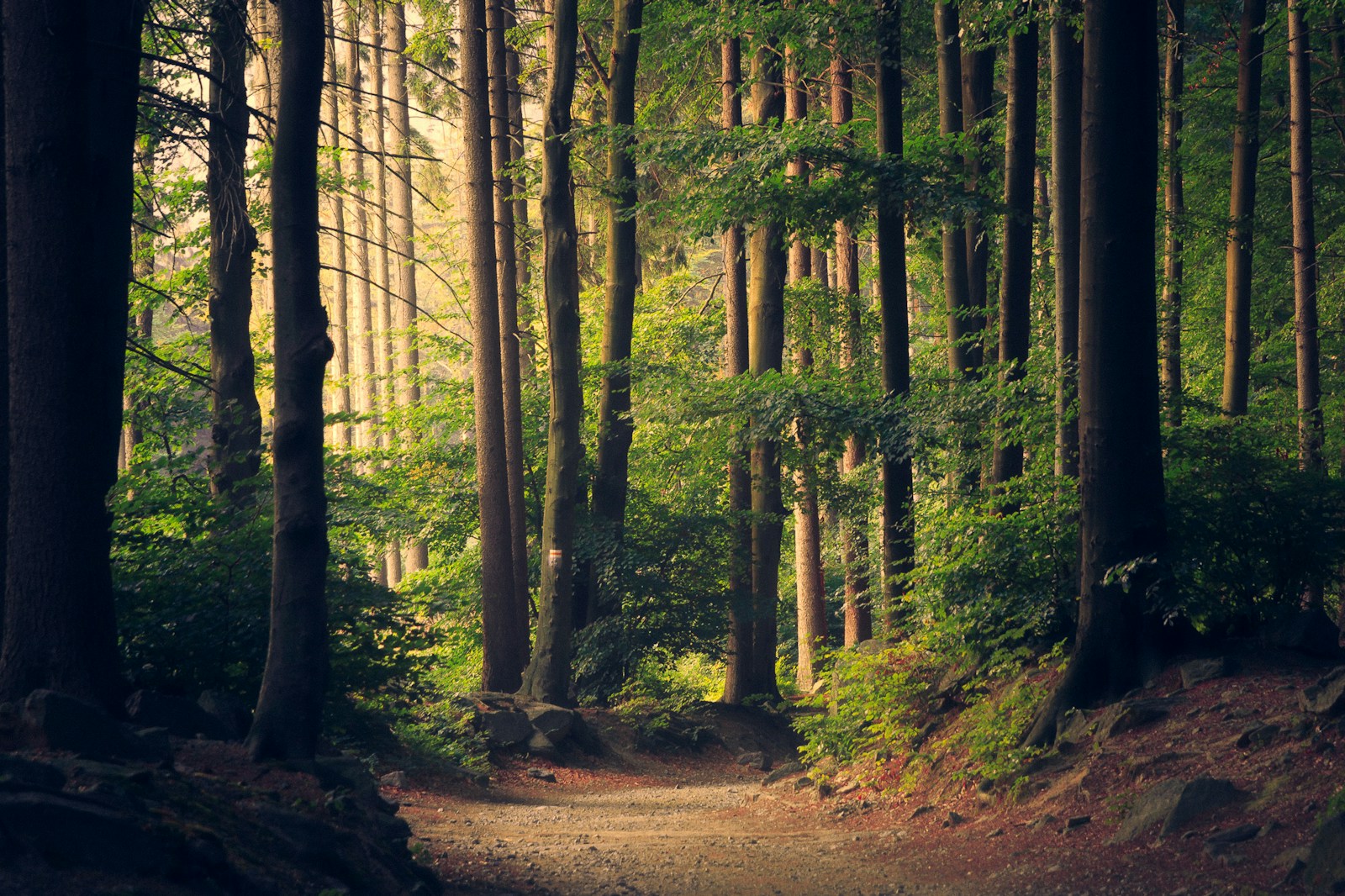
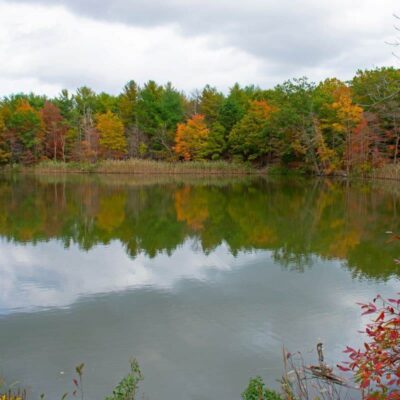
Today, the roller coasters and dance halls are gone. The mineral springs still flow, but the grand resort that surrounded them has been reclaimed by the forest. What remains is a beautiful county park where wooded trails wind through the Brandywine Creek valley, past archaeological remnants of the amusement park era, through stands of mature hardwoods, and along the creek that gives the region its name. It’s a place where nature and history intersect in the most Delaware way possible — quietly, modestly, and with layers of meaning beneath the surface.
Table of Contents
The Resort That Was
The story of Brandywine Springs begins with water. The mineral springs that bubble up in this valley were known to the Lenape people long before European settlement, and by the early 1800s, the springs had attracted the attention of entrepreneurs who recognized their commercial potential. The iron-rich, sulphur-tinged water was believed to have medicinal properties, and a resort culture grew around the springs.
📜 Historical Timeline
• Pre-1700s: Lenape people use mineral springs for centuries
• Early 1800s: Springs become known for supposed healing properties
• 1860s–1880s: Hotel and resort complex develops around the springs
• 1886–1923: Peak amusement park era — roller coaster, carousel, dance hall, theater, casino (gambling house), and trolley connection from Wilmington
• 1923: A devastating fire destroys major structures; park never fully rebuilds
• 1930s–1960s: Gradual abandonment; nature reclaims the site
• 1970s–Present: Preserved as a county park; archaeological remains protected
At its peak in the early 1900s, Brandywine Springs was connected to downtown Wilmington by electric trolley, making it one of the most accessible “trolley parks” in the region. Thousands of Wilmington residents would ride the trolley to the springs for a day of rides, dancing, picnicking, and mineral water drinking. The fire of 1923 effectively ended the resort era, and the forest gradually reclaimed the site over the following decades.
The Mineral Springs
The original mineral springs still flow — a persistent geological feature that has been bubbling for thousands of years regardless of what humans built on top of them. The springs produce iron-rich water with a distinctive mineral taste and a slight sulfurous quality. While no longer promoted for medicinal use, the springs remain a point of historical interest and can be found along the main trail system.
The water emerges from underground aquifers that pass through iron-bearing rock formations in the Piedmont geology of the Brandywine Valley. The iron content gives the water (and the surrounding soil) a characteristic rusty-orange stain that’s visible at spring seeps throughout the park.
Trails & Nature
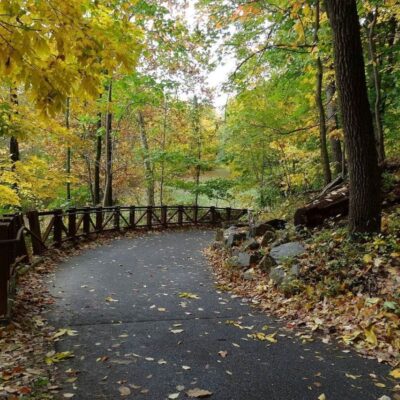
Brandywine Springs Park offers several miles of walking and hiking trails through a mix of mature hardwood forest, stream valleys, and open meadows. The terrain is rolling — typical of Delaware’s Piedmont region — with moderate elevation changes that keep the walking interesting without being strenuous.
| Trail | Distance | Difficulty | Highlights |
|---|---|---|---|
| Valley Trail | 1.5 miles | Easy | Main loop through valley, historic spring sites |
| Woodland Loop | 1.0 mile | Easy | Mature hardwoods, birding, shade |
| Creek Walk | 0.8 miles | Easy | Stream-side path, wildflowers, stone ruins |
| Ridge Path | 0.6 miles | Moderate | Uphill through oaks, best views of the valley |
The trails are natural surface (dirt, leaf litter) and can be muddy after rain. They’re well-suited for casual walking, dog-walking, and nature photography rather than aggressive hiking.
Wildlife & Birding
The park’s mature woodland, stream corridors, and meadow edges create excellent habitat for suburban wildlife and woodland birds.
| Category | Species |
|---|---|
| 🦌 Mammals | White-tailed deer, red fox, gray squirrel, eastern chipmunk, raccoon |
| 🐦 Woodland Birds | Red-bellied woodpecker, downy woodpecker, Carolina wren, tufted titmouse |
| 🦅 Raptors | Red-tailed hawk, Cooper’s hawk, great horned owl |
| 🌸 Spring Migrants | Warblers, vireos, Baltimore oriole, rose-breasted grosbeak |
| 🦋 Butterflies | Tiger swallowtail, spicebush swallowtail, monarchs (fall migration) |
Archaeological Remains
Throughout the park, observant visitors can find remnants of the amusement park era:
- Foundation walls — Stone and concrete foundations from buildings, including the hotel and dance pavilion
- Stone staircases — Original stone steps that led between the resort’s different levels
- Retaining walls — Engineered stone walls that once supported terraced grounds
- Spring houses — Remnants of structures built over the mineral springs to protect and channel the water
- Trolley grade — The flat, graded path of the former trolley line from Wilmington
These features are protected archaeological resources. Please do not disturb, remove, or deface any remains. Metal detecting and digging are prohibited.
Visitor Information
| Detail | Information |
|---|---|
| 📍 Location | Brandywine Springs Park, Wilmington area, New Castle County, DE |
| 📞 Contact | New Castle County Parks: (302) 395-5700 |
| 🕐 Hours | Year-round, dawn to dusk |
| 💰 Entry Fee | Free |
| 🅿️ Parking | Free parking area at main entrance |
| 🚻 Restrooms | Portable restrooms at trailhead |
| ⛺ Camping | No camping |
| 🐕 Pets | Allowed on leash — popular dog-walking destination |
Best Time to Visit
| Season | Weather | Best For |
|---|---|---|
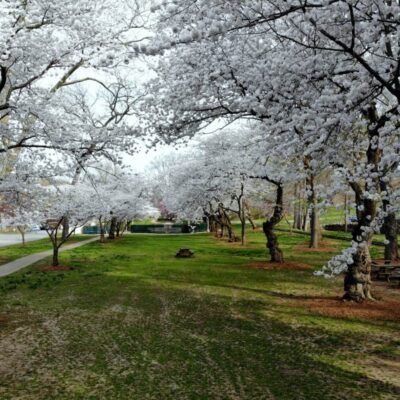
| 🌸 Spring (Apr–May) | 55–75°F | Wildflowers, spring migrants, pleasant walking temps |
| ☀️ Summer (Jun–Aug) | 80–90°F | Full canopy shade, butterflies, early morning walks |
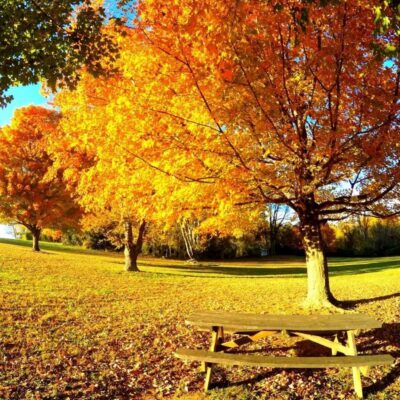
| 🍂 Fall (Sep–Nov) | 50–70°F | Fall foliage, comfortable temps, less humidity |
| ❄️ Winter (Dec–Feb) | 30–45°F | Bare trees reveal ruins, winter birding, solitude |
Pro tip: Visit in winter when the deciduous trees are bare — this is when the archaeological remains of the amusement park are most visible. Foundations, walls, and grades that are hidden beneath foliage in summer become clearly visible when the leaves drop.
Nearby Attractions
| Destination | Distance | Highlights |
|---|---|---|
| Hagley Museum & Library | 5 miles | DuPont gunpowder works, industrial history |
| Winterthur Museum | 7 miles | American decorative arts, 1,000-acre gardens |
| Brandywine Creek State Park | 8 miles | Hiking, nature center, hawk watch |
| Longwood Gardens | 12 miles | World-class botanical gardens (PA) |
| Brandywine River Museum of Art | 10 miles | Wyeth family art collection |
Frequently Asked Questions
What happened to the amusement park at Brandywine Springs?
Brandywine Springs operated as a resort and amusement park from the late 1800s through 1923, when a devastating fire destroyed many of the major structures. The park was never fully rebuilt, and the site was gradually reclaimed by forest. Today, stone foundations, retaining walls, and other archaeological remains are visible throughout the park, especially in winter when deciduous trees are bare.
Can you still see the mineral springs?
Yes — the original mineral springs still flow. You can find spring seeps along the main trail system, identifiable by the rusty-orange iron staining in the surrounding soil. The water emerges from underground aquifers that pass through iron-bearing Piedmont rock formations. The springs are not currently used for drinking water.
Is there an entrance fee?
No — Brandywine Springs Park is a free county park managed by New Castle County Parks and Recreation. Parking is also free.
Are dogs allowed?
Yes — Brandywine Springs is a popular dog-walking destination. Dogs must be kept on leash. Please clean up after your pet.
How long are the trails?
The park has approximately 3–4 miles of trails total. The main Valley Trail loop is about 1.5 miles, with additional woodland and creek-side paths. The terrain is rolling and the trails are easy to moderate — suitable for all ages and fitness levels.
Is this the same as Brandywine Creek State Park?
No — Brandywine Springs Park and Brandywine Creek State Park are different locations. Brandywine Creek State Park is a larger Delaware state park about 8 miles away, offering more extensive hiking trails, a nature center, and organized programs. Brandywine Springs Park is a smaller county park focused on its historical and natural features.
Can you see ruins of the old amusement park?
Yes — stone foundations, retaining walls, staircases, and the former trolley grade are visible throughout the park. Visit in winter (December–February) when deciduous trees are bare for the best visibility of archaeological remains. Do not disturb, remove, or dig near any ruins — they are protected archaeological resources.
🏛️ Visit Brandywine Springs Park
Walk through the ruins of a Victorian-era amusement park, discover mineral springs that have flowed for millennia, and explore one of Delaware’s most fascinating hidden-history destinations.
🗺️ New Castle County Parks 🏛️ Visit WilmingtonFrequently Asked Questions
How much does it cost to visit Delaware state parks?
Delaware state parks charge a daily vehicle fee ($5 residents, $10 non-residents) from March through November. An annual pass is $40 for residents and $80 for non-residents.
What are the best state parks in Delaware?
Top parks include Cape Henlopen (ocean beach and military history), Delaware Seashore (barrier island), Trap Pond (northernmost natural bald cypress swamp), and Brandywine Creek (piedmont forest).
Can I camp on the beach in Delaware?
Delaware Seashore State Park offers campsites very close to the beach, and Cape Henlopen offers camping near the ocean. Both parks provide great coastal camping experiences along the Atlantic.
What is the best time to visit Delaware state parks?
Summer (June-August) is peak for beach parks. Spring and fall offer comfortable hiking weather and fewer crowds. Delaware’s coastal parks have a long season from May through October.
Explore More Delaware State Parks
Brandywine Springs is one of many outstanding state parks in Delaware. Discover more parks in our Best State Parks in Delaware guide, or use our Park Finder to search by activity, location, or features.