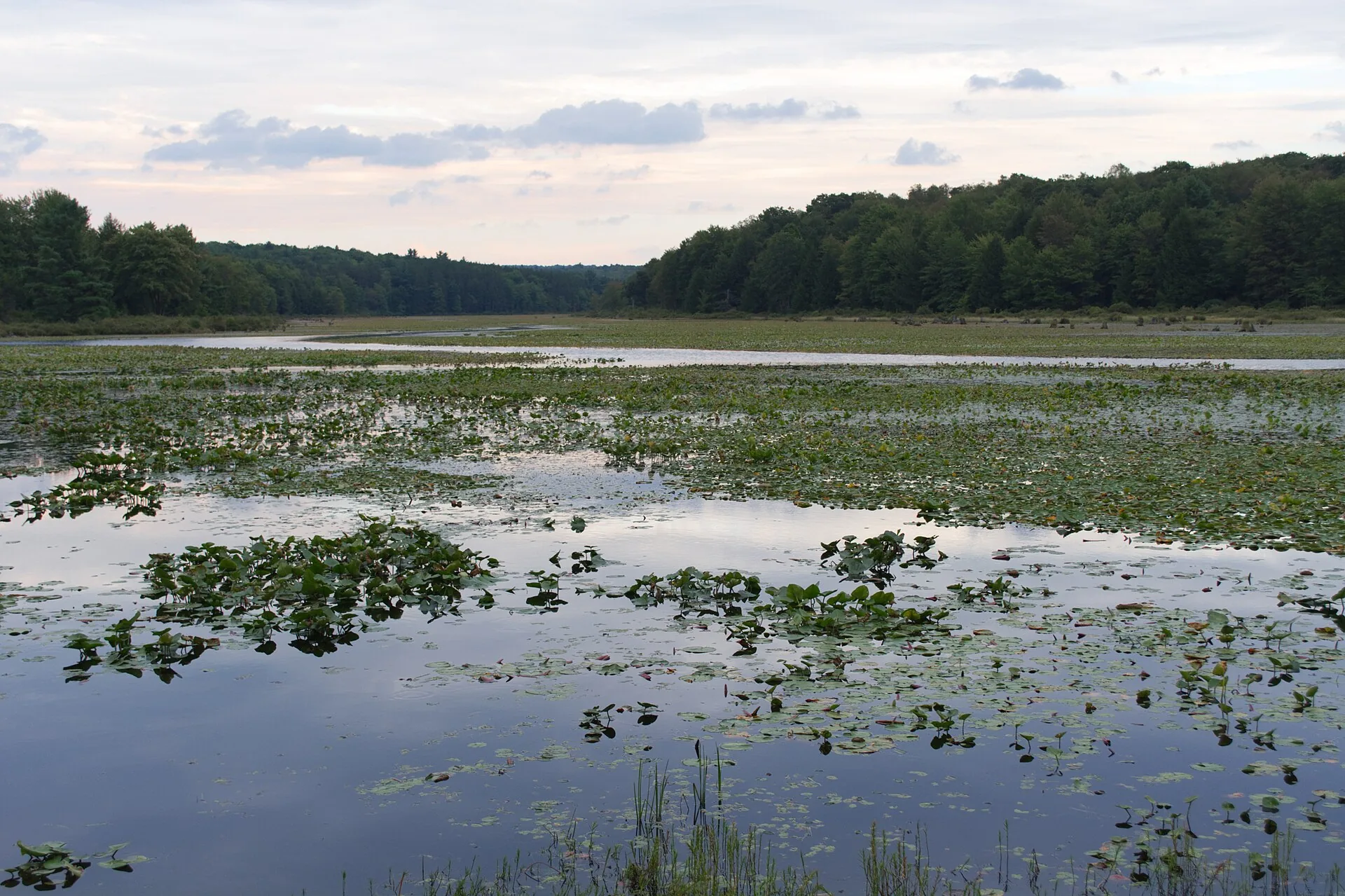
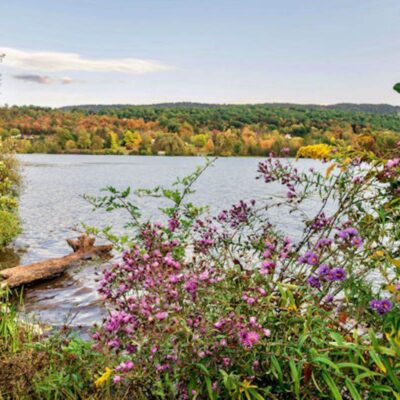
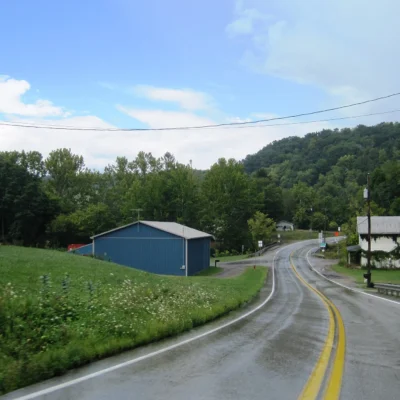
Photo: Molly Des Jardin, CC BY 2.0, via Wikimedia Commons
🌤 Weather at Black Moshannon State Park by season
| Spring | Summer | Fall | Winter |
|---|---|---|---|
| 23–68 °F | 53–80 °F | 29–72 °F | 16–36 °F |
Each range runs from the coldest monthly average low to the warmest monthly average high in that season (1991-2020 climate normals), measured at Philipsburg 2 S, 9 mi away, elevation 1,720 ft. Conditions at the park can differ from the station, especially where elevation differs — check a forecast before you go.

🏆 Pennsylvania’s Hidden Bog Wilderness — 3,394 acres surrounding a tea-colored 250-acre lake, ancient sphagnum bogs with boardwalk access, 21+ miles of trails, and color-correcting viewfinders for colorblind visitors during fall foliage season
Why Black Moshannon Is Pennsylvania’s Most Unusual State Park
Most state park lakes are blue. Black Moshannon Lake is the color of dark amber tea. This is not a sign of pollution — it is a sign of something far more interesting. The 250-acre lake gets its distinctive coloring from tannins released by sphagnum moss in the surrounding bogs, a relic ecosystem that has persisted here since the last Ice Age. The name itself tells the story: “Moss-Hanne” — Lenape for “moose stream” — combined with “black” for the lake’s dark waters.
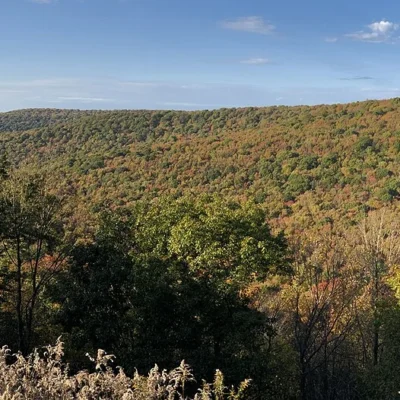
Located in Centre County and surrounded by 43,000 acres of Moshannon State Forest, this 3,394-acre park feels far more remote than its location suggests. The bog ecosystem — one of the few remaining in Pennsylvania — supports plant species typically found hundreds of miles north in Canada, including carnivorous sundew plants and rare orchids. And the park has done something genuinely innovative: during fall foliage season, they offer color-correcting viewfinders at scenic overlooks, allowing colorblind visitors to experience the autumn palette. It is the kind of thoughtful, inclusive touch that sets this park apart.
The Bog: Ancient Ecosystem
🌿 Bog Ecosystem Highlights
• Bog Boardwalk: Quarter-mile accessible boardwalk through the sphagnum bog. Walk above the delicate ecosystem without disturbing it. Interpretive signs explain the unique plant community.
• Carnivorous Plants: Sundew plants capture insects on sticky leaves — visible from the boardwalk in summer.
• Relict Species: Plants normally found in boreal Canada thrive here due to the cool, acidic microclimate. The bog has persisted for thousands of years.
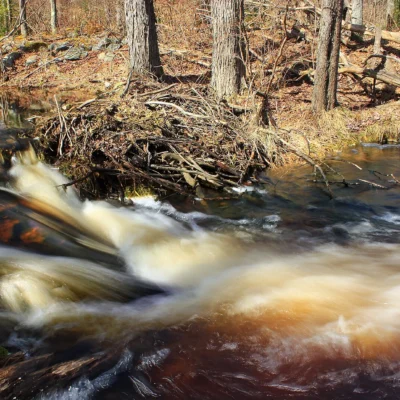
• Tannin Waters: Springs passing through the bog dissolve plant tannins, creating the amber-colored lake water. The water is clean and safe — just naturally stained.
• Environmental Programs: Ranger-led bog walks and stream studies available seasonally. These are some of the best interpretive programs in the PA state park system.
Hiking Trails
| Trail | Distance | Difficulty | Highlights |
|---|---|---|---|
| Bog Trail | 1.5 mi | Easy | Boardwalk through sphagnum bog; carnivorous plants |
| Moss-Hane Trail | 4.0 mi | Moderate | Lake loop; best fall foliage; viewfinder stations |
| Indian Trail | 3.5 mi | Moderate | Ridge views; connects to state forest trail system |
| Blueberry Trail | 2.0 mi | Easy-Moderate | Wild blueberries (July); gentle terrain; family-friendly |
| Seneca Trail | 5.0 mi | Moderate-Hard | Remote ridgeline; wildlife; connects to state forest |
| Hay Road Trail | 3.0 mi | Moderate | Mountain biking available; forest interior |
Water Activities on the Tea-Colored Lake
| Activity | Access | Season | Notes |
|---|---|---|---|
| Swimming | Sand beach | Memorial Day – mid-Sept | Lifeguards on duty; tea-colored but clean water |
| Kayaking/Canoeing | Boat launch + rentals | April – October | No gas motors allowed; peaceful paddling |
| Fishing | Shore + boat | Year-round | Largemouth bass, yellow perch, brook trout; ice fishing in winter |
Camping
| Option | Sites/Units | Amenities | Rate |
|---|---|---|---|
| Electric Sites | 45 sites | Electric hookup, table, fire ring | $25-$35/night |
| Full Hookup | 11 sites | Electric, water, sewer | $30-$40/night |
| Basic/Tent Sites | 17 sites | Table, fire ring; tent-only available | $15-$25/night |
| Deluxe Cottages | Available | Full amenities; climate control | $80-$120/night |
Best Time to Visit
| Season | Weather | Crowds | Best For |
|---|---|---|---|
| Fall (Sep-Oct) | 50-65°F | Moderate | Peak foliage; color-correcting viewfinders; bog walks |
| Summer (Jun-Aug) | 70-85°F | High | Swimming; boating; camps; blueberry picking (July) |
| Spring (Apr-May) | 45-65°F | Low | Wildflowers; ephemeral bog blooms; birding |
| Winter (Dec-Mar) | 20-35°F | Very Low | Cross-country skiing; ice fishing; snowshoeing |
Nearby parks: If you have extra time, Sand Bridge State Park is a short drive away, and Whipple Dam State Park is within about an hour’s drive.
🌿 Ready to Explore Pennsylvania’s Ancient Bog?
Walk boardwalks over thousand-year-old sphagnum bogs, paddle tea-colored waters, and experience fall foliage through color-correcting viewfinders.
Frequently Asked Questions
Why is the lake water so dark?
The amber color comes from natural tannins released by sphagnum moss in the surrounding bogs. Springs and streams flowing through the bog pick up these plant compounds before reaching the lake. The water is clean and regularly tested — it just looks like tea. Swimming is perfectly safe.
What are the color-correcting viewfinders?
Black Moshannon is one of the only state parks in the country that provides EnChroma-style color-correcting viewfinders at scenic overlooks during fall foliage season. These devices allow visitors with red-green colorblindness to perceive the full spectrum of autumn colors. It is a remarkably thoughtful accessibility feature.
Can you pick blueberries in the park?
Yes. Wild lowbush blueberries ripen along several trails, particularly the Blueberry Trail, in mid-to-late July. Picking for personal consumption is allowed. The berries are small but intensely flavored — some of the best wild blueberries in Pennsylvania.
Is the park suitable for young children?
Absolutely. The Bog Boardwalk is stroller-accessible, the beach has lifeguards, and the campground is family-friendly. The ranger-led programs (bog walks, stream studies) are excellent for kids learning about ecology. The park is also quiet and safe — a great introduction to camping for young families.
Explore More Pennsylvania State Parks
Black Moshannon State Park is one of many outstanding state parks in Pennsylvania. Discover more parks in our Best State Parks in Pennsylvania guide, or use our Park Finder to search by activity, location, or features.

⛺ Camping at Black Moshannon State Park: Campgrounds & Cabins
| Cabins & Lodging | 13 rustic cabins sleep up to 6 (deck, picnic table, electricity, wood fireplace, electric heat); 6 modern cabins sleep up to 6 (drive-in, water at structure, propane heat, ceiling fans); 2 deluxe cottages sleep 5 (pets NOT permitted, not part of dogs-in-cabins program); 1 'Unique House'. ADA cabins available. |
|---|---|
| Pets | Pets only in designated areas; not permitted in Deluxe Cottages |
| Reservations | ReserveAmerica; 888-727-2757 |
| Special sites | 3 Rustic Organized Group Tenting sites (Black Moshannon Organized Group Tenting Area) |
| Season notes | Open year-round; peak season April 1-Oct 31 |
Camping & lodging by type
| Site type | Category | Sites | Hookups |
|---|---|---|---|
| Modern Electric | Campsite | 44 | electric |
| Rustic Cabins | Cabin / lodging | 13 | — |
| Full-Hookup | Campsite | 12 | electric, water, sewer |
| Modern Tent Only | Campsite | 9 | — |
| Pavilions | Day use | 8 | — |
| Modern Non-Electric | Campsite | 7 | — |
| Modern Cabins | Cabin / lodging | 6 | — |
| Rustic Organized Group Tenting Site | Campsite | 3 | — |
| Deluxe Cottages | Cabin / lodging | 2 | — |
| Unique Houses | Cabin / lodging | 1 | — |
Blank cells mean the park does not publish that detail.
Camping questions about Black Moshannon State Park
Can you camp at Black Moshannon State Park?
Yes. Black Moshannon State Park has 75 campsites. 44 modern electric, 12 full-hookup, 7 modern non-electric, 9 modern tent-only.
How do you reserve a campsite at Black Moshannon State Park?
ReserveAmerica; 888-727-2757.
Are there cabins at Black Moshannon State Park?
13 rustic cabins sleep up to 6 (deck, picnic table, electricity, wood fireplace, electric heat); 6 modern cabins sleep up to 6 (drive-in, water at structure, propane heat, ceiling fans); 2 deluxe cottages sleep 5 (pets NOT permitted, not part of dogs-in-cabins program); 1 'Unique House'. ADA cabins available.
Are pets allowed at the Black Moshannon State Park campground?
Pets only in designated areas; not permitted in Deluxe Cottages.
Source: pennsylvaniastateparks.reserveamerica.com (verified 2026-07). Details change seasonally — confirm when booking.
🐾 Dogs & Pets at Black Moshannon State Park
- Pets allowed? statewide rule
- Pets are allowed in day-use areas of Pennsylvania state parks and in designated campground sites, but must be physically controlled, attended at all times and leashed, caged or crated.
- Leash rule statewide rule
- Leash required at all times; no universal maximum length — inquire at the park office (electronic fences/shock collars not accepted as control)
- Beaches & swim areas statewide rule
- Pets are prohibited in swimming areas and designated beaches
- Cabins & lodging statewide rule
- Dogs allowed in a limited number of designated cabins, cottages and yurts (pilot program); maximum two dogs per unit; dogs must be house-trained and current on rabies vaccination
- Pet fees statewide rule
- No standard statewide pet fee; fees may be assessed for damage in dog-friendly lodging
- Statewide exceptions statewide rule
- Maximum two non-caged pets per campsite; pets prohibited in buildings; pet food may not be left outside camping units
Are dogs allowed at Black Moshannon State Park?
Pets are allowed in day-use areas of Pennsylvania state parks and in designated campground sites, but must be physically controlled, attended at all times and leashed, caged or crated. Individual parks can post stricter rules — check signage on arrival.
Rules verified July 2026 via pa.gov. More: Pennsylvania state parks guide · Dog rules in all 50 states compared
Park Map
Plan your gear for Black Moshannon State Park
From our editorial guides, matched to this park’s activities:
Top Tours & Activities Near Pennsylvania
 from $59
 from $595
 from $35