🌤 Weather at Crowders Mountain State Park by season
| Spring | Summer | Fall | Winter |
|---|---|---|---|
| 42–81 °F | 66–91 °F | 41–83 °F | 32–58 °F |
Each range runs from the coldest monthly average low to the warmest monthly average high in that season (1991-2020 climate normals), measured at Gastonia Municipal Airport, 8 mi away, elevation 797 ft. Conditions at the park can differ from the station, especially where elevation differs — check a forecast before you go.

🧗 Guide to North Carolina’s Piedmont Peaks
Twin Peaks Rising Above the Piedmont
Just 32 miles west of Charlotte in Gaston County, Crowders Mountain State Park packs dramatic mountain scenery into 5,126 acres of North Carolina Piedmont. Two quartzite peaks — Crowders Mountain (1,625 ft) and The Pinnacle (1,705 ft, Gaston County’s highest point) — rise sharply above the surrounding flatlands, providing 100-150 foot vertical cliffs for rock climbing and panoramic summit views stretching to the Charlotte skyline on clear days. With 20+ miles of trails, designated rock climbing areas, and a connecting ridge trail to Kings Mountain across the South Carolina border, this is Charlotte’s premier outdoor escape.
Rock Climbing
- 100-150 foot quartzite cliffs: Top-roping, sport, and trad routes on vertical faces
- Free climbing permit required: Available at the visitor center or self-registration boxes
- Bouldering areas: Scattered throughout the park with variety of problems
- Experienced climbers only — no guide services within the park
Trails & Summit Views
- Rocktop Trail: Strenuous climb to Crowders Mountain summit — the most scenic route
- Pinnacle Trail: Challenging ascent to Gaston County’s highest point
- Ridgeline Trail: Connects to Kings Mountain National Military Park and Kings Mountain State Park in SC
- 20+ miles of trails: Options for hiking, mountain biking, and nature study
Practical Tips
- From Charlotte (32 miles): Take I-85 West to Exit 13, then follow Sparrow Springs Road
- Entry fee: Free
- The cliffs are unfenced — maintain safe distances from edges, especially with children
- Spring wildflowers (April-May) and fall foliage (October) are peak seasons
- Start early on weekends — parking fills by mid-morning during peak seasons
- Combine with Kings Mountain State Park (SC) via the Ridgeline Trail for a cross-state hike
Things to Do
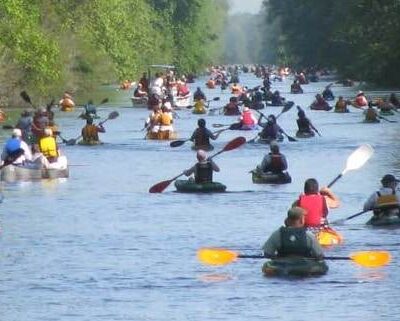
North Carolina parks span Great Smoky Mountains to Outer Banks. Activities include hiking Blue Ridge trails, swimming at beaches, fishing mountain streams, rock climbing at Pilot Mountain, kayaking whitewater rivers, and exploring Civil War and colonial history.
Best Time to Visit
Spring brings wildflowers, fall delivers Blue Ridge foliage peaking mid-October. Summer is ideal for coastal parks. Winter is mild at the coast and cold in mountains.
Visitor Tips
North Carolina state parks are free to enter. Arrive before 10 AM on fall weekends at popular parks. Ticks prevalent in all seasons. Dogs allowed on most trails but not at swimming areas.
Frequently Asked Questions
What are the best state parks in the Blue Ridge Mountains?
Top mountain parks include Grandfather Mountain (Mile High Swinging Bridge), Hanging Rock (dramatic rock formations), Stone Mountain (largest exposed granite face in the state), and South Mountains (80-foot waterfall).
Explore More North Carolina State Parks
Crowders Mountain State Park is one of many outstanding state parks in North Carolina. Discover more parks in our Best State Parks in North Carolina guide, or use our Park Finder to search by activity, location, or features.
Wildlife & Nature
Crowders Mountain SP — 5,126 acres — features two prominent mountain peaks (Crowders Mountain 1,625 ft and Kings Pinnacle 1,705 ft) rising 800 feet above the Piedmont. The park’s rocky cliffs, forest, and streams support peregrine falcons, timber rattlesnakes, and black bears. Rock climbing on the cliffs is popular.
Nearby Attractions
Gastonia — adjacent. Charlotte — 25 miles east. Kings Mountain NMP — 15 miles south — site of a pivotal Revolutionary War battle.
Keep exploring: The closest neighbors are Reedy Creek State Park (within about an hour’s drive) and South Mountains State Park (within about an hour’s drive).
Camping reservations: Book campsites and cabins for North Carolina state parks online at northcarolinastateparks.reserveamerica.com.

🐾 Dogs & Pets at Crowders Mountain State Park
- Pets allowed? statewide rule
- Pets are permitted in all North Carolina state parks as long as they are on an attended leash and under the constant control of the owner.
- Leash rule statewide rule
- Attended leash or other restraint no longer than 6 feet required at all times
- Beaches & swim areas statewide rule
- Pets are not permitted at swim areas or in bathhouses
- Cabins & lodging statewide rule
- Pets are strictly prohibited from entering any building, including cabins; no pet-friendly cabin program
- Statewide exceptions statewide rule
- Not all campgrounds allow pets (contact the park office first); pets must be confined to tent or vehicle during quiet hours (10 p.m.-7 a.m.); at Hammocks Beach visitors must arrange their own transportation for pets to Bear Island
Are dogs allowed at Crowders Mountain State Park?
Pets are permitted in all North Carolina state parks as long as they are on an attended leash and under the constant control of the owner. Individual parks can post stricter rules — check signage on arrival.
Rules verified July 2026 via ncparks.gov. More: North Carolina state parks guide · Dog rules in all 50 states compared
Park Location
Plan your gear for Crowders Mountain State Park
From our editorial guides, matched to this park’s activities: