Florida State Parks Annual Pass: Individual vs. Family
Florida offers two annual pass options:
| Pass Type | Price | Covers |
|---|---|---|
| Individual | $60/year | 1 named passholder + $2/person for guests |
| Family | $120/year | Up to 8 people in one vehicle |
📋 Florida Annual Pass: $60/year (individual) or $120/year (family, up to 8) — Entry to all 175 state parks. → See our Complete 50-State Annual Pass Price Guide for full details, discounts, and tips. Florida charges park entry, so a pass pays off fast — see how its fees compare in our 50-State Park Entry Fee Study.
Both passes include:
- ✅ Unlimited day-use entry to 175 state parks
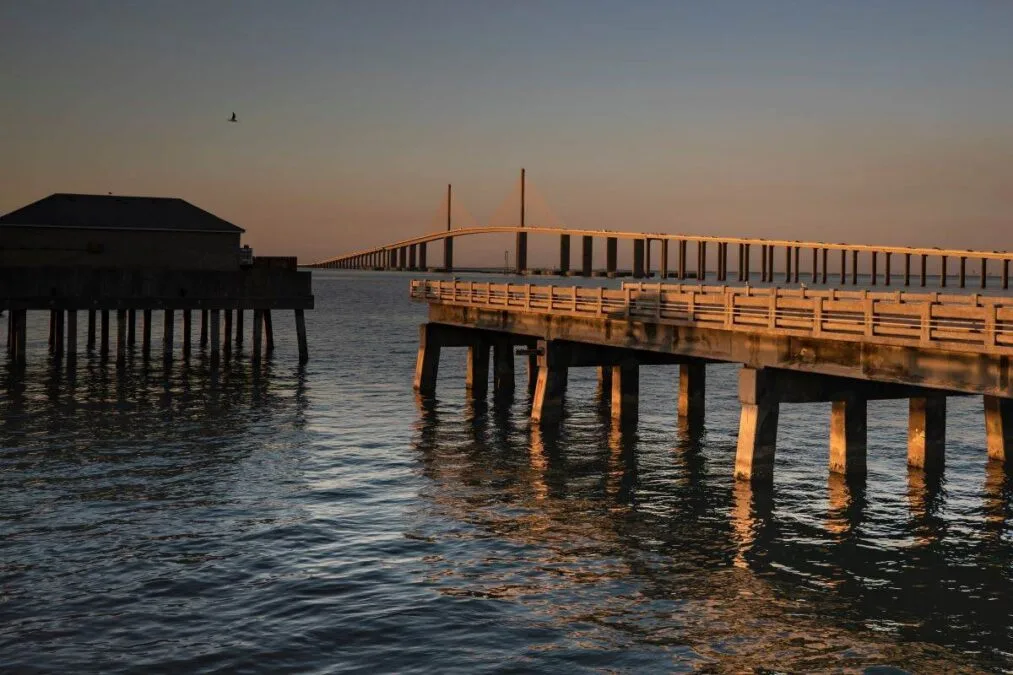
- ✅ 33% discount at Skyway Fishing Pier
Not included:
- ❌ Camping fees
- ❌ Special events and tours (boat tours, tubing)
- ❌ Ellie Schiller Homosassa Springs & Weeki Wachee (standard admission)
Break-even point: At $6 average entry, the Individual pass pays for itself after 10 visits per year. The Family pass pays off after just 5 family trips.
Where to Buy: floridastateparks.org or any park ranger station
6 Regions of Florida State Parks
1. Panhandle (Northwest Florida)
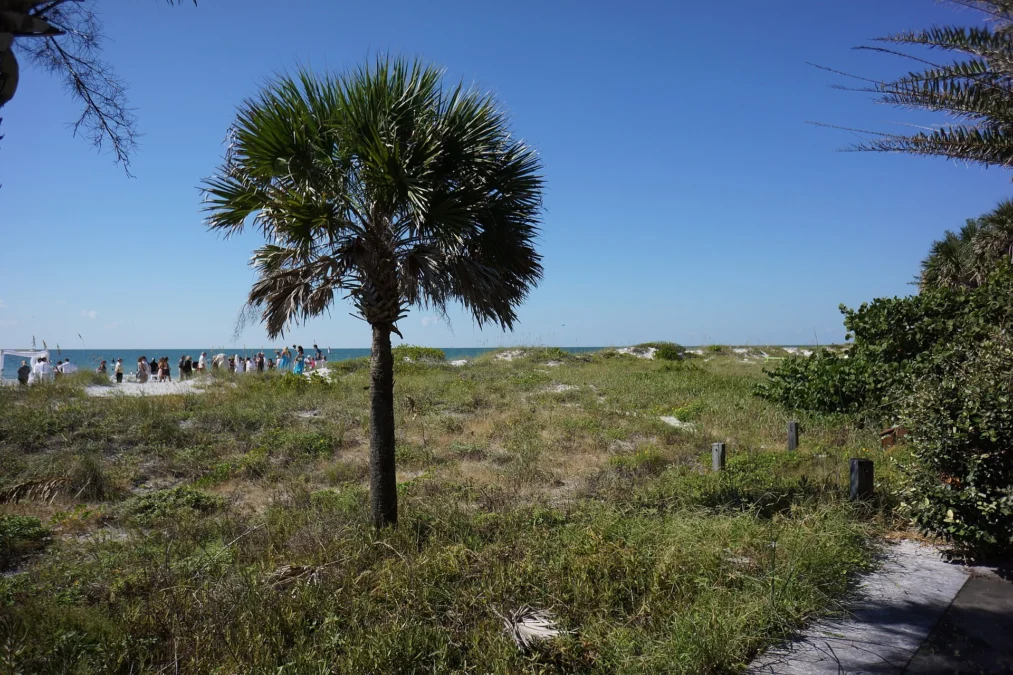
Landscape: Emerald waters, white quartz sand beaches, rare coastal caves
Signature Parks:
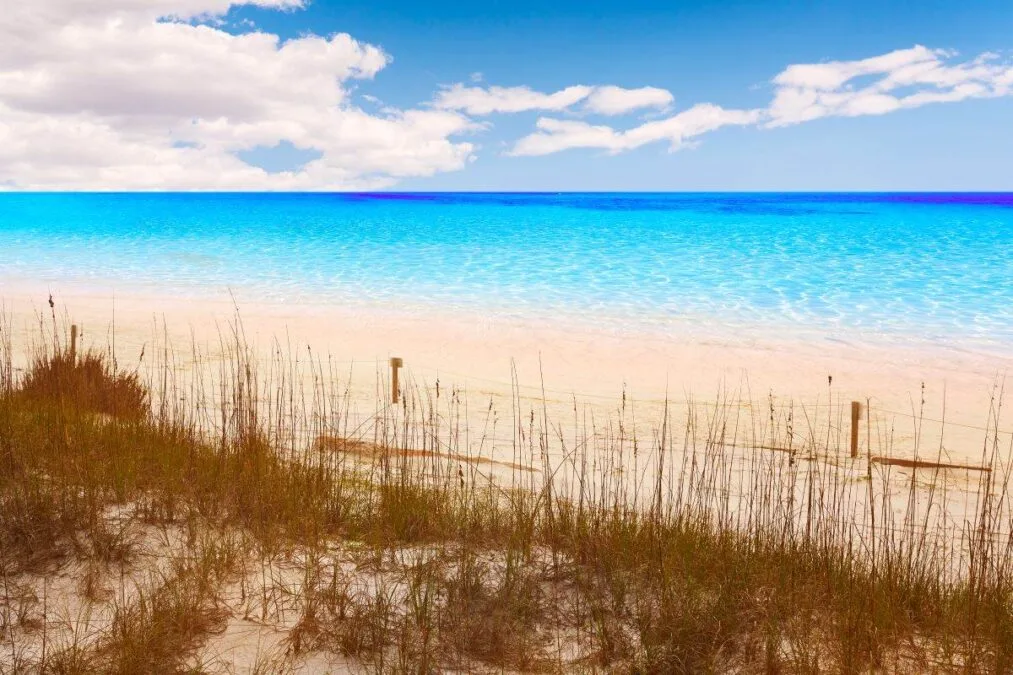
- St. Andrews State Park – #1 beach in America (multiple rankings); snorkeling jetties
- Florida Caverns State Park – Florida’s only publicly accessible dry caves
- Grayton Beach State Park – Pristine dune lakes; Western Lake kayaking
- Henderson Beach State Park – Destin’s finest beach camping
- Falling Waters State Park – Florida’s tallest waterfall (73 feet into a sinkhole)
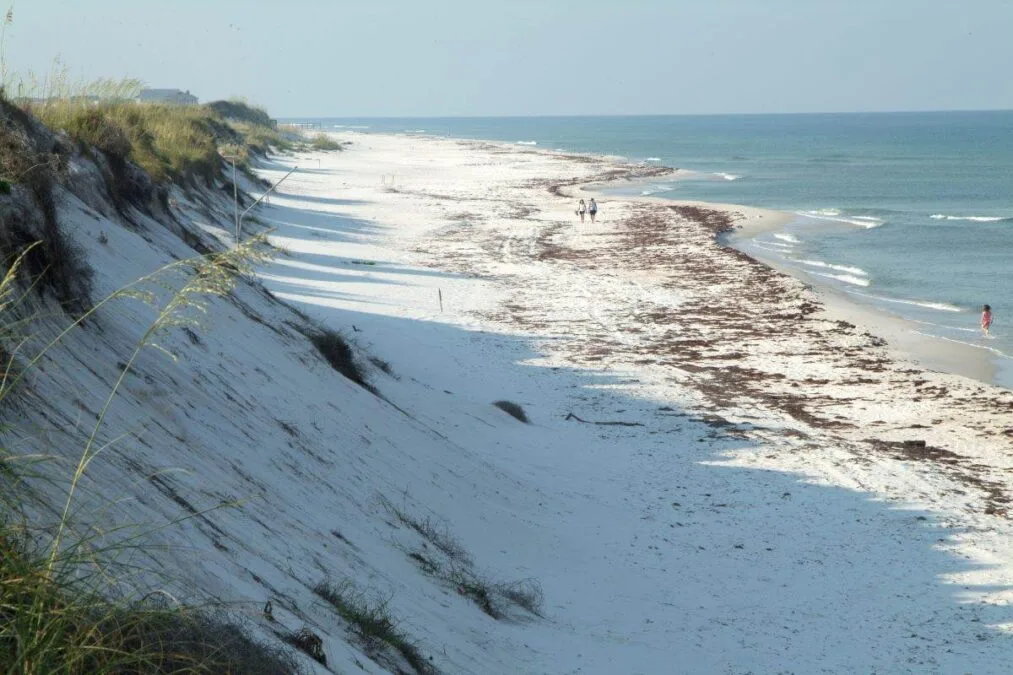
- Topsail Hill Preserve State Park – 3.2 miles of undeveloped beach
Best For: Beach camping, cave exploration, dune hiking, pristine waters
2. North Florida
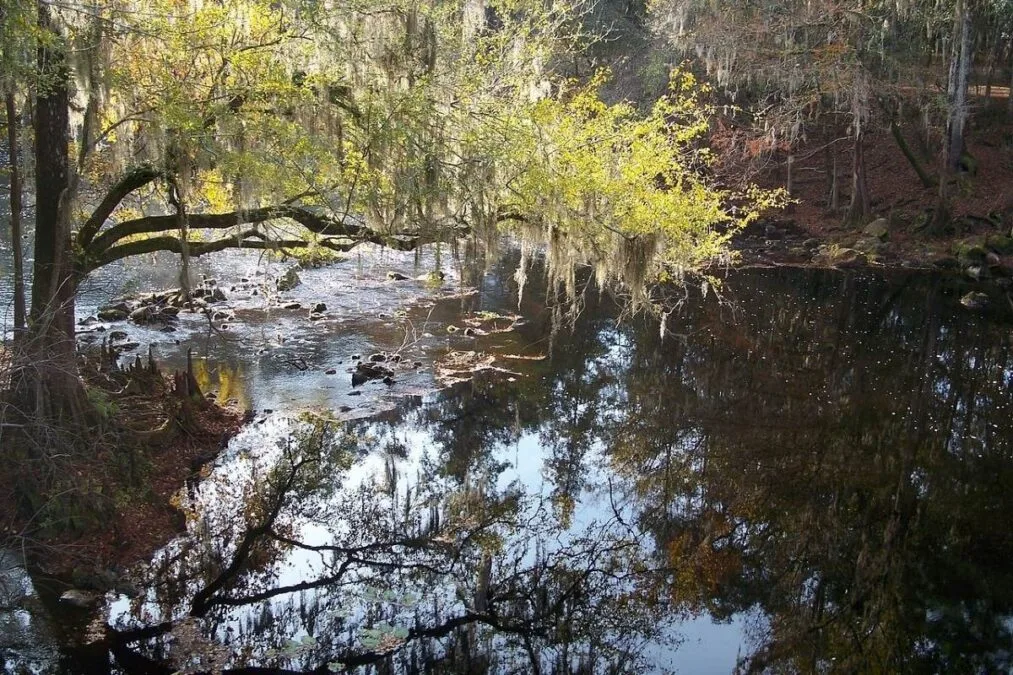
Landscape: First-magnitude springs, Suwannee River corridor, historic sites
Signature Parks:
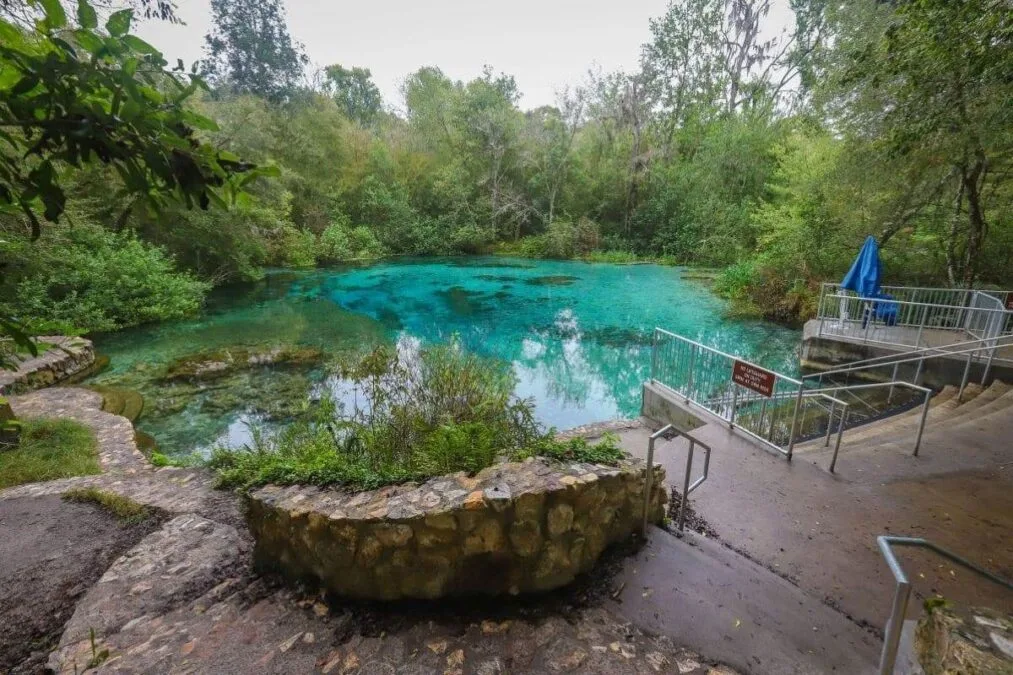
- Ichetucknee Springs State Park – 6-mile crystal-clear tubing river
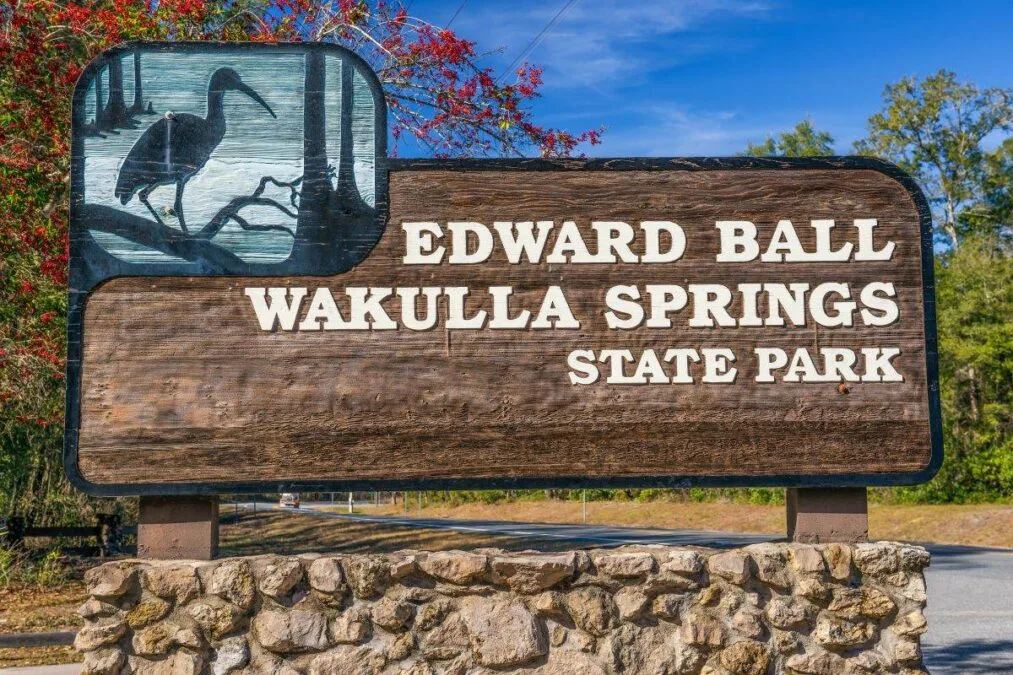
- Wakulla Springs State Park – One of world’s largest/deepest freshwater springs
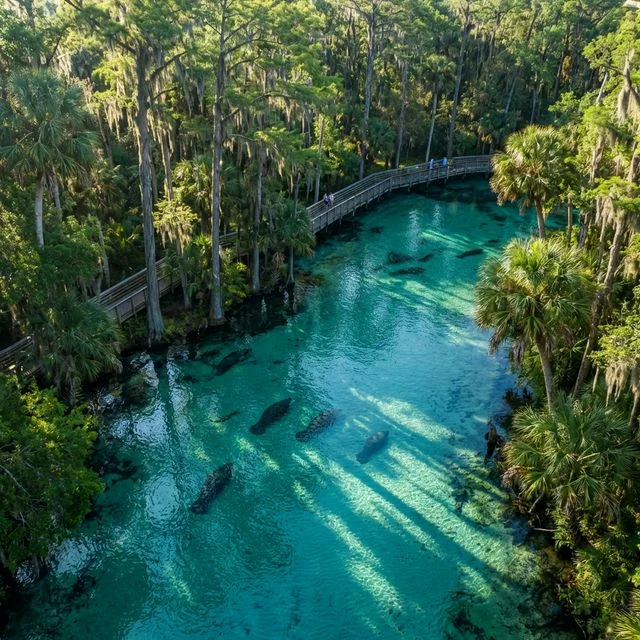
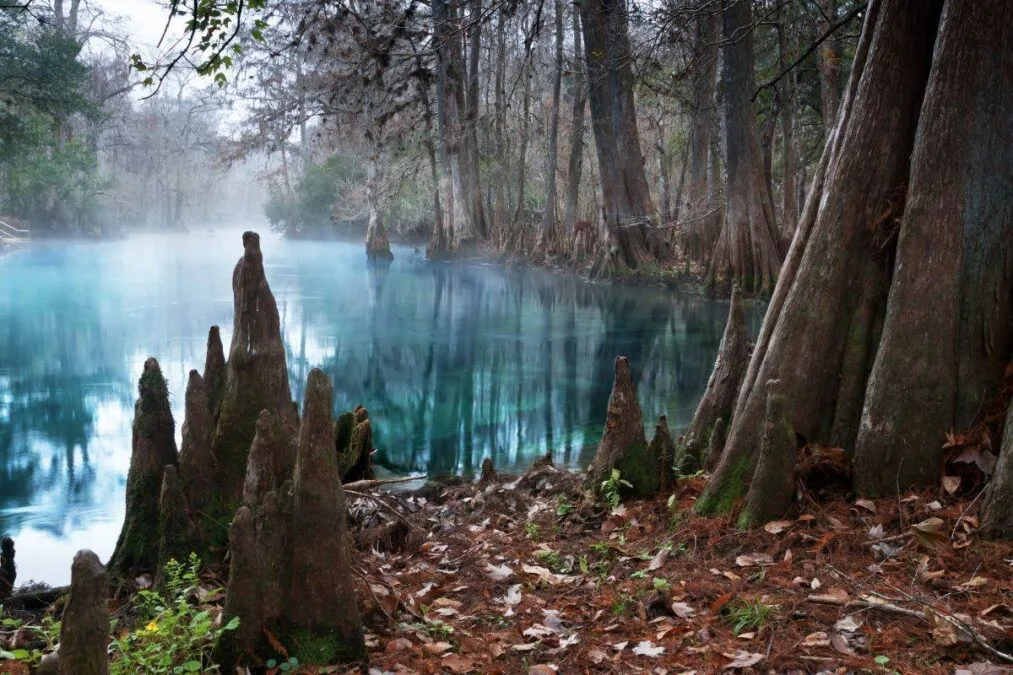
- Manatee Springs State Park – Winter manatee viewing; cypress swamps
- Blue Spring State Park – Largest manatee aggregation in Florida (Nov–Mar)
- O’Leno State Park – Santa Fe River “disappears” into limestone sink
- Stephen Foster Folk Culture Center – Suwannee River heritage; carillon tower
Best For: Spring swimming, tubing, manatee encounters, river paddling
3. Central Florida
Landscape: Spring-fed rivers, scrub habitat, lakefront wilderness
Signature Parks:
- Rainbow Springs State Park – Headspring tubing; restored gardens
- Silver Springs State Park – Glass-bottom boat heritage (since 1878)
- Wekiwa Springs State Park – Orlando’s backyard wilderness
- Lake Kissimmee State Park – Cow camp reenactments; alligators
- Rock Springs Run State Reserve – 9-mile canoe trail
- Hillsborough River State Park – Florida’s rarest: Class II rapids
Best For: Springs, glass-bottom boats, Orlando escapes, wildlife
4. Southwest Florida
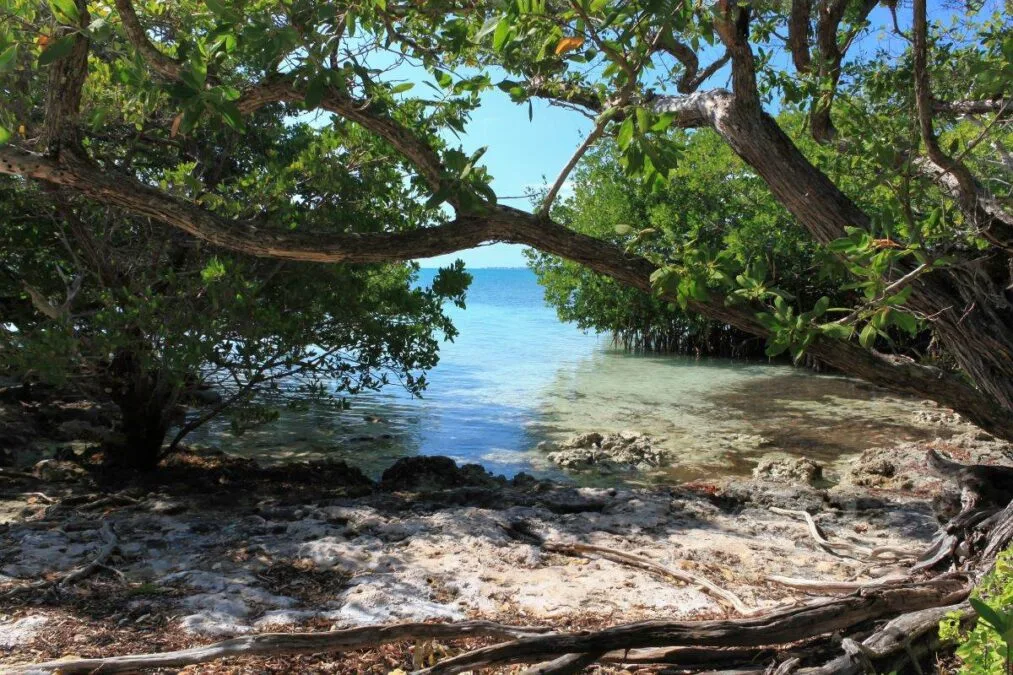
Landscape: Mangrove estuaries, barrier islands, Everglades fringe
Signature Parks:
- Lovers Key State Park – Dolphins, manatees, pristine beaches
- Myakka River State Park – One of Florida’s oldest; airboat tours
- Cayo Costa State Park – 9 miles of undeveloped island beach (boat-access only)
- Collier-Seminole State Park – Everglades gateway; historic dredge
- Koreshan State Historic Site – Utopian 1890s settlement preserved
- Delnor-Wiggins Pass State Park – Top-rated Naples beach
Best For: Island beaches, mangrove kayaking, Everglades gateway, dolphins
5. Southeast Florida
Landscape: Coastal hammocks, urban oases, Atlantic beaches
Signature Parks:
- Jonathan Dickinson State Park – Largest park in SE Florida; Trapper Nelson’s
- John D. MacArthur Beach State Park – Palm Beach wilderness
- Bill Baggs Cape Florida State Park – Historic lighthouse; Key Biscayne
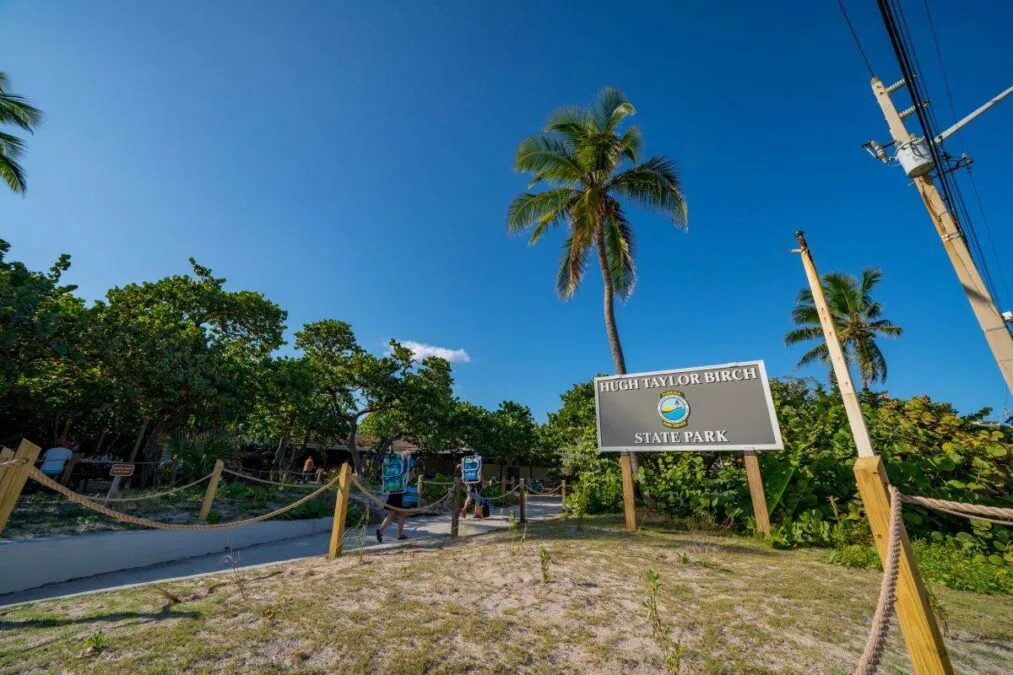
- Hugh Taylor Birch State Park – Fort Lauderdale’s hidden gem
- Oleta River State Park – Largest urban park in Florida; mountain biking
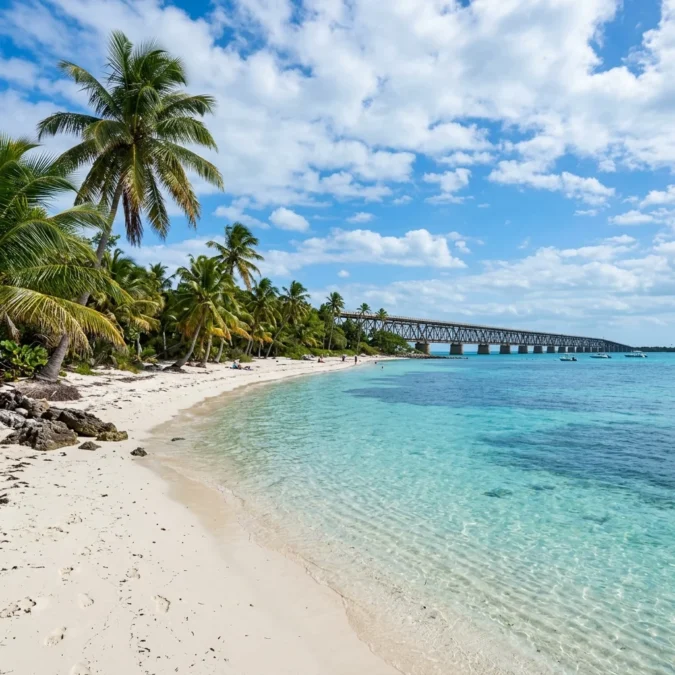
- Bahia Honda State Park – Consistently ranked among America’s best beaches
Best For: Urban escapes, lighthouse tours, palm-lined beaches, biking
6. Florida Keys
Landscape: Coral reefs, tropical hammocks, mangrove flats, historic forts
Signature Parks:
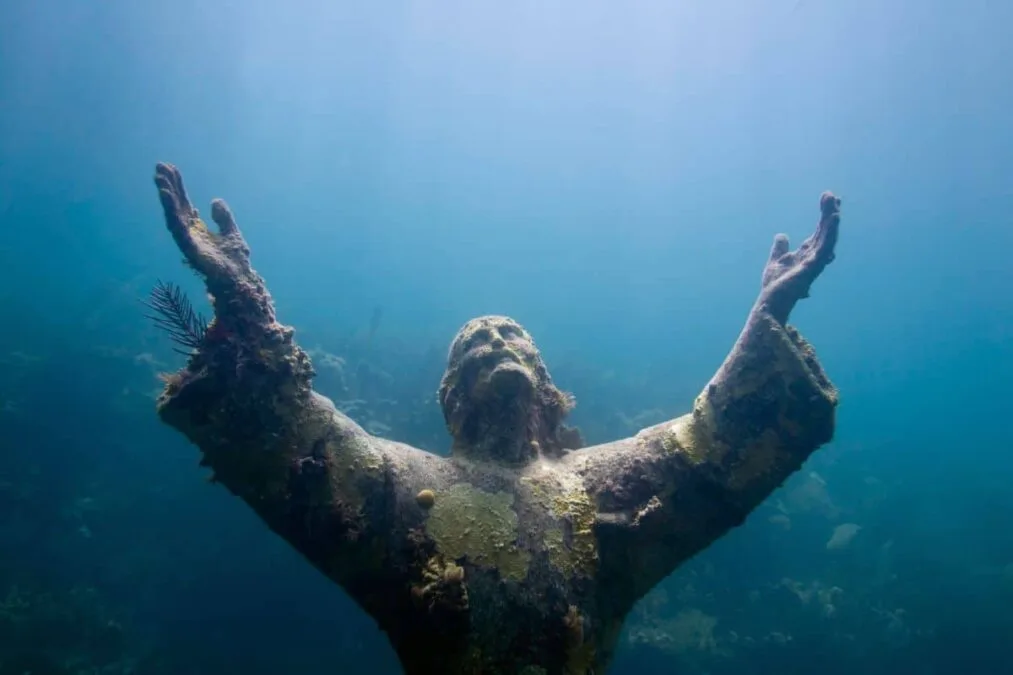
- John Pennekamp Coral Reef State Park – America’s first undersea park; Christ of the Abyss
- Bahia Honda State Park – “Best Beach” awards; Overseas Railroad ruins
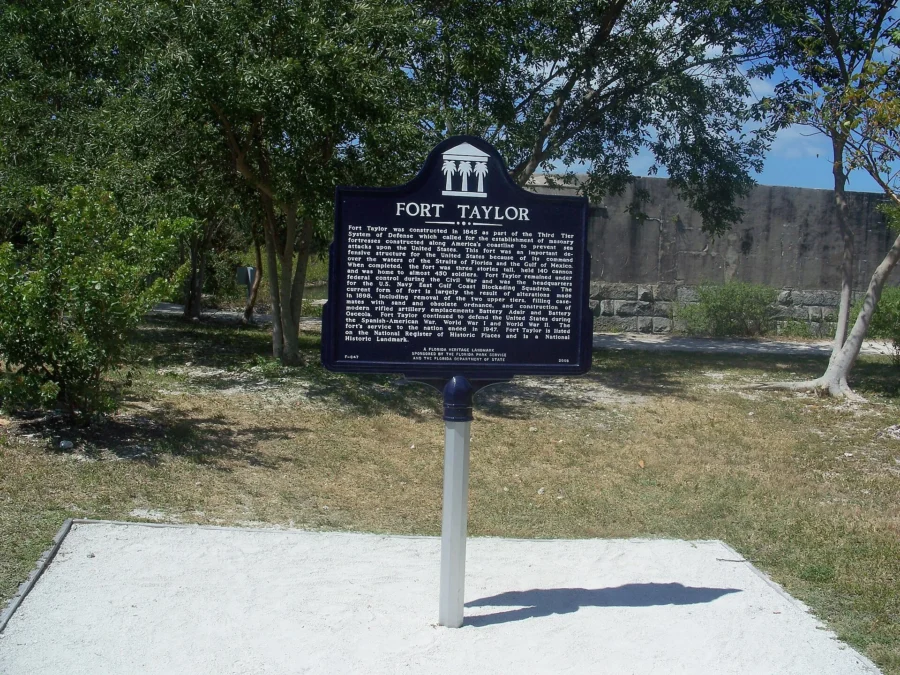
- Fort Zachary Taylor Historic State Park – Key West’s best beach + Civil War fort
- Lignumvitae Key Botanical State Park – Pristine tropical hammock (boat-access)
- Windley Key Fossil Reef Geological State Park – Walk on ancient coral
- Curry Hammock State Park – Marathon camping; stargazing
Best For: Snorkeling, diving, tropical ecology, historic forts, sunset watching
State Parks Near Major Florida Cities
Looking for a state park close to home or your hotel? Here are the best picks near Florida’s biggest metros.
Near Orlando
Wekiwa Springs (about 30 minutes north) is Orlando’s backyard spring for swimming, paddling, and hiking. Neighboring Rock Springs Run State Reserve and Lake Louisa State Park (Clermont, ~40 min) add camping and cabins. Day-trip northwest to Silver Springs and Rainbow Springs.
Near Tampa & St. Petersburg
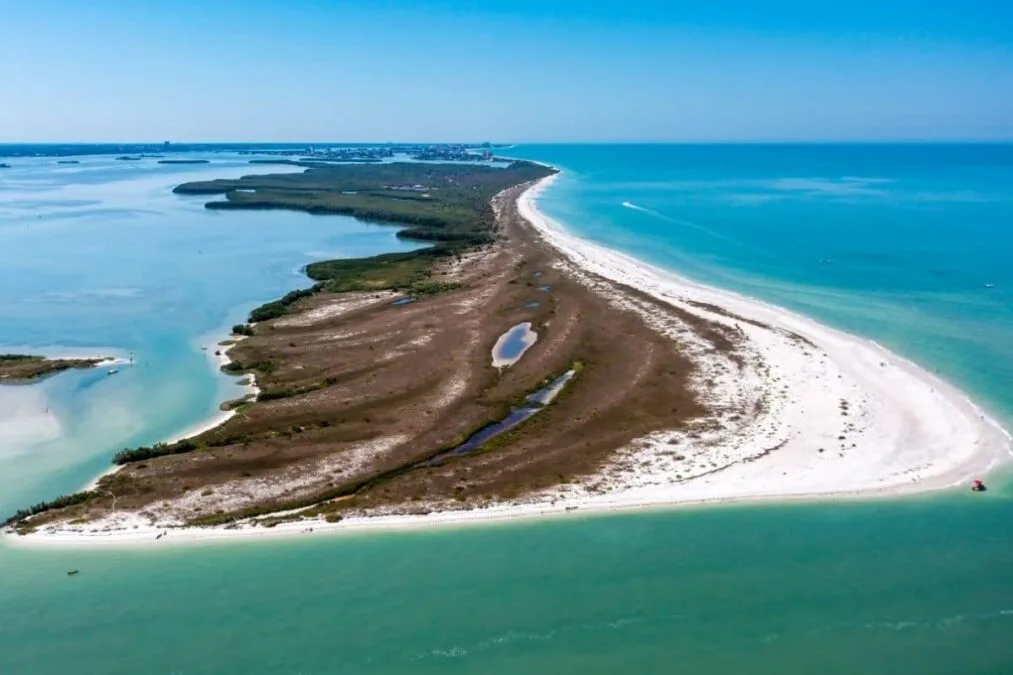
Honeymoon Island (Dunedin, ~40 min) is Florida’s most-visited park, with 4 miles of Gulf beach; a short ferry reaches Caladesi Island. Inland, Hillsborough River State Park has rare Class II rapids, and Weeki Wachee Springs (~1 hr north) still runs its famous mermaid shows.
Near Miami & Fort Lauderdale
Bill Baggs Cape Florida on Key Biscayne and Oleta River in North Miami — Florida’s largest urban park, laced with mountain-biking trails — are the closest escapes. In Fort Lauderdale, Hugh Taylor Birch State Park is a coastal-hammock oasis, and The Barnacle Historic State Park sits in Coconut Grove.
Near Jacksonville & the First Coast
The Talbot Islands — including Little Talbot Island and Big Talbot Island — offer undeveloped Atlantic beaches about 30 minutes northeast of downtown. Fort George Island Cultural State Park and Amelia Island State Park add history and horseback riding, while Fort Clinch (Fernandina Beach) runs Civil War reenactments. South of the city, Anastasia State Park anchors St. Augustine.
Near Ocala & Gainesville
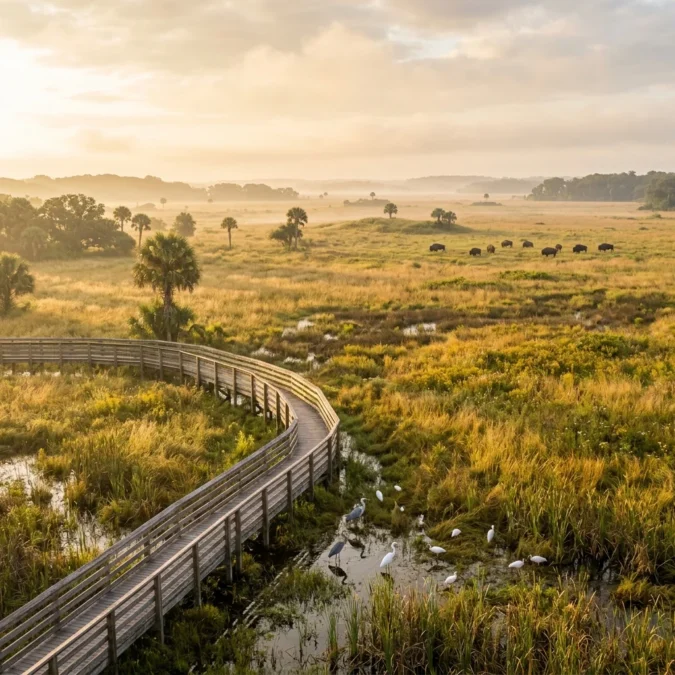
Silver Springs (glass-bottom boats since 1878) and Rainbow Springs bracket Ocala, with Paynes Prairie Preserve — home to bison and wild horses — about 30 minutes north toward Gainesville.
Florida Springs: A Special Feature
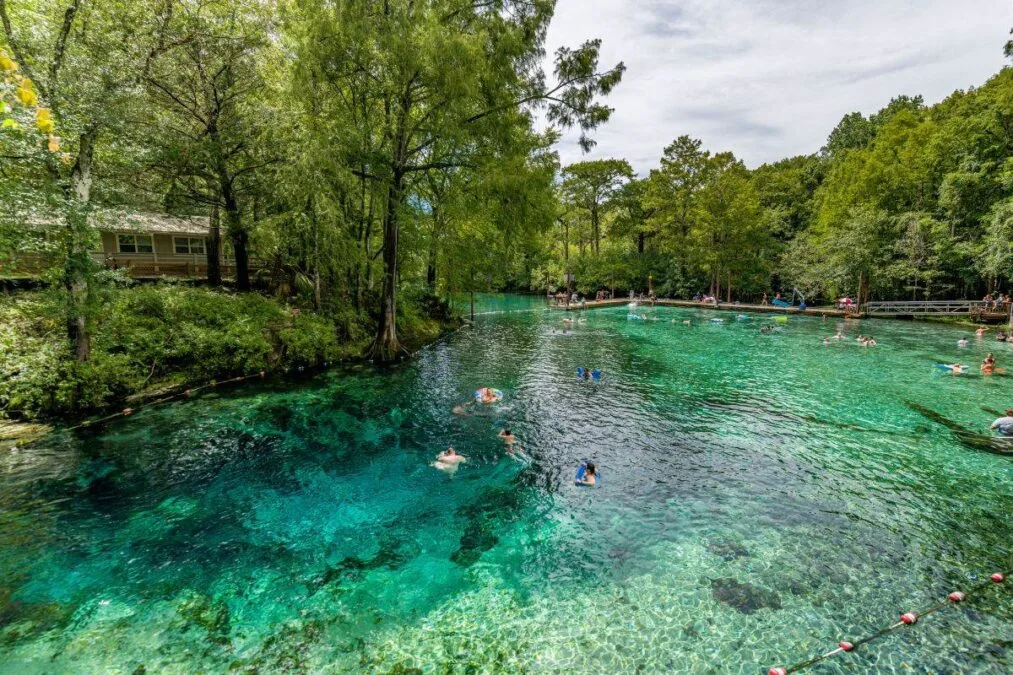
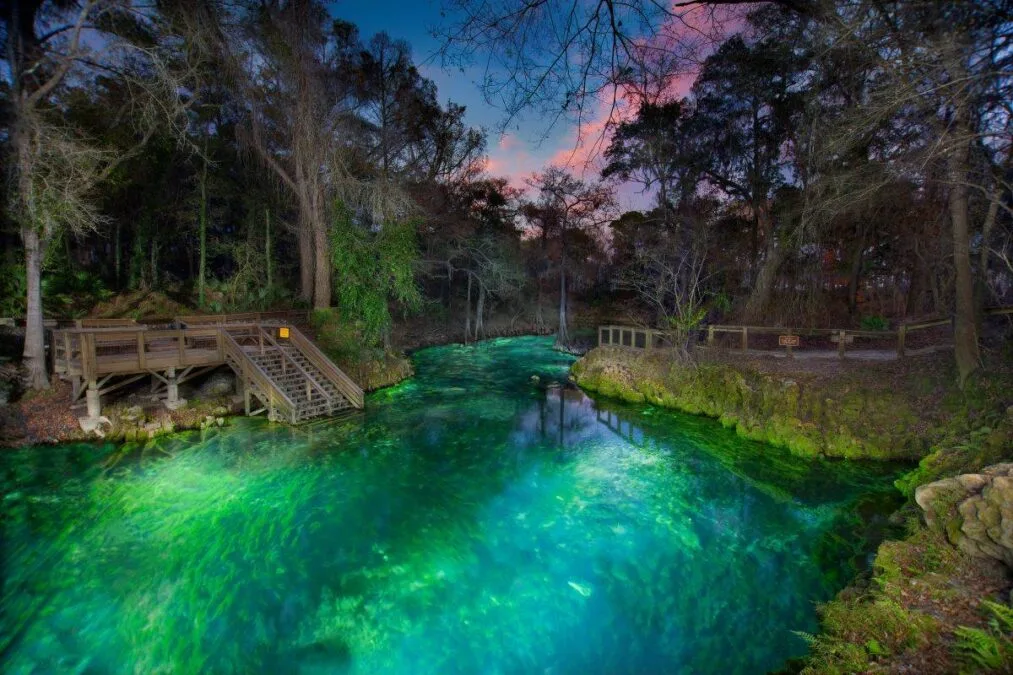
Florida has more first-magnitude springs than any other state, with many protected within state parks. Here are the must-visit spring parks:
| Park | Spring Type | Unique Feature |
|---|---|---|
| Wakulla Springs | First-magnitude | One of deepest (185 ft); glass-bottom boats |
| Ichetucknee Springs | First-magnitude | 6-mile tubing run; 72°F year-round |
| Blue Spring | First-magnitude | 300+ manatees (winter) |
| Rainbow Springs | First-magnitude | Restored 1930s gardens; tubing |
| Silver Springs | First-magnitude | Glass-bottom boats since 1878 |
| Weeki Wachee Springs | First-magnitude | Live mermaid shows since 1947 |
| Ginnie Springs | Private (nearby) | Cave diving mecca |
Swimming rules vary by spring: Some springs close swimming seasonally for manatee protection (Nov–Mar). Always check current status before visiting.
Best Florida State Parks by Activity
🌊 Best for Springs & Swimming
| Park | Water Temp | Highlights |
|---|---|---|
| Ichetucknee Springs | 72°F | 6-mile tubing river |
| Rainbow Springs | 72°F | Headspring + historic gardens |
| Weeki Wachee Springs | 72°F | Mermaid shows + Buccaneer Bay |
| Blue Spring | 72°F | Manatee viewing (Nov-Mar) |
| Wekiwa Springs | 72°F | Orlando area; paddling trails |
🏖️ Best Beaches
| Park | Coast | Why It’s Special |
|---|---|---|
| Bahia Honda | Keys | Consistently top-ranked nationally |
| St. Andrews | Gulf | Emerald waters; Shell Island access |
| Grayton Beach | Gulf | Coastal dune lakes; pristine dunes |
| Cayo Costa | Gulf | 9mi undeveloped island (boat-in) |
| Bill Baggs Cape Florida | Atlantic | Historic lighthouse; Key Biscayne |
🏕️ Best for Camping
| Park | Region | Highlights |
|---|---|---|
| Bahia Honda | Keys | Waterfront sites; bridge ruins |
| St. Andrews | Panhandle | Beach camping; Shell Island shuttle |
| Myakka River | Southwest | 48 cabins; airboat tours |
| Jonathan Dickinson | Southeast | 135 sites; boat tours to Trapper Nelson’s |
| Ocala (Juniper Springs) | Central | CCC-built mill house; spring run |
👨👩👧👦 Best for Families
| Park | Why Families Love It |
|---|---|
| Weeki Wachee Springs | Mermaid shows + Buccaneer Bay water park |
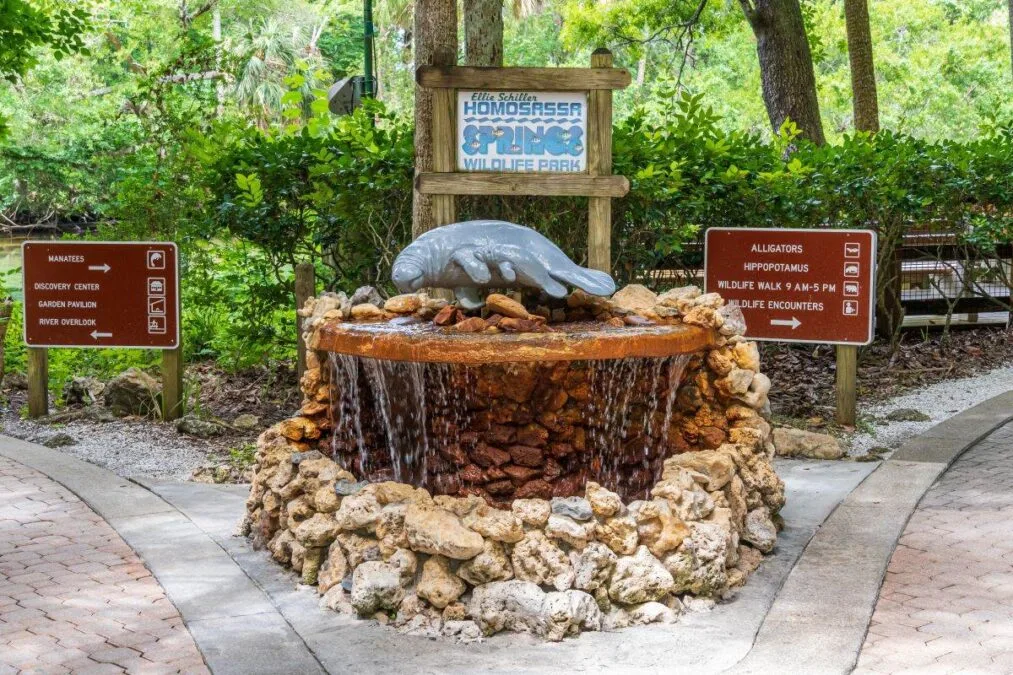
| Homosassa Springs | Manatees + Lu the hippo |
| John Pennekamp | Glass-bottom boats for non-swimmers |
| Rainbow Springs | Calm tubing; picnic gardens |
| Fort Clinch | Living history reenactments |
🐊 Best for Wildlife
| Park | Wildlife Highlight |
|---|---|
| Blue Spring | 300+ manatees (Nov–Mar) |
| Myakka River | Alligators; airboat access |
| Paynes Prairie | Bison, wild horses, sandhill cranes |
| Merritt Island (nearby) | 1,500+ species; space shuttle views |
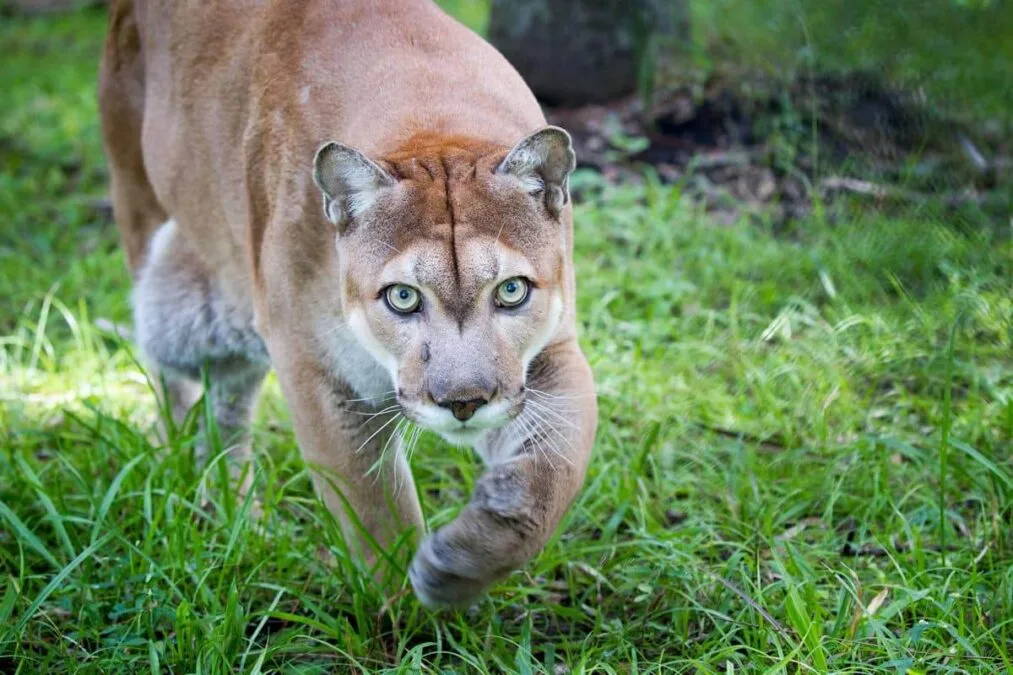
| Fakahatchee Strand | Ghost orchids; Florida panthers |
When to Visit Florida State Parks
| Season | Best For | Watch Out For |
|---|---|---|
| Winter (Dec–Feb) | Manatees, pleasant weather, fewer bugs | Peak season; book ahead |
| Spring (Mar–May) | Sea turtle nesting begins; wildflowers | Spring break crowds |
| Summer (Jun–Aug) | Sea turtle hatching; springs swimming | Extreme heat; afternoon storms |
| Fall (Sep–Nov) | Fewer crowds; migrating birds | Hurricane season (peaks Sep) |
Wildlife Calendar
| Wildlife | Best Time | Where |
|---|---|---|
| Manatees | Nov–Mar | Blue Spring, Manatee Springs, Homosassa |
| Sea Turtle Nesting | May–Oct | Sebastian Inlet, Bahia Honda, Canaveral |
| Migratory Birds | Oct–Apr | Big Lagoon, Fort De Soto, Paynes Prairie |
| Whale Sharks | Mar–Sep | Offshore (Panhandle) |
Planning around the seasons? Explore our national guides to the best state parks for spring wildflowers, summer swimming, fall foliage, and winter camping & snow sports — plus our guide to the best times to visit state parks by region.
How to Book: Reservations & Planning
Reservation System
- Website: floridastateparks.reserveamerica.com
- Advance Window: Up to 11 months ahead
- Release Time: Rolling window
Pro Tips for Popular Parks
- Bahia Honda: Campsites release 11 months ahead—set calendar reminders
- Ichetucknee Springs: Summer tubing starts at 8 AM; arrive by 7:30 AM
- Blue Spring: No swimming Nov 15–Mar 15 (manatee season)
- Keys Parks: Monroe County adds $0.50 surcharge per person
Frequently Asked Questions
How many state parks are there in Florida?
Florida has 175 state parks, trails, and historic sites managed by the Florida Department of Environmental Protection, spanning over 815,000 acres.
Does Florida have national parks too?
Yes — Florida has three national parks: Everglades, Biscayne, and Dry Tortugas, all in South Florida. The National Park Service also runs Big Cypress National Preserve, Canaveral and Gulf Islands National Seashores, and the Timucuan Preserve near Jacksonville. These are federal parks — separate from the 175 state parks — and most charge their own entrance fees.
Is there a senior discount for Florida State Parks?
Florida State Parks does not offer a senior discount on entry or annual passes. However, Florida residents 65+ (or those holding a Florida disability certificate) get 50% off base camping fees. Honorably discharged veterans receive 25% off annual passes, and service-connected disabled veterans and Gold Star families qualify for a free lifetime military entrance pass (verified via floridastateparks.org, July 2026).
What’s the difference between the Individual and Family Annual Pass?
The Individual Pass ($60) covers one named person plus $2/person for guests. The Family Pass ($120) covers up to 8 people in one vehicle—better value for families visiting together.
Can I swim with manatees in Florida State Parks?
Not directly with manatees, but you can observe them up close at Blue Spring, Manatee Springs, and Homosassa Springs. Swimming is restricted during manatee season (Nov–Mar) at most spring parks to protect the animals.
Do I need a fishing license in Florida State Parks?
Yes, a valid Florida fishing license is required for anyone 16 or older. However, you can fish from designated piers at some parks without a license (saltwater pier exemption).
Which Florida State Park has the best snorkeling?
John Pennekamp Coral Reef State Park offers the best snorkeling, with organized trips to the only living coral reef in the continental U.S. and the famous underwater Christ of the Abyss statue.
Are dogs allowed in Florida State Parks?
Domestic pets are welcome in many Florida State Parks — on hiking trails, in picnic areas and campgrounds — but only in designated areas. Florida caps leashes at 6 feet; pets must be under physical control at all times. Pets are not permitted on beaches, boardwalks or playgrounds, or in bathing areas — swimming pets can be viewed as prey by alligators. Pets are not allowed in any state park buildings, cabins or cabin areas. Pets prohibited at several parks including Ellie Schiller Homosassa Springs (free kennels at the entrance), Weeki Wachee Springs and Egmont Key; in campgrounds pets must be confined in the camping unit 11 p.m.-7 a.m. Rules verified July 2026 via floridastateparks.org. Full 50-state comparison: Dog Rules in America’s State Parks.
What’s the best Florida State Park for camping?
Bahia Honda State Park is consistently ranked among the best for its waterfront sites with Keys views. St. Andrews State Park offers excellent Gulf beach camping. Myakka River State Park has cabins and wilderness camping.
When is the best time to visit Florida springs?
Year-round for swimming (72°F constant), but manatee viewing is best November–March. Summer offers the best weather for tubing at Ichetucknee and Rainbow Springs.
Can you camp on the beach in Florida State Parks?
Yes! St. Andrews, Bahia Honda, Henderson Beach, and Anastasia offer beachfront or near-beach camping. Book 11 months in advance for summer dates.
What’s the most visited Florida State Park?
Honeymoon Island State Park near Tampa is Florida’s most visited, with over 1 million annual visitors attracted by its 4 miles of pristine beaches and calm Gulf waters.
Explore All Florida State Parks
Use our interactive filter below to find your perfect Florida State Park:
Plan Your Florida State Parks Adventure
From the aquamarine springs of North Florida to the coral gardens of the Keys, Florida’s 175 state parks offer unmatched diversity. Whether you’re tubing down the Ichetucknee, watching manatees at Blue Spring, or snorkeling America’s only continental coral reef at Pennekamp, the Sunshine State’s natural heritage awaits.
Start planning: floridastateparks.org