🌤 Weather at Sleepy Hollow State Park by season
| Spring | Summer | Fall | Winter |
|---|---|---|---|
| 26–69 °F | 59–83 °F | 33–75 °F | 18–36 °F |
Each range runs from the coldest monthly average low to the warmest monthly average high in that season (1991-2020 climate normals), measured at Saint Johns, 9 mi away, elevation 743 ft. Conditions at the park can differ from the station, especially where elevation differs — check a forecast before you go.

Overview: A No-Wake Lake and 16 Miles of Trails
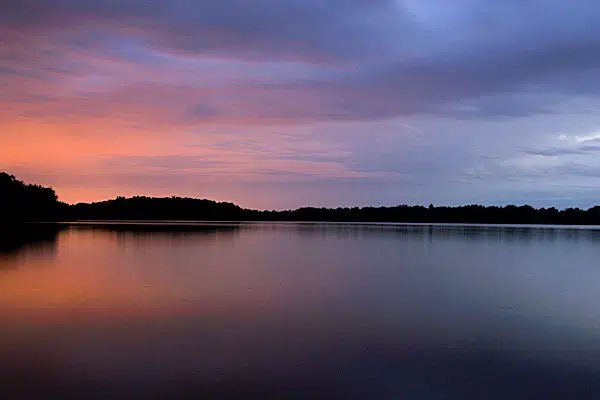
Encompassing 2,678 acres of rolling mid-Michigan countryside in Clinton County, Sleepy Hollow State Park is centered around Lake Ovid—a 410-acre man-made reservoir created in 1974 by damming the Little Maple River. The park’s defining regulation, and its most attractive characteristic for many visitors, is Lake Ovid’s designation as a no-wake lake: motorized boats are permitted, but only at idle speed. This restriction eliminates jet skis, water skiing, and high-speed powerboat traffic, creating an environment of extraordinary calm on the water that makes Sleepy Hollow one of the finest paddling, fishing, and nature-watching destinations in the Lower Peninsula.
Beyond the lake, Sleepy Hollow offers 16 miles of multi-use trails that wind through prairie grasslands, hardwood forests, and pine plantations—a trail network extensive enough for full-day hiking or biking excursions without repeating any significant stretch. Add a 181-site modern campground, equestrian trails, and the park’s convenient location between Lansing and St. Johns, and Sleepy Hollow emerges as one of central Michigan’s most versatile and underappreciated outdoor destinations.
Lake Ovid: The No-Wake Advantage
Lake Ovid’s 410 acres of calm, undisturbed water create a paddling and fishing experience that is increasingly rare on Michigan’s inland lakes, where motorized watercraft noise and wake can dominate the summer experience.
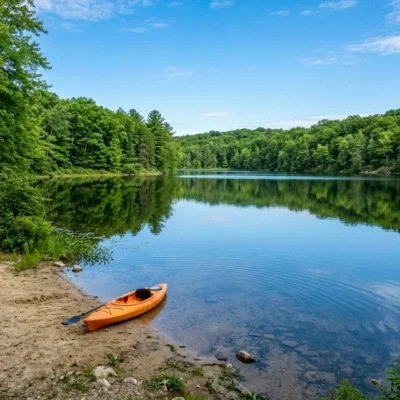
- Paddling: Kayaks, canoes, and stand-up paddleboards thrive on the glassy, wake-free surface. The lake’s irregular shoreline, with its coves, peninsulas, and marshy inlets, provides miles of exploratory paddling.
- Fishing: The shallow, weedy lake (average depth 10 feet, maximum 23 feet) supports excellent warm-water fishing: largemouth bass, bluegill, channel catfish, northern pike, and crappie are all present in good numbers.
- Swimming: A designated swimming beach provides access to the lake’s warm, dark-tinted water.
- Boating: A boat launch accommodates small trailered boats, but remember: no-wake only. Electric trolling motors are popular among anglers.
16 Miles of Multi-Use Trails
Sleepy Hollow’s trail network is impressively extensive for a mid-Michigan state park, offering 16 miles of interconnected loops through diverse landscapes.
- Prairie Trails: Several sections pass through open prairie grasslands maintained through prescribed burning. These sun-drenched meadows support native wildflowers, butterflies, and grassland birds.
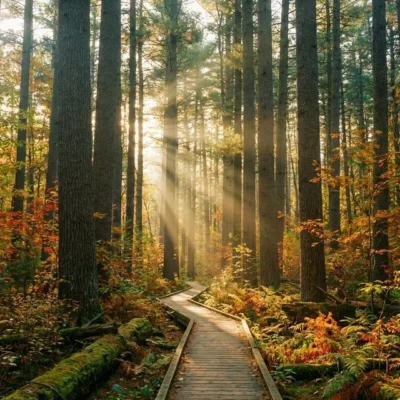
- Forest Trails: Other sections wind through mature hardwood forests and pine plantations, providing shade and a completely different character.
- Lake Loops: Shoreline trails offer water views and access to fishing spots along Lake Ovid’s perimeter.
- Winter Use: Cross-country skiing on groomed trails when snow cover permits.
Equestrian Trails
Sleepy Hollow features over 12 miles of designated equestrian trails—a significant amenity that draws riders from across central Michigan. The horse trails traverse varied terrain with good footing and are also used for dog sledding during winter months. An equestrian staging area provides parking for trailers and horse-specific amenities.
The Campground
- 181 Modern Sites: Electrical hookups, modern restrooms with flush toilets and hot showers
- Rustic/Walk-In Sites: More secluded options for visitors seeking a quieter experience
- Group Camping: Designated areas for organized group use
- Character: Wooded, generally quiet, with good spacing between sites
Wildlife Watching
The combination of lake, marsh, prairie, and forest habitats supports a diverse wildlife community. Great blue herons, green herons, and belted kingfishers hunt the lake margins. Red-tailed hawks and American kestrels hunt the prairie grasslands. White-tailed deer, wild turkeys, and foxes are commonly observed throughout the park. The no-wake policy on the lake further enhances wildlife viewing by reducing disturbance.
Seasonal Guide
Spring (April–May)
Campground opens. Prairie wildflowers emerge. Fishing improves as the lake warms. Spring bird migration brings warblers, vireos, and thrushes through the park.
Summer (June–August)
Peak season. Paddling, swimming, and fishing. Lake Ovid’s warm, calm surface is at its most inviting. Trail wildflowers peak in the prairie sections.
Autumn (September–October)
Fall color in the hardwood forests. Prairie grasses turn golden. Reduced visitor traffic. Excellent fishing as water cools.
Winter (December–March)
Cross-country skiing and snowshoeing. Equestrian trails available for dog sledding. Ice fishing when conditions permit.
Frequently Asked Questions
What does “no-wake” mean? Motorized boats are allowed on Lake Ovid but must operate at idle speed only. No jet skis, water skiing, tubing, or high-speed boating. This creates an exceptionally calm, quiet lake environment.
Is Lake Ovid good for kayaking? Excellent. The no-wake policy, irregular shoreline with coves and inlets, and warm water make Lake Ovid one of the best paddling lakes in central Michigan.
Can I bring my horse? Yes. Over 12 miles of designated equestrian trails with a dedicated staging area and trailer parking.
How deep is Lake Ovid? Average depth is 10 feet with a maximum of 23 feet. The shallow, weedy character supports excellent warm-water fishing.
More parks in Michigan: William Mitchell State Park and Meridian-Baseline State Park. See the full Michigan state parks guide.
Camping reservations: Book campsites and cabins for Michigan state parks online at midnrreservations.com.

⛺ Camping at Sleepy Hollow State Park: Campgrounds & Cabins
| Campsites | 180 sites — Sleepy Hollow Modern Campground: 180 sites, 2 loops (north/south), ADA-only sites, electrical service, concession/store. |
|---|---|
| Cabins & Lodging | Sleepy Hollow Rustic Cabin: accessible, sleeps 5, solar lighting, pet- and equine-friendly ($10/night/pet/cabin, up to 2 pets); bring own bedding/cooking supplies. Sleepy Hollow Modern Cabin: accessible, 2BR, built 2014, sleeps 6, pet-friendly (same fee), horses allowed free with 4 equine picket poles; bring own bedding/cooking supplies. |
| Pets | Both cabins pet-friendly, $10/night/pet/cabin, up to 2 cats/dogs. Pets allowed along Lake Ovid except designated swim beach. |
| Reservations | midnrreservations.com or 1-800-447-2757. Recreation Passport required for vehicle entry. |
| Special sites | Equestrian: 12+ miles of trails, staging area, 2 equestrian-friendly cabins. Rustic Group Campground for up to 100 people. 2 accessible hunting blinds (1 ground, 1 hydraulic lift). |
| Season notes | Modern campground and shelters reopened after an enhancement project; beach building construction may affect facilities - check current park alerts |
Camping questions about Sleepy Hollow State Park
Can you camp at Sleepy Hollow State Park?
Yes. Sleepy Hollow State Park has 180 campsites. Sleepy Hollow Modern Campground: 180 sites, 2 loops (north/south), ADA-only sites, electrical service, concession/store.
How do you reserve a campsite at Sleepy Hollow State Park?
midnrreservations.com or 1-800-447-2757. Recreation Passport required for vehicle entry.
Are there cabins at Sleepy Hollow State Park?
Sleepy Hollow Rustic Cabin: accessible, sleeps 5, solar lighting, pet- and equine-friendly ($10/night/pet/cabin, up to 2 pets); bring own bedding/cooking supplies. Sleepy Hollow Modern Cabin: accessible, 2BR, built 2014, sleeps 6, pet-friendly (same fee), horses allowed free with 4 equine picket poles; bring own bedding/cooking supplies.
Are pets allowed at the Sleepy Hollow State Park campground?
Both cabins pet-friendly, $10/night/pet/cabin, up to 2 cats/dogs. Pets allowed along Lake Ovid except designated swim beach.
Source: michigan.gov (verified July 2026). Details change seasonally — confirm when booking.
🐾 Dogs & Pets at Sleepy Hollow State Park
- Pets allowed? statewide rule
- Pets are welcome in Michigan state parks, campgrounds, harbors and state-designated trails, except designated swim beaches and other posted areas.
- Leash rule statewide rule
- Pets must always be on a 6-foot leash and under the owner's immediate control.
- Beaches & swim areas statewide rule
- Pets are prohibited in buoyed swim areas but allowed along the shoreline outside them (on a 6-ft leash, even in the water); 50+ parks have pet-friendly shoreline or designated dog beaches.
- Cabins & lodging statewide rule
- Up to two pets (cats and dogs only) allowed at ~12 parks' designated pet-friendly cabins, yurts and lodges; $10 per night per pet (cabins) or $15 (lodges); otherwise pets barred from overnight lodging.
- Pet fees statewide rule
- No day-use pet fee; pet-friendly lodging costs $10/night per pet (cabins) or $15/night per pet (lodges).
- Statewide exceptions statewide rule
- Leash laws do not apply to dogs used for hunting on land open to such use; pets may not be left unattended.
Are dogs allowed at Sleepy Hollow State Park?
Pets are welcome in Michigan state parks, campgrounds, harbors and state-designated trails, except designated swim beaches and other posted areas. Individual parks can post stricter rules — check signage on arrival.
Rules verified July 2026 via michigan.gov. More: Michigan state parks guide · Dog rules in all 50 states compared
Park Location
Plan your gear for Sleepy Hollow State Park
From our editorial guides, matched to this park’s activities:
Top Tours & Activities Near Grand Rapids
 from $36
 from $24
 from $80