
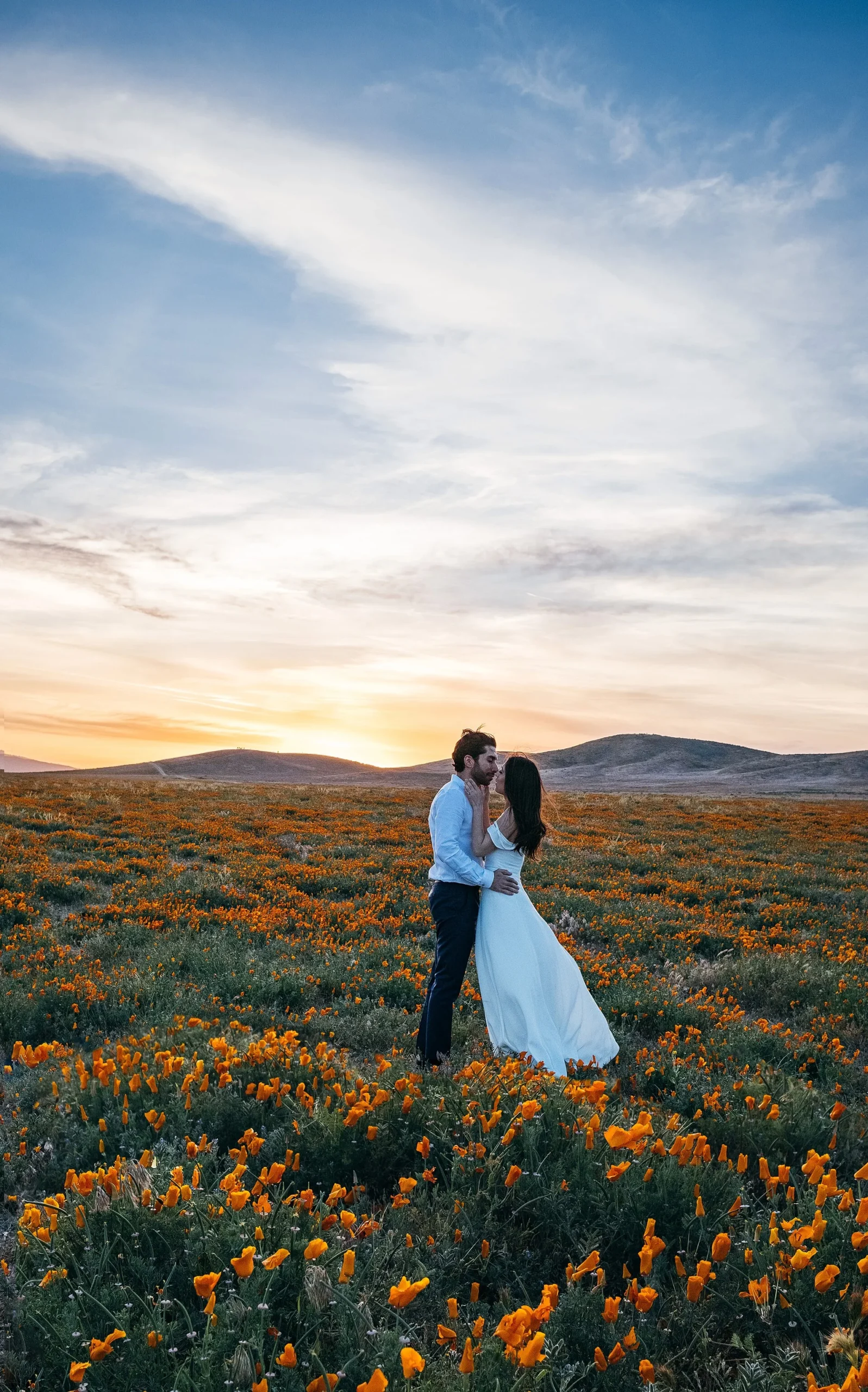
Photo: Matt McK matty_westside, CC0, via Wikimedia Commons
🌤 Weather at Antelope Valley California Poppy Reserve by season
| Spring | Summer | Fall | Winter |
|---|---|---|---|
| 43–76 °F | 62–93 °F | 44–88 °F | 37–58 °F |
Each range runs from the coldest monthly average low to the warmest monthly average high in that season (1991-2020 climate normals), measured at Fairmont, 3 mi away, elevation 3,060 ft. Conditions at the park can differ from the station, especially where elevation differs — check a forecast before you go.

🌸 California’s Superbloom Epicenter — 1,745 acres of rolling Mojave Desert hills blanketed in brilliant orange California poppies, 8 miles of wildflower trails, live PoppyCam updates, and the most spectacular natural wildflower display in America
In the westernmost foothills of the Mojave Desert, where the Tehachapi Mountains slope down toward the Antelope Valley floor, a remarkable natural spectacle unfolds each spring. The Antelope Valley California Poppy Reserve protects 1,745 acres of rolling grassland that, in favorable years, erupts into one of the most breathtaking wildflower displays on Earth — hundreds of acres of California’s state flower painting the hillsides in solid sheets of brilliant orange, gold, and green that are visible from space.
The reserve, located approximately 15 miles west of Lancaster and 85 miles north of Los Angeles, was established in 1976 specifically to protect the native California poppy (Eschscholzia californica) and the grassland ecosystem that supports it. Unlike cultivated flower gardens, the display here is entirely wild and entirely dependent on winter rainfall, temperature patterns, and seasonal timing. In “superbloom” years — when conditions align perfectly — the result is a once-in-a-lifetime visual experience that draws hundreds of thousands of visitors from around the world. Even in average years, the reserve delivers a vivid, unforgettable introduction to one of California’s most iconic natural phenomena.
Understanding the Bloom
What Is a Superbloom?
A “superbloom” occurs when an unusually wet winter (typically 200%+ of normal rainfall) is followed by moderate spring temperatures, producing an explosion of wildflower germination across vast areas. In true superbloom years, the entire Antelope Valley — not just the reserve — turns orange, visible in satellite imagery. The last major superblooms occurred in 2017, 2019, and 2023.
How the Poppies Work
California poppies are phototropic — they open their petals in response to sunlight and warmth, and close them in response to cold, clouds, or wind. This means:
- Best viewing conditions: Sunny, calm, warm days between 10 AM and 3 PM
- Closed flowers: Overcast days, windy conditions, cold mornings, and late afternoon will show closed or partially closed blooms
- Season timing: Mid-February through May, with peak displays typically in late March through mid-April
| Bloom Factor | Details |
|---|---|
| Peak Season | Late March – mid-April (varies annually) |
| Best Light | 10 AM – 3 PM on sunny, calm days |
| Poppies Close When | Cloudy, windy, cold, or after ~4 PM |
| Superbloom Years | Roughly every 3-5 years (2017, 2019, 2023) |
| Wildflower Hotline | (661) 724-1180 (weekly recorded update) |
| Live PoppyCam | Available on the official CA State Parks website |
What to Do at the Poppy Reserve
1. Hiking the Trail System
The reserve offers 8 miles of marked trails that wind through the rolling hills, providing immersive access to the wildflower fields. All trails are accessible from the main parking area.
| Trail | Distance | Difficulty | Best For |
|---|---|---|---|
| Antelope Loop | 2.0 miles | Easy-Moderate | Best panoramic views, highest poppy density |
| South & North Poppy Loop | 2.5 miles | Moderate | Mixed wildflowers, quieter sections |
| Tehachapi Vista Point | 3.0 miles | Moderate | Mountain views, diverse ecology |
| Kitanemuk Trail | 1.5 miles | Easy | Quick loop, good accessibility |
Critical rule: Stay on designated trails at all times. Walking into the poppy fields crushes plants, destroys seed beds, and is illegal. The reserve has increased enforcement in recent years due to social media-driven foot traffic. Respect the flowers — they are a fragile, seasonal miracle.
2. Photography
The Poppy Reserve is a photographer’s paradise. Tips for the best shots:
- Wide-angle for sweeping hillside carpets of orange against blue sky
- Macro lens for individual poppy close-ups (stay on trail, use zoom)
- Golden hour: Late afternoon gives the warmest light, but poppies may begin closing — arrive by 3 PM
- Include people for scale — the rolling hills and vast flower fields need a human figure to convey their enormity
3. Other Wildflowers
California poppies are the star, but the reserve hosts a diverse supporting cast of wildflowers:
- Owl’s Clover: Purple-pink spikes that create stunning contrast with orange poppies
- Goldfields: Yellow daisy-like blossoms carpeting lower elevations
- Cream Cups: Pale yellow flowers in shadier areas
- Lupines: Blue-purple spikes adding color diversity to the hillsides
- Filaree: Small pink-purple flowers scattered among the poppies
4. Jane S. Pinheiro Interpretive Center
The small visitor center near the parking area offers exhibits on the reserve’s ecology, the biology of the California poppy, and the history of the Antelope Valley landscape. Seasonal naturalist programs provide guided walks during peak bloom.
Essential Visitor Information
| Detail | Information |
|---|---|
| Address | 15101 Lancaster Rd, Lancaster, CA 93536 |
| Hours | Sunrise to Sunset, daily, year-round |
| Parking Fee | $10 per vehicle |
| Pets | Not allowed (service animals only) |
| Facilities | Restrooms, interpretive center, picnic area |
| Camping | Not available |
| Wildflower Hotline | (661) 724-1180 |
Getting There
The reserve is located on Lancaster Road (Avenue I), approximately 15 miles west of Lancaster. From Los Angeles, take Interstate 5 north to Highway 14 (Antelope Valley Freeway) north to Lancaster. Exit at Avenue I and head west approximately 15 miles to the reserve entrance. The drive from downtown LA takes approximately 1.5-2 hours depending on traffic.
Parking Warning: During peak bloom and superbloom events, the parking lot fills by mid-morning. Arrive before 9 AM on weekends during peak season. Overflow parking along the road shoulder can extend for miles during major blooms. Consider visiting on a weekday for a dramatically better experience.
Best Time to Visit
| Period | Bloom Quality | Crowd Level |
|---|---|---|
| Mid-February | Early scouts, minimal blooms | Very Low |
| Early-Mid March | Building display, lower elevations peak | Moderate |
| Late March – Mid April | Peak bloom (best odds) | Very High |
| Late April – May | Fading display, higher elevations still blooming | Moderate |
| June – January | No bloom — dry grassland | Very Low |
Pro tip: Check the Wildflower Hotline at (661) 724-1180 and the live PoppyCam on the California State Parks website before making the drive. Conditions change weekly during spring. A sunny weekday in late March or early April is the absolute sweet spot for peak blooms and manageable crowds.
Nearby Attractions
- Arthur B. Ripley Desert Woodland State Park: Nearby — ancient Joshua tree and juniper woodland
- Saddleback Butte State Park: 20 miles east — Joshua tree hiking, desert camping, summit trail
- Vasquez Rocks Natural Area: 40 miles south — iconic angled rock formations, Star Trek filming location
- Red Rock Canyon State Park: 60 miles north — dramatic desert canyon, camping, colorful cliffs
- Willow Springs Raceway: 10 miles east — historic motorsports track, spectator events
Wildlife & Nature
Antelope Valley Poppy Reserve — 1,781 acres of grassland that erupts each spring with millions of California poppies — the state flower. The reserve’s wildflower fields, grassland, and buttes support red-tailed hawks, horned lizards, and kangaroo rats. During peak bloom it is one of the most photographed natural spectacles in California.
Frequently Asked Questions
When is the best time to see poppies at the Antelope Valley Reserve?
The peak poppy bloom typically occurs from late March through mid-April, but the exact timing varies dramatically from year to year based on winter rainfall. Check the Wildflower Hotline at (661) 724-1180 or the live PoppyCam on the California State Parks website for current conditions before visiting. Arrive on a sunny, calm day between 10 AM and 3 PM — the poppies close in clouds, wind, and cold.
Can you walk through the poppy fields?
No. Visitors must stay on the 8 miles of designated trails at all times. Walking into the poppy fields is illegal, crushes plants, and destroys seed beds needed for future blooms. The reserve has increased enforcement due to damage from social media-driven tourism. Use a zoom lens for close-up photography from the trail.
Is 2026 a superbloom year?
The 2026 season is not considered a superbloom year. While wildflowers including poppies and owl’s clover are present, the displays are not reaching the expansive, unbroken carpets that define a superbloom. Beautiful displays can still be found, especially along the Antelope Loop trail. Check the Wildflower Hotline for weekly updates on current conditions.
More parks nearby: Castaic Lake State Recreation Area is within about an hour’s drive, while Placerita Canyon State Park lies within about an hour’s drive.

🐾 Dogs & Pets at Antelope Valley California Poppy Reserve
- Pets allowed? statewide rule
- Dogs are permitted in California State Parks only in developed areas — campgrounds, picnic areas, parking lots and paved roads — and are prohibited on most trails, beaches and undeveloped areas unless specifically designated as dog-friendly.
- Leash rule statewide rule
- Maximum 6-foot leash at all times; dogs may not be left unattended.
- Beaches & swim areas statewide rule
- Dogs are prohibited on most state beaches; only beaches specifically designated as dog-allowed permit them (varies by park).
- Cabins & lodging statewide rule
- Pets are generally not allowed in buildings or cabins; overnight campers must keep dogs inside a tent or vehicle at night.
- Statewide exceptions statewide rule
- Designated dog-friendly trails and beaches vary park by park; misrepresenting a pet as a service animal is a misdemeanor.
Are dogs allowed at Antelope Valley California Poppy Reserve?
Dogs are permitted in California State Parks only in developed areas — campgrounds, picnic areas, parking lots and paved roads — and are prohibited on most trails, beaches and undeveloped areas unless specifically designated as dog-friendly. Individual parks can post stricter rules — check signage on arrival.
Rules verified July 2026 via parks.ca.gov. More: California state parks guide · Dog rules in all 50 states compared
Park Map
Plan your gear for Antelope Valley California Poppy Reserve
From our editorial guides, matched to this park’s activities:


Top Tours & Activities Near Santa Monica
 from $145
 from $999
 from $285