🌤 Weather at Bodie State Historic Park by season
| Spring | Summer | Fall | Winter |
|---|---|---|---|
| 13–61 °F | 32–78 °F | 12–71 °F | 8–41 °F |
Each range runs from the coldest monthly average low to the warmest monthly average high in that season (1991-2020 climate normals), measured at Bodie California St Historic P, 0 mi away, elevation 8,370 ft. Conditions at the park can differ from the station, especially where elevation differs — check a forecast before you go.

Bodie State Historic Park is a public state park in California near Bridgeport in Mono County. Spanning 1,016 acres and established in 1876, this park offers a peaceful retreat into nature for visitors of all ages.
Quick Facts
| State | California |
| Nearest City | Bridgeport |
| County | Mono |
| Park Size | 1,016 acres |
| Established | 1876 |
| Accessibility | Yes. See parks.ca.gov website for specific accessibility details. |
Location & Getting There
Bodie State Historic Park is located near Bridgeport, California. The park’s coordinates are 38.2149, -119.0144.
Things to Do
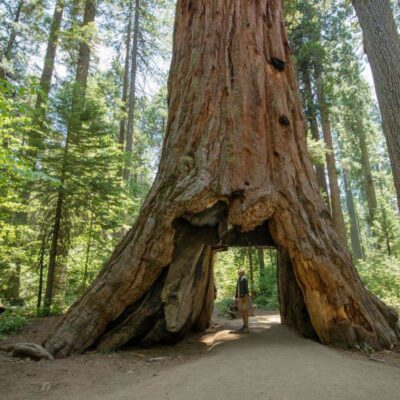
California state parks span an extraordinary range of landscapes — from ancient redwood forests and rugged Pacific coastline to Mojave Desert dunes and Sierra Nevada alpine meadows. Depending on the park, visitors can enjoy hiking through old-growth groves, swimming and surfing along miles of wild beaches, camping beneath towering sequoias, kayaking coastal sea caves, mountain biking oak-studded foothills, fishing in alpine lakes, rock climbing granite formations, and wildlife watching for everything from elephant seals to California condors. Many parks also preserve important cultural and historic sites, including Native American heritage areas, Gold Rush-era settlements, and Spanish mission ruins.
Best Time to Visit
California’s parks are a year-round destination, though the ideal season depends on the region. Coastal parks enjoy mild weather from spring through fall, with summer fog keeping temperatures comfortable along the central and northern coast. Desert parks like Anza-Borrego are best visited October through April — summer temperatures can exceed 110°F. Mountain parks in the Sierra Nevada are most accessible June through October, when snow melts and trails open. Spring (March–May) brings wildflower super blooms in the southern deserts. Fall offers warm days, thinner crowds statewide, and stunning foliage at higher elevations. Winter is the quiet season at most parks and brings excellent whale watching along the coast.
Visitor Tips
Most California state parks charge a day-use parking fee of $10 per vehicle: purchasing an annual pass ($125) is highly recommended if you plan to visit multiple parks. Camping reservations can be made through ReserveCalifornia up to 6 months in advance — popular coastal campgrounds book within minutes of opening. Cell service is limited or nonexistent in many parks, so download maps and directions before you leave. Bring layers: California’s microclimates can shift dramatically even within a single park. Dogs are generally allowed in campgrounds and on paved roads but not on most trails or beaches in state parks.
Can you go inside the buildings at Bodie?
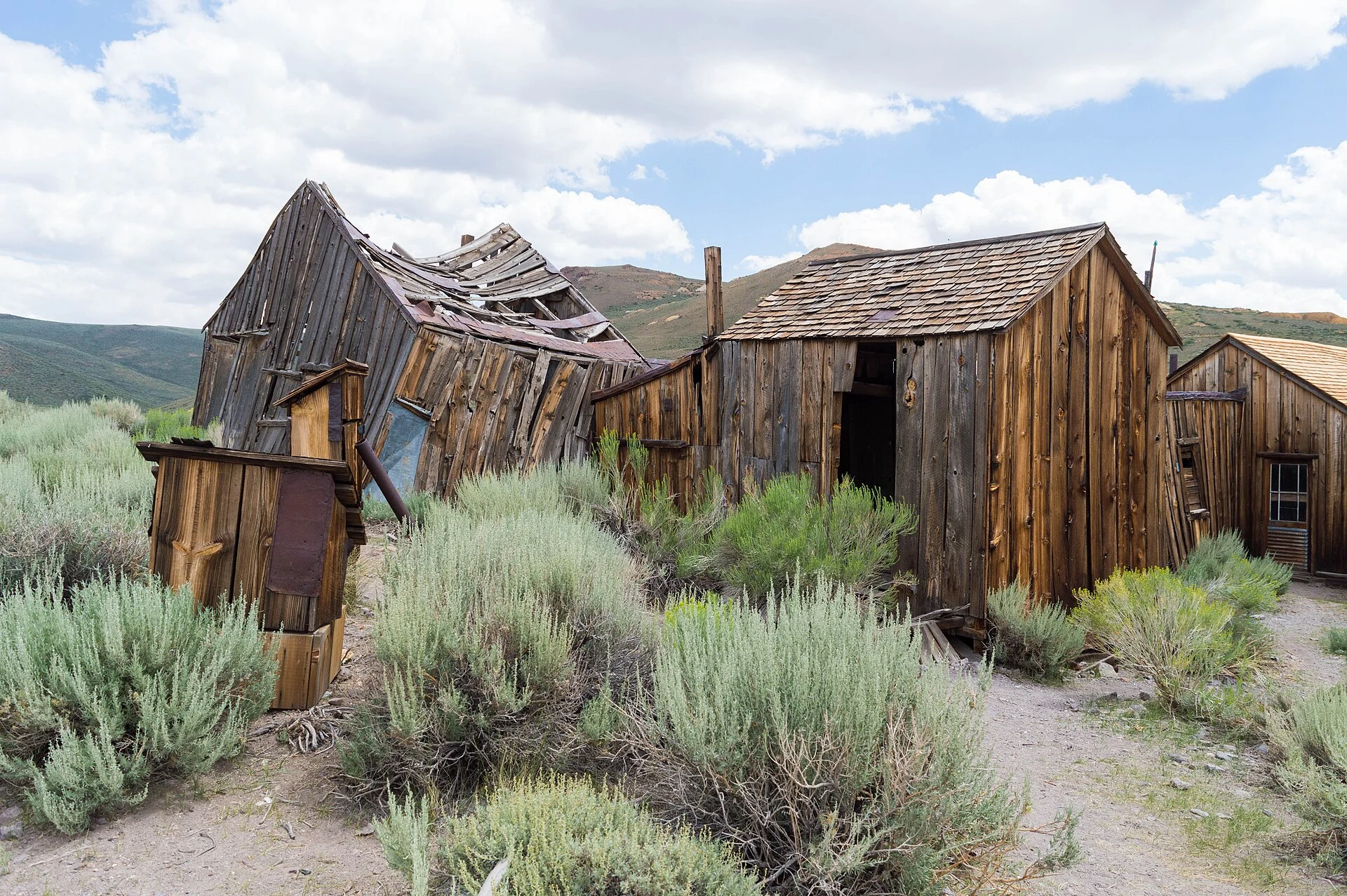
No — visitors cannot enter the buildings at Bodie State Historic Park. However, you can peer through windows and open doorways to see interiors frozen in time, with furniture, goods, and personal items still in place. The park maintains this “arrested decay” preservation approach rather than restoring or reconstructing buildings.
Is the road to Bodie passable for regular cars?
Yes, in summer and fall (May-October). The 13-mile access road from Highway 395 is paved for the first 10 miles, then becomes a graded dirt road for the last 3 miles. Regular passenger cars can usually make it in dry conditions. In winter, the road is typically closed by snow, and Bodie becomes accessible only by snowmobile, skis, or snowshoes.
Is the “Curse of Bodie” real?
Rangers maintain a collection of hundreds of letters from visitors who took artifacts and later experienced bad luck. Many letters include returned items. While the curse is likely a combination of superstition and guilty conscience, it serves as an effective reminder that removing artifacts from historic sites is illegal. Taking anything from Bodie — even a nail or piece of glass — is a misdemeanor under California law.
How long should I plan to visit Bodie?
Plan at least 2-3 hours for a thorough visit. This allows time to explore the town streets, visit the museum in the Miners’ Union Hall, photograph the buildings, and walk to the Standard Mine viewpoint. Photography enthusiasts may want a full day, especially during golden hour. Remember that Bodie is at 8,375 feet elevation — take it slow if you’re not acclimated.
What happened to the people of Bodie?
As the mines played out in the 1880s-1890s, most residents simply moved on to the next boomtown or returned to established cities. By 1910, fewer than 100 people remained. Two major fires (1892 and 1932) destroyed portions of the town. The last mine closed in 1942 under a wartime government order. A few caretakers remained until the 1960s when California acquired the town as a State Historic Park. Today, 200+ structures survive — only about 5-10% of the original town.
Explore More California State Parks
Bodie State Historic Park is one of many outstanding state parks in California. Discover more parks in our Best State Parks in California guide, or use our Park Finder to search by activity, location, or features.
The Rise and Fall of Bodie: America’s Wildest Ghost Town
Bodie stands as a monument to the California Gold Rush’s most dramatic cycle — boom, bust, and abandonment — preserved in a state of “arrested decay” at 8,375 feet in the Eastern Sierra Nevada. What began as a modest placer mining discovery became one of the most lawless, violent, and ultimately prosperous gold mining districts in the American West.
The Discovery and Early Years (1859-1876)
W.S. Bodey (sometimes spelled “Body”) discovered gold in the hills east of the Sierra Nevada in 1859, but died in a blizzard that same winter before he could profit from his find. His name — misspelled as “Bodie” — stuck. For nearly two decades, the district remained a minor camp of 20-30 miners working modest placer claims. The extreme elevation — higher than any major mining town in the state — meant brutal winters with 20-foot snowdrifts and temperatures plunging to -30°F.
The Boom: “The Bad Man from Bodie” (1877-1882)
Everything changed in 1877 when the Standard Mine struck a rich vein of gold-bearing quartz. By 1879, Bodie had exploded to an estimated 10,000 residents with 2,000 buildings, 65 saloons, multiple newspapers, a brass band, a red-light district on Bonanza Street, and a reputation as the most lawless town in the West. The saying “Bad man from Bodie” entered American folklore. A widely repeated (though likely apocryphal) diary entry from a young girl moving to Bodie reads: “Goodbye God, I’m going to Bodie.”
The mines produced approximately $34 million in gold (equivalent to over $1 billion today) between 1877 and 1888. The Standard Consolidated Mining Company became one of the most profitable operations in California.
Violence and Vice
Bodie’s reputation for violence was well-earned. Newspapers of the era recorded shootings, knifings, and stagecoach robberies as near-daily occurrences. The town had a murder rate comparable to modern-day war zones. The red-light district — centered on Bonanza Street and Virgin Alley — employed dozens of women. Opium dens served the Chinese community on King Street. Despite the chaos, Bodie also had churches, a school, and families — the full spectrum of frontier life.
The Decline and Abandonment (1882-1942)
The mines began playing out by 1882, and population dropped precipitously. Two devastating fires — in 1892 and 1932 — destroyed large portions of the town. By the 1930s, fewer than a dozen people remained. The last mine closed in 1942 when the federal government ordered all non-essential gold mines shut for the war effort (War Production Board Order L-208). The town was finally abandoned.
Exploring Bodie: A Walking Tour
The Main Street District
Start at the Miners’ Union Hall — now the park’s museum and visitor center — which houses original artifacts: mining equipment, period furnishings, photographs, and the town’s original safe. Walk south along Main Street past the Boone Store & Warehouse (with goods still on shelves), the Sam Leon Bar & Barber Shop, and the Odd Fellows Hall. Peer through windows into rooms frozen in time — chairs at tables, dishes on shelves, cans of food on counters.
The Standard Mine Complex
The Standard Mine and its massive stamp mill — perched on the hillside above town — are the industrial heart of Bodie. The 30-stamp mill processed tons of ore daily. The mine shaft descends 500+ feet. Adjacent is the Standard Consolidated cyanide plant and the warehouse complex. Note: mine buildings are fragile; observe from designated viewpoints.
The Methodist Church
The Methodist Church (c. 1882) — with its bell tower and wooden pews — is one of Bodie’s most iconic and most photographed structures. Only two churches survive of the three that originally served the town. The Catholic church is now gone, marked only by its foundation.
The Schoolhouse and Residential Areas
The schoolhouse still has its blackboard, desks, and pot-bellied stove. Residential streets — Green Street, Fuller Street, and Wood Street — have homes in varying states of decay, some with furniture still visible through broken windows. The J.S. Cain House — the finest residence in town — belonged to the principal mine owner.
Visiting Bodie: Practical Guide
| Detail | Information |
|---|---|
| Season | Typically accessible May-October (road may close due to snow) |
| Access Road | 13 miles from Highway 395 (last 3 miles unpaved, usually passable for all vehicles) |
| Elevation | 8,375 feet — acclimate if coming from sea level |
| Hours | 9 AM – 6 PM (summer), 9 AM – 3 PM (winter, if accessible) |
| Entry Fee | $8 per adult, $5 ages 5-17, under 5 free |
| Facilities | Vault toilets, museum/visitor center (no water, food, or gas) |
| Weather | Summers: 70-80°F days, 30s nights. Winters: -30°F possible |
| Bring | Water, food, sunscreen, hat, layers (temperature swings of 40°F daily) |
Photography Tips
Bodie is a photographer’s paradise. Golden hour (early morning and late afternoon) creates warm light on the weathered wooden buildings. The Methodist Church against the Eastern Sierra is the classic shot. Interior window shots — shooting through dusty glass at objects inside — create haunting images. Night photography is exceptional (limited light pollution at this elevation), but note that the park is closed after dark for most of the year.
The Curse of Bodie
Perhaps Bodie’s most famous legend is the “Curse of Bodie” — the belief that anyone who removes an artifact from the ghost town will suffer bad luck. Rangers maintain a file of “guilt letters” — hundreds of letters from visitors who took small items (nails, glass, wood fragments) and later experienced car breakdowns, illness, job loss, or other misfortunes. Many letters include the returned artifacts. One letter reads: “I took a small piece of wood from Bodie and since then my life has been nothing but trouble.” Whether superstition or conscience, the letters keep arriving — a testament to Bodie’s enduring hold on the imagination.
The Geology of the Bodie Hills
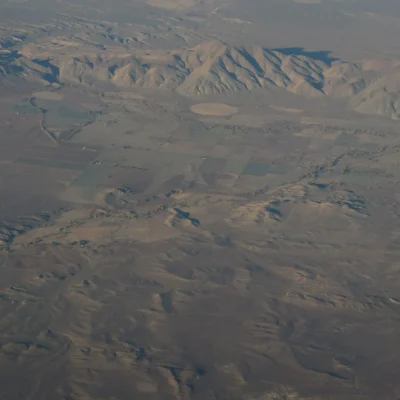
The Bodie Hills are part of a volcanic field that erupted 8-15 million years ago, creating the gold-bearing quartz veins that miners would later exploit. The gold formed when hydrothermal fluids — superheated water rich in dissolved minerals — circulated through fractures in the volcanic rock, depositing gold, silver, and other metals. The district produced gold from both placer deposits (eroded gold in streams) and lode deposits (gold embedded in quartz veins requiring hard-rock mining). The surrounding landscape — sagebrush steppe stretching to the Mono Lake basin — shows the stark beauty of the Basin and Range Province.
Wildlife of the Bodie Hills
Despite the harsh climate, the Bodie Hills support a surprising diversity of wildlife adapted to the high desert sagebrush ecosystem:
Pronghorn antelope — the fastest land mammal in North America (capable of 60 mph) — graze the sagebrush flats. Mule deer browse the hillsides. Coyotes are frequently heard howling at dusk. Golden eagles — with wingspans exceeding 7 feet — soar over the ridges hunting jackrabbits and ground squirrels. Great Basin rattlesnakes inhabit the ruins (watch where you step!). Yellow-bellied marmots sun on rocks near the buildings. Sage grouse perform elaborate mating dances (leks) in spring.
Nearby Attractions
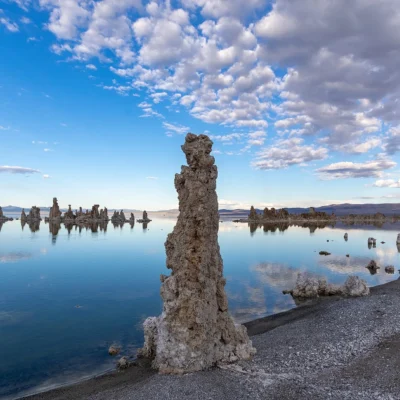
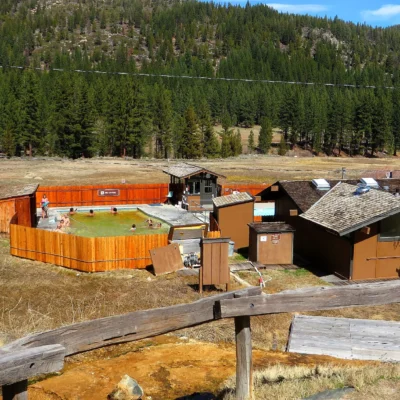
Mono Lake — 20 miles south via Highway 395 — features otherworldly tufa towers (calcium carbonate formations) rising from the alkaline lake. The lake supports trillions of brine shrimp and alkali flies, which in turn feed 2 million migratory birds — including 80% of the world’s California gull breeding population. Bridgeport — 20 miles north — has natural hot springs (Buckeye, Travertine), the historic Bridgeport Hotel, and Bridgeport Reservoir fishing. Yosemite National Park — 50 miles southwest — is accessible via Tioga Pass (Highway 120, open June-October). June Lake Loop — 30 miles south — has alpine lake swimming, fishing, and skiing. Mammoth Lakes — 40 miles south — has year-round recreation, including Mammoth Mountain ski resort and Devils Postpile NM.
Frequently Asked Questions
Make it a road trip: Pair a visit with Grover Hot Springs State Park (elsewhere in the state) or Calaveras Big Trees State Park (elsewhere in the state).

🐾 Dogs & Pets at Bodie State Historic Park
- Pets allowed? statewide rule
- Dogs are permitted in California State Parks only in developed areas — campgrounds, picnic areas, parking lots and paved roads — and are prohibited on most trails, beaches and undeveloped areas unless specifically designated as dog-friendly.
- Leash rule statewide rule
- Maximum 6-foot leash at all times; dogs may not be left unattended.
- Beaches & swim areas statewide rule
- Dogs are prohibited on most state beaches; only beaches specifically designated as dog-allowed permit them (varies by park).
- Cabins & lodging statewide rule
- Pets are generally not allowed in buildings or cabins; overnight campers must keep dogs inside a tent or vehicle at night.
- Statewide exceptions statewide rule
- Designated dog-friendly trails and beaches vary park by park; misrepresenting a pet as a service animal is a misdemeanor.
Are dogs allowed at Bodie State Historic Park?
Dogs are permitted in California State Parks only in developed areas — campgrounds, picnic areas, parking lots and paved roads — and are prohibited on most trails, beaches and undeveloped areas unless specifically designated as dog-friendly. Individual parks can post stricter rules — check signage on arrival.
Rules verified July 2026 via parks.ca.gov. More: California state parks guide · Dog rules in all 50 states compared
Park Location
Plan your gear for Bodie State Historic Park
From our editorial guides, matched to this park’s activities: