🌤 Weather at Bennett Spring State Park by season
| Spring | Summer | Fall | Winter |
|---|---|---|---|
| 34–76 °F | 63–88 °F | 35–80 °F | 22–48 °F |
Each range runs from the coldest monthly average low to the warmest monthly average high in that season (1991-2020 climate normals), measured at Lebanon 2W, 9 mi away, elevation 1,246 ft. Conditions at the park can differ from the station, especially where elevation differs — check a forecast before you go.

🏆 Missouri’s Premier Trout Fishing Destination — Where a spring gushing 100 million gallons daily feeds one of America’s finest trout streams, surrounded by 3,338 acres of Ozark wilderness
Why Bennett Spring State Park Is a Bucket-List Destination for Anglers
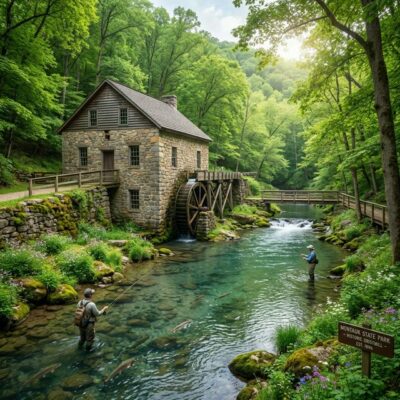
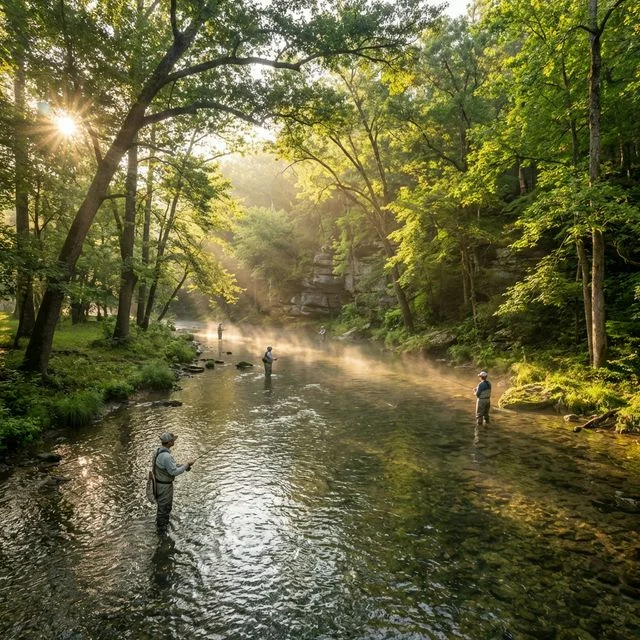
There are exactly four state parks in Missouri designated as “trout parks,” and Bennett Spring is the crown jewel. Every night during the March-through-October season, hatchery workers stock the spring branch with rainbow trout — fresh, strong fish that will be rising to flies and striking lures by dawn. By 6:30 AM, the banks are lined with anglers who’ve been coming here for generations, standing in water so clear you can count individual pebbles on the stream bottom 8 feet down. This isn’t just fishing — it’s a Missouri institution.
But Bennett Spring State Park is far more than a fishing hole. This 3,338-acre Ozark gem features one of Missouri’s most impressive natural springs, pumping over 100 million gallons of crystal-clear water daily into the Niangua River. The park offers 12 miles of hiking trails (including one that passes through an intact collapsed cave tunnel), an Olympic-size swimming pool, a nature center, a dining lodge, five campgrounds, and cabins that book out months in advance. From the spring pool where cold water erupts from underground to the Niangua River where families float on lazy summer afternoons, every corner of this park is shaped by water.
The Spring: 100 Million Gallons a Day
Bennett Spring itself is the park’s beating heart — a first-magnitude spring that produces over 100 million gallons of water daily at a constant 58°F. The spring emerges from a cave system in the dolomite bedrock, creating a pool of impossibly clear water that feeds a spring branch running approximately 1.5 miles before joining the Niangua River.
That constant 58°F temperature is what makes the trout fishery possible. Rainbow trout need cold, oxygen-rich water to survive, and Bennett Spring delivers it year-round regardless of Missouri’s hot summers. The spring branch maintains water clarity that allows anglers to sight-fish for trout on bright days — a rare luxury in Midwest fishing.
Trout Fishing: The Main Event
Trout fishing at Bennett Spring operates under a unique system that has remained essentially unchanged for decades. The spring branch is divided into three zones, each with its own regulations and character. Understanding these zones is essential to planning a successful fishing trip.
| Zone | Location | Regulations | Character |
|---|---|---|---|
| Zone 1 | Spring Pool to Hatchery Bridge | Flies & artificial lures only. No bait. | Challenging, clear water, wary fish |
| Zone 2 | Hatchery Bridge to Bridge #3 | All legal methods (bait allowed) | Most popular, highest catch rates |
| Zone 3 | Bridge #3 to Niangua River | All legal methods (bait allowed) | Wider water, fewer anglers, larger trout |
| Season | Dates | Hours | Tag Cost |
|---|---|---|---|
| Regular Season | Mar 1 – Oct 31 (daily) | Legal opening to 30 min after sunset | $4/day tag |
| Winter C&R | 2nd Fri Nov – 2nd Mon Feb | Fri, Sat, Sun, Mon only | $4/day tag |
The daily trout tag costs just $4 (in addition to a Missouri fishing permit), which is one of the best values in American trout fishing. The statewide daily limit is four trout, and all fish must be 12 inches or longer. Brown trout have a 15-inch minimum and a one-fish daily limit — these are the trophy fish that experienced anglers target, especially in Zone 3 where the bigger browns tend to hold.
🎣 Pro Tips: Bennett Spring Trout Fishing
• Arrive Early: Opening day (March 1) draws 3,000+ anglers. Stake your spot by 5 AM. Regular weekdays during April-May offer the best combination of fresh stockings and manageable crowds.
• Zone 1 Fly Selection: Match the hatch — Pheasant Tail Nymphs (#14-16), Woolly Buggers (olive/black), and Elk Hair Caddis work consistently. The clear water demands light tippet (5X-6X).
• Zone 2 Bait Strategy: Power Bait (chartreuse or rainbow) drifted along the bottom under a small split shot. Set the hook on any hesitation — these trout are subtle biters.
• Zone 3 Trophy Hunting: Fish early morning or late evening with streamers for browns. These fish are less pressured and significantly larger than Zone 1/2 stockers.
• Wading Gear: Wading is essential in all zones. The gravel bottom is slippery — felt-sole wading boots provide the best grip. Water is 58°F year-round, so neoprene waders are comfortable even in summer for extended sessions.
Bennett Spring Fish Hatchery
The Bennett Spring Fish Hatchery, operated by the Missouri Department of Conservation, is one of the most productive cold-water hatcheries in the state. The facility raises approximately 400,000 rainbow trout annually, stocking them into the spring branch every night during the regular fishing season. The hatchery also produces a smaller number of brown trout that grow to trophy size in the deeper sections of the stream.
The hatchery is open to visitors during daylight hours and offers a fascinating look at the trout-raising process from tiny fingerlings to the 12-inch fish that end up in anglers’ creels. Kids especially enjoy the outdoor raceways where thousands of trout swirl in response to approaching visitors — it’s one of the best free educational experiences in any Missouri state park.
Hiking the Ozark Trails
| Trail | Distance | Difficulty | Highlights |
|---|---|---|---|
| Natural Tunnel Trail | 7.5 mi | Strenuous | Collapsed cave passage, Ozark ridgeline views |
| Savannah Ridge Trail | 2.5 mi | Moderate | Restored savannah, wildflowers, deer |
| Spring Trail | 0.5 mi | Easy | Spring pool overlook, interpretive signs |
| Whistle Trail | 1.5 mi | Easy | River views, accessible, family-friendly |
The Natural Tunnel Trail is the park’s hiking gem — a challenging 7.5-mile loop that climbs through oak-hickory forest to ridgeline overlooks before descending to an intact segment of a collapsed cave system. The “natural tunnel” is a passage where you walk through what was once a cave ceiling, with daylight visible at both ends and fern-covered walls rising above you. It’s one of the most unusual geological features in any Missouri state park and worth the effort of the longer hike.
Camping and Lodging
| Option | Sites/Units | Amenities | Price |
|---|---|---|---|
| Basic Sites | 110 | Fire ring, table, nearby restrooms | $16/night |
| Electric Sites | 68 | 30 amp electric, water nearby | $24/night |
| Full Hookup | 15 | Water, electric, sewer | $28/night |
| Cabins | 8 | Kitchen, bath, A/C, heat | $85-$130/night |
| Motel Rooms | 12 | Lodge rooms with A/C | $65-$95/night |
The park’s five campgrounds accommodate everything from tent campers to large RV rigs. Camp Cedar and Camp Deer offer the most wooded, private sites, while Camp Buffalo provides the easiest access to the fishing zones. All campgrounds have hot showers, modern restrooms, and access to the camp store. The dining lodge serves breakfast, lunch, and dinner during the fishing season — the biscuits and gravy at 5 AM before opening cast are a Bennett Spring tradition.
Swimming, Floating, and Water Activities
Bennett Spring isn’t all about fishing. The park’s Olympic-size swimming pool operates from Memorial Day through mid-August with lifeguards on duty, providing welcome relief from Missouri’s humid summers. The pool uses the spring-fed water, which means temperatures stay refreshingly cool — a welcome contrast to typical heated public pools.
Floating the Niangua River is another popular warm-weather activity. Several outfitters near the park rent canoes, kayaks, and tubes for trips ranging from 3 to 11 miles. The Niangua is a gentle, Class I river with moderate current and just enough riffles to keep things interesting — ideal for families and first-time floaters.
Best Time to Visit Bennett Spring State Park
| Season | Fishing | Crowds | Best For |
|---|---|---|---|
| Spring (Apr-May) | Peak — fresh stockings | Moderate-High | Trout fishing, wildflowers, pleasant temps |
| Summer (Jun-Aug) | Good | High | Swimming, floating, family camping |
| Fall (Sep-Oct) | Excellent | Low | Fall colors, trophy browns, uncrowded trails |
| Winter (Nov-Feb) | C&R weekends only | Very Low | Solitude, winter photography, cabin stays |
Budget Planning: Bennett Spring State Park
| Expense | Day Trip | Weekend Camp | Week |
|---|---|---|---|
| Day Trout Tag | $4 | $8 (2 days) | $20 |
| MO Fishing Permit | $12 (annual) | $12 | $12 |
| Camping | — | $32-$56 | $112-$196 |
| Swimming Pool | $5 | $5 | $10 |
| Canoe Rental | $35-$50 | $35-$50 | $35-$50 |
| Dining Lodge | $12-$20 | $30-$50 | $70-$140 |
| Total (per person) | $16-$91 | $87-$181 | $259-$428 |
More parks nearby: Ha Ha Tonka State Park is within about an hour’s drive, while Pomme de Terre State Park lies within about an hour’s drive.
🎣 Ready to Fish Bennett Spring?
Book your campsite, grab your waders, and experience Missouri’s finest trout stream.
Frequently Asked Questions
How much does it cost to fish at Bennett Spring State Park?
Trout fishing requires a daily trout tag ($4) plus a Missouri fishing permit ($12 annually for residents, $42 for non-residents, or $7 for a one-day permit). That gets you access to 1.5 miles of stocked trout stream with a four-fish daily limit. Zone 1 is restricted to flies and artificial lures only, while Zones 2 and 3 allow bait fishing. All trout must be at least 12 inches to keep.
When is the best time to go trout fishing at Bennett Spring?
The sweet spot is April through May — water temperatures are ideal, fish are actively feeding, wildflowers line the trails, and crowds haven’t reached summer peaks. Opening day (March 1) is a spectacle worth experiencing at least once but draws 3,000+ anglers. Fall (September-October) offers excellent fishing with minimal crowds and beautiful foliage. The winter catch-and-release season provides solitude but is limited to weekends.
Can you swim at Bennett Spring State Park?
Yes, the park has an Olympic-size swimming pool fed by the spring water, open from Memorial Day through mid-August. Admission is $5. Swimming in the spring branch itself is not permitted to protect the trout fishery. For river swimming, the nearby Niangua River offers natural swimming holes accessible by canoe or kayak.
What is the Natural Tunnel at Bennett Spring?
The Natural Tunnel is an intact segment of a collapsed cave system along the 7.5-mile Natural Tunnel Trail. You can walk through a passage where the cave ceiling has partially collapsed, creating a natural tunnel with daylight visible at both ends and fern-covered limestone walls. It’s one of the most unique geological features in any Missouri state park and one of the best reasons to hike the longer trail loop.
Are there cabins at Bennett Spring State Park?
Yes, the park offers 8 cabins with full kitchens, bathrooms, air conditioning, and heat, priced at $85-$130/night. There are also 12 motel-style rooms in the park lodge at $65-$95/night. Both options book up quickly during fishing season — reservations 2-3 months in advance are recommended for spring and summer weekends. Campground sites with various amenities are also available across five campgrounds.
Can you float the Niangua River near Bennett Spring?
Yes, floating the Niangua River is a popular summer activity. Several outfitters near the park rent canoes, kayaks, and tubes for trips ranging from 3 to 11 miles. The Niangua is a gentle Class I river, perfect for families and beginners. Float times range from 2-6 hours depending on distance. The river section downstream from the park offers the most scenic stretches with bluffs and occasional wildlife sightings.
How big is Bennett Spring compared to other Missouri trout parks?
At 3,338 acres, Bennett Spring is the largest of Missouri’s four designated trout parks (the others are Roaring River, Montauk, and Maramec Spring). It also produces the highest volume of spring water (100+ million gallons daily) and stocks approximately 400,000 trout annually. The combination of size, facilities (dining lodge, cabins, pool, nature center), and the quality of the trout stream make it the most complete recreational experience among the four parks.
Explore More Missouri State Parks
Bennett Spring State Park is one of many outstanding state parks in Missouri. Discover more parks in our Best State Parks in Missouri guide, or use our Park Finder to search by activity, location, or features.

⛺ Camping at Bennett Spring State Park: Campgrounds & Cabins
| Campsites | Five campgrounds ranging from basic to sewer/electric/water. Campground 1: sewer/electric/water, year-round, showerhouse open year-round. Campground 2 (Apr 15-Oct 31): electric, family sites, water, restrooms, playground. Campground 3 (Apr 15-Oct 31): basic and electric, water, restrooms, showers. Campground 4 (Feb 25-Oct 31): electric, water, restrooms, showers, laundry. Campground 5 (Feb 25-Oct 31): basic, electric, family, water, restrooms, showers. |
|---|---|
| Pets | Maximum two dogs per site recommended; must remain leashed (10 feet or less); prohibited indoors except through the Cabins for Canines program. |
| Reservations | Reservable up to 12 months in advance via icampmo1.usedirect.com or toll-free 877-ICampMO (877-422-6766); walk-up registration available for unreserved sites. Park office phone 417-532-4338; lodging/store 417-532-4307. |
| Special sites | Significant uphill travel required to reach campgrounds 2, 3, 4 and 5; camping limited to 15 days within any 30-consecutive-day period; campground hosts on-site; park store on-site; special-use camping area also available. |
| Season notes | Campgrounds 2 and 3 open Apr 15-Oct 31; campgrounds 4 and 5 open Feb 25-Oct 31; campground 1 open year-round. |
Camping questions about Bennett Spring State Park
Can you camp at Bennett Spring State Park?
Five campgrounds ranging from basic to sewer/electric/water. Campground 1: sewer/electric/water, year-round, showerhouse open year-round. Campground 2 (Apr 15-Oct 31): electric, family sites, water, restrooms, playground. Campground 3 (Apr 15-Oct 31): basic and electric, water, restrooms, showers. Campground 4 (Feb 25-Oct 31): electric, water, restrooms, showers, laundry. Campground 5 (Feb 25-Oct 31): basic, electric, family, water, restrooms, showers.
How do you reserve a campsite at Bennett Spring State Park?
Reservable up to 12 months in advance via icampmo1.usedirect.com or toll-free 877-ICampMO (877-422-6766); walk-up registration available for unreserved sites. Park office phone 417-532-4338; lodging/store 417-532-4307.
Are pets allowed at the Bennett Spring State Park campground?
Maximum two dogs per site recommended; must remain leashed (10 feet or less); prohibited indoors except through the Cabins for Canines program.
Source: mostateparks.com (verified July 2026). Details change seasonally — confirm when booking.
🐾 Dogs & Pets at Bennett Spring State Park
- Pets allowed? statewide rule
- Responsible pet owners and their pets are welcome in Missouri state parks and historic sites, with pets leashed and under control.
- Leash rule statewide rule
- Leash not longer than 10 feet required at all times; portable fences and shock collars do not satisfy the requirement.
- Beaches & swim areas statewide rule
- Pets are not allowed in public swimming areas or on beaches.
- Cabins & lodging statewide rule
- The 'Cabins for Canines' program opens about 30% of lodging units to dogs (max two dogs per unit) at roughly 15 participating parks including Lake of the Ozarks, Bennett Spring, Echo Bluff and Roaring River; per-dog per-night fee varies by unit type.
- Pet fees statewide rule
- No day-use pet fee; Cabins for Canines charges a per-dog, per-night lodging fee (varies by unit).
- Statewide exceptions statewide rule
- Maximum two dogs per campsite; pets not allowed inside any park building.
Are dogs allowed at Bennett Spring State Park?
Responsible pet owners and their pets are welcome in Missouri state parks and historic sites, with pets leashed and under control. Individual parks can post stricter rules — check signage on arrival.
Rules verified July 2026 via mostateparks.com. More: Missouri state parks guide · Dog rules in all 50 states compared
Park Location
Plan your gear for Bennett Spring State Park
From our editorial guides, matched to this park’s activities: