
🏆 Nevada State Fossil Site — Home to the largest known ichthyosaur fossils ever discovered and a remarkably preserved 1890s silver mining ghost town
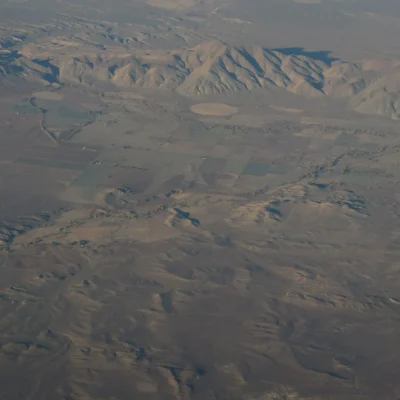
Two hundred and twenty-five million years ago, where the desert mountains of central Nevada now stand, there was an ocean. Massive marine reptiles called ichthyosaurs — some reaching 50 feet in length — cruised through warm Triassic seas, hunting fish and squid in waters that would eventually become some of the driest, most remote landscape in the continental United States. And then, for reasons paleontologists are still debating, a group of these enormous creatures died together in the shallow waters, settled into the seafloor mud, and waited 225 million years for someone to find them.
The discovery happened in the 1920s, when a geology professor from Stanford University noticed immense fossilized bones eroding out of a hillside in the Shoshone Mountains. What he found — and what subsequent excavations revealed — was one of the most important ichthyosaur fossil concentrations in the world: at least 40 individual Shonisaurus popularis, the Nevada State Fossil and the largest marine reptile known from the Triassic period.
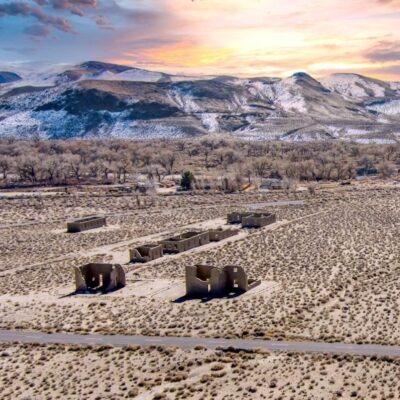
But Berlin-Ichthyosaur State Park isn’t just about ancient oceans. It’s also about a different kind of disappearance. Adjacent to the fossil site sits the ghost town of Berlin, a silver mining settlement that boomed in the 1890s, produced $850,000 in ore over its brief life, and then emptied out when the silver ran dry — leaving behind a stamp mill, mine shafts, company buildings, and the quiet melancholy of a town that humans abandoned but never tore down. Together, these two stories — separated by 225 million years but sharing the same remote canyon — create one of the most unusual and moving state park experiences in the American West.
Table of Contents
The Ichthyosaur Fossils
Shonisaurus popularis was the largest marine reptile of the Triassic period. Adults reached lengths of approximately 50 feet (15 meters), weighed several tons, and possessed a distinctive body shape — more whale-like than lizard-like, with a long, narrow snout, paddle-shaped flippers, and a large, muscular body. They were apex predators that dominated the Triassic oceans the way orcas dominate today’s seas.
The Berlin-Ichthyosaur site contains the fossilized remains of at least 40 individual animals concentrated in a single geological layer. This mass accumulation is one of the great mysteries of paleontology — why did so many die in the same place? Theories range from a mass stranding event (similar to modern whale beachings) to toxic algal blooms, changes in water chemistry, or predation by an even larger unknown creature. The debate continues, and the site remains an active subject of scientific research.
🦕 Shonisaurus popularis: Key Facts
• Species: Shonisaurus popularis — Nevada’s State Fossil (designated 1977)
• Length: Up to 50 feet (15 meters)
• Age: Late Triassic period, approximately 225 million years old
• Diet: Fish, cephalopods (squid-like creatures)
• Discovery: First identified by Dr. Siemon Muller (Stanford) in the 1920s
• Major excavations: 1950s–1960s by Dr. Charles Camp (UC Berkeley)
• Number of individuals at site: At least 40 (largest known concentration)
• Classification: Marine reptile, order Ichthyosauria — not a dinosaur
The Fossil Shelter
The centerpiece of the paleontological site is the Fossil Shelter, a protective building constructed over the in-situ fossil bed. Inside, you can see the actual bones of several ichthyosaurs exactly as they were found — partially exposed in the rock, in the actual positions where they came to rest 225 million years ago. This is not a cast or a replica. These are the real fossils, in the real rock, at the real site of death.
| Feature | Details |
|---|---|
| 🏛️ Fossil Shelter | Enclosed building protecting exposed ichthyosaur bones in original position |
| 🦴 Visible fossils | Vertebrae, ribs, and limb bones of multiple individuals |
| 🔬 Scientific value | One of the most complete Triassic marine reptile sites in the world |
| 🎫 Access | Guided tours only (ranger-led, seasonal schedule) |
| 📏 Specimen size | Individual vertebrae the size of dinner plates |
Important: The Fossil Shelter is accessible only by guided ranger tour. Tours are typically offered on weekends from March through November, but schedules vary by season and staffing. Call the park at (775) 964-2440 before visiting to confirm tour availability. Self-guided access is not permitted to protect the fossils.
The Ghost Town of Berlin
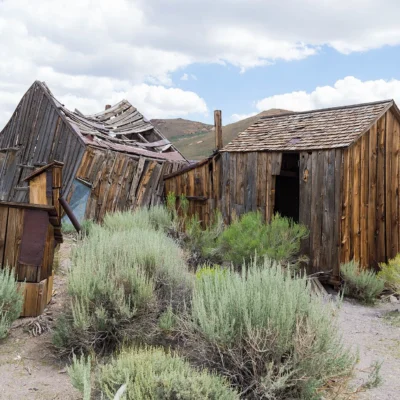
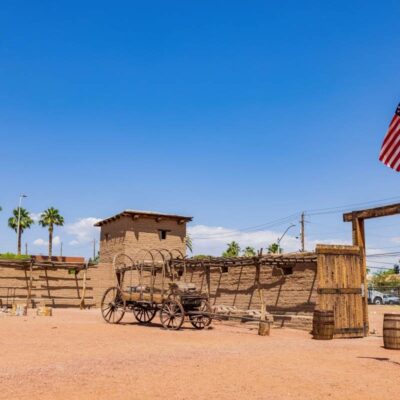
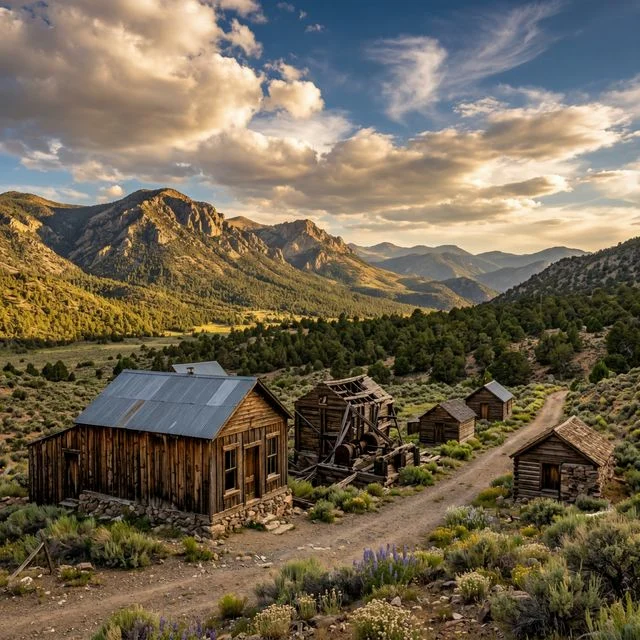
Just down the canyon from the fossil site sits Berlin, one of the best-preserved ghost towns in the state of Nevada. Unlike many Western ghost towns that have been commercially developed, fenced off, or dismantled for salvage, Berlin has been stabilized but deliberately left in a state of “arrested decay” — the buildings are maintained enough to prevent collapse, but no effort has been made to restore them to their original appearance. The result is hauntingly authentic.
| Structure | Status | Highlights |
|---|---|---|
| 🏭 30-Stamp Mill | Standing, stabilized | Most impressive structure — massive ore processing equipment still in place |
| ⛏️ Diana Mine | Sealed, interpretive | Primary silver mine, headframe visible, interpretive panels |
| 🏠 Assay Office | Standing | Where ore quality was tested and valued |
| 🏠 Company Buildings | Various states | Cabins, foundations, and structures throughout the canyon |
| 🪨 Tailings & Equipment | In place | Mining artifacts, machinery, and ore processing remnants |
⛏️ Brief History of Berlin
• 1896: Silver ore discovered in the Shoshone Mountains
• 1897–1899: Berlin Mining District established, town built rapidly
• Peak population: Approximately 200–300 residents
• Total ore production: Approximately $850,000 (1890s dollars)
• 1911: Mining operations ceased, town abandoned
• 1957: Area designated as Nevada State Park
• Preservation approach: “Arrested decay” — stabilized but not restored
Hiking Trails
| Trail | Distance | Difficulty | Highlights |
|---|---|---|---|
| Berlin Ghost Town Loop | 0.5 miles | Easy | All major structures, stamp mill, mine buildings |
| Fossil Shelter Trail | 0.3 miles | Easy | Access to the ichthyosaur fossil shelter (guided only) |
| Champion Mine Trail | 2.0 miles | Moderate | Mine ruins, canyon views, geology exposures |
| Shoshone Peak Trail | 5.0 miles RT | Difficult | Summit views, wildflowers, pinyon-juniper woodland |
The park sits at an elevation of approximately 6,800 feet, which means cooler temperatures than the Nevada desert below, but also the potential for snow from November through March. Carry water on all hikes — there are no reliable water sources on the trails.
Camping
Berlin-Ichthyosaur offers a small, no-reservation campground that captures the essence of the Nevada backcountry experience: quiet, remote, and dark.
| Detail | Information |
|---|---|
| ⛺ Sites | 14 individual campsites |
| 🚰 Water | Available seasonally (check before visiting) |
| 🚻 Restrooms | Vault toilets |
| 🔌 Hookups | None — no electricity or RV hookups |
| 💰 Fee | $15 per night (cash or check) |
| 📋 Reservations | First-come, first-served |
| 🔥 Fires | Fire rings provided (check fire restriction status) |
Dark Sky Stargazing
Berlin-Ichthyosaur is located in one of the darkest areas of the continental United States. The nearest town (Austin, population ~200) provides virtually no light pollution, and the park’s high elevation and dry desert air create exceptional astronomical viewing conditions. The Milky Way is visible in breathtaking detail on clear, moonless nights.
This is one of the best stargazing locations in Nevada — bring a telescope, binoculars, or simply a blanket and patience. Summer and early fall evenings offer the best conditions, with the galactic core visible directly overhead.
Wildlife
Despite the arid landscape, the park’s elevation supports a diverse community of high-desert wildlife. Mule deer are common in the pinyon-juniper woodlands, and wild horses (mustangs) are occasionally spotted in the surrounding valleys. Raptors — including golden eagles, red-tailed hawks, and prairie falcons — hunt above the canyons. Rattlesnakes are present; watch your step on warm days.
Visitor Information
| Detail | Information |
|---|---|
| 📍 Address | SR 844, Austin, NV 89310 (off SR 21) |
| 📞 Phone | (775) 964-2440 |
| 🕐 Park Grounds | Year-round, sunrise to sunset |
| 🕐 Ghost Town | Self-guided, year-round (daylight hours) |
| 🕐 Fossil Shelter | Guided tours only — weekends, Mar–Nov (call for schedule) |
| 💰 Day Use | $5 per vehicle |
| 💰 Camping | $15 per night |
| 💰 Fossil Tour | Included with day-use fee |
| 🅿️ Parking | Gravel lot near ghost town and campground |
| 📡 Cell Service | None — no cell coverage at the park |
Best Time to Visit
| Season | Weather | Fossil Tours | Best For |
|---|---|---|---|
| 🌸 Spring (Apr–May) | 45–70°F | Weekends | Wildflowers, comfortable hiking, wildlife |
| ☀️ Summer (Jun–Sep) | 65–85°F | Weekends | Best stargazing, longest days, all facilities open |
| 🍂 Fall (Oct–Nov) | 35–65°F | Limited | Golden aspens, cool hiking, fewer visitors |
| ❄️ Winter (Dec–Mar) | 15–40°F, snow | None | Solitude, photography (road may be impassable) |
The June through September window offers the best combination of reliable fossil shelter tours, warm weather, and extraordinary stargazing. However, this is remote Nevada — daytime temperatures in summer can reach 85°F, and evenings drop into the 40s or 50s even in July. Carry warm layers for evening camping.
Getting There
🚗 Driving Directions
• From Reno: ~290 miles southeast via US-50 and SR-21/SR-844 (approximately 4.5 hours)
• From Las Vegas: ~375 miles northwest via US-95 and US-50 (approximately 5.5 hours)
• From Austin, NV: 23 miles south via SR-21, then east on SR-844
• Road conditions: SR-844 is a well-maintained gravel road for the final 12 miles. Standard passenger vehicles can make it in dry conditions. High-clearance or 4WD recommended in wet weather or winter.
• Fuel: Fill your tank in Austin (the nearest gas station). There are NO services between Austin and the park.
• Critical: No cell service at the park or for much of the drive. Download maps and directions before leaving Austin.
Photography Guide
📸 Best Photography at Berlin-Ichthyosaur
• Ghost town golden hour: The weathered wood and rusting metal of the ghost town buildings glow magnificently in warm late-afternoon light. The 30-stamp mill is the most photogenic structure — shoot from downhill to capture it against the mountain backdrop.
• Astrophotography: This is a world-class dark sky location. The Milky Way arcs directly over the ghost town structures, creating dramatic compositions. Use a wide-angle lens (14–24mm), tripod, and 15–25 second exposures at ISO 3200+.
• Interior details: The stamp mill’s interior machinery creates compelling industrial decay compositions. Bring a wide-angle lens and a small flashlight for light painting.
• Fossils: Photography inside the Fossil Shelter is typically permitted but the light is dim. Ask your ranger guide about flash restrictions.
Nearby parks: If you have extra time, Lake Tahoe – Nevada State Park is elsewhere in the state, and Walker River State Recreation Area is elsewhere in the state.
Frequently Asked Questions
What is an ichthyosaur?
An ichthyosaur was a large marine reptile — not a dinosaur — that lived during the Mesozoic era (approximately 250 to 90 million years ago). The species found at Berlin-Ichthyosaur, Shonisaurus popularis, lived during the Late Triassic period (about 225 million years ago) and could reach 50 feet in length. Ichthyosaurs were air-breathing reptiles that returned to the sea, similar in concept to modern dolphins and whales — but evolved completely independently.
Can you see the actual fossils?
Yes — the Fossil Shelter contains real ichthyosaur bones exposed in their original rock matrix, exactly where they were buried 225 million years ago. These are not replicas or casts. Access is by guided ranger tour only, typically on weekends from March through November. Call the park at (775) 964-2440 to confirm tour schedules before making the drive.
Is it worth the long drive to Berlin-Ichthyosaur?
If you have an interest in paleontology, ghost towns, dark sky stargazing, or remote Nevada landscapes, absolutely yes. The combination of world-class fossils, an authentically preserved ghost town, and one of the darkest skies in the lower 48 makes this park genuinely unique. Plan to camp overnight to experience the stargazing — the Milky Way display alone justifies the drive.
Do I need a 4×4 to get to the park?
Not in good weather. The final 12 miles on SR-844 are well-maintained gravel that standard passenger vehicles can handle when dry. However, after rain or snow, the road can become muddy and rutted — high-clearance or 4WD is recommended in those conditions. The road may be impassable in winter (November through March). Always check conditions with the park office before traveling.
Is there camping at Berlin-Ichthyosaur?
Yes — the park has 14 first-come, first-served campsites with fire rings and vault toilets. The fee is $15 per night. There are no hookups, no electricity, and cell service is nonexistent. Water is available seasonally but should not be relied upon — bring all the water you need. This is primitive camping in one of the most remote state parks in Nevada, which is exactly what makes it special.
Can you explore the ghost town on your own?
Yes — the Berlin ghost town is open for self-guided exploration year-round during daylight hours. Interpretive signs throughout the town explain the history of the mining operation. You can walk through the ruins, examine the stamp mill from outside, and explore the remains of the company buildings. Do not enter buildings that are posted as closed, and never enter mine shafts — they are unstable and dangerous.
Why are there ocean fossils in the middle of the Nevada desert?
During the Late Triassic period (225 million years ago), central Nevada was covered by a shallow arm of the Pacific Ocean. The area that is now the Shoshone Mountains was a marine basin where ichthyosaurs and other sea creatures lived and died. Over millions of years, tectonic forces pushed the ancient seafloor upward, creating the mountain ranges of the Great Basin. The fossils were carried along for the ride, eventually eroding out of hillsides at 6,800 feet elevation — thousands of feet above and hundreds of miles from the nearest modern ocean.
🦕 Visit Berlin-Ichthyosaur State Park
Walk through a genuine Nevada ghost town, stand beside 225-million-year-old marine reptile fossils, and experience some of the darkest night skies in the continental United States — all in one extraordinary state park.
🗺️ Official Park Information 🏜️ Explore NevadaExplore More Nevada State Parks
Berlin–Ichthyosaur State Park is one of many outstanding state parks in Nevada. Discover more parks in our Best State Parks in Nevada guide, or use our Park Finder to search by activity, location, or features.

🐾 Dogs & Pets at Berlin–Ichthyosaur State Park
- Pets allowed? statewide rule
- Leashed pets are welcome at most Nevada state parks.
- Leash rule statewide rule
- Leash no longer than 6 feet required.
- Beaches & swim areas statewide rule
- Pets are not permitted at swim beaches; notably pets are banned at Sand Harbor (Lake Tahoe) April 15 through October 15.
- Statewide exceptions statewide rule
- Pets prohibited on certain trails in the Spooner Management Area; park supervisors may close additional areas to pets.
Are dogs allowed at Berlin–Ichthyosaur State Park?
Leashed pets are welcome at most Nevada state parks. Individual parks can post stricter rules — check signage on arrival.
Rules verified July 2026 via parks.nv.gov. More: Nevada state parks guide · Dog rules in all 50 states compared
Park Location
Plan your gear for Berlin–Ichthyosaur State Park
From our editorial guides, matched to this park’s activities: