Breaks Interstate Park
🌤 Weather at Breaks Interstate Park by season
| Spring | Summer | Fall | Winter |
|---|---|---|---|
| 32–73 °F | 58–82 °F | 33–76 °F | 23–47 °F |
Each range runs from the coldest monthly average low to the warmest monthly average high in that season (1991-2020 climate normals), measured at Breaks Interstate Park, 0 mi away, elevation 1,893 ft. Conditions at the park can differ from the station, especially where elevation differs — check a forecast before you go.

🏆 The Deepest Canyon East of the Mississippi — 5-mile gorge plunging 1,600 feet, with Class V whitewater, 25+ miles of trails, and the only interstate park in America
Welcome to the Grand Canyon of the South
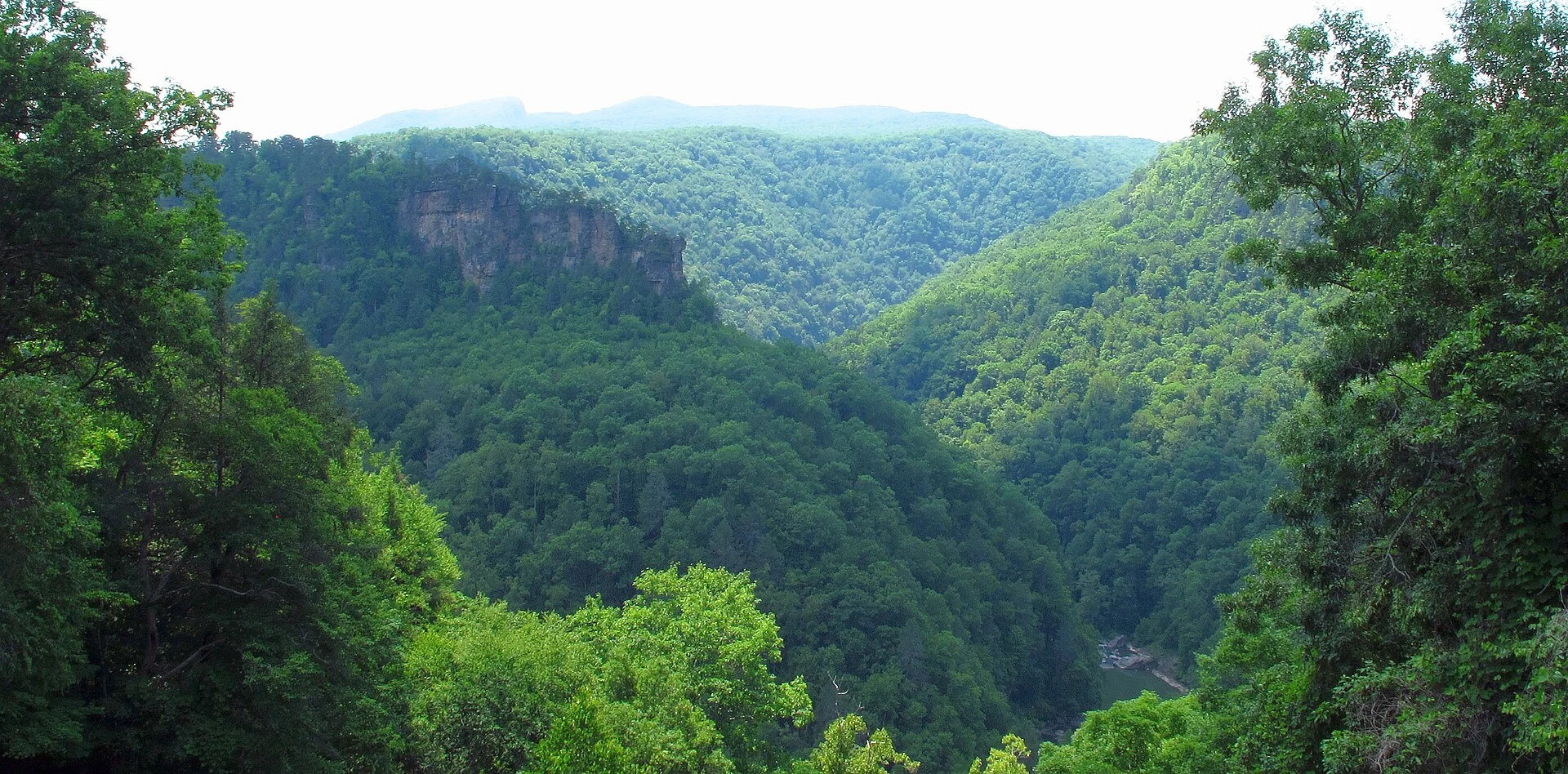
The first thing you notice at Breaks Interstate Park is the sound — or rather, the absence of it. Standing at the Towers Overlook, 1,600 feet above the Russell Fork River, the only thing reaching your ears is the faint roar of whitewater echoing off billion-year-old sandstone walls. The canyon stretches five miles before you, a gash in the Appalachian Plateau so deep and vast that early settlers called it “The Breaks” because it was the only place the Pine Mountain range was broken enough to pass through.
Straddling the Virginia-Kentucky border, Breaks Interstate Park holds the distinction of being the only interstate park in the United States — jointly operated by both states since 1954. At 4,500 acres, this remote Appalachian gem encompasses one of the largest canyons east of the Mississippi River, rivaling even the New River Gorge in sheer vertical drama. The Russell Fork River carved this masterpiece over 250 million years, exposing layer after geological layer of Pennsylvanian-era sandstone, shale, and coal seams that read like a textbook of Earth’s ancient history.
What makes Breaks truly exceptional isn’t just the canyon itself — it’s the staggering variety packed into one park. World-class whitewater rafting with Class IV-VI rapids during October dam releases. A 12-mile mountain biking trail system. A lodge perched on the canyon rim. Lakefront cabins. A zip-line soaring over the gorge. And enough hiking trails to keep you exploring for a week. This is not a drive-through overlook park — this is a destination that demands you stay.
Top Trails at Breaks Interstate Park
Breaks Interstate Park offers over 25 miles of hiking trails, ranging from easy paved overlook walks to strenuous canyon descents that will test the strongest legs. The trail system is what sets Breaks apart from typical overlook parks — you can actually get down into the canyon, hike along the river, and experience the gorge from every possible angle. Trail maps with detailed descriptions are available at the Visitor Center, and self-guided booklets for the Ridge and Geological trails explain the fascinating rock formations along the way.
| Trail Name | Distance | Difficulty | Highlights |
|---|---|---|---|
| Overlook Trail | 0.7 mi | Easy | 5 canyon rim overlooks with interpretive signs, wheelchair accessible sections |
| Geological Trail | 0.8 mi | Easy | Self-guided geology walk through 300-million-year-old rock formations |
| Prospectors’ Ridge Trail | 1.2 mi | Moderate | Ridge-top views, connects to Loop Trail for extended hike |
| Loop Trail | 1.5 mi | Moderate | Forest walk connecting Overlook and Prospectors’ Ridge trails |
| Center Creek Trail | 1.8 mi | Difficult | Descends into the canyon, creek crossings, connects to river |
| Bottom of the Breaks | 3.5 mi RT | Strenuous | Most challenging — 1,600 ft descent via switchbacks to Russell Fork River |
| Laurel Branch Trail | 2.2 mi | Moderate | Rhododendron tunnels, beaver ponds, creek-side walking |
| River Trail | 2.0 mi | Difficult | Along the Russell Fork, huge boulders, seasonal rapids |
| 12-Mile MTB System | 12.0 mi | Moderate-Difficult | Stack loop system, good climbs, lengthy downhill runs |
The Breaks Interstate Loop is the must-do hike here — a 3.6-mile circuit combining the Loop, Prospectors’ Ridge, Geological, and Overlook trails. You’ll walk through the rhododendron-tunneled forest, emerge onto spectacular rim overlooks, learn about the park’s geology at every turn, and finish with the most dramatic canyon views in the eastern United States. Allow 2-3 hours and bring a camera — the overlooks along this loop are where the park’s most iconic photographs are taken, particularly during the golden hour when the sandstone walls glow amber.
For the truly adventurous, the Bottom of the Breaks Trail is a once-in-a-lifetime experience. Accessed via Center Creek Trail, this strenuous descent takes you 1,600 feet down through switchbacks, rocky creek crossings, and dense forest to reach the Russell Fork River at the canyon floor. Standing at the bottom looking up, you understand why they call this the Grand Canyon of the South. Pack plenty of water, wear sturdy boots, and allow a full day for the round trip.
Camping at Breaks Interstate Park
The campground at Breaks sits on a wooded plateau near the canyon rim, offering 138 campsites spread across four distinct camping loops (A through D). The vibe here is classic Appalachian camping — tall hardwoods providing canopy shade, the distant sound of the river in the canyon below, and enough space between sites that you feel genuinely immersed in the forest. Campground D has the most open, grassy sites for those who prefer sun, while A and B are the most wooded and private. The campground operates from the first Friday in March through the first Monday in December.
| Site Type | Sites | Amenities | Price |
|---|---|---|---|
| Full Hookup (W/E/S) | 35 | Water, 30/50 amp electric, sewer, fire ring | $35-45/night |
| Water/Electric | 65 | Water, 30 amp electric, fire ring, picnic table | $28-38/night |
| Primitive (Tent) | 38 | Fire ring, tent pad, access to bathhouse | $18-25/night |
| Lakefront Cabins | 5 | Full kitchen, A/C, heat, on Laurel Lake (1 pet-friendly) | $100-180/night |
| Woodland Cottages | 4 | Near Beaver Pond, kitchen, bathroom, linens | $85-150/night |
| Luxury Yurt | 1 | Electricity, water, full fridge, microwave, near bathhouse | $75-120/night |
Campground amenities include two modern bathhouses with hot showers and flush toilets, a well-stocked camp store, laundry facilities, a playground, and a basketball court. Reservations are strongly recommended, especially for weekend stays from May through October, and can be made up to 11 months in advance through the park’s website at breakspark.com. Quiet hours run from 10:00 PM to 6:00 AM, and all food must be properly secured due to the active black bear population in the area.
🏨 The Breaks Lodge — Canyon Rim Living
For those who prefer a roof and a restaurant over a tent, the Rhododendron Lodge sits right on the canyon rim with jaw-dropping views from every room. The lodge offers standard rooms and suites, an on-site restaurant serving Appalachian comfort food, and pet-friendly rooms available for a small fee. Rates typically run $90-160/night depending on the season. The real draw is the outdoor dining deck — eating breakfast while watching the morning mist rise out of a 1,600-foot canyon is an experience that no campsite can match.
Whitewater Rafting: The Russell Fork
The Russell Fork River through Breaks Canyon is one of the most challenging and celebrated whitewater runs east of the Mississippi. During the annual October dam releases from the John W. Flannagan Reservoir, this otherwise calm river transforms into a raging torrent of Class IV, V, and VI rapids that draws expert paddlers from across the country. The release weekends — typically four consecutive weekends in October — are the park’s most electrifying events.
| Rapid Name | Class | Description |
|---|---|---|
| Triple Drop | IV-V | Three consecutive ledge drops with powerful hydraulics |
| El Horrendo | V-VI | The most infamous rapid, 15-foot waterfall drop into a violent hole |
| Fist | IV | Tight constriction with punchy waves and rocks |
| S-Turn | IV | Technical maneuvering around boulders with fast current |
Several licensed outfitters operate guided rafting trips during the dam releases. This is not beginner-friendly whitewater — the Russell Fork is considered one of the top 10 most challenging commercially rafted rivers in the United States. Even experienced kayakers portage El Horrendo. If you’re new to whitewater, the park offers calmer paddling on Laurel Lake with kayak and pedal boat rentals available spring through fall.
Seasonal Guide to Breaks Interstate Park
| Season | Weather | Crowds | Best For |
|---|---|---|---|
| Spring (Mar-May) | 50-75°F, rainy, wildflowers | Low | Wildflower hikes, waterfall flows, rhododendron blooms (May-June) |
| Summer (Jun-Aug) | 75-90°F, humid, afternoon storms | Moderate | Swimming, zip-line, guided hikes, mountain biking, water park |
| Fall (Sep-Nov) | 50-75°F, crisp, clear skies | High (October) | Fall foliage, whitewater rafting releases, photography, elk viewing |
| Winter (Dec-Feb) | 25-45°F, occasional snow | Very Low | Solitude hiking, canyon photography in snow, lodge stays |
Fall is without question the premier season at Breaks Interstate Park. The combination of brilliant Appalachian foliage coloring the canyon walls, the excitement of the October whitewater releases, comfortable hiking temperatures, and the chance to spot elk on guided viewing tours makes October the month every serious outdoor enthusiast should circle on their calendar. Book your campsite or lodge room at least 6 months in advance for October weekends — they sell out fast.
Things to Do Beyond the Trails
Breaks is far more than just hiking and overlooks. The park has steadily added adventure attractions that make it a viable week-long destination, especially for families with kids who burn through a single hike in an hour and immediately demand “what’s next?”
| Activity | Season | Details |
|---|---|---|
| Zip-Line over the Canyon | Apr-Oct | Soar above the canyon on a dual zip-line course — reservations recommended |
| Splash in the Park Water Park | Memorial Day-Labor Day | Pool complex with waterslides, splash pad — great for kids under 12 |
| Fishing (Laurel Lake) | Year-round | 12-acre stocked lake — trout, bass, bluegill. VA/KY license required |
| Pedal Boats & Kayaks | Apr-Oct | Rentals on Laurel Lake — $8-15/hour, perfect calm-water paddling |
| Mountain Biking | Mar-Nov | 12-mile stack loop system, moderate-difficult, helmet required |
| Geocaching | Year-round | 60 geocaching sites throughout the park |
| Elk Viewing Tours | Sep-Nov | Guided tours to see reintroduced elk herd in nearby areas |
| Guided Nature Hikes | Summer | Ranger-led hikes focusing on geology, wildflowers, and wildlife |
Wildlife & Birding
Breaks Interstate Park sits on the Virginia Birding and Wildlife Trail, and the combination of deep gorge, Appalachian forest, and lake/pond habitats makes it an exceptional wildlife watching destination. The park’s remote location in far southwestern Virginia means less human disturbance and more opportunities for rare sightings.
| Animal | Best Months | Where | Tips |
|---|---|---|---|
| 🦅 Peregrine Falcons | Spring-Fall | Canyon cliffs, Overlook Trail | Scan the cliff faces with binoculars — they nest on the sandstone ledges |
| 🐻 Black Bears | Apr-Nov | Throughout park | Secure all food, bear canisters required for backcountry; dawn/dusk sightings common |
| 🦌 White-tailed Deer | Year-round | Campgrounds, meadows | Most visible at dawn near Campground D |
| 🦊 Red Fox | Year-round | Forest edges, near lodge | Often spotted along roads at dusk |
| 🐢 Box Turtles | May-Sep | Trail crossings | Watch your step on warm mornings — they sun on the trail surface |
| 🦉 Barred Owls | Year-round | Deep forest areas | Listen for their “who cooks for you” call at dusk |
Budget Planning Guide
| Expense | Day Trip | Weekend (2 nights) | Week (5 nights) |
|---|---|---|---|
| Entry Fee | FREE | FREE | FREE |
| Camping/Lodging | $0 | $56-90 (tent) | $140-225 (tent) |
| Fishing License (VA) | $7 (daily) | $7 | $7 |
| Zip-Line | $45-65 | $45-65 | $45-65 |
| Pedal Boat/Kayak | $8-15/hr | $15-30 | $15-30 |
| Water Park | $5-10 | $10-20 | $25-50 |
| Food (est.) | $15-25 | $40-80 | $100-200 |
| Total Estimate | $15-115 | $120-290 | $325-575 |
Money-saving tip: Entry to Breaks Interstate Park is completely free — no vehicle fee, no entrance fee. The biggest savings come from tent camping ($18-25/night) over cabin or lodge stays, and bringing your own fishing gear and kayak. The park’s camp store sells basic groceries, firewood, and ice, but prices are typical campground markup — stock up in Haysi or Elkhorn City before you arrive.
Safety & Emergency Information
| Hazard | Risk Level | Prevention |
|---|---|---|
| 🐻 Black Bears | Moderate | Store food in vehicles or bear boxes, never approach, carry bear spray on backcountry trails |
| ⚠️ Canyon Rim Falls | High | Stay behind railings at ALL overlooks — 1,600-foot fatal drops, slippery when wet |
| 🌊 Whitewater Drowning | High (Oct) | Only experienced paddlers during dam releases, always wear PFD and helmet |
| 🐍 Copperhead/Timber Rattler | Moderate | Watch where you step on rocky trails, stay on marked paths |
| ⛈️ Flash Floods | Seasonal | Canyon trails close during heavy rain — check at Visitor Center before descending |
🚨 Emergency Contacts
• Park Office: (276) 865-4413
• Emergency: 911
• Nearest Hospital: Clinch Valley Medical Center, Richlands, VA (~40 miles, ~50 minutes)
• Cell Service: Extremely limited throughout the park — Verizon gets spotty signal near the lodge. Download offline maps before arriving.
Photography Guide
📸 Best Photo Spots & Camera Settings
• Towers Overlook (sunrise): The park’s signature shot — morning mist filling the canyon with the Russell Fork River 1,600 feet below. Arrive 30 minutes before sunrise. Settings: f/11, ISO 100, tripod essential, 24-70mm lens.
• Geological Trail (midday): The exposed sandstone layers photograph beautifully in direct light, highlighting the 300-million-year geological record. Macro lens for rock detail shots.
• Laurel Lake (golden hour): Calm water reflections of the surrounding forest. Polarizing filter removes glare. Best October for fall color reflections.
• Bottom of the Breaks (afternoon): Looking up from the canyon floor captures the sheer scale. Wide-angle lens (16-35mm), f/8-11, bracket exposures for the high-contrast lighting.
• Fall Foliage Tip: Peak color typically arrives the third week of October. The overlooks along the Breaks Interstate Loop provide the most photogenic canvas of canyon + foliage.
Getting There & Practical Info
Breaks Interstate Park is located at 627 Commission Circle, Breaks, VA 24607, straddling the Virginia-Kentucky border in the remote southwestern corner of Virginia. The park is approximately 2 hours from Abingdon, VA, 2.5 hours from Knoxville, TN, and 3 hours from Lexington, KY. The drive in on Route 80 through the mountains is scenic but winding — give yourself extra time if towing an RV, and note that some RVs over 35 feet may have difficulty with the mountain road curves.
The nearest towns for gas, groceries, and supplies are Haysi, VA (7 miles east) and Elkhorn City, KY (12 miles west). Neither town has a major grocery store — the closest Walmart is in Grundy, VA (24 miles). Stock up before you arrive.
Nearby State Parks Worth Visiting
If you’re making the trip to this remote corner of Appalachia, consider combining Breaks with visits to nearby parks that showcase different facets of the region:
- Natural Tunnel State Park — A 850-foot natural limestone tunnel carved by Stock Creek, 45 minutes south. Take the chairlift down.
- Kingdom Come State Park — Kentucky’s highest state park at 2,700 feet, perched atop Pine Mountain, 30 minutes northeast. Log Rock and Raven Rock overlooks.
- Pine Mountain State Resort Park — Kentucky lodge with 36-hole golf, 1 hour northeast. The Chained Rock Trail is a local legend.
History & Geology
The canyon at Breaks was carved over approximately 250 million years by the Russell Fork River cutting through Pine Mountain, a ridge of the Appalachian Plateau. The exposed rock layers tell a story stretching back to the Pennsylvanian Period, when this region was a vast coastal swamp — the same ancient forests whose compressed remains became the coal seams visible in the canyon walls today. Early European settlers considered the gap through Pine Mountain a crucial passage — hence “The Breaks” — and it served as a major route for westward migration into Kentucky.
In 1954, Virginia and Kentucky signed an unprecedented interstate compact to jointly operate the park, making Breaks the only interstate park in the United States. The park was officially dedicated in 1955, and the Rhododendron Lodge was completed in the 1960s. The Civilian Conservation Corps left its mark in the region, but Breaks itself was established after the CCC era, giving it a more modern infrastructure than many Appalachian parks.
What to Pack
- Sturdy hiking boots — Canyon trails are rocky with creek crossings; trail runners won’t cut it on the Bottom of the Breaks trail
- Bear spray — Active black bear population; available at outdoor stores in Abingdon
- Layers — Rim temperature can be 10-15°F cooler than the canyon floor; mornings are cold even in summer at 1,800 ft elevation
- Offline maps — Cell service is minimal; download AllTrails maps and Google Maps offline area before arriving
- Binoculars — For peregrine falcon spotting on canyon cliffs and elk viewing tours
- Headlamp — Campground roads are very dark; essential for nighttime bathroom trips
- Fishing gear + license — Laurel Lake is stocked; purchase VA license online at gooutdoorsvirginia.com
- Rain jacket — Mountain weather changes fast; afternoon thunderstorms are common May-September
🏕️ Ready to Experience Breaks Interstate Park?
Whether you come for the canyon views, the October whitewater, or simply to escape to one of the most remote and dramatic landscapes east of the Rockies, Breaks Interstate Park delivers an experience that very few parks in America can match. Book early for fall — October weekends sell out months in advance.
Frequently Asked Questions
Is Breaks Interstate Park in Virginia or Kentucky?
Both! Breaks Interstate Park is the only interstate park in the United States, straddling the Virginia-Kentucky border. The park’s 4,500 acres are jointly operated by both states under an interstate compact signed in 1954. The visitor center, lodge, and main campground are on the Virginia side, while some trail sections and the Russell Fork River crossing enter Kentucky.
Is there an entrance fee at Breaks Interstate Park?
No. Entry to Breaks Interstate Park is completely free — there is no vehicle fee or per-person entrance fee. You only pay for camping, lodging, activity rentals (zip-line, boats), and the water park. This makes it one of the best-value destination parks in the eastern United States.
When is the best time to visit Breaks Interstate Park?
October is the undisputed best month. The fall foliage turns the canyon into a spectacular palette of reds, oranges, and golds, the weather is perfect for hiking (50-70°F), and the Russell Fork whitewater releases on four consecutive October weekends draw paddlers from across the country. Book lodging at least 6 months in advance for October dates.
Can you swim at Breaks Interstate Park?
Yes! The park has two swimming options: the “Splash in the Park” water park complex (open Memorial Day through Labor Day) with pools, waterslides, and a splash pad, and Laurel Lake for more natural swimming. The Russell Fork River is generally not safe for swimming due to strong currents and rocky conditions, especially during dam release periods.
How difficult is the Bottom of the Breaks Trail?
Very difficult. This is the park’s most strenuous hike, descending approximately 1,600 feet from the canyon rim to the Russell Fork River over 3.5 miles round trip. Expect steep switchbacks, multiple creek crossings, rocky and root-covered terrain, and a grueling climb back out. Allow 4-6 hours for the round trip, bring at least 2 liters of water per person, and wear proper hiking boots with ankle support. This trail is not recommended for children under 12 or anyone with knee problems.
Is there cell phone service at Breaks Interstate Park?
Cell service is extremely limited throughout the park. Verizon users may get a weak signal near the lodge and visitor center, but AT&T and T-Mobile have virtually no coverage. The park’s remote location in the Appalachian mountains creates a significant dead zone. Download offline maps, notify someone of your hiking plans, and bring a physical trail map from the Visitor Center.
Can I bring my dog to Breaks Interstate Park?
Yes, dogs are welcome at Breaks Interstate Park on all trails, in the campground, and in designated pet-friendly lodge rooms and one pet-friendly cabin. Dogs must be on a leash no longer than 6 feet at all times. Dogs are not permitted in the water park or on the zip-line course. Bring waste bags and clean up after your pet — bear attractant rules apply to pet food as well.
Explore More Kentucky State Parks
Looking for state parks in Kentucky? Discover them in our Best State Parks in Kentucky guide, or use our Park Finder to search by activity, location, or features.

⛺ Camping at Breaks Interstate Park: Campgrounds & Cabins
| Campsites | 138 sites — Primitive sites $27/night plus tax; Electric and water sites $37/night plus tax; Full hookup sites (electric, water, sewer) $41/night plus tax; Group campsites $134/night plus tax. Located across Campgrounds A, B, C and D. |
|---|---|
| Cabins & Lodging | 5 cabins at the Southern Gap (SG) camping area (separate from the main A–D campground), sleep up to 6, 2-night minimum: Elkhorn, Clintwood and Blair have 2 full-size bunk beds; Eagle and Glamorgan have 1 queen bunk bed plus a twin sofa. Each cabin has a kitchenette (microwave, mini fridge), private bathroom with shower, TV and heating/cooling. Eagle and Blair are pet-friendly ($10/night per pet, max 2 pets); the other three do not allow pets. |
| Pets | All pets in the campground must be kept on a leash. |
| Reservations | Book via the Firefly Reservations system through breakspark.com or by phone at (276) 865-4413 ext. 3201/3202; $10 per site cancellation fee; check-in 4:00 p.m., check-out 1:00 p.m.; maximum 2 vehicles per rented site. |
| Special sites | Playgrounds, basketball court, camp store, laundry facility. |
| Season notes | Campgrounds A, B and C open April 1 through October 31; Campground D is open year-round. |
Camping questions about Breaks Interstate Park
Can you camp at Breaks Interstate Park?
Yes. Breaks Interstate Park has 138 campsites. Primitive sites $27/night plus tax; Electric and water sites $37/night plus tax; Full hookup sites (electric, water, sewer) $41/night plus tax; Group campsites $134/night plus tax. Located across Campgrounds A, B, C and D.
How do you reserve a campsite at Breaks Interstate Park?
Book via the Firefly Reservations system through breakspark.com or by phone at (276) 865-4413 ext. 3201/3202; $10 per site cancellation fee; check-in 4:00 p.m., check-out 1:00 p.m.; maximum 2 vehicles per rented site.
Are there cabins at Breaks Interstate Park?
5 cabins at the Southern Gap (SG) camping area (separate from the main A–D campground), sleep up to 6, 2-night minimum: Elkhorn, Clintwood and Blair have 2 full-size bunk beds; Eagle and Glamorgan have 1 queen bunk bed plus a twin sofa. Each cabin has a kitchenette (microwave, mini fridge), private bathroom with shower, TV and heating/cooling. Eagle and Blair are pet-friendly ($10/night per pet, max 2 pets); the other three do not allow pets.
Are pets allowed at the Breaks Interstate Park campground?
All pets in the campground must be kept on a leash.
Source: breakspark.com (verified July 2026). Details change seasonally — confirm when booking.
Park Location
Plan your gear for Breaks Interstate Park
From our editorial guides, matched to this park’s activities:
Top Tours & Activities Near Boone
 from $120
 from $125
 from $23