🌤 Weather at Mingo Oak by season
| Spring | Summer | Fall | Winter |
|---|---|---|---|
| 34–79 °F | 62–89 °F | 35–82 °F | 26–51 °F |
Each range runs from the coldest monthly average low to the warmest monthly average high in that season (1991-2020 climate normals), measured at Williamson, 8 mi away, elevation 760 ft. Conditions at the park can differ from the station, especially where elevation differs — check a forecast before you go.

West Virginia’s Legendary Tree Memorial — World’s Oldest White Oak (577 Years, 1361–1938), “Church in the Wild Woods”, 145-Foot Giant, Former State Park, Mingo County West Virginia
Mingo Oak is a historical memorial site in Mingo County, West Virginia, honoring the legendary Mingo Oak tree, once considered the largest and oldest white oak tree in the world. The tree stood for approximately 577 years (circa 1361–1938), reaching over 145 feet in height with a trunk nearly 10 feet in diameter and a canopy spread of approximately 130 feet. The site features historical markers commemorating the tree’s remarkable history, its role as “the church in the wild woods” where frontier settlers held religious services under its massive canopy, and its tragic demise from toxic coal mine fumes in 1938.
The World’s Oldest White Oak
The Mingo Oak sprouted around 1361 AD — decades before Columbus reached America, during the height of the Medieval period. For nearly six centuries, it grew on a hillside in what would become Mingo County, witnessing the rise and fall of empires, the colonization of America, and the birth of the state of West Virginia. By the early 20th century, scientists estimated it was the oldest and largest living white oak (Quercus alba) in the world, standing over 145 feet tall with a trunk diameter of nearly 10 feet and limb spread of approximately 130 feet.
“The Church in the Wild Woods”
The massive tree became a beloved landmark known as “the church in the wild woods” because early settlers and itinerant ministers regularly held religious services beneath its enormous canopy. The tree could shelter hundreds of people under its branches, and it became a gathering place for the scattered communities of the southern West Virginia coalfields. Its fame spread nationally, drawing visitors from across the country to marvel at this ancient living monument.
Protection and Tragic Loss
Recognizing the tree’s extraordinary significance, the land surrounding it was leased to the West Virginia Game, Fish, and Forestry Commission to be managed as a state park for the duration of the tree’s life. However, by the late 1930s, the oak began declining rapidly. Biologists determined that toxic sulfur fumes and gases from a nearby burning coal refuse pile were poisoning the ancient tree. The state forester officially declared the Mingo Oak dead in May 1938, and it was felled on September 23, 1938. Portions of the wood were preserved for the West Virginia State Museum and the Smithsonian Institution.
Visitor Information
Today the site preserves the memory of this extraordinary tree through historical markers and interpretive signage. The site is located in Mingo County near the community of Trace Fork. While there are no traditional park facilities, the site holds profound significance as a memorial to both natural heritage and the environmental costs of industrial coal mining in Appalachia.
Frequently Asked Questions
Is the Mingo Oak still standing?
No, the tree was felled on September 23, 1938 after dying from toxic coal mine fumes. The site preserves its memory through historical markers.
How old was the Mingo Oak?
The tree was approximately 577 years old, having sprouted around 1361 AD. It was the oldest documented white oak in the world.
Wildlife & Nature
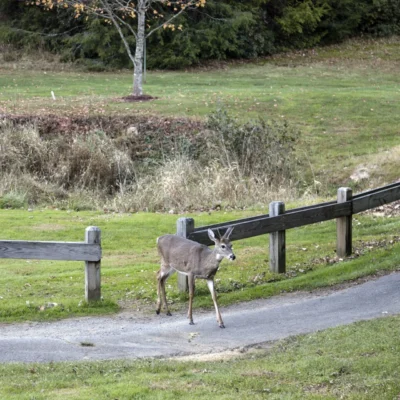
Mingo Oak — the site of a legendary white oak tree that was once the largest known white oak in the world — 577 years old, 145 feet tall, with a 20-foot circumference when it died in 1938. A successor sapling now grows nearby. The site’s Appalachian forest supports white-tailed deer, songbirds, and wild turkeys.
Nearby Attractions
Mingo County — surrounding. Williamson — nearby — heart of Hatfield-McCoy country. Hatfield-McCoy Trail System — nearby.
Keep exploring: The closest neighbors are Chief Logan State Park (a short drive away) and Twin Falls State Park (within about an hour’s drive).

🐾 Dogs & Pets at Mingo Oak
- Pets allowed? statewide rule
- Dogs and cats (the only pets permitted) are welcome in West Virginia state parks and forests, including campgrounds and trails, if leashed, restrained, vaccinated and in good health.
- Leash rule statewide rule
- Pets must be leashed and restrained at all times; in lodging public areas a sturdy leash no longer than 10 ft is required
- Cabins & lodging statewide rule
- Select pet-friendly cabins, cottages and lodge rooms at 16 state parks and 4 state forests (e.g. Babcock, Blackwater Falls, Cacapon Resort, Twin Falls Resort); lodge rooms $25 first night + $10 each additional night per pet (capped at $75 per visit), cabins $50 first night + $5 each additional night per pet
- Pet fees statewide rule
- Lodging pet fees: lodge rooms $25 first night + $10/additional night per pet (max $75/visit); cabins $50 first night + $5/additional night per pet
- Statewide exceptions statewide rule
- Only dogs and cats permitted; maximum two pets in pet-friendly lodging; rabies certification required for lodging stays
Are dogs allowed at Mingo Oak?
Dogs and cats (the only pets permitted) are welcome in West Virginia state parks and forests, including campgrounds and trails, if leashed, restrained, vaccinated and in good health. Individual parks can post stricter rules — check signage on arrival.
Rules verified July 2026 via wvstateparks.com. More: West Virginia state parks guide · Dog rules in all 50 states compared
Park Location
Plan your gear for Mingo Oak
From our editorial guides, matched to this park’s activities:

Top Tours & Activities in West Virginia
 from $109
 from $103
 from $200