
🌤 Weather at Brunswick Town by season
| Spring | Summer | Fall | Winter |
|---|---|---|---|
| 43–82 °F | 69–92 °F | 44–86 °F | 36–63 °F |
Each range runs from the coldest monthly average low to the warmest monthly average high in that season (1991-2020 climate normals), measured at Southport 5 N, 3 mi away, elevation 20 ft. Conditions at the park can differ from the station, especially where elevation differs — check a forecast before you go.

🏆 Colonial Capital Ruins — Ruins of colonial Brunswick Town + Civil War Fort Anderson — two layers of dramatic American history on the Cape Fear River
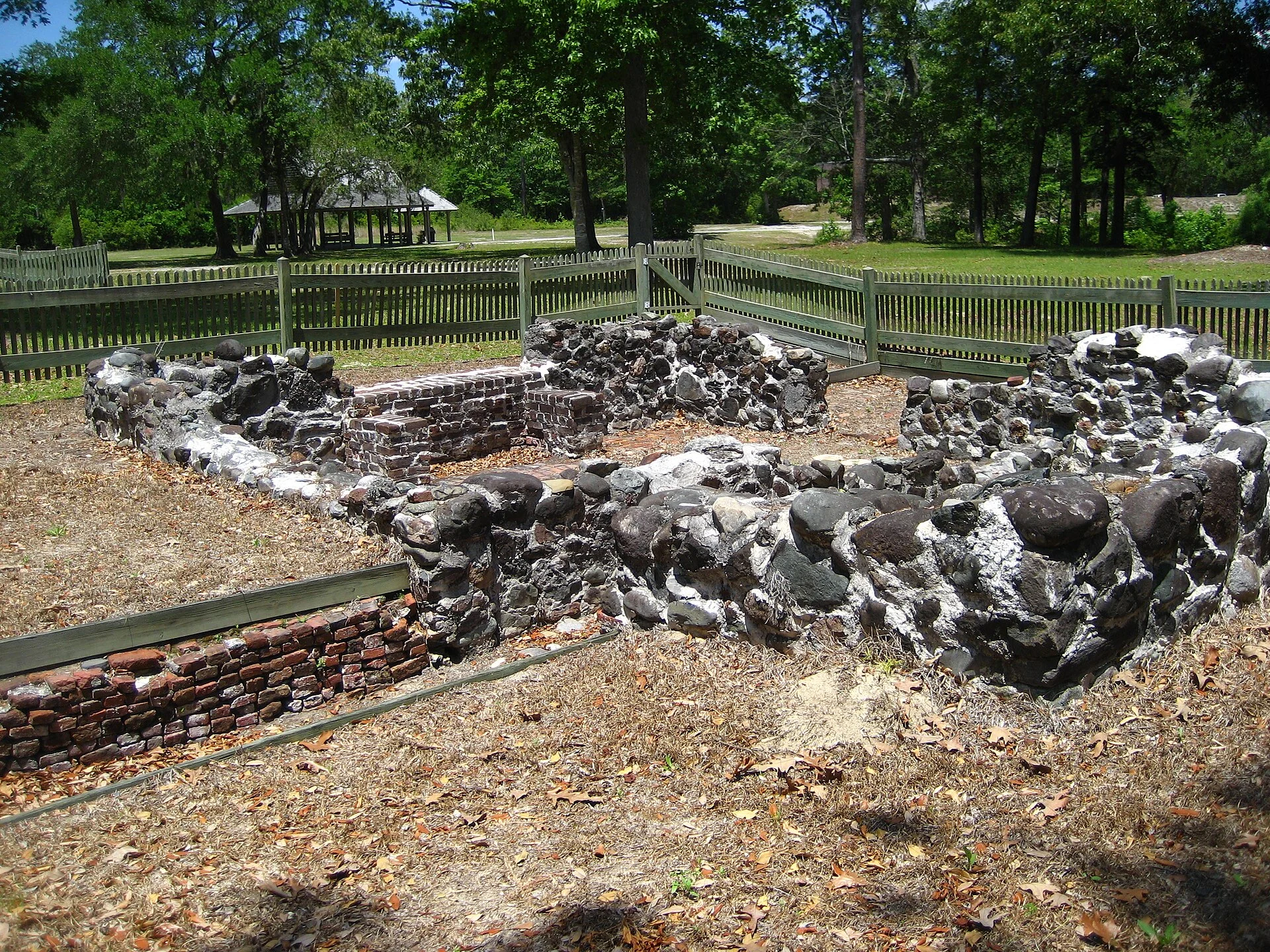
Brunswick Town/Fort Anderson State Historic Site preserves the ruins of colonial Brunswick Town (founded 1726) and the Civil War earthworks of Fort Anderson — stacked on top of each other on the Cape Fear River. Brunswick Town was one of the most important colonial ports in North Carolina — the site of the “Stamp Act Resistance” in 1766, when armed colonists prevented the unloading of stamped paper (9 years before Lexington!). The town was burned by the British in 1776 and never rebuilt. During the Civil War, Confederates built Fort Anderson over the ruins to defend the vital port of Wilmington — the last major Confederate port to fall (February 1865).
Visitor Information
| Detail | Information |
|---|---|
| Location | Brunswick County, NC (Cape Fear River!) |
| Entry Fee | Free |
| Colonial | Founded 1726 — Stamp Act 1766! |
| Civil War | Fort Anderson — last major port 1865! |
Frequently Asked Questions
What happened at the Stamp Act Resistance?
In November 1765, 500 armed colonists surrounded Brunswick Town to prevent the royal stamp master from distributing stamped paper required by Parliament’s Stamp Act. This was one of the earliest acts of organized colonial resistance — 9 years before the Boston Tea Party and 10 years before Lexington.
Why was Brunswick Town abandoned?
Brunswick Town was burned by the British Navy in 1776 as punishment for colonial resistance. Residents had already been moving to nearby Wilmington, which had a better harbor. After the burning, no one rebuilt. The ruins lay undisturbed for 200 years — making it an exceptional archaeological site. Confederate soldiers built Fort Anderson on the ruins in 1862, adding another layer of history to this remarkable place.
Make it a road trip: Pair a visit with Carolina Beach State Park (a short drive away) or Fort Fisher State Recreation Area (a short drive away).
🏰 Visit Brunswick Town/Fort Anderson
Colonial ruins + Civil War fort — Stamp Act Resistance 1766!
Insider Tips
Colonial ghost town: Brunswick Town was a thriving colonial port — burned by the British in 1776 and never rebuilt. Pro tip: The ruins include Fort Anderson, a Confederate earthwork fort built directly on top of the colonial ruins during the Civil War. Cape Fear: The Cape Fear River was colonial NC’s most important waterway — Wilmington and Brunswick competed for commerce.
Best Time to Visit
Spring/fall: Comfortable weather for ruins exploration. Summer: Full programming. Winter: Mild coastal winter. Year-round: Ruins accessible.
Wildlife & Nature
Brunswick Town / Fort Anderson SHS — preserves the ruins of a colonial port town (founded 1726) and a Civil War earthwork fort. Brunswick Town was burned by the British in 1776. Fort Anderson was a Confederate stronghold defending the Cape Fear River. The site’s live oaks, ruins, and river support osprey, painted buntings, and alligators.
Nearby Attractions
Southport — 10 miles south. Fort Fisher SHS — 5 miles south. Wilmington — 15 miles north.

🐾 Dogs & Pets at Brunswick Town
- Pets allowed? statewide rule
- Pets are permitted in all North Carolina state parks as long as they are on an attended leash and under the constant control of the owner.
- Leash rule statewide rule
- Attended leash or other restraint no longer than 6 feet required at all times
- Beaches & swim areas statewide rule
- Pets are not permitted at swim areas or in bathhouses
- Cabins & lodging statewide rule
- Pets are strictly prohibited from entering any building, including cabins; no pet-friendly cabin program
- Statewide exceptions statewide rule
- Not all campgrounds allow pets (contact the park office first); pets must be confined to tent or vehicle during quiet hours (10 p.m.-7 a.m.); at Hammocks Beach visitors must arrange their own transportation for pets to Bear Island
Are dogs allowed at Brunswick Town?
Pets are permitted in all North Carolina state parks as long as they are on an attended leash and under the constant control of the owner. Individual parks can post stricter rules — check signage on arrival.
Rules verified July 2026 via ncparks.gov. More: North Carolina state parks guide · Dog rules in all 50 states compared
Park Location

Top Tours & Activities Near Carolina Beach
 from $55
 from $1,225
 from $29