🌤 Weather at Heavener Runestone Park by season
| Spring | Summer | Fall | Winter |
|---|---|---|---|
| 39–79 °F | 68–93 °F | 39–86 °F | 27–56 °F |
Each range runs from the coldest monthly average low to the warmest monthly average high in that season (1991-2020 climate normals), measured at Wister 3S, 8 mi away, elevation 525 ft. Conditions at the park can differ from the station, especially where elevation differs — check a forecast before you go.

⚔️ Oklahoma’s Viking Mystery — Ancient runic inscriptions on Poteau Mountain, 2+ miles of cliff trails, free admission, and one of America’s most debated archaeological puzzles
On a sandstone slab tucked into a ravine on Poteau Mountain, eight characters are carved deep into the rock face. They look like Elder Futhark runes — the alphabet of the Vikings. If the inscription is genuine, Norse explorers reached eastern Oklahoma sometime between 600 and 900 AD, more than 500 years before Columbus. If it is not genuine, someone went to extraordinary effort to create one of the most convincing archaeological hoaxes in American history. Either way, the stone is real, the carvings are deep, and the debate has been going on for over a century.
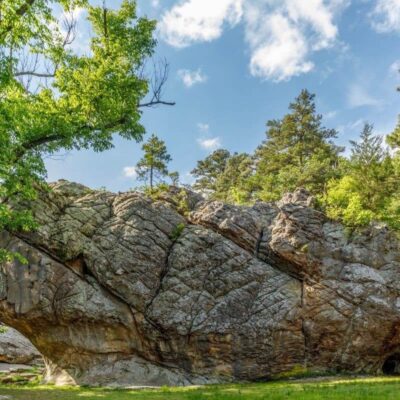
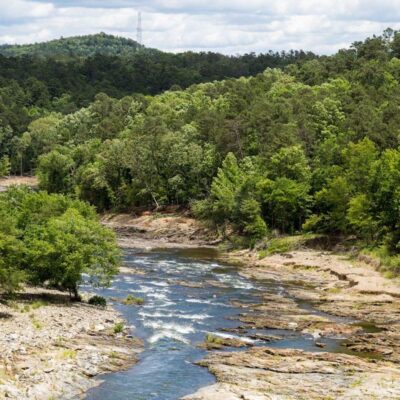
Heavener Runestone Park sits on 55 wooded acres on the slopes of Poteau Mountain in LeFlore County, Oklahoma. The park protects the runestone itself — a massive slab roughly 10 by 12 feet — along with hiking trails that wind through Ouachita Mountain forest and along cliff edges with views stretching to Lake Wister and the Arkansas River Valley. It is a small park with a big mystery, and whether you come as a history buff, a skeptic, a hiker, or simply someone who wants to stand in front of a stone that might be 1,400 years old, Heavener delivers an experience that no other state park in America can match.
The Runestone: History, Mystery, and Debate
The eight characters carved into the sandstone slab have been the subject of scholarly debate since at least the 1920s, when Carl Albert — future Speaker of the U.S. House of Representatives — brought them to public attention. The characters closely match Elder Futhark runes, the oldest form of the runic alphabets used by Germanic and Norse peoples from roughly the 2nd to 8th centuries AD.
The Viking Theory
Proponents argue the inscription reads “GLOMEDAL” (Glome’s Valley) or a similar place-name, and that it served as a boundary marker left by Norse explorers who traveled inland via the Mississippi and Arkansas River systems. The depth and weathering of the carvings suggest significant age, and at least one translation — by cryptographer Alf Monge — proposed that the runes encode a date corresponding to November 11, 1012 AD. Several other runestone-like carvings have been reported in the surrounding area (the Poteau Stone, the Shawnee Stone), suggesting a possible pattern of Norse presence in the region.
The Skeptic’s View
Most mainstream archaeologists and runologists consider the inscription to be of more recent origin — likely 19th or early 20th century, possibly created by Scandinavian immigrants who settled in Oklahoma during that period. Critics point out that the rune forms are inconsistent with any single historical period, that no supporting Norse artifacts have been found in the area, and that hoax runestones are a well-documented phenomenon in American history (the Kensington Runestone in Minnesota being the most famous example).
What You’ll See
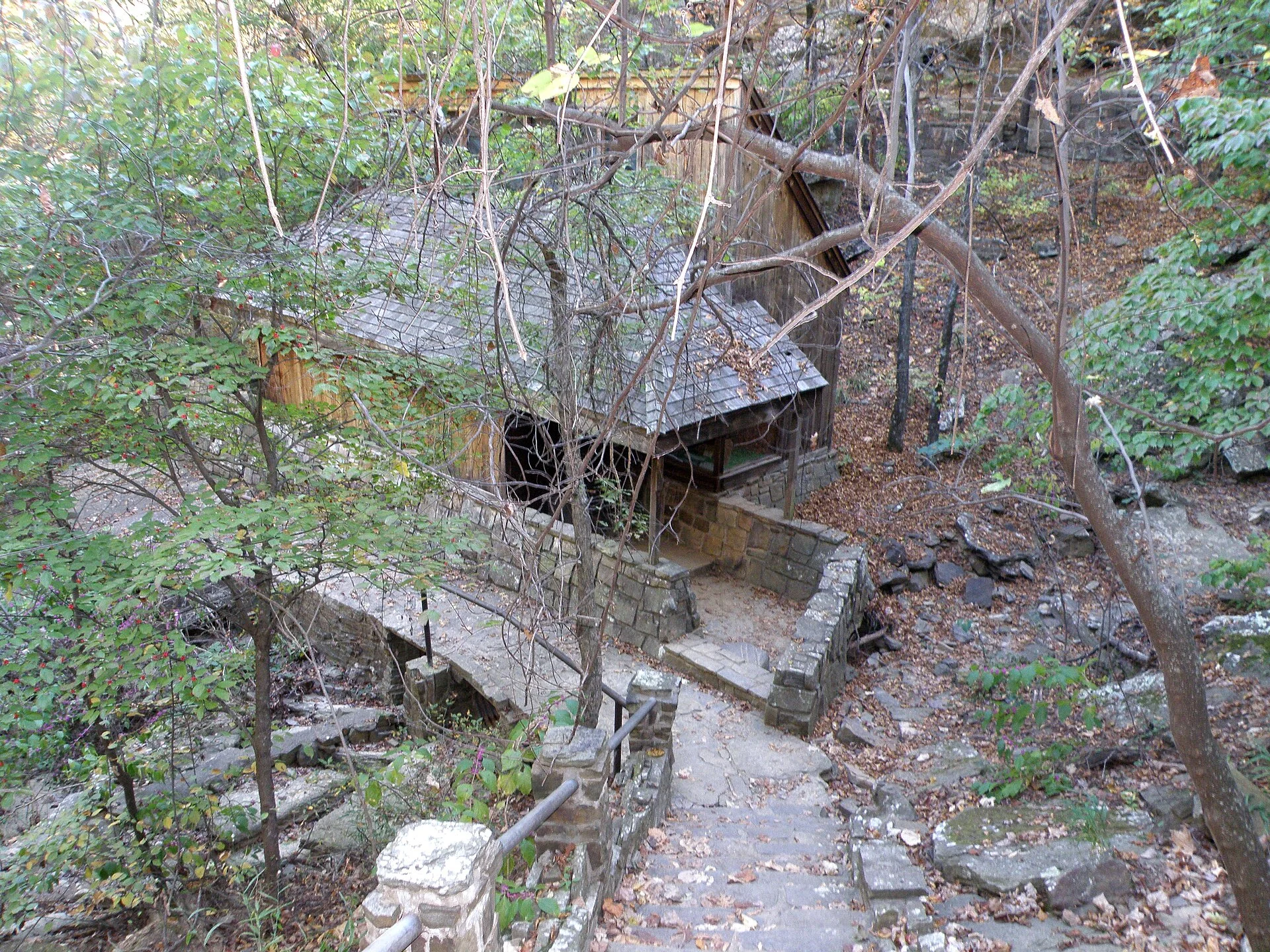
The stone itself is now protected under a permanent shelter with interpretive displays explaining both theories. The carvings are clearly visible, deeply incised into the tan sandstone. Even if you arrive skeptical, standing in front of those eight characters — whatever their true origin — is a genuinely compelling experience. The gift shop and information center provide additional context, maps, and locally-made Viking-themed merchandise.
Hiking Trails
| Trail Name | Distance | Difficulty | Highlights |
|---|---|---|---|
| Runestone Interpretive Trail | 0.12 mi | Easy | Paved path from gift shop to the sheltered runestone |
| Nature Trail | 1.0 mi | Easy-Moderate | Forest loop through Ouachita hardwoods, wildflowers in spring |
| Cliffside Trail | 1.0 mi | Moderate | Ridge walk with overlooks of Heavener, Lake Wister, Arkansas Valley |
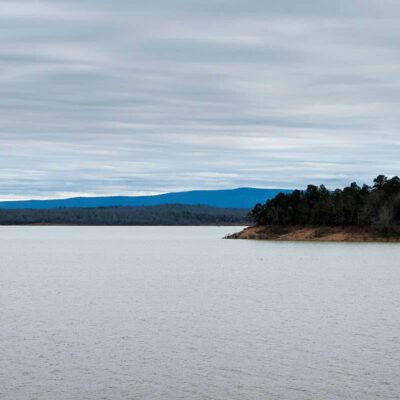
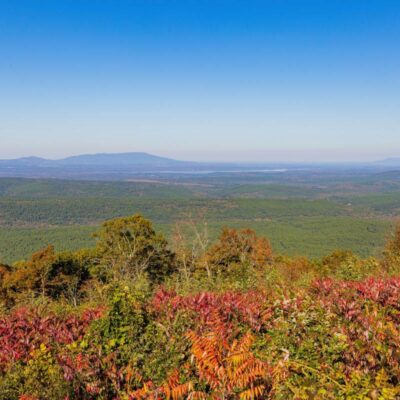
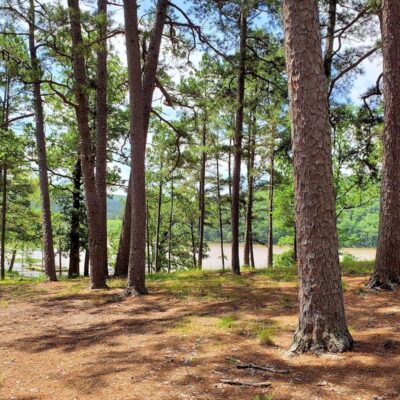
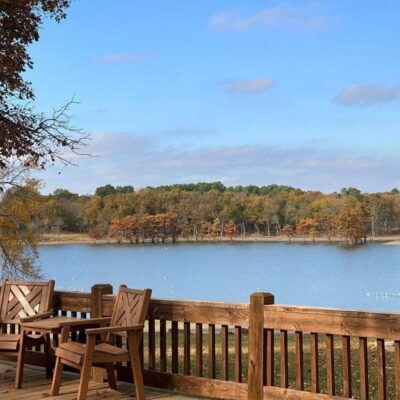
The Cliffside Trail is the highlight for hikers — the southern cliff overlooks provide panoramic views of the town of Heavener below and the distant shimmer of Lake Wister. The trail follows exposed sandstone ledges, so watch your footing near the edges. In spring (April-May), the Nature Trail loop is carpeted with wildflowers, and the forest canopy creates cool shade even on warm days. The entire trail system can be hiked in under two hours.
What to Do at Heavener Runestone Park
1. View the Runestone
The main attraction. Walk the short interpretive trail from the gift shop to the sheltered runestone and examine the eight carved characters up close. Read the interpretive panels that present both the Viking theory and the skeptic’s view. Take your time — the stone rewards careful observation, and the ravine setting adds atmosphere.
2. Hike the Cliffside Trail
The one-mile ridge trail offers the best views in the park. The sandstone cliffs drop away to the south, providing overlooks of the Arkansas River Valley and Lake Wister. Morning light is best for photography. The trail surface is natural rock and dirt — wear sturdy shoes.
3. Picnic on Poteau Mountain
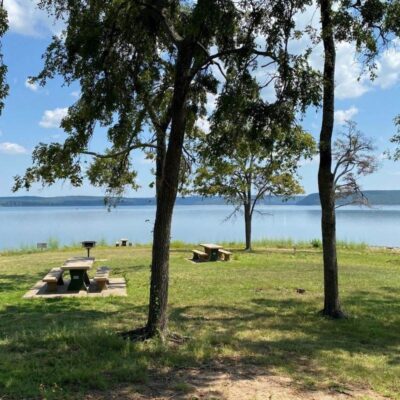
The park has shaded picnic areas with tables and grills, set among mature oaks and hickories on the mountainside. It is a peaceful setting with forest sounds and cool mountain air, especially welcome during Oklahoma’s hot summers.
4. Camp Under the Stars
The park offers tent camping sites, including some with electrical hookups and a few primitive/secluded sites deeper in the woods. A shower house and restrooms are available. The mountain location means less light pollution than the valley below, making for decent stargazing on clear nights.
5. Attend the Viking Festival
The park hosts Viking-themed festivals (typically in spring and fall) featuring historical demonstrations, Norse reenactors, artisan vendors, and themed activities for families. These events draw Viking enthusiasts and history buffs from across the region. Check the park’s website for current event dates.
6. Explore the Gift Shop and Museum
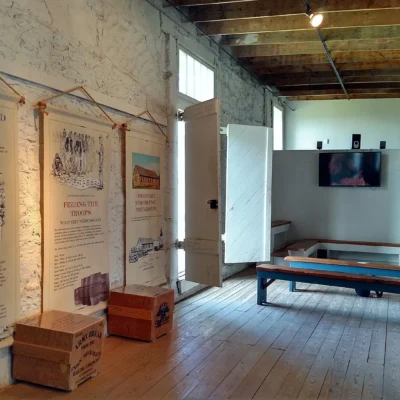
The information center doubles as a small museum with exhibits on the runestone’s discovery, the various translation theories, and the broader question of pre-Columbian Norse exploration in North America. The gift shop carries books on the topic, locally-made crafts, and Viking-themed souvenirs. Staff members are knowledgeable and happy to discuss the competing theories.
Best Time to Visit
| Season | Weather | Crowds | Best For |
|---|---|---|---|
| Spring (Mar–May) | 55–80°F | Low-Moderate | Wildflowers, comfortable hiking, Viking festivals |
| Summer (Jun–Aug) | 80–100°F | Moderate | Early morning hikes, camping, long daylight hours |
| Fall (Sep–Nov) | 50–80°F | Moderate | Foliage on Poteau Mountain, fall festivals, cool hiking |
| Winter (Dec–Feb) | 30–55°F | Low | Solitude, photography, off-season quiet |
Spring and fall offer the most comfortable conditions for hiking and outdoor activities. Oklahoma summers can be brutally hot — if visiting June through August, start your hike early in the morning and bring plenty of water. The mountain elevation provides some relief compared to the valley floor, but midday heat is still intense. The gift shop hours shift seasonally: 10 AM–6 PM (March–September) and 9 AM–5 PM (October–February).
Know Before You Go
Getting There
Heavener Runestone Park is located at 18365 Runestone Rd, Heavener, OK 74937, on the slopes of Poteau Mountain in LeFlore County. From Poteau, take US-59 South approximately 8 miles to Heavener, then follow signs to the park (roughly 3 miles up Runestone Road). From Fort Smith, Arkansas, cross the state line and head south on US-59 — about 30 minutes. The road to the park climbs the mountain and is paved but narrow in places.
Fees
Admission is free. Donations are encouraged and directly support park maintenance and operations. Camping fees are modest — check current rates at the park office or on the website.
Facilities
The park has restrooms, a shower house (for campers), picnic shelters, a playground, an amphitheater for events, and the gift shop/information center. No food is sold in the park — bring your own supplies or eat in Heavener (8 minutes down the mountain).
💰 Trip Cost Estimator
| Expense | Day Trip | Overnight (1 Night) | Notes |
|---|---|---|---|
| Park Admission | FREE | FREE | Donations appreciated |
| Camping (Electric) | — | $15–25 | Shower house included |
| Camping (Primitive) | — | $10–15 | Secluded forest sites |
| Food | $10–20 | $25–40 | Bring your own or eat in Heavener |
| Gas (from OKC) | $50 | $50 | ~190 miles each way |
| Total (Day Trip) | $60–70 | — | Family of 4 |
| Total (Overnight) | — | $85–130 | Family of 4, camping |
Nearby Attractions
Lake Wister State Park is approximately 15 minutes southwest and offers boating, fishing, swimming, and full-service camping — a natural companion for a multi-day trip paired with Heavener Runestone. The Ouachita National Forest surrounds the area with hundreds of miles of hiking and mountain biking trails. Talimena National Scenic Byway — one of America’s finest fall foliage drives — begins about 45 minutes north. Fort Smith, Arkansas, with its historic downtown, riverfront parks, and restaurants, is just 30 minutes east across the state line.
Frequently Asked Questions
Is the Heavener Runestone real?
The stone and its carvings are definitely real — you can see them with your own eyes. The debate is about their origin. Some researchers believe Norse explorers carved the runes between 600 and 1000 AD. Most mainstream archaeologists believe the inscription is more recent, likely 19th century. The park presents both perspectives and lets you decide.
How long does a visit take?
A focused visit (runestone viewing + gift shop) takes about 45 minutes to 1 hour. Add 1–2 hours for the hiking trails. A half-day visit covers everything comfortably. Overnight camping extends the experience with stargazing and morning hikes.
Is the park accessible?
The Runestone Interpretive Trail from the gift shop to the stone is short (about 200 yards) and relatively accessible, though there is some grade change. The Cliffside and Nature Trails are natural-surface paths with uneven terrain and are not wheelchair accessible.
Are dogs allowed?
Yes — dogs are welcome on leash throughout the park, including on trails and in the camping area. Owners are expected to clean up after their pets.
Is there a fee to see the runestone?
No — admission to the entire park, including the runestone, is free. Donations are appreciated and help maintain the site.
Keep exploring: The closest neighbors are Lake Wister State Park (a short drive away) and Talimena State Park (within about an hour’s drive).
Camping reservations: Heavener Runestone Park is owned by the City of Heavener and cared for by Friends of Heavener Runestone, a local nonprofit, not by Oklahoma State Parks. Book campsites through the park’s reservations page.
⚔️ Ready to Solve the Viking Mystery?
Ancient runes carved into an Oklahoma mountainside. One of America’s most enduring archaeological debates. Cliff-edge views of the Arkansas Valley. Free admission. Whether you’re a believer or a skeptic, the Heavener Runestone demands to be seen in person.
Wildlife & Nature
Heavener Runestone Park — features the Heavener Runestone — a 12-foot stone slab with runic inscriptions that some believe were carved by Vikings around 600-900 AD. The park’s Poteau Mountain, forest, and ravines support white-tailed deer, wild turkeys, and black bears.

⛺ Camping at Heavener Runestone Park: Campgrounds & Cabins
| Campsites | Tent sites, including some with electrical hookups, plus secluded primitive sites and one limited RV site suited to vehicles 16 ft or smaller (no dump station); reported site counts vary between sources (12-13 tent/primitive sites plus 1 RV site, or 18 sites total in some listings) and are not confirmed on the operator's own page. |
|---|---|
| Pets | Dogs allowed, must be kept on a leash at all times; owners must clean up after them. |
| Reservations | Reservations made through Hipcamp; park phone (918) 653-2241. |
| Special sites | Free hot showers at the shower house; restrooms near the front parking area; group camping available. |
Camping questions about Heavener Runestone Park
Can you camp at Heavener Runestone Park?
Tent sites, including some with electrical hookups, plus secluded primitive sites and one limited RV site suited to vehicles 16 ft or smaller (no dump station); reported site counts vary between sources (12-13 tent/primitive sites plus 1 RV site, or 18 sites total in some listings) and are not confirmed on the operator's own page.
How do you reserve a campsite at Heavener Runestone Park?
Reservations made through Hipcamp; park phone (918) 653-2241.
Are pets allowed at the Heavener Runestone Park campground?
Dogs allowed, must be kept on a leash at all times; owners must clean up after them.
Source: heavenerrunestonepark.com (verified July 2026). Details change seasonally — confirm when booking.
Park Map
Plan your gear for Heavener Runestone Park
From our editorial guides, matched to this park’s activities: