

🌤 Weather at John Pennekamp Coral Reef State Park by season
| Spring | Summer | Fall | Winter |
|---|---|---|---|
| 67–85 °F | 77–90 °F | 70–89 °F | 63–78 °F |
Each range runs from the coldest monthly average low to the warmest monthly average high in that season (1991-2020 climate normals), measured at John Pennekamp State Park, 6 mi away, elevation 6 ft. Conditions at the park can differ from the station, especially where elevation differs — check a forecast before you go.

There’s a moment on a snorkeling tour at John Pennekamp Coral Reef State Park when you first put your face in the water and the world transforms. One second you’re floating on the surface of the warm Atlantic, hearing the boat engine and the wind and your own breathing. The next second, you’re looking down into an alien landscape of brain coral and sea fans swaying in the current, schools of neon-blue tang and yellow-striped grunts drifting past your mask, and maybe—if you’re lucky and patient—a green sea turtle cruising beneath you with the unhurried grace of a creature that has been doing this for 100 million years.
John Pennekamp Coral Reef State Park in Key Largo, Florida, was established in 1960 as the first undersea park in the United States, and it remains one of the most extraordinary experiences in the entire American state park system. The park protects approximately 70 nautical square miles of Atlantic Ocean waters containing the only living coral barrier reef in the continental United States—a reef system that rivals anything in the Caribbean and exists just a short boat ride from the shores of Key Largo. Combined with mangrove swamps, seagrass meadows, and two man-made beaches on shore, the park offers a complete marine ecosystem experience that ranges from wading in shin-deep water to diving with barracuda at 25 feet.
What makes Pennekamp genuinely special isn’t just the reef—it’s the accessibility. You don’t need to be a certified diver or even a strong swimmer to experience world-class coral reef snorkeling. Glass-bottom boat tours let you see the reef without getting wet at all. Kayak trails wind through mangrove tunnels where manatees surface to breathe. And the park’s 47-site campground puts you within walking distance of the visitor center’s 30,000-gallon saltwater aquarium, where you can study the reef species before meeting them face-to-face the next morning. For families, for first-time snorkelers, for experienced divers, and for anyone who has ever wondered what lies beneath the surface of the Florida Keys’ turquoise waters, this park is the answer.
History: Saving America’s Only Living Coral Reef
The story of John Pennekamp State Park is fundamentally a conservation story—and a close call. In the 1930s, plans emerged to include the coral reefs off Key Largo within the boundaries of the newly proposed Everglades National Park, but fierce local opposition blocked the effort. For the next two decades, the reefs remained unprotected, and tourists and souvenir hunters helped themselves to living coral, removing chunks of reef that had taken centuries to grow.
By the late 1950s, marine biologist Dr. Gilbert Voss of the University of Miami’s Marine Institute sounded the alarm: the reef was being loved to death. He found an ally in John D. Pennekamp, an associate editor at the Miami Herald and one of Florida’s most influential voices for conservation. Pennekamp had already played a pivotal role in establishing Everglades National Park, and he used his editorial platform to campaign relentlessly for reef protection. In 1960, President Dwight Eisenhower proclaimed the area the Key Largo Coral Reef Preserve, and Florida Governor LeRoy Collins officially designated it John Pennekamp Coral Reef State Park—the first park of its kind in the Western Hemisphere.
The park was added to the National Register of Historic Places in 1972, and in 1975, the adjacent Key Largo National Marine Sanctuary was established by the federal government, extending protections seaward. Together, these overlapping designations protect one of the most biologically rich marine environments in the continental United States—a living laboratory where more than 600 species of fish, 32 species of stony coral, and 14 species of octocoral create an underwater world that rivals the Caribbean’s finest reefs.
Snorkeling: Your Window to the Reef
Snorkeling is the most popular activity at Pennekamp and the best way for most visitors to experience the coral reef. The park’s concessionaire operates guided snorkeling tours that depart from the marina multiple times daily, running approximately 2.5 hours with about 1.5 hours of actual reef time. Tours typically visit two different reef sites at depths of 5 to 25 feet, making them accessible for all ages and swimming abilities.
| Snorkel Site | Depth | Difficulty | Highlights |
|---|---|---|---|
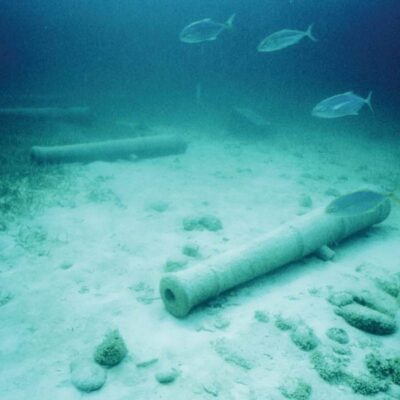
| Cannon Beach (shore) | 3–5 ft | Easy (wade-in) | Spanish shipwreck artifacts, tropical fish, no boat required, free with park entry |
| Grecian Rocks | 5–15 ft | Easy | Shallow reef, excellent for beginners, elkhorn coral, parrotfish, sergeant majors |
| Key Largo Dry Rocks | 10–25 ft | Moderate | Christ of the Abyss statue (9-ft bronze at 25 ft depth), brain coral, angelfish |
| Molasses Reef | 10–40 ft | Moderate–Advanced | Largest reef in the park, massive formations, barracuda, nurse sharks, sea turtles |
| White Banks | 10–20 ft | Easy–Moderate | Seagrass and patch reefs, spotted eagle rays, southern stingrays |
For visitors who want a free snorkeling experience, Cannon Beach is the hidden gem. This man-made beach features submerged artifacts from a Spanish shipwreck—replica cannons and ballast stones—that attract tropical fish in waist-deep water. You can wade in from shore, no boat required, and spend as long as you want exploring. It’s an ideal introduction for children or first-time snorkelers before committing to a full boat tour.
The most iconic snorkeling destination is Key Largo Dry Rocks, home to the famous Christ of the Abyss—a nine-foot bronze statue standing in 25 feet of crystal-clear water with arms outstretched toward the surface. The statue, placed in 1965, has become encrusted with living coral and surrounded by schools of tropical fish, creating one of the most photographed underwater scenes in the world. Even snorkelers on the surface can see the statue clearly on calm days.
Scuba Diving
For certified divers, Pennekamp offers a world-class reef diving experience without the expense and hassle of international travel. The park’s PADI Five-Star Gold Palm dive shop operates guided two-tank dive trips departing twice daily, typically at 9:30 AM and 1:30 PM. Dive sites range from shallow patch reefs at 15 feet to deeper formations at 40 feet, and visibility generally ranges from 30 to 60 feet depending on conditions.
The dive shop also offers a Resort Course for non-certified beginners—a half-day program that includes pool instruction followed by a shallow reef dive. For experienced divers, night dives and specialty tours are available seasonally. Equipment rental (BCD, regulator, wetsuit, mask, fins) runs approximately $40–60 per person on top of the dive trip fee.
Glass-Bottom Boat Tours & Kayaking
Not everyone wants to get wet, and Pennekamp delivers reef viewing from the comfort of a boat. Glass-bottom boat tours depart three times daily, running approximately 2.5 hours with about 1.5 hours over the reef. The boat motors to coral formations and drifts slowly, allowing passengers to watch reef fish, coral, and marine life through the transparent hull. Tours are wheelchair-accessible and suitable for all ages, making them the best option for families with very young children or visitors with mobility limitations.
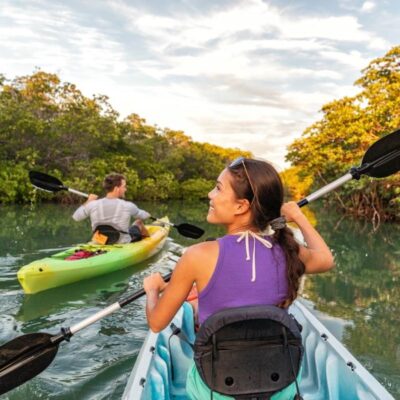
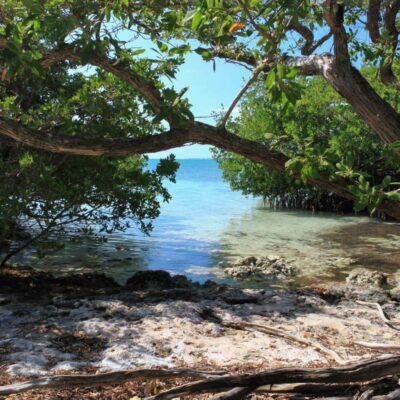
Kayaking offers a completely different Pennekamp experience. Kayak and canoe rentals are available at the marina, and self-guided trails wind through mangrove tunnels that serve as nursery habitat for juvenile fish, spiny lobsters, and crabs. Manatees are regularly spotted in the mangrove channels, especially during winter months (November–March) when they seek warmer shallow-water habitat. Paddling through these tunnels of overarching red mangrove roots, with only the sound of your paddle and occasional fish splashing, is one of the most peaceful experiences in the Florida Keys.
Camping
| Campsite Type | Sites | Hookups | Max RV Length | Rate/Night |
|---|---|---|---|---|
| Full Facility Sites | 47 | Water, Electric (30/50-amp, 110V) | 40 ft (some longer) | $33–48 |
| Primitive Group Site | 1 | None (no electricity) | N/A (tent only) | Contact park |
Pennekamp’s 47-site campground is one of the most sought-after in the Florida state park system—camping in the Florida Keys with water and electric hookups, hot showers, laundry facilities, and the reef literally at your doorstep. Each site includes a picnic table and grill, and the campground is shaded by tropical hardwoods that provide welcome relief from the Keys sun. Reservations are essential, especially during winter season (November–April) and holidays. Book up to 11 months in advance through ReserveAmerica—popular dates sell out within minutes of opening.
Best Time to Visit: A Seasonal Guide
| Season | Weather | Water Conditions | Best For |
|---|---|---|---|
| Winter (Dec–Feb) | 70–80°F, low humidity | 70–75°F, excellent visibility | Best weather, clearest water, peak manatee season, snowbird crowds |
| Spring (Mar–May) | 80–85°F, moderate | 75–80°F, good visibility | Comfortable temps, shoulder season pricing, spring break crowds Mar |
| Summer (Jun–Aug) | 88–92°F, very humid | 82–86°F, variable | Warmest water, lobster mini-season (Jul), afternoon thunderstorms, lowest prices |
| Fall (Sep–Nov) | 82–88°F, hurricane risk | 80–84°F, variable | Fewest crowds, best lodging deals, hurricane season risk through November |
Winter and early spring offer the best overall experience—comfortable air temperatures, the clearest water visibility, and the highest probability of calm seas that make for ideal snorkeling and diving conditions. The trade-off is that this is peak season, so campground reservations, snorkeling tours, and dive trips can fill up weeks in advance. Summer brings warmer water temperatures (great for comfortable snorkeling) but also afternoon thunderstorms that can cancel boat tours and reduce visibility.
Photography Guide
📸 Best Photo Opportunities & Settings
• Christ of the Abyss Underwater: The iconic 9-foot bronze statue at 25 feet depth. Best with natural light on clear days, 10 AM–2 PM for overhead sun penetration. Wide-angle (10-17mm fisheye), f/8, auto ISO. GoPro or underwater housing required. Shoot upward for dramatic sunburst effect.
• Coral Close-ups: Brain coral, elkhorn coral, and sea fans provide incredible macro subjects. Get close (within 12 inches) and use a macro port or macro mode. Strobe lighting dramatically improves color rendition at depth. 60-100mm macro, dual strobes.
• Mangrove Tunnels: Kayaking through overarching mangrove roots creates natural framing. Morning light filtering through the canopy is magical. Waterproof camera or dry bag essential. Wide-angle, f/5.6.
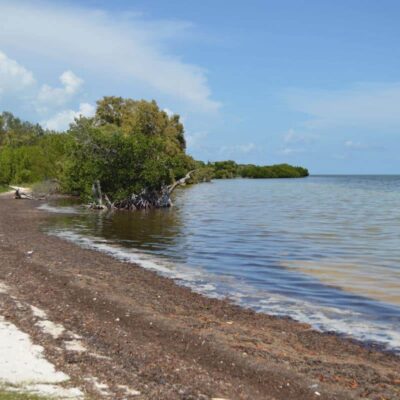
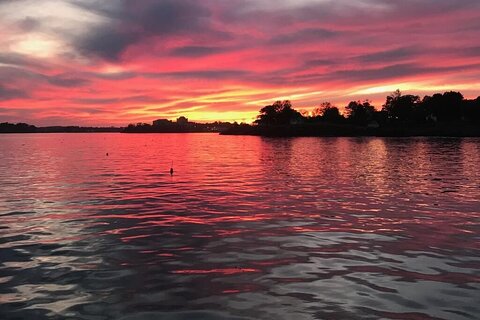
• Sunset over Florida Bay: From Far Beach, westward sunsets over Florida Bay produce spectacular skies. The park closes at sunset, so time carefully. 16-35mm, f/11, graduated ND filter for sky/water balance.
• Aquarium Portraits: The 30,000-gallon aquarium at the visitor center offers close reef-fish photography without getting wet. Press lens against glass to eliminate reflections, no flash. 50-100mm, f/2.8, high ISO.
Budget Planning
| Expense | Day Visit | Camping Weekend | Notes |
|---|---|---|---|
| Park Entry (per vehicle) | $8 | $8/day | Plus $0.50/person; single vehicle $4.50 |
| Snorkeling Tour | $78–85 | $78–85 | Includes equipment, snacks, reef-safe sunscreen |
| Scuba Diving (2-tank) | $100–130 | $100–130 | Plus equipment rental $40–60 if needed |
| Glass-Bottom Boat | $24–30/adult | $24–30/adult | Children 4–11 approximately $17 |
| Kayak Rental | $17–30/hr | $17–30/hr | Single and tandem available |
| Camping | — | $33–48/night | Water and electric hookups included |
| Estimated Total | $110–220 | $260–500 | Reserve tours/camping well in advance |
Wildlife & Marine Life
| Species | Best Season | Where to Look | Notes |
|---|---|---|---|
| 🐢 Green Sea Turtles | Year-round | Molasses Reef, seagrass beds | Often seen grazing on seagrass; approach slowly, maintain 15-ft distance |
| 🐠 Queen Angelfish | Year-round | Coral heads at all reef sites | Electric blue and yellow; unmistakable, approachable for photos |
| 🦈 Nurse Sharks | Year-round | Under coral ledges, Molasses Reef | Docile bottom-dwellers; often resting under overhangs during day |
| 🐋 Manatees | Nov–Mar | Mangrove channels, marina area | Seek warm shallow water in winter; kayaking offers best encounters |
| 🐙 Caribbean Reef Octopus | Year-round | Rocky crevices, night dives | Color-changing camouflage; more active at dusk and night |
| 🦅 Ospreys | Year-round | Channel markers, mangrove tops | Dramatic fish-catching dives; nest on park structures |
The reef ecosystem at Pennekamp supports an extraordinary diversity of marine life—more than 600 species of fish have been documented in the park’s waters, along with 32 species of stony coral, 14 species of octocoral, and uncounted invertebrates from spiny lobsters to Christmas tree worms. The seagrass meadows serve as critical nursery habitat for juvenile fish and feeding grounds for sea turtles and manatees. Even from shore, visitors can spot great blue herons stalking the shallows, brown pelicans diving for fish, and magnificent frigatebirds soaring overhead on seven-foot wingspans.
Safety & Hazards
| Hazard | Risk Level | Prevention |
|---|---|---|
| ☀️ Sun Exposure | Very High | Wear reef-safe sunscreen (no oxybenzone), rash guard, and hat. Keys sun is intense, especially reflected off water. Reapply every 60 min |
| 🌊 Currents | Moderate | Stay with your snorkel/dive group. Strong currents possible at outer reef sites. Wear provided flotation vest if not a confident swimmer |
| 🪸 Coral Contact | Moderate | Do NOT touch, stand on, or kick coral—it’s alive and takes decades to recover. Fire coral causes intense burning. Maintain buoyancy control |
| 🪼 Jellyfish | Moderate (seasonal) | Portuguese man-of-war occasionally present in currents. Wearing a rash guard or wetsuit provides protection. If stung, apply vinegar |
| 🦟 Mosquitoes | High (summer) | Mangrove areas and campground can be intense, especially at dusk. Bring strong repellent |
The most important safety rule at Pennekamp is also a conservation rule: do not touch the coral. Living coral is an animal, not a rock, and even brief contact with hands, fins, or feet can kill coral tissue that took decades or centuries to grow. Fire coral, in particular, delivers a painful sting that feels like a severe burn. Maintain neutral buoyancy while snorkeling or diving, and keep your fins above the reef at all times. The reef survived 500 years of hurricanes—it shouldn’t have to survive careless tourists.
Visitor Information
| Detail | Information |
|---|---|
| Address | 102601 Overseas Highway, Key Largo, FL 33037 (MM 102.5) |
| Phone | (305) 451-6300 |
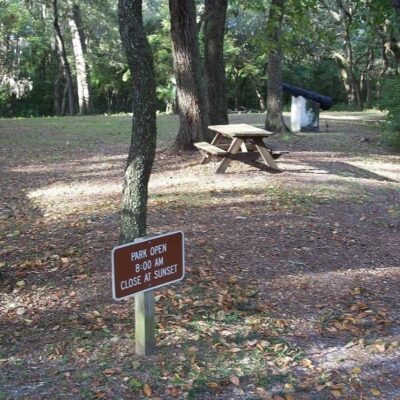
| Hours | 8:00 AM – Sunset, 365 days/year |
| Entry Fee | $8/vehicle (2–8 people) + $0.50/person |
| Camping | 47 sites, water/electric, $33–48/night |
| Dive Shop | PADI Five-Star Gold Palm, full equipment rental |
| Visitor Center | 30,000-gallon aquarium, exhibits, gift shop |
| Marina | Boat launch ($10/day), kayak/canoe rental, tour departure point |
Getting There & Nearby Attractions
John Pennekamp Coral Reef State Park is located at Mile Marker 102.5 on US Highway 1 (Overseas Highway) in Key Largo, Florida. From Miami International Airport, the drive south on the Florida Turnpike to US-1 takes approximately 1 hour and 15 minutes (60 miles). The park entrance is clearly marked on the ocean (left/east) side of US-1.
| Attraction | Distance | Drive Time | Highlights |
|---|---|---|---|
| Florida Keys Wild Bird Rehabilitation Center | 2 mi | 5 min | Injured pelicans, herons, raptors; free admission, educational |
| Dagny Johnson Key Largo Hammock | 5 mi | 10 min | Largest tract of West Indian hardwood hammock in US; rare butterflies |
| Key Largo Undersea Park | 3 mi | 5 min | Jules’ Undersea Lodge—only underwater hotel in the US |
| Islamorada (Theater of the Sea) | 18 mi | 25 min | Marine mammal park, dolphin encounters, sea lion shows |
| Everglades National Park | 35 mi | 45 min | Anhinga Trail, airboat tours, alligators, mangrove wilderness |
Frequently Asked Questions
Is John Pennekamp State Park worth visiting?
Absolutely—John Pennekamp is one of the most unique state parks in America and a must-visit for anyone traveling through the Florida Keys. It protects the only living coral barrier reef in the continental United States, offering snorkeling, diving, glass-bottom boat tours, kayaking, camping, and beach swimming in a single park. Whether you’re a certified diver, a first-time snorkeler, or someone who just wants to see the reef from a boat, the park delivers a world-class marine experience that would cost significantly more at a Caribbean resort.
Do I need to know how to swim to visit Pennekamp?
No. Glass-bottom boat tours let you experience the reef without entering the water at all. Cannon Beach offers wade-in snorkeling in waist-deep water where you can stand up at any time. For boat-based snorkeling tours, flotation vests are provided and recommended for non-swimmers. The visitor center’s 30,000-gallon aquarium also offers an excellent reef experience on dry land.
How far in advance should I book tours and camping?
For camping during peak season (November–April), book the maximum 11 months in advance—popular dates sell out within hours of opening. Snorkeling and diving tours during winter season should be booked at least 1–2 weeks ahead. Summer and fall are less competitive, and same-day bookings are sometimes possible for tours, though camping reservations are still recommended year-round.
What is the Christ of the Abyss statue?
The Christ of the Abyss is a nine-foot bronze statue of Christ with arms raised toward the surface, placed in 25 feet of water at Key Largo Dry Rocks reef in 1965. It’s a third casting of a statue originally created by Italian sculptor Guido Galletti—the first stands in the Mediterranean near Genoa. Over the decades, the statue has become encrusted with living coral and surrounded by tropical fish, making it one of the most photographed underwater sites in the world. It’s accessible to both snorkelers (visible from the surface) and divers.
Can I bring my own boat?
Yes. The park has a boat launch available for $10 per vessel per day. You’ll need to follow all park and marine sanctuary regulations, including no-anchor zones on the reef (use mooring buoys), no-take fishing regulations in certain areas, and speed restrictions in the channels. A nautical chart of the reef system is available at the visitor center.
Is the snorkeling good for beginners?
Excellent. Cannon Beach offers free, shore-based snorkeling in 3–5 feet of water—perfect for first-timers and children. Guided boat tours visit shallow reef sites (5–15 feet) where you can float on the surface and see everything below. Equipment is provided on tours, and crew members offer instruction for beginners. The warm, clear water (75–86°F year-round) and generally calm conditions make Pennekamp one of the best places in the United States to learn to snorkel.
Are there sharks at Pennekamp?
Yes—nurse sharks are commonly seen resting under coral ledges, and reef sharks occasionally patrol deeper areas. However, these species are not aggressive toward humans and incidents are essentially unheard of at the park. Nurse sharks in particular are bottom-dwelling, slow-moving animals that are far more interested in sea urchins than snorkelers. Seeing a shark on a dive is considered a highlight, not a hazard.
More parks in Florida: Dagny Johnson Key Largo Hammock Botanical State Park and Windley Key Fossil Reef Geological State Park. See the full Florida state parks guide.
🤿 Ready to Explore America’s First Undersea Park?
Snorkel over living coral reefs, dive to the Christ of the Abyss statue, kayak through mangrove tunnels where manatees breathe, and camp under the stars in the Florida Keys. No passport required.
Explore More Florida State Parks
John Pennekamp Coral Reef State Park is one of many outstanding state parks in Florida. Discover more parks in our Best State Parks in Florida guide, or use our Park Finder to search by activity, location, or features.

🐾 Dogs & Pets at John Pennekamp Coral Reef State Park
- Pets allowed? statewide rule
- Domestic pets are welcome in many Florida State Parks — on hiking trails, in picnic areas and campgrounds — but only in designated areas.
- Leash rule statewide rule
- Leashes may not exceed 6 feet; pets must be under physical control at all times.
- Beaches & swim areas statewide rule
- Pets are not permitted on beaches, boardwalks or playgrounds, or in bathing areas — swimming pets can be viewed as prey by alligators.
- Cabins & lodging statewide rule
- Pets are not allowed in any state park buildings, cabins or cabin areas.
- Statewide exceptions statewide rule
- Pets prohibited at several parks including Ellie Schiller Homosassa Springs (free kennels at the entrance), Weeki Wachee Springs and Egmont Key; in campgrounds pets must be confined in the camping unit 11 p.m.-7 a.m.
- Dogs & wildlife
- FWC's croc-wise guidance applies at the marina and Largo Sound where crocodiles are documented: keep your dog on a leash and away from the water's edge, and never swim with your pet - and note that in the park pets are permitted in designated areas only, on a leash no longer than six feet.
Are dogs allowed at John Pennekamp Coral Reef State Park?
Domestic pets are welcome in many Florida State Parks — on hiking trails, in picnic areas and campgrounds — but only in designated areas. Individual parks can post stricter rules — check signage on arrival.
Rules verified July 2026 via floridastateparks.org. More: Florida state parks guide · Dog rules in all 50 states compared
🐻 Wildlife at John Pennekamp Coral Reef State Park: What to Watch For — and Watch Out For
Worth watching for: Florida State Parks' own wildlife-viewing notes put more than 600 species of fish, 70 species of coral and a range of marine invertebrates in the park's waters, best seen from the glass-bottom or snorkel boats or in the swimming areas at Cannon Beach and Far Beach. Manatees and crocodiles occasionally turn up in the marina or in Largo Sound. On land, the 0.6-mile Grove Trail runs through tropical hardwood hammock to a historic fruit grove where you can often watch a myriad of butterfly species, while the 0.3-mile Wild Tamarind Trail loops through hammock and the 0.3-mile Mangrove Trail boardwalk crosses the swamp at the south end of the Far Beach parking lot. Songbirds use the hardwood forest, shorebirds work the small beaches, and pelagic birds pass overhead.
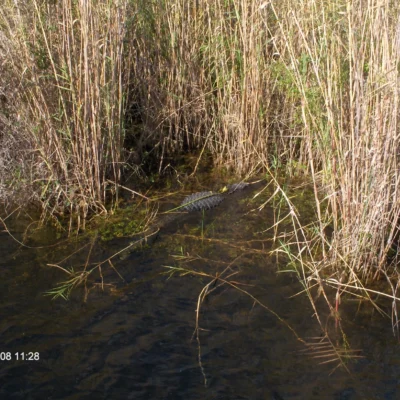
Watch out for: Manatees and American crocodiles show up occasionally in the marina and Largo Sound. The park's own in-water rules require you to keep a minimum distance of 50 feet between you and manatees at all times, and touching or standing on corals is prohibited because it can kill them. The Florida Fish and Wildlife Conservation Commission advises keeping a safe distance from any crocodile, never feeding one (it is illegal and dangerous), keeping pets on a leash and small children away from the water's edge especially at night, and swimming only in designated areas in daylight, because crocodiles are most active between dusk and dawn. There are no lifeguards on duty at either beach - swimming is at your own risk.
Wildlife information verified July 2026 via floridastateparks.org.
Park Location
Plan your gear for John Pennekamp Coral Reef State Park
From our editorial guides, matched to this park’s activities:
Top Tours & Activities Near Key Largo
 from $595
 from $65
 from $449