🌤 Weather at Kohala Historical Sites State Monument by season
| Spring | Summer | Fall | Winter |
|---|---|---|---|
| 70–86 °F | 74–88 °F | 73–88 °F | 68–84 °F |
Each range runs from the coldest monthly average low to the warmest monthly average high in that season (1991-2020 climate normals), measured at Puukohola Heiau 98.1, 16 mi away, elevation 133 ft. Conditions at the park can differ from the station, especially where elevation differs — check a forecast before you go.

Overview
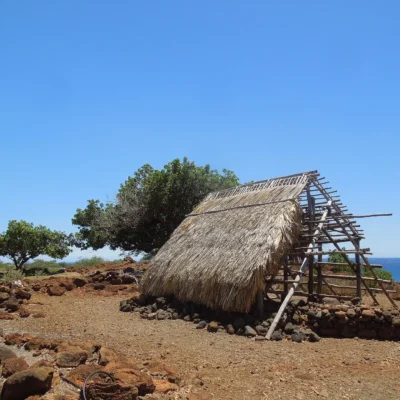
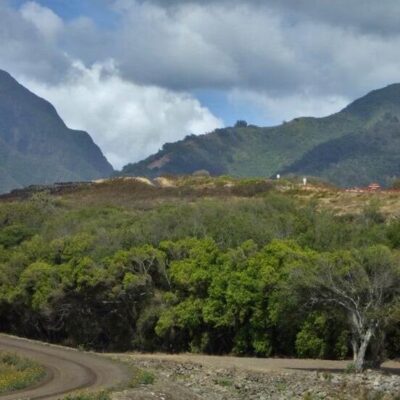
Kohala Historical Sites State Monument protects two of the most sacred and historically significant sites in all of Hawaii — the ancient Moʻokini Heiau and the birthplace of King Kamehameha I. Located on the remote northern tip of the Big Island’s Kohala coast, this state monument preserves the spiritual and political origins of the ruler who would unite the Hawaiian Islands into a single kingdom. The dramatic windswept landscape, overlooking the Alenuihaha Channel toward Maui, adds a powerful sense of isolation and reverence to these hallowed grounds.
The Moʻokini Heiau is one of the oldest and most sacred temples in Hawaii, believed to have been built as early as 480 AD. This massive stone platform served as a luakini heiau — a sacrificial temple dedicated to the war god Kū — and was maintained by an unbroken line of kahuna (priests) from the Moʻokini family for over 1,500 years. Nearby, a simple stone enclosure marks the traditional birthplace of Kamehameha the Great, born around 1758 under circumstances of secrecy and prophecy that would shape the future of the Hawaiian Islands.
Historical Significance
The Moʻokini Heiau was designated a National Historic Landmark, recognizing its extraordinary cultural and historical importance. According to Hawaiian oral tradition, the heiau was constructed in a single night by a chain of thousands of workers passing stones hand to hand from Pololu Valley, 14 miles away. In 1963, the Moʻokini family formally rededicated the heiau as a temple of peace, opening it to visitors of all backgrounds while maintaining its sacred character.
The birthplace of Kamehameha I nearby is marked by a low stone wall enclosure. Hawaiian prophecy foretold that a great chief would be born under a bright star, and Kamehameha’s birth was reportedly concealed by his mother to protect him from rivals who sought to kill the prophesied leader. The monument preserves this founding story of the Hawaiian monarchy in its original landscape setting.
Location & Access
Kohala Historical Sites State Monument is located near Hawi on the northern tip of the Big Island of Hawaii. Access is via a rough, unpaved road from Upolu Airport Road — a four-wheel-drive vehicle is strongly recommended. The site is generally open during daylight hours but is closed on Wednesdays for cultural practices and maintenance. There are no facilities or water at the site; visitors should come prepared. The remote location and rough access road mean the site sees relatively few visitors, preserving its contemplative atmosphere.
Frequently Asked Questions
Do I need a 4WD vehicle?
A four-wheel-drive vehicle is strongly recommended due to the rough, unpaved access road from Upolu Airport Road. The road can be especially challenging after rain.
Is the site always open?
The monument is generally accessible during daylight hours but is closed on Wednesdays for maintenance and cultural practices. Check with Hawaii DLNR Division of State Parks for current access information.
Are there guided tours?
There are no regularly scheduled guided tours. The site is self-guided. Interpretive signage provides historical context. Visitors are asked to treat the area with respect as a sacred Hawaiian cultural site.
Wildlife & Nature
Kohala Historical Sites SM — preserves the Mo’okini Heiau — one of the oldest and most sacred temples in Hawaii (built around AD 480). Nearby is the Kamehameha Birthsite — where Kamehameha the Great, who unified all the Hawaiian Islands, was born. Humpback whales are visible from the coastal cliffs.
Nearby Attractions
North Kohala — surrounding. Hawi — 5 miles east. Pololu Valley — 8 miles east.
Nearby parks: If you have extra time, Lapakahi State Historical Park is a short drive away, and Hapuna Beach State Recreation Area is within about an hour’s drive.

🐾 Dogs & Pets at Kohala Historical Sites State Monument
- Pets allowed? statewide rule
- Pets are heavily restricted in Hawaii state parks: they are not permitted in pavilions, swimming areas, campgrounds, lodges, on beaches or wherever posted, and only limited areas allow them.
- Leash rule statewide rule
- Where permitted, pets must be crated, caged, on a 6-foot or shorter leash, or otherwise under physical restrictive control at all times
- Beaches & swim areas statewide rule
- Pets are not permitted on beaches or in swimming areas statewide
- Cabins & lodging statewide rule
- Pets are not permitted in lodges or campgrounds, so overnight accommodations are effectively pet-free
- Statewide exceptions statewide rule
- Rules vary by park and posting; effectively day-use only in the limited unposted areas where pets are tolerated
Are dogs allowed at Kohala Historical Sites State Monument?
Pets are heavily restricted in Hawaii state parks: they are not permitted in pavilions, swimming areas, campgrounds, lodges, on beaches or wherever posted, and only limited areas allow them. Individual parks can post stricter rules — check signage on arrival.
Rules verified July 2026 via dlnr.hawaii.gov. More: Hawaii state parks guide · Dog rules in all 50 states compared