🌤 Weather at Magnolia Springs State Park by season
| Spring | Summer | Fall | Winter |
|---|---|---|---|
| 43–84 °F | 67–92 °F | 41–86 °F | 34–62 °F |
Each range runs from the coldest monthly average low to the warmest monthly average high in that season (1991-2020 climate normals), measured at Waynesboro 2 S, 13 mi away, elevation 277 ft. Conditions at the park can differ from the station, especially where elevation differs — check a forecast before you go.

💀 Civil War Prison Camp Turned Nature Sanctuary — Built on the site of Camp Lawton, a Confederate POW camp designed for 40,000 prisoners, now a 1,070-acre park where crystal-clear springs flow 7 million gallons daily from the Floridan Aquifer, with camping, cottages, a 28-acre fishing lake, and active archaeological excavations unearthing artifacts from one of the Civil War’s darkest chapters
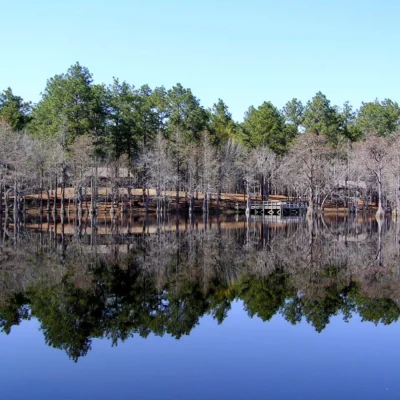
In the pine flatwoods of Jenkins County, near the small town of Millen in east-central Georgia, a belt of crystal-clear springs emerges from deep limestone channels of the Floridan Aquifer, pouring 7 million gallons of water per day into a spring run that feeds through a corridor of ancient magnolia trees, tupelos, and bald cypress. These springs — beautiful, constant, and almost impossibly clear — are the natural wonder at the heart of Magnolia Springs State Park. But beneath the park’s peaceful surface lies one of the darkest chapters of the American Civil War.
In the fall of 1864, as the Confederacy staggered toward collapse, the Confederate Army established Camp Lawton on this very site — a massive prisoner-of-war camp designed to hold 40,000 Union prisoners, built to relieve the apocalyptic overcrowding at the notorious Andersonville prison 150 miles to the southwest. The springs that make the park so beautiful today were the same springs that made this site attractive to the Confederate command: a reliable, self-renewing water source in an era when lack of clean water was killing prisoners by the thousands. Camp Lawton ultimately held over 10,000 prisoners in its brief existence — just six weeks of operation before General William T. Sherman’s March to the Sea forced its evacuation in November 1864.
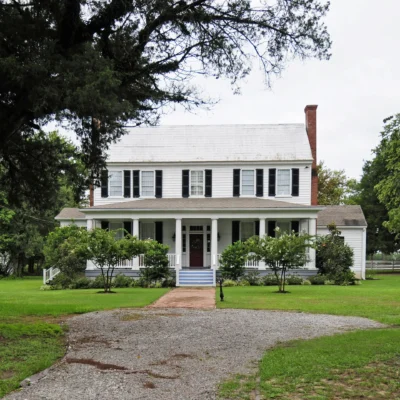
Today, Magnolia Springs State Park occupies 1,070 acres of reclaimed forest, wetland, and spring-fed waterways on ground that still yields artifacts from its Confederate past. Ongoing archaeological excavations by Georgia Southern University continue to unearth buttons, coins, personal effects, and structural remains from Camp Lawton — pieces of a story that the park’s History Center preserves for visitors who want to understand what happened here and why it matters.
The Springs
| Feature | Details |
|---|---|
| Flow Rate | ~7 million gallons per day |
| Source | Floridan (Ocala) Aquifer — deep limestone channels |
| Water | Crystal-clear, constant temperature year-round |
| Setting | Magnolia trees, bald cypress, tupelo corridor |
| Boardwalk | Elevated walkway over spring run |
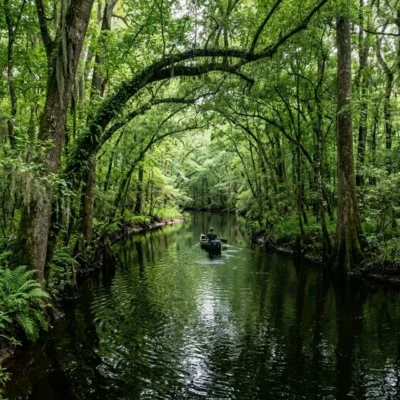
The springs are the park’s most iconic feature. Visitors walk along an elevated boardwalk above the spring run, looking down into water so clear that the sandy bottom, fallen magnolia leaves, and fish swimming below are visible in striking detail. The spring corridor is lined with massive magnolia trees — the park’s namesake — along with bald cypress draped in Spanish moss, creating a landscape that feels ancient and cathedral-like.
Camp Lawton: The Civil War Prison
| Detail | Information |
|---|---|
| Established | Fall 1864 |
| Purpose | Relieve overcrowding at Andersonville |
| Designed Capacity | 40,000 prisoners |
| Peak Population | Over 10,000 Union prisoners |
| Duration | ~6 weeks (evacuated before Sherman’s March) |
| Visible Remains | Earthen breastworks (defensive earthworks) |
| Archaeology | Active Georgia Southern University excavations |
| History Center | Exhibits on Camp Lawton with recovered artifacts |
Camp Lawton’s story is one of desperation, suffering, and the logistical collapse of the Confederacy. Built in haste as Andersonville became synonymous with death, Camp Lawton was intended to be a “better” prison — with access to clean spring water and more space per prisoner. But the reality was still grim: inadequate shelter, minimal food, and the psychological torment of captivity. When Sherman’s forces approached, the camp was hastily evacuated, and many prisoners were marched back to other facilities or simply released in the confusion.
The park’s earthen breastworks — defensive fortifications built around the camp — are still visible in the landscape, and the History Center displays artifacts recovered from decades of archaeological work at the site.
Camping and Accommodations
| Type | Details |
|---|---|
| Standard Campsites | 26 sites with water and electric hookups |
| Walk-In Sites | 3 tent-only walk-in sites |
| Pioneer Camp | 1 large primitive group campground |
| Cottages | Available for rental (fully equipped) |
| Facilities | Restrooms, showers |
| Reservations | 800-864-7275 or gastateparks.org |
Fishing
| Feature | Details |
|---|---|
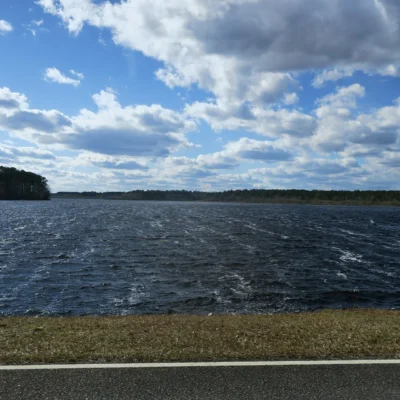
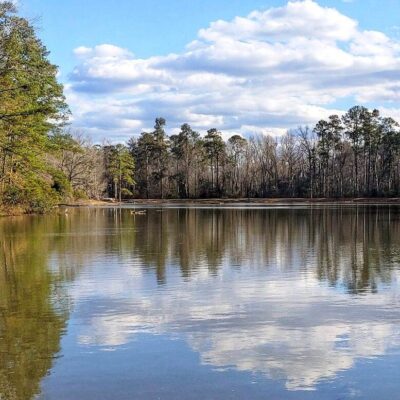
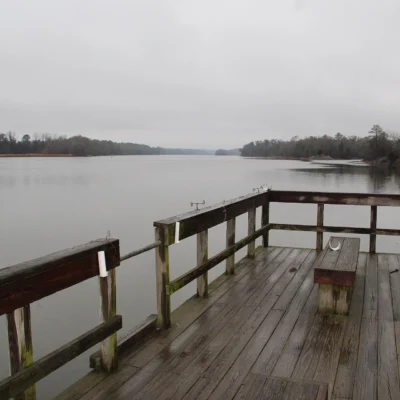
| Lake | 28-acre fishing lake |
| Species | Crappie, bass, trout (stocked) |
| Restriction | No fishing in springs or spring run |
| License | Georgia fishing license required (age 16+) |
Wildlife
The park’s spring-fed ecosystem supports remarkable biodiversity for its size:
- Reptiles: Alligators inhabit the spring run and lake — keep a safe distance
- Birds: Great blue herons, egrets, wood ducks, barred owls, pileated woodpeckers
- Aquatic: Spring-run fish visible from boardwalk, turtles basking on logs
- Mammals: White-tailed deer, armadillos, river otters
Essential Visitor Information
| Detail | Information |
|---|---|
| Address | 1053 Magnolia Springs Drive, Millen, GA 30442 |
| Park Hours | 7 AM – 10 PM daily |
| Office Hours | 8 AM – 5 PM |
| Entrance Fee | Georgia ParkPass required ($10 daily / $70 annual) |
| Phone | (478) 982-1660 |
Getting There
- From Savannah: 80 miles northwest (~1 hour 20 minutes via US-25)
- From Augusta: 60 miles south (~1 hour)
- From Macon: 100 miles east (~1 hour 40 minutes)
- From Atlanta: 200 miles southeast (~3 hours via I-16)
Best Time to Visit
| Season | Highlights | Crowd Level |
|---|---|---|
| Spring (Mar-May) | Wildflowers, birding, comfortable temps for hiking | Low-Moderate |
| Summer (Jun-Aug) | Springs at their most refreshing, fishing, full programs | Moderate |
| Fall (Oct-Nov) | Cool weather, excellent camping, fall foliage | Low |
| Winter (Dec-Feb) | Mild GA winters (50s-60s°F), solitary cottage stays | Very Low |
Frequently Asked Questions
What was Camp Lawton?
Camp Lawton was a Confederate prisoner-of-war camp established in Fall 1864 on the site of today’s Magnolia Springs State Park. It was designed to hold 40,000 Union prisoners and was built to relieve the catastrophic overcrowding at Andersonville. The camp operated for only about six weeks, holding over 10,000 prisoners before being evacuated as General Sherman’s March to the Sea approached. Today, earthen breastworks are still visible in the park, and Georgia Southern University continues active archaeological excavations at the site, with recovered artifacts displayed in the park’s History Center.
How much water flows from Magnolia Springs?
The springs at Magnolia Springs State Park flow at an astonishing rate of approximately 7 million gallons per day from the Floridan Aquifer through deep limestone channels. The water is crystal clear and maintains a constant temperature year-round. Visitors can view the springs from an elevated boardwalk that passes directly over the spring run, offering down-through-the-water views of the sandy bottom and aquatic life.
Are there alligators at Magnolia Springs State Park?
Yes. American alligators are present in the spring run and the 28-acre fishing lake at Magnolia Springs State Park. This is typical for freshwater environments in south-central Georgia. Maintain a safe distance, never feed alligators, and keep pets on leash. The alligators are generally shy and will avoid human contact, but they are large predators and should be respected.
More parks nearby: George L. Smith State Park is within about an hour’s drive, while Hamburg State Park lies elsewhere in the state.

🐾 Dogs & Pets at Magnolia Springs State Park
- Pets allowed? statewide rule
- Leashed dogs are welcome in Georgia State Parks, including campgrounds and most park trails, and must be accompanied by the owner at all times.
- Leash rule statewide rule
- Leash no longer than 6 feet required at all times; dogs may not be tied to trees or fences.
- Beaches & swim areas statewide rule
- Pets are not permitted in swimming areas or on beaches.
- Cabins & lodging statewide rule
- Pets are banned from lodges, yurts and group camps; designated dog-friendly cottages are available for a $50 fee per dog (maximum 2 dogs) covering the entire stay.
- Pet fees statewide rule
- No day-use pet fee; $50 per dog (max 2) per stay in dog-friendly cottages.
- Statewide exceptions statewide rule
- Dogs prohibited on certain trails at Tallulah Gorge and Panola Mountain; fenced dog park at Laura S. Walker State Park; 'Tails on Trails Club' rewards program.
Are dogs allowed at Magnolia Springs State Park?
Leashed dogs are welcome in Georgia State Parks, including campgrounds and most park trails, and must be accompanied by the owner at all times. Individual parks can post stricter rules — check signage on arrival.
Rules verified July 2026 via gastateparks.org. More: Georgia state parks guide · Dog rules in all 50 states compared
Park Location
Plan your gear for Magnolia Springs State Park
From our editorial guides, matched to this park’s activities: