🌤 Weather at Redcliffe Plantation State Historic Site by season
| Spring | Summer | Fall | Winter |
|---|---|---|---|
| 44–84 °F | 69–92 °F | 41–85 °F | 35–60 °F |
Each range runs from the coldest monthly average low to the warmest monthly average high in that season (1991-2020 climate normals), measured at Aiken 5SE, 8 mi away, elevation 492 ft. Conditions at the park can differ from the station, especially where elevation differs — check a forecast before you go.

🏛️ “Cotton Is King” — The Plantation Where a Senator Defended Slavery to the World — Redcliffe Plantation State Historic Site in Beech Island, South Carolina, 1857–1859 Greek Revival mansion, built for James Henry Hammond (Governor, U.S. Senator), “Cotton is King” / “Mudsill” speech 1858, 300 enslaved people, magnolia allée (ca. 1860), three generations of Hammond family, slave quarters, donated 1973 by John Shaw Billings (Time/Life editor), African American heritage interpretation — Aiken County, SC
On March 4, 1858, South Carolina Senator James Henry Hammond stood on the floor of the United States Senate and declared: “No, you dare not make war on cotton. Cotton is king.” In the same speech — the infamous “Mudsill Speech” — he argued that every civilization required a permanent underclass, and that enslaved Black people were the natural “mudsill” of Southern society.
Two years later, the Civil War began. Redcliffe, Hammond’s Greek Revival mansion, still stands — and today it tells the story of both the Hammond family and the African American families who were enslaved there, who continued to live and work on the property through Reconstruction and into the twentieth century.
What to See
| Feature | Details |
|---|---|
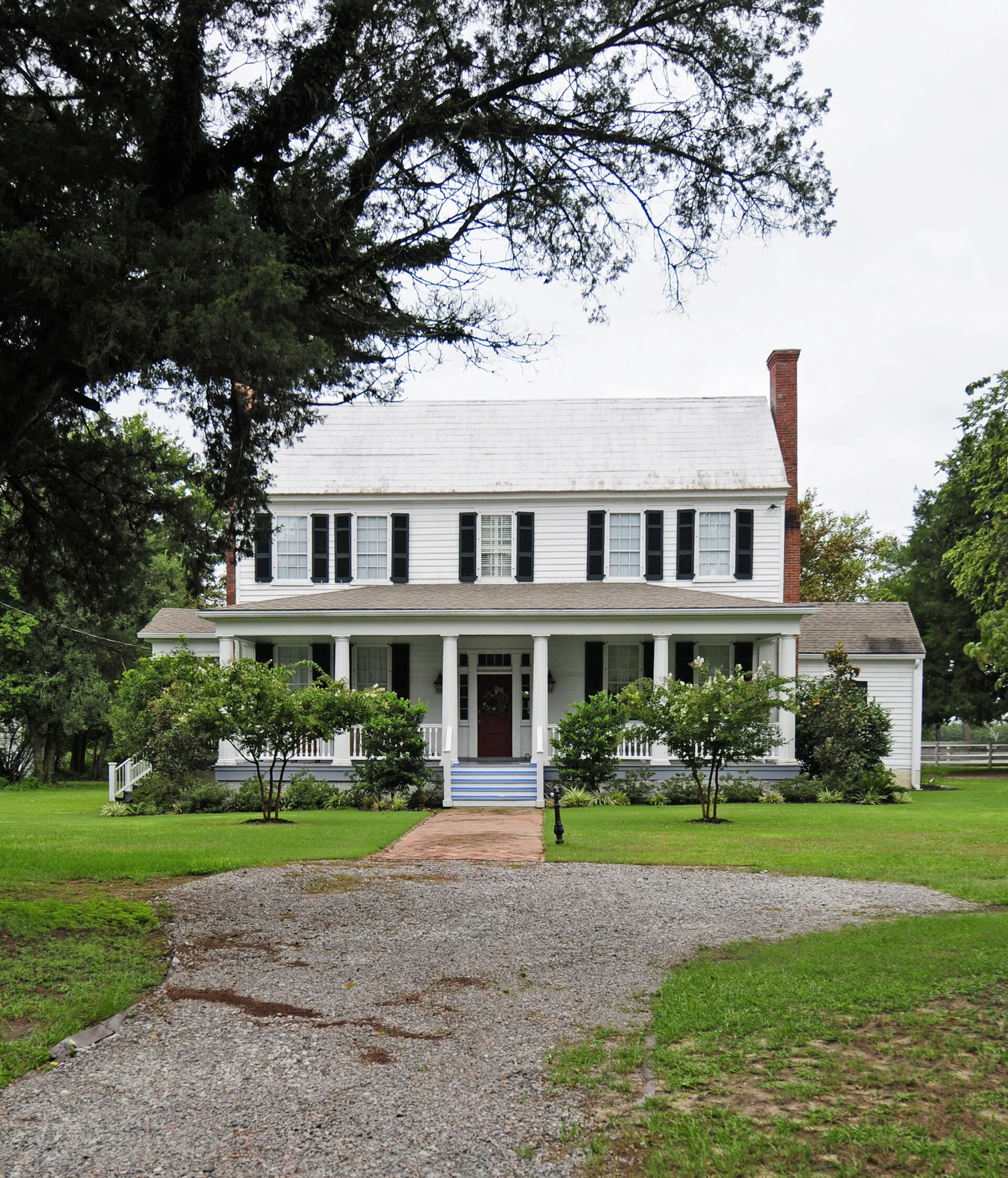
| The Mansion | Two-story Greek Revival with Italianate elements, built 1857–1859. Large center halls, porches, and the interior preserved with three generations of Hammond family furnishings and artifacts |
| Magnolia Allée | Iconic double row of Southern magnolias planted ca. 1860 — the approach to the mansion |
| Slave Quarters | Surviving slave cabins interpreting the lives of the approximately 300 people Hammond enslaved across his plantations |
| African American Heritage | The site interprets the Henley, Goodwin, and Wigfall families — enslaved people who remained on the property after emancipation and shaped Redcliffe’s story for generations |
| Grounds | Shaded grounds with heritage trees, outbuildings, and the landscape of an antebellum estate maintained for over 160 years |
The Timeline
| Year | Event |
|---|---|
| 1835 | James Henry Hammond elected to U.S. Congress. A fierce defender of slavery and states’ rights |
| 1842–1844 | Hammond serves as Governor of South Carolina. Controls thousands of acres and hundreds of enslaved people |
| 1857–1859 | Redcliffe mansion constructed in Beech Island as Hammond’s estate. Greek Revival design with Italianate elements |
| 1858 | The “Cotton is King” / “Mudsill” speech in the U.S. Senate — one of the most notorious pro-slavery speeches in American history |
| 1860 | Magnolia allée planted. The approach to the mansion as it appears today |
| 1861–1865 | Civil War. Hammond dies in 1864. The plantation system he championed is destroyed |
| 1865–1970s | Three generations of Hammonds maintain Redcliffe. African American families — formerly enslaved — continue to live and work on the property |
| 1973 | John Shaw Billings (Hammond’s great-grandson, editor of Time, Life, and Fortune magazines) donates the estate to South Carolina |
| 1975 | Opens to the public as Redcliffe Plantation State Historic Site |
Best Time to Visit
| Season | Best For |
|---|---|
| Spring (Mar–May) | 🌸 Magnolias blooming. Comfortable weather. Southern spring at its best |
| Fall (Oct–Nov) | 🍂 Fall color on the grounds. Cool temperatures. Fewer visitors |
| Summer (Jun–Aug) | Hot and humid — typical South Carolina summer. Guided tours are air-conditioned |
| Winter (Dec–Feb) | Mild winter. Bare magnolias reveal the mansion’s architecture. Good for photography |
Frequently Asked Questions
What was the “Cotton is King” speech?
Senator Hammond’s 1858 speech defending slavery as an economic and moral necessity. He argued that the South’s cotton production was so vital to the global economy that “no power on earth dares to make war on cotton.” He also introduced the “Mudsill Theory” — that every society requires a permanent lower class, and enslaved people were that class.
Does the site interpret slavery?
Yes — slavery and African American heritage are central to Redcliffe’s interpretation. The site preserves slave quarters and tells the stories of the Henley, Goodwin, and Wigfall families — enslaved people who remained on the property after emancipation and whose descendants shaped the site’s history for over a century.
Who donated the property?
John Shaw Billings — Hammond’s great-grandson and a major figure in American journalism. Billings edited Time, Life, and Fortune magazines. He donated the estate to South Carolina in 1973, ensuring that both the mansion and its complex history would be preserved.
Nearby state parks: If you have extra time, Aiken State Park is within about an hour’s drive, and Barnwell State Park is within about an hour’s drive.
🏛️ “Cotton Is King” — And the People Who Made It Grow
A senator’s mansion built by enslaved hands. The “Mudsill Speech” delivered from the Senate floor. Three generations of both families. The story Redcliffe tells is not comfortable — but it is true.
Wildlife & Nature
Redcliffe Plantation SHS — the antebellum estate of James Henry Hammond — US Senator, Governor of South Carolina, and outspoken slavery defender. The 1859 mansion and magnolia-lined grounds tell both planter and enslaved peoples’ stories. The site’s grounds, forest, and gardens support songbirds and white-tailed deer.
Nearby Attractions
Beech Island — adjacent. Aiken — 10 miles north — “Thoroughbred Country”. Augusta, GA — 10 miles south.

🐾 Dogs & Pets at Redcliffe Plantation State Historic Site
- Pets allowed? statewide rule
- Pets are allowed in most outdoor areas of South Carolina state parks provided they are kept under physical restraint or on a leash.
- Leash rule statewide rule
- Leash no longer than six feet (or other physical restraint) required at all times
- Cabins & lodging statewide rule
- Pets are not allowed in or around lodging facilities except in designated pet-friendly units at eight parks (Barnwell, Devils Fork, Dreher Island, Hickory Knob, Lake Hartwell, Oconee, Santee, Table Rock); up to two pets under 75 pounds each; additional charge applies
- Pet fees statewide rule
- Additional charge for pet-friendly cabins/villas; no fee for day use
- Statewide exceptions statewide rule
- Park staff may require removal of noisy or dangerous pets or pets that threaten wildlife
Are dogs allowed at Redcliffe Plantation State Historic Site?
Pets are allowed in most outdoor areas of South Carolina state parks provided they are kept under physical restraint or on a leash. Individual parks can post stricter rules — check signage on arrival.
Rules verified July 2026 via southcarolinaparks.com. More: South Carolina state parks guide · Dog rules in all 50 states compared
Park Location
Plan your gear for Redcliffe Plantation State Historic Site
From our editorial guides, matched to this park’s activities: