🧭 Know Before You Go: Palo Duro Canyon State Park
| Entry & permits | Visitors bringing their own horses must present original Coggins papers. An all-terrain wheelchair can be reserved from the park in advance. |
|---|---|
| What you'll actually see | Trails and backpack campsites close in wet weather, poor conditions or excessive heat. |
| On-site services | Cabins built by the Civilian Conservation Corps more than 80 years ago can be rented, as can pavilions. Park store at the Visitor Center. |
| Seasonal access | The TEXAS Outdoor Musical runs Tuesday through Sunday in summer at the park's Pioneer Amphitheater; tickets are sold by the production, not the park. |
Source: tpwd.texas.gov (verified July 2026). Rules and seasons change — confirm before you go.
🌤 Weather at Palo Duro Canyon State Park by season
| Spring | Summer | Fall | Winter |
|---|---|---|---|
| 33–82 °F | 62–93 °F | 32–84 °F | 23–56 °F |
Each range runs from the coldest monthly average low to the warmest monthly average high in that season (1991-2020 climate normals), measured at Canyon, 15 mi away, elevation 3,590 ft. Conditions at the park can differ from the station, especially where elevation differs — check a forecast before you go.

Quick Facts
| Detail | Information |
|---|---|
| Location | Canyon, Randall County, Texas |
| Size | 29,182 acres |
| Canyon Length | 120 miles |
| Canyon Depth | Up to 800 feet |
| Nickname | Grand Canyon of Texas |
| Trails | 30+ miles hiking, biking, equestrian |
| Day Use Fee | $8 per person (13+) |
| Annual Pass | Texas State Parks Pass $70/year |
| Coordinates | 34.9422° N, 101.6688° W |
Overview
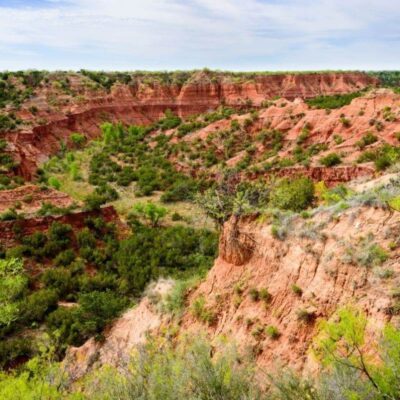
Palo Duro Canyon, stretching 120 miles across the Texas Panhandle, is the second-largest canyon system in the United States, rivaled only by the Grand Canyon itself. At up to 800 feet deep and 20 miles wide, this dramatic gorge reveals 250 million years of geological history in its colorful rock layers of red, yellow, and orange sediments. The 29,182-acre state park protects the most scenic portion of the canyon and draws visitors from across the nation for hiking, mountain biking, horseback riding, and the legendary outdoor musical drama “TEXAS.”
Things to Do
The Lighthouse Trail
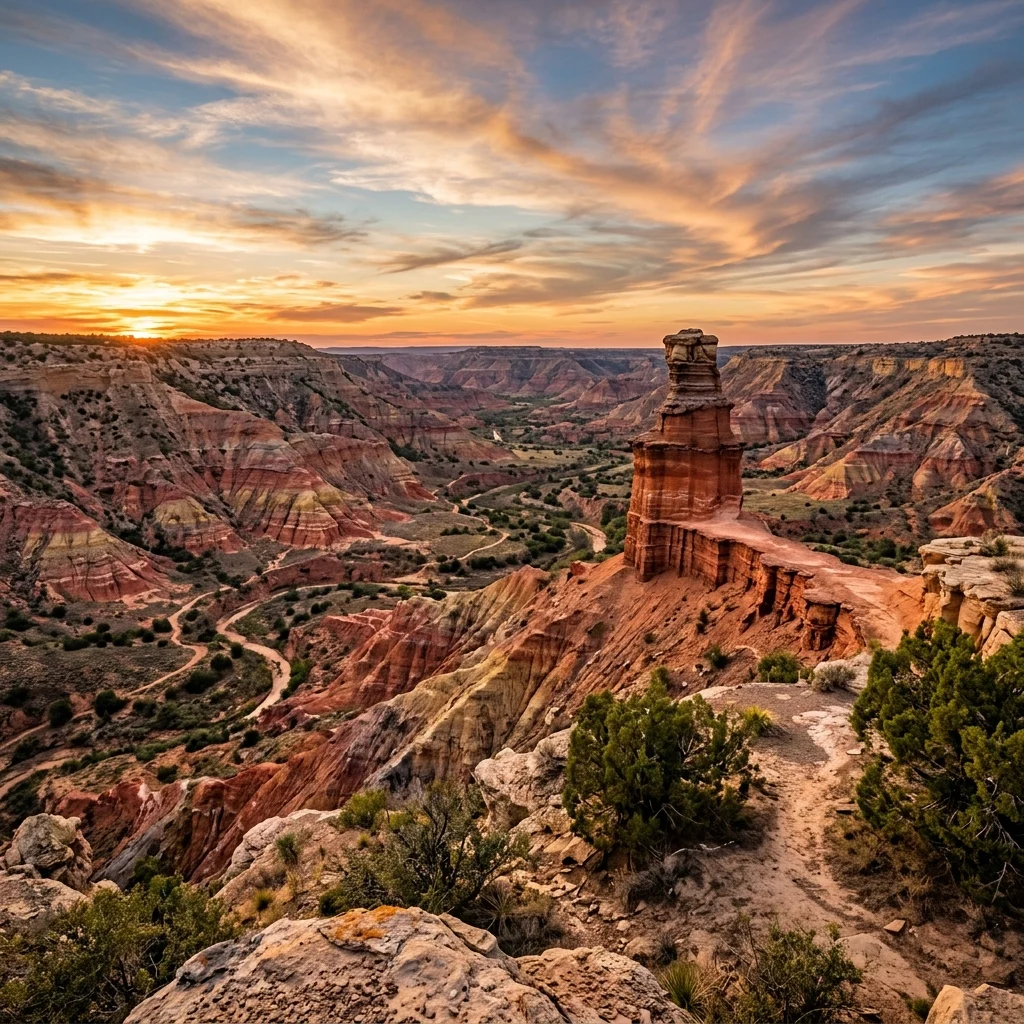
The park’s most iconic hike leads to the Lighthouse, a towering 310-foot rock formation that has become the symbol of Palo Duro Canyon. The trail covers approximately 5.8 to 6 miles round trip with moderate difficulty — relatively flat for most of the route before a moderately challenging scramble to the base of the formation. The trail is fully exposed to the sun with zero shade, making early morning starts essential, especially during Texas summers. During extreme heat advisories, the park may close this and other trails between 11 AM and 5 PM for visitor safety.
Mountain Biking and Horseback Riding
Palo Duro offers over 30 miles of multi-use trails open to mountain bikers and equestrians. The Capitol Peak Trail and the GSL (Givens, Spicer, Lowry) Trail provide challenging terrain with stunning canyon views. Horseback riding is available through park concessionaires, offering guided rides through the canyon floor for visitors of all experience levels. The combination of red rock scenery and open trail makes Palo Duro one of the premier mountain biking destinations in Texas.
TEXAS Outdoor Musical Drama
Every summer (June through August), the Pioneer Amphitheatre at the canyon floor hosts “TEXAS,” an outdoor musical drama celebrating the history and culture of the Texas Panhandle. Running since 1966, this spectacular production features fireworks, live music, dancing, and dramatic storytelling against the natural backdrop of the canyon walls. Dinner and show packages are available, and performances are held weather-permitting. Reservations are highly recommended.
Scenic Drives and Photography
The park road descends 800 feet from the canyon rim to the floor, providing jaw-dropping views at every turn. Multiple pull-off overlooks offer photography opportunities, especially during the golden hours of sunrise and sunset when the canyon’s iron-rich rock layers glow in vivid reds and oranges. The geological formations include hoodoos, spires, and mesa-like structures that rival formations found in Utah and Arizona.
Best Trails
| Trail | Distance | Difficulty | Highlights |
|---|---|---|---|
| Lighthouse Trail | 5.8 mi RT | Moderate | Iconic rock formation, signature hike |
| Rock Garden Trail | 3.0 mi | Difficult | Challenging scrambles, unique formations |
| Paseo Del Rio Trail | 1.0 mi | Easy | Riverside walk, family-friendly |
| Capitol Peak Trail | 5.5 mi | Moderate | Mountain biking favorite, mesa views |
| GSL Trail | 5.7 mi | Moderate | Multi-use, canyon rim views |
| Rojo Grande Trail | 1.5 mi | Easy | Geological layers, interpretive signs |
Camping
The park offers diverse camping options from full-hookup RV sites with electricity and water to primitive backcountry tent sites accessible only by hiking. Developed campground loops (including Juniper and Mesquite) provide restrooms, picnic tables, and fire rings. Rim cabins perched at the canyon’s edge offer stunning views, while “Cow Camp” cabins on the canyon floor provide a rustic cowboy experience. Group camping areas accommodate larger parties. All reservations should be made through the Texas Parks and Wildlife Department reservation system.
Best Time to Visit
Spring (March through May) and fall (September through November) offer the most comfortable temperatures for hiking and outdoor activities. Summers bring intense heat with temperatures regularly exceeding 100°F — plan strenuous hikes for early morning only. Winter can be surprisingly cold on the Panhandle, but clear days offer excellent hiking conditions with fewer crowds. The “TEXAS” musical runs June through August.
Visitor Tips
- Start the Lighthouse Trail before 8 AM in summer — there is no shade on the entire route
- Carry at least one liter of water per person per hour of hiking
- A Texas State Parks Pass ($70/year) provides free entry and pays for itself in 9 visits
- Day-use reservations are recommended during weekends and holidays
- Watch for rattlesnakes on trails, especially near rocky areas
- The park store at the canyon floor sells basic supplies and souvenirs
- Sunscreen and a hat are essential — UV exposure is intense at this elevation
Getting There
Palo Duro Canyon State Park is located 12 miles east of Canyon, Texas, and approximately 28 miles south of Amarillo. From Amarillo, take I-27 South to Canyon, then follow TX-217 East to the park entrance. The nearest major airport is Rick Husband Amarillo International Airport (AMA). The park address is 11450 State Hwy Park Rd 5, Canyon, TX 79015.
Geology and Formation
Palo Duro Canyon reveals a geological record spanning 250 million years across four major rock layers. The oldest exposed layer, the Permian-age red beds at the canyon floor, dates back 250 million years and was deposited in an arid climate similar to modern North Africa. Above this, layers of mudstone, siltstone, and gypsum record periods of shallow seas, river deltas, and windblown desert. The distinctive banding of red, orange, yellow, and white rock that gives the canyon its painted appearance results from varying concentrations of iron oxide in the sediment — more iron produces deeper reds, while reduced iron creates yellows and whites. The canyon itself was carved primarily by the Prairie Dog Town Fork of the Red River over the past one to two million years, a process accelerated by the dissolution of underlying gypsum layers that triggered surface collapse. The iconic Lighthouse formation stands as a testament to differential erosion — its hard caprock protected the softer sediment beneath while surrounding rock weathered away, leaving a 310-foot tower standing sentinel over the canyon floor.
Native History and Ranching Heritage
Palo Duro Canyon has served as a refuge and hunting ground for indigenous peoples for over 12,000 years, as evidenced by Folsom and Clovis point artifacts discovered at multiple sites within the canyon. The Comanche, Kiowa, and Cheyenne nations utilized the canyon’s protection from Great Plains weather and its abundant water, game, and timber — resources rare on the surrounding Llano Estacado (Staked Plains). The canyon became the site of the decisive Battle of Palo Duro Canyon in September 1874, when Colonel Ranald S. Mackenzie’s Fourth Cavalry surprised a large encampment of Comanche, Kiowa, and Southern Cheyenne warriors, capturing and destroying over 1,400 horses and effectively ending the Red River War. Shortly after, legendary rancher Charles Goodnight established the JA Ranch in the canyon in 1876, partnering with Irish investor John George Adair. The ranch, which grew to over one million acres, pioneered Texas Panhandle ranching and introduced innovations in cattle breeding and land management that influenced the entire western ranch industry.
TEXAS Musical Production
The Pioneer Amphitheatre, a 1,742-seat open-air performance venue carved into the canyon wall, has hosted the outdoor musical drama “TEXAS” every summer since 1966. Written by Pulitzer Prize-winning playwright Paul Green, the production tells the story of Panhandle settlers through live music, choreography, horsemanship, and dramatic storytelling — all set against the breathtaking natural backdrop of the illuminated canyon walls. The show runs from June through August, typically Tuesday through Sunday evenings, with a pre-show barbecue dinner available. Pyrotechnic and fireworks effects add spectacle to the performance, and the combination of professional theatre with the canyon acoustics creates an unforgettable experience. Ticket reservations are strongly recommended, particularly for weekend performances and the Fourth of July show.
Wildlife
Despite the semi-arid climate, Palo Duro Canyon supports a surprisingly diverse wildlife population. The canyon provides habitat for mule deer, white-tailed deer, aoudad (Barbary sheep — introduced from North Africa in the 1950s), wild turkeys, roadrunners, Texas horned lizards, and over 200 species of birds. The Golden Prairie Dog Town near the park entrance offers close-up viewing of these industrious rodents in their natural colony. Birdwatchers may spot painted buntings, canyon wrens, and Mississippi kites during breeding season. Rattlesnakes are present throughout the park — hikers should watch their footing, particularly around rocky outcroppings and brush.
Planning Your Visit
A single-day visit to Palo Duro should begin early — both for cooler hiking temperatures and to experience the canyon in morning light, when the rock layers glow with warm intensity. The Lighthouse Trail should be your primary objective, requiring 3 to 4 hours round trip at a moderate pace. Pack at least two liters of water per person and start before 8 AM during summer months. After hiking, drive the scenic 16-mile park road for additional overlooks and photo opportunities. For multi-day visitors, camping on the canyon floor allows for sunset and sunrise experiences that rank among the most dramatic in Texas. The park store near the canyon floor sells basic supplies, ice, and souvenirs. Amarillo (28 miles north) provides all services including restaurants, hotels, and outfitters.
Astronomy and Dark Skies
Palo Duro Canyon’s remote Panhandle location and minimal light pollution make it one of the premier stargazing destinations in Texas. On moonless nights, the Milky Way stretches brilliantly across the sky from the canyon floor, with the towering walls framing the celestial display. The park regularly hosts star parties and astronomy events in cooperation with the Amarillo Astronomy Club, providing telescopes and expert guidance for celestial observation. The combination of dark skies, dramatic rock formations, and the 360-degree canyon horizon creates astrophotography opportunities that rival those found at much more remote national parks. For the best experience, camp on the canyon floor during a new moon phase and allow your eyes 20-30 minutes to fully adapt to the darkness.
Nearby Attractions
Amarillo, the gateway city just 28 miles north, offers several distinctive attractions that complement a Palo Duro visit. The Cadillac Ranch (10 nose-down Cadillacs buried alongside I-40) is one of the most photographed roadside attractions in America. The Big Texan Steak Ranch, famous for its free 72-ounce steak challenge, has been a Route 66 institution since 1960. The Panhandle-Plains Historical Museum in Canyon is the largest history museum in Texas, with extensive exhibits on Native American culture, ranching heritage, and the geological formation of the canyon. For those extending their trip, Caprock Canyons State Park (60 miles southeast) provides a less-crowded alternative with its own dramatic canyon scenery and the official Texas State Bison Herd.
More parks nearby: Caprock Canyons State Park is elsewhere in the state, while Copper Breaks State Park lies elsewhere in the state.

⛺ Camping at Palo Duro Canyon State Park: Campgrounds & Cabins
| Cabins & Lodging | Rim Cabins: Sorenson ($150, 4-person), Goodnight & Lighthouse ($125 each, 4-person), private bath, linens, queen+full futon. Cow Camp Cabins: #1/3/4 (4-person, $60), #2 (2-person, ADA), shared nearby bath, full+twin bunks, no towels/linens. All have A/C, heat, electricity, picnic table, grill, microwave/coffee pot/fridge; no pets. Separate luxury glamping via PaloDuroGlamping.com |
|---|---|
| Pets | Pets allowed at campsites but not in buildings or cabins; contact park for specifics |
| Reservations | texasstateparks.reserveamerica.com or 512-389-8900 |
| Special sites | 10 equestrian sites with water, 4 joined horse pens (2 horses each), max 8 people+horses combined/site, negative Coggins test <12 months required, $12/night; Wolfberry group camp (9 sites, up to 72 people); Youth group camp (32 people) |
| Season notes | Burn ban currently in effect — no ash-producing (wood/charcoal) fires; containerized fuel stoves with shut-off valve permitted for cooking |
Campsite types
| Site type | Sites | Hookups | Nightly |
|---|---|---|---|
| Campsites with Electricity (Juniper) showers | 18 | 30/50-amp, water | $26 |
| Campsites with Electricity (Mesquite | Sagebrush) showers | 47 | 30/50-amp, water | $26 |
| Campsites with Electricity (Hackberry) showers | 32 | 20/30-amp, water | $26 |
| Campsites with Water | 18 | water | $16 |
| Primitive Campsites (Hike-in) | — | — | $12 |
| Group Camp (Wolfberry) showers · ADA sites | — | — | $250 |
| Group Camp (Youth) | — | water | $50 |
Blank cells mean the park does not publish that detail. Nightly rates are before the daily entrance fee.
Camping questions about Palo Duro Canyon State Park
Can you camp at Palo Duro Canyon State Park?
Yes. Palo Duro Canyon State Park has 115 campsites. 18 Juniper (50-amp), 47 Mesquite/Sagebrush (50-amp), 32 Hackberry (30-amp) — all water+electric; 18 Fortress Cliff drive-up tent-only with water; primitive backpack hike-in, no designated sites, 40-person capacity max; some sites hold RVs up to 60 ft (Mesquite/Sagebrush, Hackberry).
How do you reserve a campsite at Palo Duro Canyon State Park?
texasstateparks.reserveamerica.com or 512-389-8900.
Are there cabins at Palo Duro Canyon State Park?
Rim Cabins: Sorenson ($150, 4-person), Goodnight & Lighthouse ($125 each, 4-person), private bath, linens, queen+full futon. Cow Camp Cabins: #1/3/4 (4-person, $60), #2 (2-person, ADA), shared nearby bath, full+twin bunks, no towels/linens. All have A/C, heat, electricity, picnic table, grill, microwave/coffee pot/fridge; no pets. Separate luxury glamping via PaloDuroGlamping.com.
Are pets allowed at the Palo Duro Canyon State Park campground?
Pets allowed at campsites but not in buildings or cabins; contact park for specifics.
Source: tpwd.texas.gov (verified 2026-07). Details change seasonally — confirm when booking.
🐾 Dogs & Pets at Palo Duro Canyon State Park
Park policy: Allowed on leash (6 ft max) in campgrounds and on most trails. Not allowed in cabins.
- Pets allowed? statewide rule
- Pets are welcome at almost all Texas State Parks on trails and in campgrounds, but must be on leash, in a car, or in a crate at all times and may not be left unattended.
- Leash rule statewide rule
- 6 ft maximum leash required at all times
- Beaches & swim areas statewide rule
- Pets are not allowed in the water or on land around designated swim areas
- Cabins & lodging statewide rule
- Pets are not permitted in any state park buildings, including motels, cabins, screened shelters and group facilities
- Statewide exceptions statewide rule
- Several parks restrict dogs in specific areas (Big Bend Ranch, Enchanted Rock, Government Canyon, Hueco Tanks); proof of current rabies vaccination required
- Dogs & wildlife
- Keep pets leashed and on developed trails — venomous rattlesnakes are common in the canyon.
Are dogs allowed at Palo Duro Canyon State Park?
Pets are welcome at almost all Texas State Parks on trails and in campgrounds, but must be on leash, in a car, or in a crate at all times and may not be left unattended. Individual parks can post stricter rules — check signage on arrival.
Rules verified July 2026 via tpwd.texas.gov. More: Texas state parks guide · Dog rules in all 50 states compared
🐻 Wildlife at Palo Duro Canyon State Park: What to Watch For — and Watch Out For
Worth watching for: Texas Parks and Wildlife documents a rich canyon community here: wild turkeys, white-tailed and mule deer, coyotes, bobcats and roadrunners are year-round residents, while summer brings Mississippi kites, Bullock's orioles and painted buntings. Two threatened species live in the canyon — the endemic Palo Duro mouse in the canyon walls and the Texas horned lizard. Several members of the official Texas State Longhorn Herd live at the park, usually visible on the rim near headquarters.
Watch out for: The canyon's walls and grottos are ideal habitat for the venomous western diamond-backed rattlesnake, the most common venomous snake in Texas, plus prairie rattlesnakes; sticking to developed trails sharply lowers the chance of a bite, and if you meet a snake, give it space rather than approaching. TPWD also warns that flash flooding is a serious danger in the canyon, and that trails may close during excessive heat — carry plenty of water and hike with a partner.
Are there venomous snakes at Palo Duro Canyon State Park?
Yes — see above for where they occur in the park and how to behave. Sightings are a normal part of a healthy park; incidents are rare when visitors keep distance and store food properly.
Wildlife information verified July 2026 via tpwd.texas.gov.
Park Location
Plan your gear for Palo Duro Canyon State Park
From our editorial guides, matched to this park’s activities: