🌤 Weather at Bahia Honda State Park by season
| Spring | Summer | Fall | Winter |
|---|---|---|---|
| 68–85 °F | 78–90 °F | 70–88 °F | 64–76 °F |
Each range runs from the coldest monthly average low to the warmest monthly average high in that season (1991-2020 climate normals), measured at Bahia Honda State Park, 0 mi away, elevation 2 ft. Conditions at the park can differ from the station, especially where elevation differs — check a forecast before you go.

Quick Facts
| Detail | Information |
|---|---|
| Location | Mile Marker 37, Florida Keys |
| Size | 524 acres |
| Beaches | 3 (Sandspur, Calusa, Loggerhead) |
| Campsites | 80 sites + 6 duplex cabins |
| Entry Fee | $8/vehicle (2-8 people) |
| Hours | 8 AM to sunset, 365 days/year |
| Coordinates | 24.6584° N, 81.2632° W |
Overview
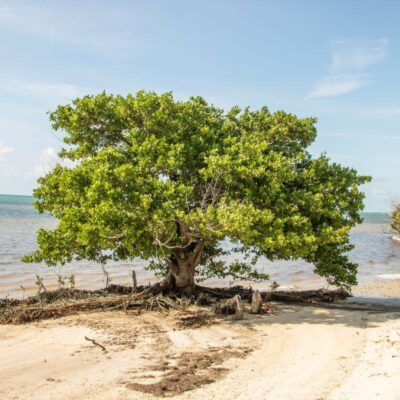
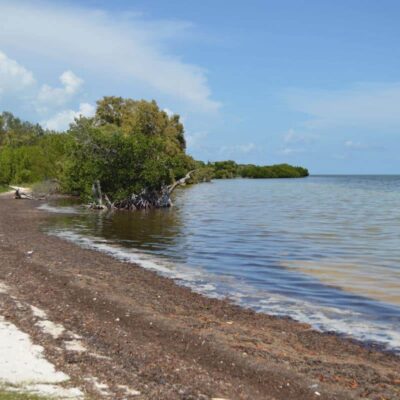
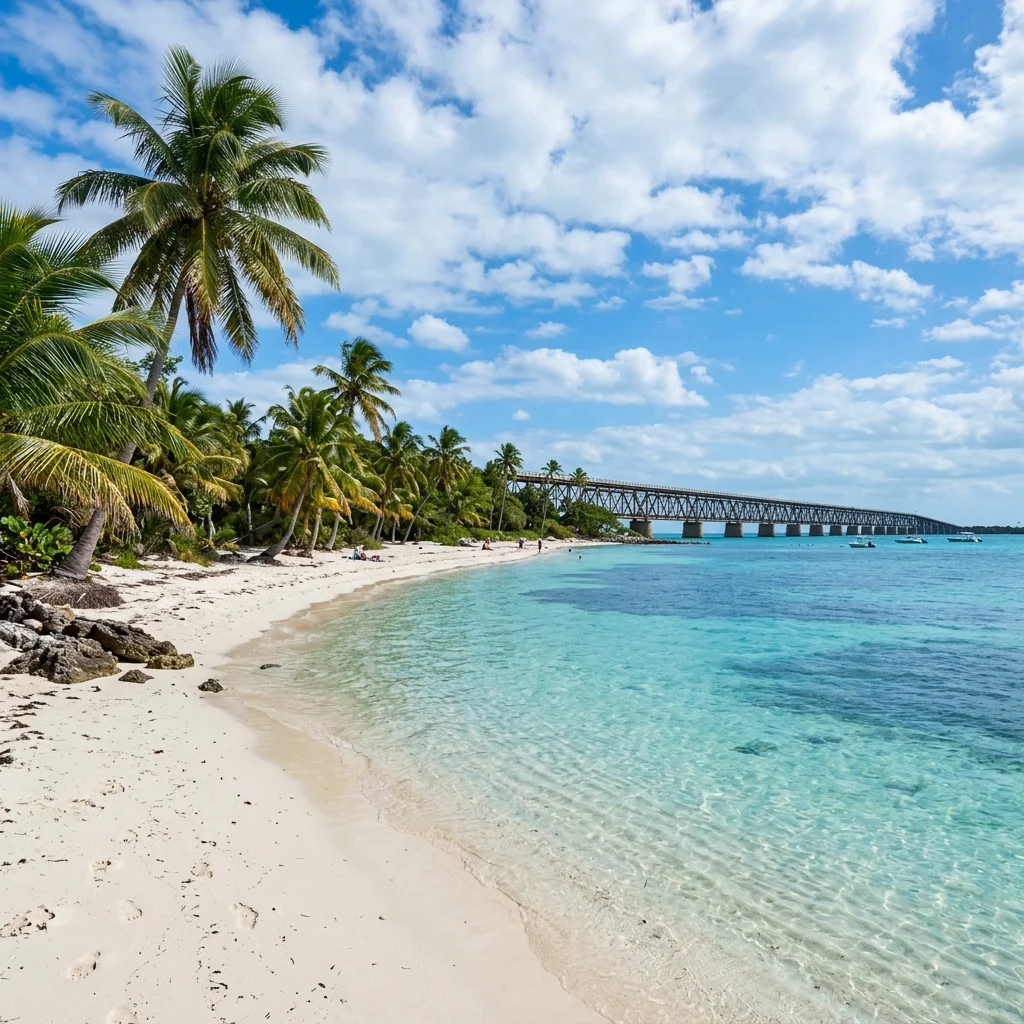
Bahia Honda State Park, nestled at mile marker 37 in the Lower Florida Keys, is consistently ranked among the best beaches in the United States. The park’s 524 acres encompass three distinct beaches, crystal-clear turquoise waters, a historic railroad bridge, and some of the finest snorkeling in the continental United States. Unlike many Florida beaches, Bahia Honda’s sand is naturally white and fine — a rarity in the Keys, where most shorelines are rocky or mangrove-lined. The park’s unique position between the Atlantic Ocean and the Gulf of Mexico creates ideal conditions for marine life, water sports, and some of the most spectacular sunsets in the Sunshine State.
Things to Do
Beaches
Bahia Honda features three distinct beaches, each with its own character. Sandspur Beach, the largest, stretches along the park’s southeast shore and offers the widest sand area for sunbathing and swimming. Calusa Beach, on the northwest side facing the Gulf, is the smallest and most family-friendly, with the calmest waters and natural shade from surrounding vegetation. Loggerhead Beach, on the southern shore, is known for its shallow crystalline waters and exceptional stargazing at night — the Keys’ minimal light pollution makes this a premier dark-sky location.
Snorkeling and Diving
Snorkeling directly from shore is possible around the rocky areas of Calusa Beach and the western coastline, where you can spot tropical fish, sea turtles, crabs, and seagrass meadows. For world-class reef snorkeling, the park concessionaire operates daily boat trips to Looe Key National Marine Sanctuary, a vibrant coral reef ecosystem teeming with colorful fish, nurse sharks, rays, and living coral formations. Snorkel gear is available for rent at the park. Note: a dive flag is required when snorkeling, and currents near the bridge can be strong.
Old Bahia Honda Bridge
The historic Old Bahia Honda Bridge, originally built for Henry Flagler’s Overseas Railroad in 1912, is one of the park’s most distinctive features. A short nature trail from the Calusa area leads to the top of the bridge’s remaining span, offering spectacular panoramic views of the Keys, the turquoise waters below, and the modern Overseas Highway stretching into the distance. This viewpoint is especially stunning at sunset and provides one of the most photographed vantage points in all of the Florida Keys.
Kayaking and Paddleboarding
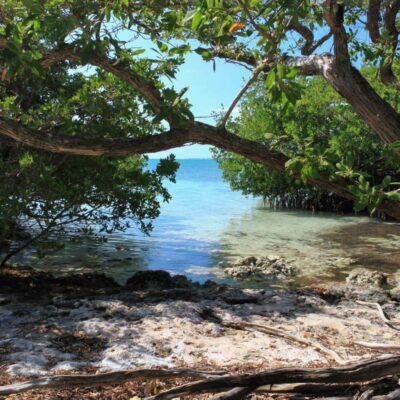
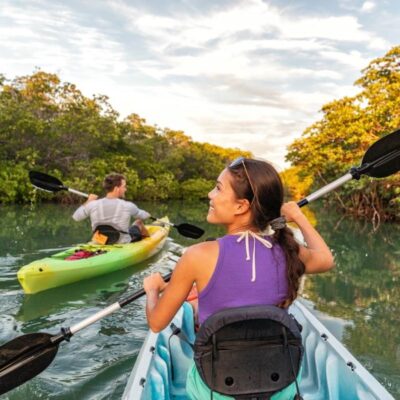
The calm waters surrounding Bahia Honda are ideal for kayaking and stand-up paddleboarding. Rentals are available from the park concession, or you can launch your own from designated areas near the Loggerhead parking lot or the boat ramp. Paddling along the mangrove shorelines reveals a world of wading birds, juvenile fish, and the occasional manatee or dolphin. Guided eco-tours are also available for a more educational experience.
Fishing
The park offers excellent fishing opportunities from shore, the old sea walls, or by boat. Common catches include tarpon, bonefish, permit, snapper, and various reef species. A valid Florida saltwater fishing license is required for anyone over 16. The bridge remains and rocky outcroppings provide structure that attracts a variety of game fish, making this a popular spot for both casual and serious anglers.
Camping
Bahia Honda’s campground features 80 sites across three areas, accommodating both tents and RVs. Some sites offer electricity and water hookups, while others are tent-only with water access. Six duplex cabins on stilts overlook the water and can accommodate up to six guests each, offering a more comfortable alternative with full kitchens and bathrooms. Due to extreme popularity, camping and cabin reservations should be booked months in advance through the Florida State Parks reservation system. Prime season (December through April) often sells out within minutes of availability.
Best Time to Visit
The Florida Keys enjoy a tropical climate year-round, but the dry season (November through April) offers the most pleasant conditions with lower humidity and less rain. Water clarity peaks during winter months, making this the ideal window for snorkeling. Summer brings warmer water temperatures and occasional afternoon thunderstorms but fewer crowds. Hurricane season runs June through November, so check forecasts during those months. The park reaches capacity on peak weekends — arriving by 9 AM is essential during holiday periods.
Visitor Tips
- The park frequently reaches capacity on weekends — arrive before 9 AM or visit mid-week
- Bring reef-safe sunscreen to protect the marine environment
- Book Looe Key snorkeling trips in advance during peak season
- Calusa Beach is the best choice for families with small children
- The Sand and Sea Nature Center offers free educational exhibits about local marine life
- Mosquitoes can be intense at dusk — bring insect repellent
- No-see-ums (biting midges) are common; long sleeves help at sunrise and sunset
- A Florida Annual Pass ($60/individual, $120/family) saves money for frequent visitors
Getting There
Bahia Honda is located on U.S. Route 1 (Overseas Highway) at mile marker 37 in the Lower Keys, approximately 37 miles from Key West and 125 miles from Miami. The drive from Miami takes about 2.5 to 3 hours via the scenic Overseas Highway. The nearest airports are Key West International Airport (EYW, 40 minutes) and Miami International Airport (MIA, 3 hours). The park address is 36850 Overseas Highway, Big Pine Key, FL 33043.
Marine Ecosystem
Bahia Honda sits at the transition zone between the Atlantic Ocean and the Gulf of Mexico, creating a unique marine environment where tropical and temperate species overlap. The park’s waters support extensive seagrass meadows — primarily turtle grass and manatee grass — that serve as nursery habitat for juvenile fish, shrimp, and spiny lobsters. Green and loggerhead sea turtles are regular visitors, and lucky observers may spot hawksbill turtles during summer months. Bottlenose dolphins are frequently seen in the channels around the island, often feeding in the tidal flows near the old bridge pilings. The nearby Looe Key reef, part of the Florida Keys National Marine Sanctuary, is one of the most pristine sections of the Florida Reef Tract — the third-largest barrier reef system in the world. Snorkelers at Looe Key may encounter barracuda, nurse sharks, moray eels, parrotfish, angelfish, and spectacular living coral formations including brain coral, elkhorn coral, and sea fans.
History: Flagler’s Railroad
The park’s most distinctive architectural feature, the Old Bahia Honda Bridge, tells the story of Henry Flagler’s audacious Florida Overseas Railroad — a 128-mile engineering marvel completed in 1912 that connected mainland Florida to Key West across open ocean. The Bahia Honda section required an unusual construction approach: because the channel was too deep for conventional bridge supports, engineers built the railroad on top of the bridge deck instead of beneath it, giving the structure its distinctive top-mounted rail bed. The railroad operated for 23 years until the devastating Labor Day Hurricane of 1935 destroyed sections of track in the Upper Keys, killing 423 people and rendering the railroad irreparable. The existing bridges were subsequently converted to carry automobile traffic, and the Overseas Highway opened in 1938. When the modern highway was rerouted in the 1970s, the old bridge at Bahia Honda was preserved as a historic landmark within the state park.
Stargazing
The Florida Keys rank among the best dark-sky destinations in the eastern United States, and Bahia Honda’s remote location between populated Key West and Marathon minimizes light pollution. Loggerhead Beach, facing south away from the Overseas Highway, offers particularly dark conditions for astronomy. On moonless nights, the Milky Way stretches brilliantly across the sky, and southern constellations not visible from most of the continental U.S. — including Crux (the Southern Cross) during certain seasons — can be observed from this latitude. The park occasionally hosts ranger-led astronomy programs, and independent stargazers should bring a red-light flashlight to preserve night vision.
Planning Your Visit
Bahia Honda reaches vehicle capacity regularly during peak season (December through April), particularly on weekends and holidays. The park’s popularity means that arriving before 9 AM — or better yet, mid-week — is essential for guaranteed entry. Day visitors should plan for at least 4-5 hours to enjoy a beach session, walk the Old Bridge for sunset views, and explore the nature trail. Overnight visitors have the significant advantage of guaranteed entry and the ability to enjoy the beaches during the golden hours of early morning and late afternoon when most day visitors have departed. For the complete Bahia Honda experience, pair a camping stay with a Looe Key snorkeling excursion and an evening at Loggerhead Beach for stargazing. The park concessionaire operates equipment rentals and boat trips — booking in advance is recommended during holiday periods.
Wildlife Encounters
Bahia Honda sits at the crossroads of multiple marine and terrestrial ecosystems, creating an extraordinary diversity of wildlife encounters for such a small island park. Green sea turtles, loggerhead turtles, and the rare hawksbill turtle visit the park’s waters, and nesting season (May through October) may bring females ashore to lay eggs on the beaches — park staff monitor and protect nesting sites. Bottlenose dolphins are daily residents of the surrounding channels, often visible feeding near the bridge pilings in the early morning. West Indian manatees pass through seasonally, especially during cooler months when they seek warm water refuges. The park’s mangrove shorelines host magnificent frigatebirds, roseate spoonbills, white ibis, and brown pelicans, while the hardwood hammock interior shelters the endangered Key deer’s distant range. Underwater, the coral reef community at nearby Looe Key supports over 200 species of tropical fish, from tiny cleaning gobies to large barracuda and nurse sharks that patrol the reef edge.
Practical Astronomy
The Florida Keys enjoy some of the clearest night skies on the U.S. East Coast, and Bahia Honda’s position between the bright lights of Key West and Marathon provides a relatively dark observation site. The southern latitude (24.66°N) allows viewing of constellations and celestial objects not visible from most of the continental United States, including the Southern Cross (Crux) during spring months. Loggerhead Beach, facing south away from the Overseas Highway, offers the darkest conditions within the park. Rangers occasionally lead evening astronomy programs, and independent observers should bring a red-light flashlight to preserve night vision while walking the darkened beach paths.
Nearby state parks: If you have extra time, Curry Hammock State Park is within about an hour’s drive, and Long Key State Park is within about an hour’s drive.

⛺ Camping at Bahia Honda State Park: Campgrounds & Cabins
| Campsites | 80 sites — Buttonwood (sites 1-48): gravel, electric/water/table/grill, large RVs to small tents. Sandspur (49-72): max rig length 23 ft. Bayside (73-80): 8 non-electric primitive sites, water only. Hammock camping on sites 45,73,80 |
|---|---|
| Cabins & Lodging | 3 duplex cabins on stilts overlook the bay, full kitchen, pots/pans/utensils/linens, central heat/air, 2BR, living room w/futon, full bath, porch, wood deck w/table & grill; sleep up to 6 except Cabin 2 (wheelchair lift, sleeps 4). TVs/phones NOT provided. Pets not permitted. Min 2-night stay. Vehicle height limit 6'8" to reach cabins. |
| Pets | Campground: pets welcome, 6-ft leash or confined, never unattended. Cabins: pets NOT permitted. Limited pet areas overall (small park); not allowed in cabins, bathhouses, pavilions, concession, beaches, or water |
| Reservations | reserve.floridastateparks.org or 800-326-3521/TDD 888-433-0287; up to 11 months in advance |
| Special sites | Boat camping: 19 marina slips, $2/ft ($30 min), water/electric/bathhouse included; reservations recommended, call 305-872-3210 |
| Season notes | Visitor center currently closed (call 305-872-2353); Sandspur Campground bathhouse being remodeled, temporary A/C mobile restrooms/showers in use |
Camping questions about Bahia Honda State Park
Can you camp at Bahia Honda State Park?
Yes. Bahia Honda State Park has 80 campsites. Buttonwood (sites 1-48): gravel, electric/water/table/grill, large RVs to small tents. Sandspur (49-72): max rig length 23 ft. Bayside (73-80): 8 non-electric primitive sites, water only. Hammock camping on sites 45,73,80.
How do you reserve a campsite at Bahia Honda State Park?
reserve.floridastateparks.org or 800-326-3521/TDD 888-433-0287; up to 11 months in advance.
Are there cabins at Bahia Honda State Park?
3 duplex cabins on stilts overlook the bay, full kitchen, pots/pans/utensils/linens, central heat/air, 2BR, living room w/futon, full bath, porch, wood deck w/table & grill; sleep up to 6 except Cabin 2 (wheelchair lift, sleeps 4). TVs/phones NOT provided. Pets not permitted. Min 2-night stay. Vehicle height limit 6'8" to reach cabins.
Are pets allowed at the Bahia Honda State Park campground?
Campground: pets welcome, 6-ft leash or confined, never unattended. Cabins: pets NOT permitted. Limited pet areas overall (small park); not allowed in cabins, bathhouses, pavilions, concession, beaches, or water.
Source: floridastateparks.org (verified July 2026). Details change seasonally — confirm when booking.
🐾 Dogs & Pets at Bahia Honda State Park
- Pets allowed? statewide rule
- Domestic pets are welcome in many Florida State Parks — on hiking trails, in picnic areas and campgrounds — but only in designated areas.
- Leash rule statewide rule
- Leashes may not exceed 6 feet; pets must be under physical control at all times.
- Beaches & swim areas statewide rule
- Pets are not permitted on beaches, boardwalks or playgrounds, or in bathing areas — swimming pets can be viewed as prey by alligators.
- Cabins & lodging statewide rule
- Pets are not allowed in any state park buildings, cabins or cabin areas.
- Statewide exceptions statewide rule
- Pets prohibited at several parks including Ellie Schiller Homosassa Springs (free kennels at the entrance), Weeki Wachee Springs and Egmont Key; in campgrounds pets must be confined in the camping unit 11 p.m.-7 a.m.
Are dogs allowed at Bahia Honda State Park?
Domestic pets are welcome in many Florida State Parks — on hiking trails, in picnic areas and campgrounds — but only in designated areas. Individual parks can post stricter rules — check signage on arrival.
Rules verified July 2026 via floridastateparks.org. More: Florida state parks guide · Dog rules in all 50 states compared
Park Location
Plan your gear for Bahia Honda State Park
From our editorial guides, matched to this park’s activities: