
🌤 Weather at Curry Hammock State Park by season
| Spring | Summer | Fall | Winter |
|---|---|---|---|
| 66–86 °F | 77–90 °F | 69–89 °F | 62–78 °F |
Each range runs from the coldest monthly average low to the warmest monthly average high in that season (1991-2020 climate normals), measured at Curry Hammock State Park, 0 mi away, elevation 4 ft. Conditions at the park can differ from the station, especially where elevation differs — check a forecast before you go.

🛶 Guide to the Florida Keys’ Hidden Wilderness
A Mangrove Paradise Between Key Largo and Key West
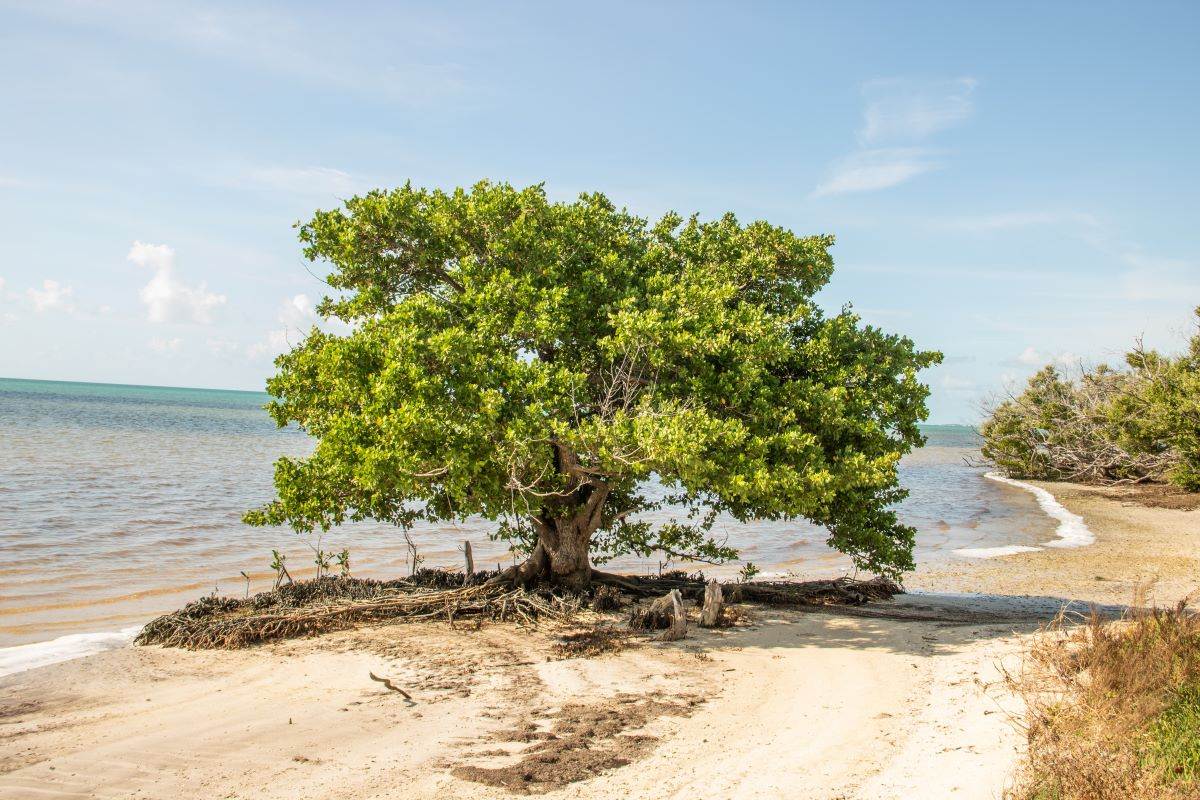
Halfway through the Florida Keys near Marathon, Curry Hammock State Park protects over 1,000 acres of the largest uninhabited parcel of land between Key Largo and Big Pine Key. This is the Keys as they existed before development — pristine mangrove swamps, ancient rockland hammock forest, and turquoise ocean shoreline that reveals what these islands looked like for millennia. The park is renowned as one of the finest kayaking destinations in the Florida Keys, with mangrove tunnels, calm bay waters, and an oceanfront campground that puts you steps from the water.
Kayaking the Mangrove Tunnels
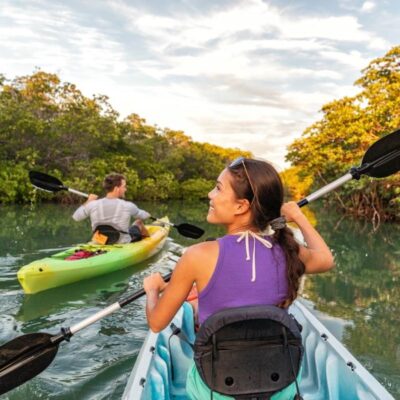
Curry Hammock’s most celebrated experience is paddling through natural mangrove tunnels — narrow, canopy-covered channels where prop roots arch overhead and juvenile fish dart below your boat. Kayak and paddleboard rentals are available at the park, making it accessible even without your own gear. The calm bayside waters are perfect for beginners, while more experienced paddlers can explore the outer mangrove islands.
Oceanfront Camping & Beach
The park’s 28-site oceanfront campground is among the most coveted in the entire Florida State Park system:
- Sandy Beach: Small but beautiful — ideal for snorkeling, wading, and sunset watching
- Campground Beach: Steps from your tent or RV to the ocean
- Kiteboarding & Windsurfing: Consistent trade winds make this a premier spot
- Nature Trail (1.5 miles): Moderate loop through rockland hammock — watch for rare tree snails and migratory birds
Practical Tips
- From Marathon (5 miles): The park is at Mile Marker 56.2 on the Overseas Highway (US-1)
- Entry fee: $5 per vehicle (single occupant), $6 for 2-8 passengers
- Reserve camping months ahead — the 28 oceanfront sites book up extremely fast, especially December-April
- Bring reef-safe sunscreen — the Keys’ coral ecosystem is protected
- The park is a critical migratory bird stopover — September and October bring spectacular raptor migration
- No fresh water for kayaking — bring plenty of drinking water for paddling excursions
- Combine with Bahia Honda State Park (20 miles south) for the Keys’ finest beach
Explore More Florida State Parks
Curry Hammock State Park is one of many outstanding state parks in Florida. Discover more parks in our Best State Parks in Florida guide, or use our Park Finder to search by activity, location, or features.
Wildlife & Nature
Curry Hammock SP — in the Florida Keys at Mile Marker 56 — preserves the largest uninhabited parcel of land between Key Largo and Big Pine Key. The park’s rockland hammock, mangroves, and seagrass beds support great white herons (found only in the Keys), white-crowned pigeons, and Key deer. Nurse sharks cruise the shallows.
Nearby Attractions
Marathon — adjacent. Bahia Honda SP — 15 miles south — has Florida’s best-rated beach. Pigeon Key — nearby. Seven Mile Bridge — nearby.
Keep exploring: The closest neighbors are Long Key State Park (a short drive away) and Bahia Honda State Park (within about an hour’s drive).

🐾 Dogs & Pets at Curry Hammock State Park
- Pets allowed? statewide rule
- Domestic pets are welcome in many Florida State Parks — on hiking trails, in picnic areas and campgrounds — but only in designated areas.
- Leash rule statewide rule
- Leashes may not exceed 6 feet; pets must be under physical control at all times.
- Beaches & swim areas statewide rule
- Pets are not permitted on beaches, boardwalks or playgrounds, or in bathing areas — swimming pets can be viewed as prey by alligators.
- Cabins & lodging statewide rule
- Pets are not allowed in any state park buildings, cabins or cabin areas.
- Statewide exceptions statewide rule
- Pets prohibited at several parks including Ellie Schiller Homosassa Springs (free kennels at the entrance), Weeki Wachee Springs and Egmont Key; in campgrounds pets must be confined in the camping unit 11 p.m.-7 a.m.
Are dogs allowed at Curry Hammock State Park?
Domestic pets are welcome in many Florida State Parks — on hiking trails, in picnic areas and campgrounds — but only in designated areas. Individual parks can post stricter rules — check signage on arrival.
Rules verified July 2026 via floridastateparks.org. More: Florida state parks guide · Dog rules in all 50 states compared
Park Location
Plan your gear for Curry Hammock State Park
From our editorial guides, matched to this park’s activities:

Top Tours & Activities Near Islamorada
 from $900
 from $650
 from $350