
🌤 Weather at Goose Island State Park by season
| Spring | Summer | Fall | Winter |
|---|---|---|---|
| 60–85 °F | 78–92 °F | 58–89 °F | 49–69 °F |
Each range runs from the coldest monthly average low to the warmest monthly average high in that season (1991-2020 climate normals), measured at Rockport Aransas Co Airport, 5 mi away, elevation 22 ft. Conditions at the park can differ from the station, especially where elevation differs — check a forecast before you go.

Goose Island State Park is home to “The Big Tree“—a 1,000+ year old live oak that’s one of Texas’s largest! Camp bayside under ancient oaks, fish from a 1,620-foot pier (no license needed!), and spot endangered whooping cranes wintering November–April.
⚠️ 2026 Alerts
- Construction: Sites 1-24 improvements, some closures
- Water Conservation: Bring your own water!
- Marsh Restoration: Begins June 2026
The Big Tree
| Stats | Details |
|---|---|
| ⏳ Age | 1,000+ years (some say 2,000!) |
| 📏 Height | 44 feet |
| 👐 Crown Spread | 90 feet |
| 📐 Trunk | 36 feet circumference |
Whooping Cranes
November – April: Endangered whooping cranes winter along the coast (record 557 cranes in 2024-25!). Best viewing: Lamar Beach Road, sunrise/late afternoon. Whooping Crane Festival: Feb 19-22, 2026 in Port Aransas!
Fishing
| Info | Details |
|---|---|
| 🎣 Pier Length | 1,620 feet! |
| 📜 License | NOT required (pier/shore) |
| 🎣 Pole Limit | 2 max from structure |
Camping
| Type | Sites |
|---|---|
| 🌊 Bayfront | 44 (water/electric) |
| 🌳 Oak Grove | 57 (water/electric) |
| ⛺ Walk-in Tent | 25 |
Wildlife & Nature
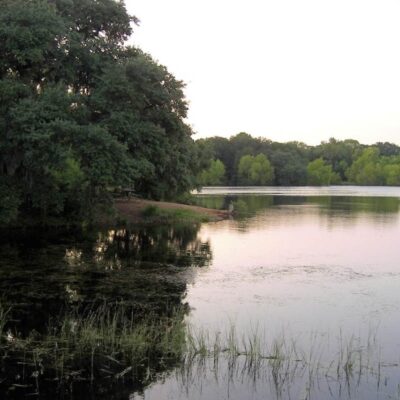
Goose Island SP — home of the Big Tree — a 1,000+-year-old live oak that is one of the largest live oaks in Texas (35-foot circumference). The park’s Aransas Bay, coastal marshes, and live oak groves support whooping cranes (critically endangered — winter here at nearby Aransas NWR), roseate spoonbills, and brown pelicans.
Nearby Attractions
Rockport — adjacent. Aransas NWR — nearby (world’s primary wintering ground for whooping cranes). Aransas Bay — at the park.
FAQ
How old is The Big Tree?
Estimated 1,000+ years old (some say up to 2,000!). It’s one of Texas’s largest live oaks—44ft tall, 90ft crown, 36ft trunk circumference. Protected with lightning rod and irrigation system.
When can I see whooping cranes?
November through early April. A record 557 whooping cranes wintered in Texas in 2024-25. Best viewing: Lamar Beach Road at sunrise or late afternoon. Annual Whooping Crane Festival: Feb 19-22, 2026.
Do I need a fishing license?
Not from pier or shore! Within state park boundaries, no license required. Max 2 poles from any structure.
🌳 Ancient Oaks & Whooping Cranes
Visit Texas Parks website.
Things to Do
Texas state parks encompass an extraordinary range — from Big Bend’s Chihuahuan Desert canyons and Hill Country swimming holes to East Texas piney woods, Gulf Coast barrier islands, and Panhandle canyon country. Activities include hiking through dramatic canyon landscapes, swimming in spring-fed Hill Country rivers, kayaking coastal bays and inland waterways, fishing for bass, catfish, and redfish, camping under vast starry skies (Texas has multiple International Dark Sky parks), mountain biking rugged desert trails, rock climbing at Hueco Tanks, birding along the Gulf Coast flyway, and tubing crystal-clear rivers like the Frio, Guadalupe, and San Marcos.
Best Time to Visit
Texas parks vary hugely by region. Hill Country and desert parks are best October through April — summer brings punishing heat exceeding 100°F. Gulf Coast parks are pleasant November through April, with warm water for fishing year-round. East Texas piney woods are enjoyable spring and fall. The Big Bend region is a winter destination — spring break and Thanksgiving are peak times. Fall foliage is limited in most of Texas, but Lost Maples State Natural Area in the Hill Country delivers spectacular bigtooth maple color in late October through November. Day-use reservations are mandatory at high-demand parks (Enchanted Rock, Garner, Pedernales Falls) — check the TPWD website before visiting.
Visitor Tips
Texas state parks charge per-person daily entrance fees ($2–$8 for ages 13 and older, depending on the park; children 12 and under free). The Texas State Parks Pass ($70/year) covers unlimited free entry for the passholder and all passengers in their vehicle — one of the best deals in the state park world. Camping reservations through the TPWD reservation system open 30 days in advance. Popular Hill Country parks frequently reach capacity and close to new entries on weekends. Cell service is nonexistent in remote West Texas and Big Bend parks. Carry at least 1 gallon of water per person per day when hiking in desert parks.
Explore More Texas State Parks
Goose Island State Park is one of many outstanding state parks in Texas. Discover more parks in our Best State Parks in Texas guide, or use our Park Finder to search by activity, location, or features.
Nearby parks: If you have extra time, Matagorda Island State Park is within about an hour’s drive.

🐾 Dogs & Pets at Goose Island State Park
- Pets allowed? statewide rule
- Pets are welcome at almost all Texas State Parks on trails and in campgrounds, but must be on leash, in a car, or in a crate at all times and may not be left unattended.
- Leash rule statewide rule
- 6 ft maximum leash required at all times
- Beaches & swim areas statewide rule
- Pets are not allowed in the water or on land around designated swim areas
- Cabins & lodging statewide rule
- Pets are not permitted in any state park buildings, including motels, cabins, screened shelters and group facilities
- Statewide exceptions statewide rule
- Several parks restrict dogs in specific areas (Big Bend Ranch, Enchanted Rock, Government Canyon, Hueco Tanks); proof of current rabies vaccination required
Are dogs allowed at Goose Island State Park?
Pets are welcome at almost all Texas State Parks on trails and in campgrounds, but must be on leash, in a car, or in a crate at all times and may not be left unattended. Individual parks can post stricter rules — check signage on arrival.
Rules verified July 2026 via tpwd.texas.gov. More: Texas state parks guide · Dog rules in all 50 states compared
Park Location
Plan your gear for Goose Island State Park
From our editorial guides, matched to this park’s activities: