
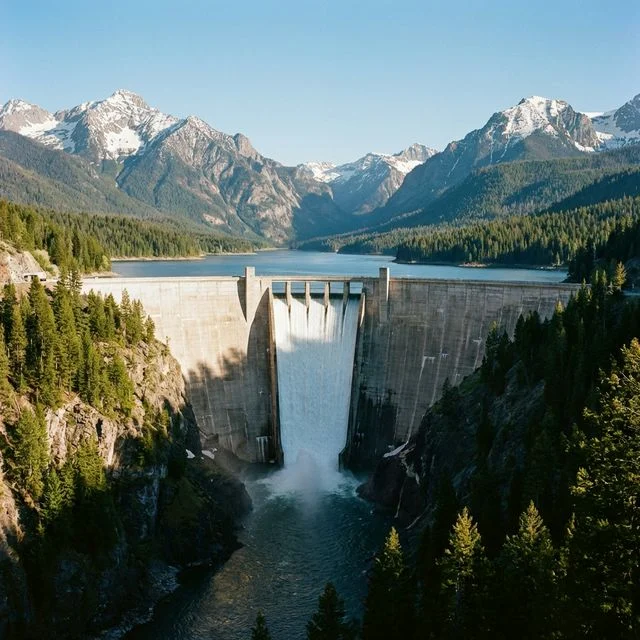
Hungry Horse Dam

🏔️ Montana’s 564-Foot Concrete Giant – Updated 2025
A Colossus Near Glacier National Park
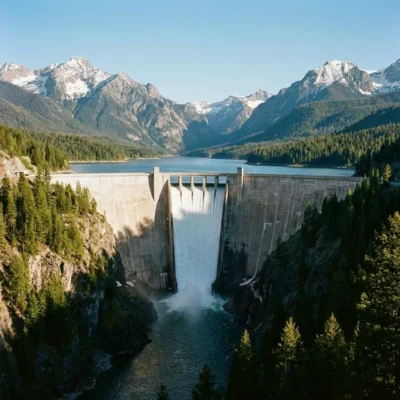
Hungry Horse Dam is a 564-foot concrete arch dam on the South Fork of the Flathead River in northwest Montana—the tallest dam in Montana and the 10th highest in the United States. Just 20 miles south of Glacier National Park, the dam creates the spectacular Hungry Horse Reservoir, a 34-mile-long mountain lake surrounded by 25+ peaks in the Flathead National Forest.
The dam features the world’s highest morning-glory spillway and offers free tours during summer months. The reservoir is a world-class destination for fishing, boating, and backcountry camping.
The Dam
- Height: 564 feet (172m)
- Crest Length: 2,115 feet
- Spillway: World’s highest morning-glory (bell-mouth) type.
- Purpose: Hydroelectric power and flood control (Bureau of Reclamation).
Free Dam Tours
| Feature | Details |
|---|---|
| Season | Memorial Day–Labor Day |
| Visitor Center | Open daily, 8 AM – 3 PM |
| Tour Times | 9:30 AM, 11:30 AM, 1:30 PM, 3:30 PM |
| Cost | Free |
The Reservoir
Hungry Horse Reservoir stretches 34 miles through the Rocky Mountains with 170 miles of shoreline and 23,800 acres of water.
- Fishing: Cutthroat trout, bull trout, whitefish. Remote and uncrowded.
- Boating: Multiple boat launches. Some campgrounds are island-accessible only by boat.
- Scenic Loop: A 120-mile road encircles the reservoir—one of Montana’s best scenic drives.
- Camping: 12+ campgrounds managed by the Flathead National Forest.
Planning Your Visit
Quick Facts
| Feature | Details |
|---|---|
| Location | Hungry Horse, Montana (Flathead County) |
| Reservoir Size | 23,800 acres, 34 miles long |
| Entry Fee | Free (some campgrounds charge fees) |
| Nearby | Glacier National Park (20 mi), Whitefish, Kalispell |
Frequently Asked Questions
Can I walk across the dam?
Yes, during visitor center hours (Memorial Day–Labor Day). Free guided tours walk across the dam crest and explain the engineering and history.
Is this near Glacier National Park?
Yes. Hungry Horse Dam is approximately 20 miles south of Glacier’s West Entrance. Many visitors combine the two destinations.
Do Montana state parks require an entrance fee?
Montana residents can enter free if they pay the state parks fee with their vehicle registration. Non-residents pay a day-use fee of approximately $8 per vehicle. No annual pass is available for non-residents.
Do I need bear spray at Montana state parks?
Bear spray is strongly recommended at most Montana state parks, especially in the western and mountainous regions. Black bears and grizzly bears are present. Carry spray, know how to use it, and follow food storage rules.
What are the best state parks near Glacier National Park?
Whitefish Lake, Wayfarers (on Flathead Lake), and Lone Pine are accessible parks near Glacier. Flathead Lake is the largest natural freshwater lake west of the Mississippi and offers excellent camping.
Can it snow in Montana state parks in summer?
Yes, snow is possible in Montana mountain parks even in July and August at higher elevations. Weather can change dramatically and quickly. Always carry layers, rain gear, and be prepared for cold conditions.
Things to Do
Montana state parks offer access to the raw, untamed beauty of the “Big Sky” state, featuring alpine glacial lakes, immense river canyons, Old West ghost towns, and Native American buffalo jumps. Activities are deeply rooted in the wilderness experience: world-renowned fly fishing on blue-ribbon trout streams, hiking and mountain biking in bear country, floating and kayaking crystal-clear rivers, and camping in remote, scenic locations. The parks also serve as unparalleled gateways for wildlife viewing, including eagles, bighorn sheep, and elk.
Best Time to Visit
Summer (late June to August) is the primary window for visiting Montana parks, offering warm days, accessible high-elevation trails, and peak water recreation. Fall (September–October) is stunning with golden aspens and excellent, uncrowded fishing, though snow can arrive early. Winter is long and harsh, closing many park roads, but select parks offer ice fishing and cross-country skiing. Spring is beautiful but often hampered by muddy trails and high, murky river runoffs until late June.
Visitor Tips
Montana residents who pay the state parks fee with their annual vehicle registration enter for free. Out-of-state visitors pay a day-use fee (typically $8 per vehicle). Bear safety is critical: carry bear spray, know how to use it, hike in groups, make noise, and strictly adhere to food storage regulations when camping. Many parks have limited amenities (pit toilets, no running water), so prepare for a more rustic experience. Weather can change drastically—snow is possible in the mountains even in July.
Explore More Montana State Parks
Hungry Horse Dam is one of many outstanding state parks in Montana. Discover more parks in our Best State Parks in Montana guide, or use our Park Finder to search by activity, location, or features.

Park Location
Top Tours & Activities Near West Glacier
 from $250
 from $65
 from $165