
🌤 Weather at Illinois Beach State Park by season
| Spring | Summer | Fall | Winter |
|---|---|---|---|
| 27–67 °F | 56–81 °F | 31–73 °F | 16–36 °F |
Each range runs from the coldest monthly average low to the warmest monthly average high in that season (1991-2020 climate normals), measured at Chicago Waukegan Rgnl Airport, 4 mi away, elevation 727 ft. Conditions at the park can differ from the station, especially where elevation differs — check a forecast before you go.

🌿 Guide to Illinois’ Last Natural Shoreline
6.5 Miles of Lake Michigan’s Only Natural Shore in Illinois
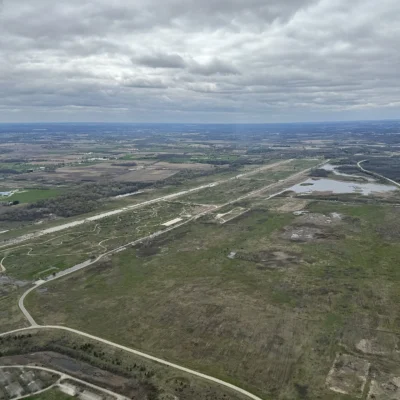
In the city of Zion in Lake County, Adeline Jay Geo-Karis Illinois Beach State Park protects 4,160 acres along 6.5 miles of Lake Michigan’s only remaining natural beach ridge shoreline in Illinois. Split into North and South units — separated by the decommissioned Zion Nuclear Power Station site — the park harbors sand dunes, wetlands, black oak savannas, and over 650 recorded plant species — including prickly pear cactus, an unexpected find this far north. The South Unit’s nature preserve is a National Natural Landmark (1980), protecting rare dune-and-swale habitats found nowhere else in the state.
With 2 million visitors in 2024 — making it Illinois’ second most-visited state park after Starved Rock — Illinois Beach offers Chicago-area residents the closest experience of Great Lakes coastal wilderness. The park is free to enter, open daily from 8:00 a.m. to sundown.
Geology: 5,000 Years of Beach Ridge Formation
Illinois Beach sits on the Zion beach-ridge plain, an 18-mile migratory coastal landform stretching from Kenosha, Wisconsin, south into Illinois. The park’s distinctive “washboard” topography — alternating sand ridges and low marshy swales — formed over the past 4,000-5,000 years as waves and currents transported sand and gravel southward from eroding glacial bluffs in southern Wisconsin.
The formation process is ongoing and dynamic: waves deposit coast-parallel sand ridges, while wind builds dunes atop them. Dune-building plants — marram grass, sand reed grass, and sand-dune willow — trap windblown sand, stabilizing the ridges. The northern portions of the park typically experience erosion that feeds sediment southward, continuously building the southern portions. This net southerly littoral transport makes Illinois Beach a living geological laboratory — the ridges correspond to historical shoreline positions as Lake Michigan receded from post-glacial high-water stages like the Nipissing phase.
💡 Geology Tip: Walk from the lakeshore inland in the South Unit and you’re literally walking backward through time — each successive ridge represents an older shoreline position, with the outermost ridges being the youngest (hundreds of years) and the inland ridges the oldest (thousands of years).
North Unit vs. South Unit
| Feature | North Unit (1,925 acres) | South Unit (2,235 acres) |
|---|---|---|
| Shoreline | ~2.5 miles | ~3.5 miles |
| Beach access | Sandy beach, less crowded | Main beach area, most popular |
| Trails | 1.8-mile Camp Logan Trail | 5+ miles including 2.2-mile loop |
| Camping | No camping | 241 Class A Premium sites |
| Lodging | None | Illinois Beach Resort & Conference Center |
| Nature Preserve | No | Yes — National Natural Landmark |
| History | Camp Logan (IL National Guard, 1892) | First Illinois Nature Preserve |
| Best for | Quiet walks, birding, history | Beach days, camping, resort stays |
Wildlife & Nature: A Biodiversity Hotspot
Illinois Beach is designated an Important Bird Area and hosts approximately 40 endangered plant and animal species within its diverse habitats of dunes, wetlands, prairies, and black oak savannas. The park’s location on the Lake Michigan shoreline makes it a critical migration corridor — hawks, falcons, warblers, shorebirds, and waterfowl funnel through during spring and fall migrations.
Piping Plover Conservation
The piping plover (Charadrius melodus) — a federally endangered shorebird — has returned to Illinois Beach after disappearing from the state around 1955. The park serves as a key release site for captive-reared piping plover chicks, part of a U.S. Fish and Wildlife Service program to bolster the Great Lakes breeding population. Much of the park’s shoreline is designated critical piping plover habitat. Visitors should respect “Share the Shore” signage and keep dogs away from marked nesting areas.
Notable Species
| Category | Species | Notes |
|---|---|---|
| Endangered birds | Piping plover, sandhill crane | Breeding/nesting documented |
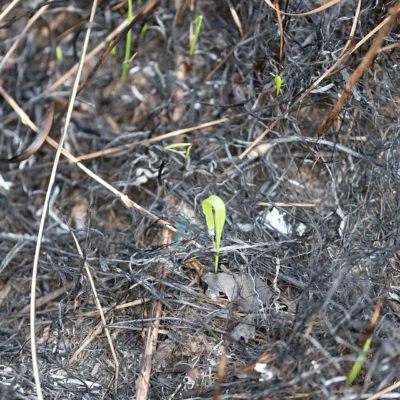
| Endangered plants | Dune thistle, eastern prairie fringed orchid | Found in nature preserve |
| Rare insects | Karner blue butterfly | Wild lupine dependent |
| Migratory raptors | Hawks, falcons, osprey | Peak: September-November |
| Waterfowl | Common mergansers, bufflehead, scaup | Winter concentrations on lake |
| Marsh birds | Sora rails, Virginia rails | Breeding in wetland swales |
| Unexpected plants | Prickly pear cactus | Northernmost range — sand dune habitat |
Trails & Hiking
South Unit Trails (~5 miles total)
The South Unit offers the park’s most extensive trail network through diverse habitats — from dune ridges to wetland swales to black oak savanna. The 2.2-mile graveled loop trail is the most popular, winding through the nationally significant beach ridge landscape. The terrain is mostly flat with gentle sandy rises over the ancient ridges. Spring wildflowers — including rare orchids — bloom along the trail edges from April through June.
North Unit: Camp Logan Trail (1.8 miles)
This multi-use trail follows the historic Camp Logan military training grounds (est. 1892) through open meadows and scrubby dune forest. The Camp Logan National Guard Rifle Range Historic District was listed on the National Register of Historic Places in 2000 — several historic structures from the pre-WWI training facility remain visible along the trail. This unit is typically quieter and better for birding.
Connecting Trail
The Zion Bike Trail connects the North and South Units via a paved route along 29th Street to 17th Street — about 2 miles each way. This enables a full-day exploration of both units by bike or on foot.
Beach & Swimming
Illinois Beach’s sandy Lake Michigan shoreline is the park’s signature feature — and the only natural beach in Illinois. The South Unit’s main beach is the most popular swimming area, with fine sand and views stretching across the lake toward Michigan’s distant shore.
⚠️ Safety Notice: No lifeguards are on duty. Lake Michigan has strong currents and cold water temperatures — even in summer, surface temperatures rarely exceed 70°F (21°C). Warmest swimming is in late July and August. Never swim alone, and avoid the water after heavy rains when bacterial levels may be elevated.
Camping
| Detail | Information |
|---|---|
| Location | South Unit only |
| Total sites | 241 Class A Premium sites |
| Hookups | Electric (30/50 amp) |
| Facilities | Showers, restrooms, sanitary dump station |
| Season | May 1 – September 30 |
| Reservations | Via ExploreMoreIL™ — book early, fills fast |
| Alcohol | Not permitted in campground |
| Pets | Allowed on leash — not in Nature Preserve |
💡 Camping Tip: The 241-site campground fills every summer weekend from Memorial Day through Labor Day. Reserve at least 2-3 weeks in advance. Midweek stays (Tuesday-Thursday) have the best availability. Sites closest to the beach are the first to go.
Illinois Beach Resort & Conference Center
For visitors who prefer a roof over their heads, the Illinois Beach Resort sits within the South Unit, directly on the Lake Michigan shoreline. The full-service resort offers hotel rooms with lake views, on-site dining, an indoor pool, and conference facilities. It’s one of only a handful of state park lodges in Illinois — and the only one on Lake Michigan.
Fishing
Anglers have two distinct options at Illinois Beach:
- Lake Michigan surf casting: Fish from the sandy beach (outside of swimming areas) for perch, steelhead trout, and salmon. Dawn and dusk are prime times.
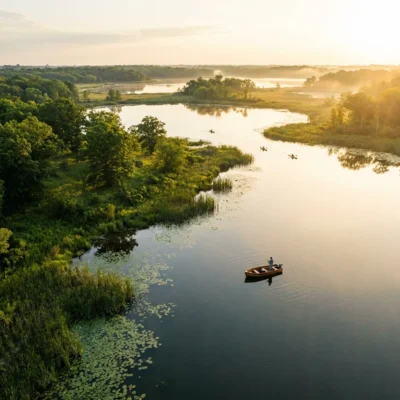
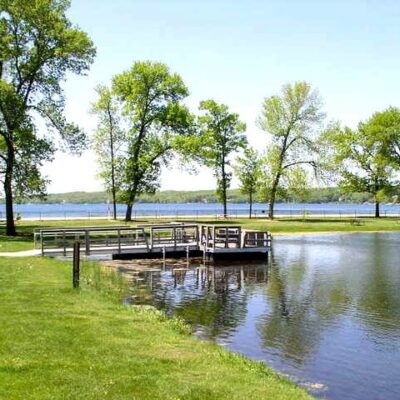
- Inland ponds: Several small ponds within the park — including Sand Pond with its accessible fishing pier — offer panfish, bass, and catfish in a quieter setting.
Fishing is not permitted within the Nature Preserve. A valid Illinois fishing license is required.
Boating & Paddling
North Point Marina — adjacent to the park in Winthrop Harbor — is the largest marina on Lake Michigan’s Illinois shore, offering public boat launch ramps with multiple lanes. Kayakers and paddleboarders can launch here and paddle south along the Illinois Beach shoreline for a scenic coastal experience.
⚠️ Paddling Caution: Lake Michigan is an inland sea with unpredictable currents and waves. This route is recommended for experienced sea kayakers only. Always check weather forecasts, wear a PFD, and be aware that landing within the Nature Preserve (south of the Dead River) is restricted. Illinois law requires all canoes, kayaks, and paddleboards to be registered.
History: From Camp Logan to Conservation
The park’s North Unit sits on the former Camp Logan, established in 1892 as an Illinois National Guard training facility and rifle range — named for General John Alexander Logan, a prominent Union Army general who raised the 31st Illinois Volunteer Infantry. The camp served as a training ground for marksmanship and tactical maneuvers from 1892 until the early 1970s, hosting Illinois National Guard, U.S. Army, and U.S. Navy units through both World Wars.
The State of Illinois began acquiring parkland in 1948, establishing the South Unit first. The North Unit — including the Camp Logan site — was incorporated in the 1970s-1980s. In 2010, the park was renamed for Adeline Jay Geo-Karis, a long-serving state senator who championed Lake County conservation.
Nearby Attractions
| Attraction | Distance | Highlights |
|---|---|---|
| North Point Marina | Adjacent | Illinois’ largest Lake Michigan marina, boat launches, dining |
| Chain O’Lakes State Park | 30 miles west | Inland lake paddling, fishing, 6,063 acres of water |
| Volo Bog State Natural Area | 25 miles west | Illinois’ only remaining quaking bog |
| Six Flags Great America | 15 miles south | Theme park in Gurnee |
| Shiloh House Museum | In Zion | Zion founder John Alexander Dowie’s history |
| Indiana Dunes National Park | 45 miles south | 15 miles of Lake Michigan beach, 15,000 acres |
| Chicago Museums | 45 miles south | Field Museum, Shedd Aquarium, Museum of Science & Industry |
Getting There & Practical Information
| Detail | Information |
|---|---|
| Address | Lake Front, Zion, IL 60099 |
| From Chicago | 45 miles north via I-94 to IL-173 East, then Sheridan Road |
| From Milwaukee | 50 miles south via I-94 |
| Entry fee | Free — all Illinois state parks are free |
| Hours | Daily, 8:00 a.m. to sundown |
| Best season | June-September for beach; May & September-October for birding |
| Public transit | Metra Union Pacific North Line to Zion station (limited service) |
💡 Visitor Tips:
- The South Unit beach has the most parking and amenities — arrive before 10 a.m. on summer weekends
- Bring sunscreen and water — limited shade on the beach and dunes
- The North Unit is the best choice for birding and solitude
- Dogs are allowed on most trails but banned from the Nature Preserve
- Lake Michigan water remains cold well into summer — peak temperatures in late July/August
- Check beach water quality advisories at illinoisbeach.org before swimming after storms
Frequently Asked Questions
Is Illinois Beach State Park free?
Yes, all Illinois state parks offer free admission year-round. There are no vehicle permits or entrance fees. Camping fees apply separately — the 241 Class A Premium sites can be reserved through ExploreMoreIL™. The Illinois Beach Resort charges standard hotel rates.
Can I swim at Illinois Beach State Park?
Yes, swimming is permitted along the sandy Lake Michigan beach, but there are no lifeguards on duty. Lake Michigan has strong currents and cold water temperatures — even in summer, the water rarely exceeds 70°F. Swim only in designated areas, never alone, and avoid the water after heavy rains when bacterial levels may be elevated. The warmest swimming conditions occur in late July and August.
How far is Illinois Beach State Park from Chicago?
Illinois Beach is approximately 45 miles north of downtown Chicago — about a 1-hour drive via I-94. The park is also accessible via the Metra Union Pacific North Line to Zion station, though service is limited and you’ll need to arrange transportation from the station to the park entrance.
What makes Illinois Beach State Park unique?
Illinois Beach protects the only remaining natural beach ridge shoreline in Illinois — a rare geological formation of alternating sand ridges and marshy swales built by Lake Michigan over 5,000 years. The South Unit’s nature preserve is a National Natural Landmark (1980) with over 650 plant species, including prickly pear cactus, rare orchids, and 40 endangered species. It’s also a critical release site for the federally endangered piping plover.
Are dogs allowed at Illinois Beach State Park?
Dogs are allowed on leash on most trails and in the campground, but they are strictly prohibited in the Nature Preserve in the South Unit. During piping plover nesting season (spring and summer), additional beach areas may be restricted — watch for “Share the Shore” signage and respect all closed area boundaries.
Can I launch a kayak at Illinois Beach?
The best launch point is North Point Marina in Winthrop Harbor, adjacent to the park’s North Unit. From there, experienced paddlers can head south along the Illinois Beach shoreline. Note: Lake Michigan is an inland sea with unpredictable conditions — this is not recommended for beginners. Landing within the Nature Preserve is restricted. Illinois requires all kayaks and paddleboards to be registered.
When is the best time to visit Illinois Beach?
June through September is best for beach activities and camping, with the warmest water in late July and August. May and September-October are ideal for birding during migration. The campground operates May 1 through September 30 — reserve at least 2-3 weeks in advance for summer weekends.
Explore More Illinois State Parks
Illinois Beach State Park is one of many outstanding state parks in Illinois. Discover more parks in our Best State Parks in Illinois guide, or use our Park Finder to search by activity, location, or features.
Keep exploring: The closest neighbor is Chain O'Lakes State Park (within about an hour’s drive).

🐾 Dogs & Pets at Illinois Beach State Park
- Pets allowed? statewide rule
- Pets are allowed in Illinois state parks and on trails as long as they are leashed at all times.
- Leash rule statewide rule
- Leash required at all times; state code caps leash length at 10 feet
- Beaches & swim areas statewide rule
- Pets are prohibited in areas posted 'NO PETS', reserved for beach areas, concession areas and crowded campground/picnic areas (e.g. no dogs on the beach at Illinois Beach State Park)
- Cabins & lodging statewide rule
- Pets are not allowed in campground cabins
- Statewide exceptions statewide rule
- Leash rule exceptions for hunting dogs, field trials and dog training areas; pets must not be left unattended
Are dogs allowed at Illinois Beach State Park?
Pets are allowed in Illinois state parks and on trails as long as they are leashed at all times. Individual parks can post stricter rules — check signage on arrival.
Rules verified July 2026 via dnr.illinois.gov. More: Illinois state parks guide · Dog rules in all 50 states compared
Park Location
Plan your gear for Illinois Beach State Park
From our editorial guides, matched to this park’s activities: