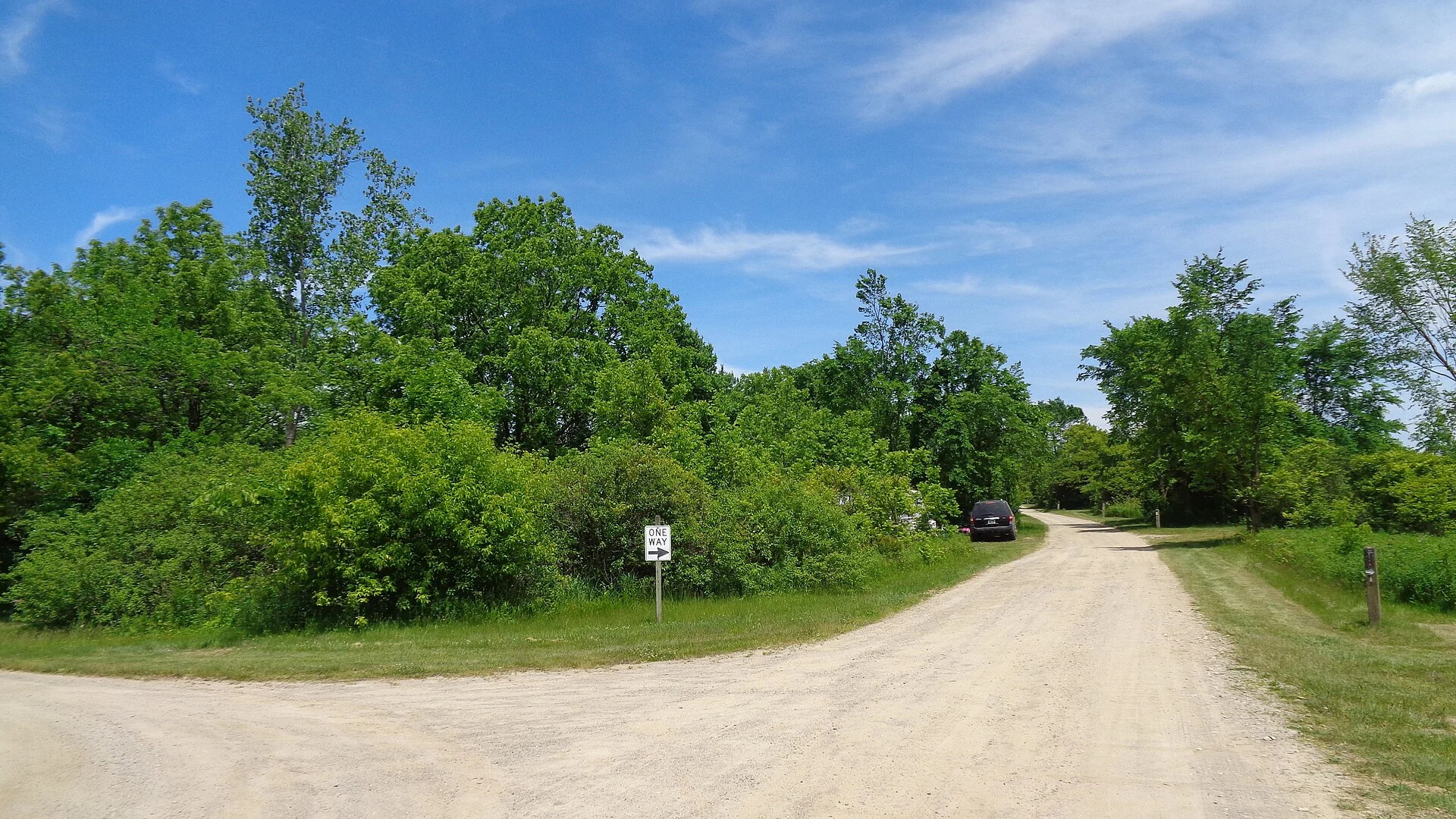
🌤 Weather at Lake Hudson State Recreation Area by season
| Spring | Summer | Fall | Winter |
|---|---|---|---|
| 24–72 °F | 56–86 °F | 28–76 °F | 15–37 °F |
Each range runs from the coldest monthly average low to the warmest monthly average high in that season (1991-2020 climate normals), measured at Morenci, 8 mi away, elevation 770 ft. Conditions at the park can differ from the station, especially where elevation differs — check a forecast before you go.

Overview: Michigan’s First Dark-Sky Preserve
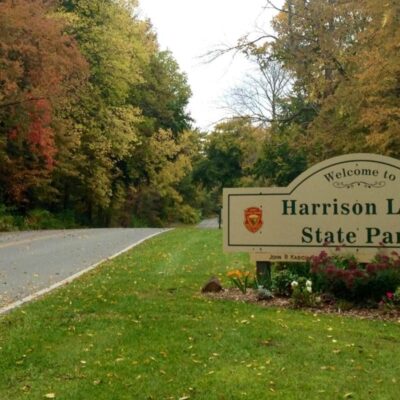
In the flat, open agricultural landscape of southwestern Lenawee County, just a few miles north of the Ohio border, the Lake Hudson State Recreation Area occupies a quietly distinguished position in Michigan’s park system. This 2,796-acre property, centered around the 502-acre man-made Lake Hudson, is best known for two things: its excellent, trophy-caliber muskellunge (muskie) fishing and its official designation as Michigan’s first Dark-Sky Preserve—a recognition granted in 1993 that formally identifies the park as one of the best locations in the Lower Peninsula for stargazing and astronomical observation.
Managed by the Michigan Department of Natural Resources, Lake Hudson offers a deliberately low-key, unpretentious outdoor experience. The semi-modern campground is modest, the facilities are functional rather than luxurious, and the surrounding landscape of flat farmland and young second-growth forest lacks the dramatic topography of Michigan’s more famous northern parks. But for dedicated anglers pursuing the elusive muskie, for amateur astronomers seeking genuinely dark skies within driving distance of Toledo, Ann Arbor, and Detroit, and for families seeking a quiet, uncrowded weekend without the chaos of Michigan’s big-name destinations, Lake Hudson delivers a surprisingly compelling and underrated experience.
Lake Hudson: The No-Wake Muskie Fishery
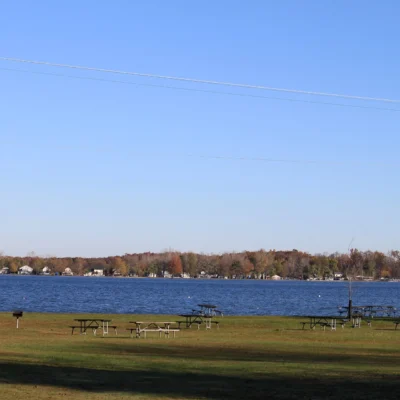
The 502-acre Lake Hudson was created by damming the Bean Creek during the late 1970s. Unlike many Michigan lakes that support high-volume recreation with speedboats, waterski towers, and personal watercraft, Lake Hudson is designated as a strict no-wake zone for all motorized vessels. This regulation transforms the entire lake into a calm, quiet, trolling-speed-only environment that is ideal for serious fishing and peaceful paddling.
The Muskie Reputation
Lake Hudson has earned a significant reputation among Michigan’s muskie fishing community. Muskellunge—the largest member of the pike family, capable of exceeding 50 inches and 30 pounds—are the lake’s premier game fish. The MDNR actively stocks muskies in Lake Hudson and manages the fishery to promote trophy-sized fish. Muskie fishing here requires specialized heavy tackle, large lures or live bait, extraordinary patience, and a willingness to endure long stretches of unproductive casting. The species is famously nicknamed the “fish of 10,000 casts,” and Lake Hudson fully upholds that reputation. But when a 40-inch-plus muskie finally strikes, the explosive fight is among the most thrilling experiences in freshwater fishing.
Other Species
Beyond muskies, Lake Hudson supports a diverse warm-water fishery. Walleye, largemouth bass, black crappie, bluegill, pumpkinseed sunfish, yellow perch, and channel catfish are all present in healthy numbers. The no-wake regulation means the entire lake is fishable from small boats, kayaks, and canoes without fighting boat wakes or competing for space with recreational powerboaters.
Michigan’s First Dark-Sky Preserve
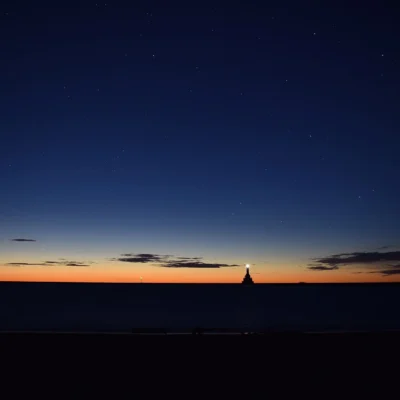
In 1993, Lake Hudson State Recreation Area was officially designated as the first Dark-Sky Preserve in Michigan’s state park system. This designation was driven by the park’s geographic advantage: its location in a sparsely populated agricultural area, distant from the light pollution domes of major cities, provides genuinely dark skies that are increasingly rare in the densely populated Lower Peninsula.
What Dark-Sky Designation Means
The designation means that the park actively manages its own lighting to minimize light pollution. Campground lighting is shielded and minimized, and visitors are encouraged to use red-filtered flashlights and minimize white light after dark. The result is a nighttime environment where the Milky Way is clearly visible to the naked eye, where meteor showers are spectacular, and where amateur telescopes can resolve deep-sky objects (nebulae, galaxies, star clusters) that would be invisible from suburban backyards.
Stargazing Tips
- Best Months: The darkest, clearest skies typically occur from late August through early October, when the Milky Way is prominently positioned overhead and summer humidity has diminished.
- Moon Phase: Plan your visit around a new moon for the darkest possible skies. Even a half-moon significantly reduces the visibility of faint celestial objects.
- Equipment: Even without a telescope, binoculars dramatically enhance the stargazing experience at Lake Hudson. A simple pair of 10×50 binoculars will reveal thousands of stars, the Andromeda Galaxy, and the individual stars within the Pleiades cluster.
- Events: Local astronomy clubs occasionally organize public observing events at the park. Check with the park office or local astronomy organizations for scheduled programs.
Camping
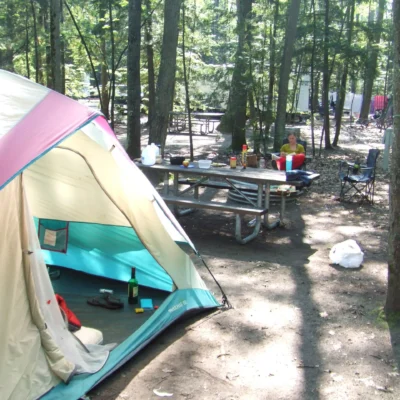
The campground at Lake Hudson is deliberately simple—a reflection of the park’s overall low-key character.
- Sites: Approximately 50 semi-modern campsites with electrical hookups (20/30 amp)
- Facilities: Vault toilets (no flush toilets or showers), hand-pump water (seasonal), fire rings, picnic tables
- Cabins: Two rustic cabins available for reservation
- Season: Generally open from April 1 through November 30
- Character: The campground is rarely fully booked except on major holiday weekends, providing a reliably quiet, low-density experience
The absence of shower facilities and flush toilets is the most common visitor complaint. However, many regular visitors consider this a fair tradeoff for the campground’s consistently low occupancy, genuine quiet, and the exceptional dark skies overhead.
Swimming Beach and Day Use
A designated swimming beach on Lake Hudson provides a sandy shoreline and roped swimming area. The beach is modest in size but adequate for the park’s typically low visitor volume. Adjacent picnic areas with grills and tables offer a pleasant day-use option for visitors not staying overnight.
Trails and Nature
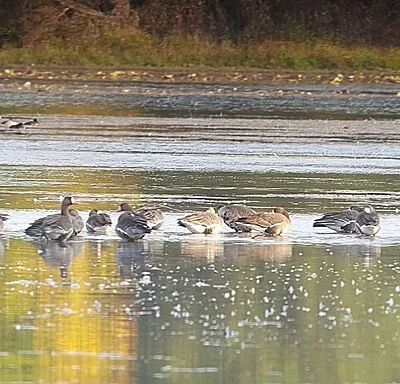
Several miles of trails wind through the park’s forests and along the lake’s shoreline. The terrain is flat—this is the glacial lake plain of southeastern Michigan—and the trails are easy, well-suited for casual walking and wildlife observation. The young second-growth forests and brushy field edges support white-tailed deer, wild turkeys, red foxes, and a pleasing variety of songbirds. The lake’s marshy margins attract great blue herons, green herons, and migrating waterfowl during spring and fall.
Practical Information
Getting There
Lake Hudson State Recreation Area is located in southwestern Lenawee County, approximately 10 miles west of the city of Adrian. From US-223, follow signs to the park entrance. The drive from Toledo, Ohio, is approximately 30 minutes; from Ann Arbor, approximately one hour.
Vehicle Pass
A Michigan Recreation Passport ($15 residents, $42 non-residents) is required for vehicle entry.
Fishing License
A valid Michigan fishing license is required. Muskie-specific regulations (minimum size limits, catch-and-release requirements) apply and should be reviewed before fishing.
Frequently Asked Questions
What makes Lake Hudson a “Dark-Sky Preserve”? The park’s remote location in a sparsely populated agricultural area produces minimal light pollution. Combined with the park’s active management of its own lighting (shielded fixtures, minimal campground lights), the result is genuinely dark skies where the Milky Way is clearly visible—a rarity in Michigan’s Lower Peninsula.
Can I use a motorboat on Lake Hudson? Yes, but the entire lake is a strict no-wake zone. All motorized vessels must operate at trolling speed only. This regulation eliminates speedboats, water skiing, and personal watercraft, creating a calm, quiet environment ideal for fishing and paddling.
Is Lake Hudson good for muskie fishing? Yes. Lake Hudson is one of the most respected muskie fisheries in southern Michigan. The MDNR actively stocks muskellunge and manages the fishery for trophy potential. However, muskie fishing requires specialized tackle, significant patience, and realistic expectations—the species is notoriously difficult to catch.
Are there showers at the campground? No. The campground features vault toilets and hand-pump water only. There are no shower facilities or flush toilets. This is the most significant amenity limitation at Lake Hudson.
When is the best time for stargazing? Late August through early October, during a new moon phase, typically provides the darkest, clearest skies. The Milky Way is prominently positioned overhead during this period, and summer humidity has usually diminished, improving atmospheric transparency.
Make it a road trip: Pair a visit with Walter J. Hayes State Park (a short drive away) or Cambridge Junction Historic State Park (within about an hour’s drive).

🐾 Dogs & Pets at Lake Hudson State Recreation Area
- Pets allowed? statewide rule
- Pets are welcome in Michigan state parks, campgrounds, harbors and state-designated trails, except designated swim beaches and other posted areas.
- Leash rule statewide rule
- Pets must always be on a 6-foot leash and under the owner's immediate control.
- Beaches & swim areas statewide rule
- Pets are prohibited in buoyed swim areas but allowed along the shoreline outside them (on a 6-ft leash, even in the water); 50+ parks have pet-friendly shoreline or designated dog beaches.
- Cabins & lodging statewide rule
- Up to two pets (cats and dogs only) allowed at ~12 parks' designated pet-friendly cabins, yurts and lodges; $10 per night per pet (cabins) or $15 (lodges); otherwise pets barred from overnight lodging.
- Pet fees statewide rule
- No day-use pet fee; pet-friendly lodging costs $10/night per pet (cabins) or $15/night per pet (lodges).
- Statewide exceptions statewide rule
- Leash laws do not apply to dogs used for hunting on land open to such use; pets may not be left unattended.
Are dogs allowed at Lake Hudson State Recreation Area?
Pets are welcome in Michigan state parks, campgrounds, harbors and state-designated trails, except designated swim beaches and other posted areas. Individual parks can post stricter rules — check signage on arrival.
Rules verified July 2026 via michigan.gov. More: Michigan state parks guide · Dog rules in all 50 states compared
Park Location
Plan your gear for Lake Hudson State Recreation Area
From our editorial guides, matched to this park’s activities: