🌤 Weather at North Higgins Lake State Park by season
| Spring | Summer | Fall | Winter |
|---|---|---|---|
| 16–67 °F | 51–80 °F | 26–71 °F | 9–32 °F |
Each range runs from the coldest monthly average low to the warmest monthly average high in that season (1991-2020 climate normals), measured at Grayling, 10 mi away, elevation 1,137 ft. Conditions at the park can differ from the station, especially where elevation differs — check a forecast before you go.

Overview: Home of the Michigan CCC Museum
Positioned on the north shore of crystal-clear Higgins Lake in Roscommon County, North Higgins Lake State Park combines the same extraordinary lake access that makes its southern counterpart so popular with a unique cultural attraction found nowhere else in the state: the Michigan Civilian Conservation Corps (CCC) Museum. Housed in a reconstructed CCC work camp within the park, the museum documents one of the most remarkable chapters in American conservation history—the story of the 3 million young men who planted billions of trees, built thousands of miles of trails, and constructed much of the infrastructure that supports public recreation across the United States to this day.
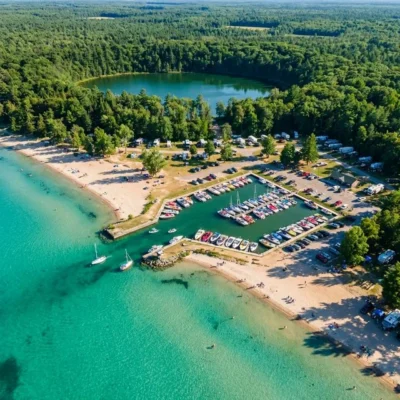
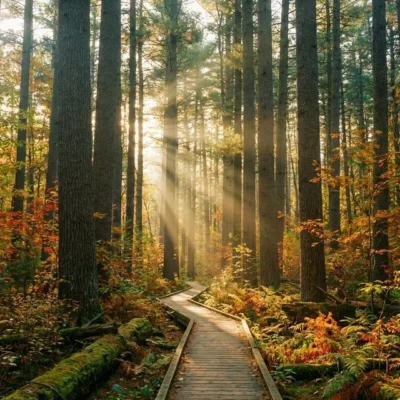
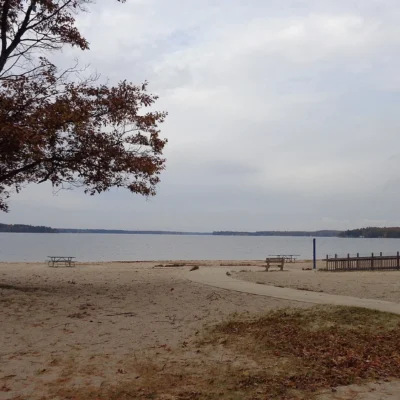
The park itself covers approximately 429 acres of pine and hardwood forest on Higgins Lake’s northern shore, offering a modern campground, a beautiful swimming beach on the same stunningly clear water that draws crowds to South Higgins Lake, and a quieter, somewhat less crowded alternative to the massive 400-site campground across the lake.
The CCC Museum
The Michigan CCC Museum is the park’s signature attraction and one of the most important Depression-era historical sites in the state. The museum is built on the site of one of Michigan’s original CCC camps and features a faithfully reconstructed camp layout that brings the 1930s work experience to vivid life.
What You’ll See
- Reconstructed Barracks: Authentic reproductions of the wooden barracks where CCC enrollees lived during their service, furnished with period-correct bunks, personal items, and equipment
- Exhibit Hall: Comprehensive displays documenting the CCC’s history, accomplishments, and lasting impact on Michigan’s state parks, forests, and infrastructure
- Higgins Lake Nursery History: Exhibits detailing the historic Higgins Lake tree nursery that operated in the area, producing millions of seedlings used in reforestation efforts across Michigan
- Equipment and Tools: Original tools, vehicles, and construction equipment used by CCC crews
- Personal Stories: Firsthand accounts from CCC enrollees describing their experiences, the physical labor, and the sense of purpose the program provided during the height of the Great Depression
The CCC Legacy
The Civilian Conservation Corps (1933–1942) was President Franklin D. Roosevelt’s most popular New Deal program. In Michigan alone, CCC crews planted hundreds of millions of trees, built roads, bridges, and buildings in nearly every state park and forest, and established the infrastructure foundation that the state’s outdoor recreation system continues to rely on today. The museum at North Higgins Lake is the primary keeper of this legacy in Michigan.
Higgins Lake: Crystal-Clear Swimming
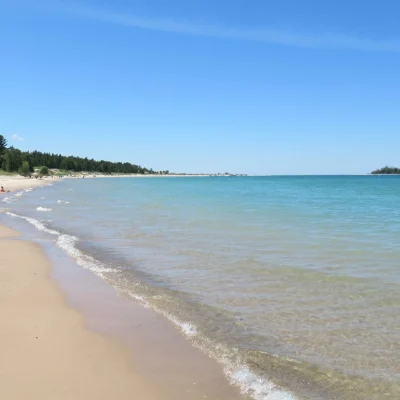
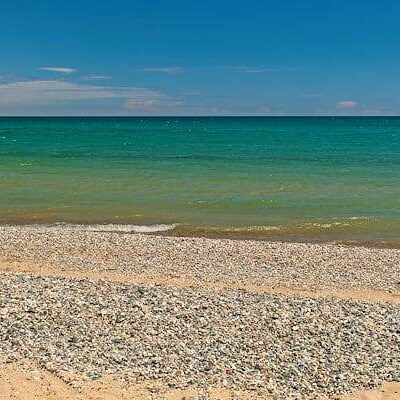
North Higgins Lake provides access to the same extraordinary body of water celebrated at its southern counterpart: 10,185 acres of spring-fed, oligotrophic (nutrient-poor) water with clarity that allows visibility to 15–20 feet or more. The lake’s deep blue color, cold temperatures, and sandy bottom create swimming conditions that rival anything in the Great Lakes region.
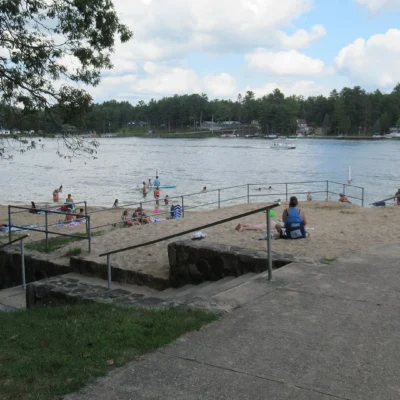
- Swimming Beach: Sandy beach with gradual entry on the north shore
- Water Temperature: Cold. Higgins Lake warms slowly; comfortable swimming typically begins by late June or early July
- Fishing: Lake trout, rainbow trout, smallmouth bass, walleye, cisco, and perch
The Campground
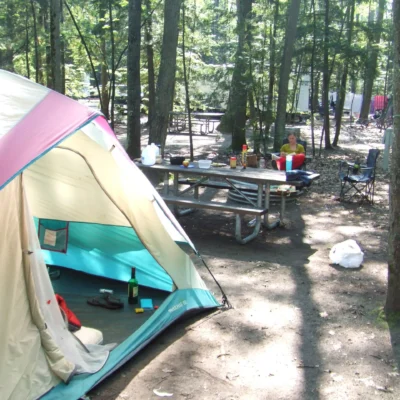
- Modern Sites: Well-spaced sites in a mix of pine and hardwood forest
- Electrical Hookups: Available at most sites
- Facilities: Modern restrooms with flush toilets and hot showers
- Character: Generally quieter and less crowded than the 400-site campground at South Higgins Lake, offering a more relaxed camping experience on the same spectacular lake
Connecting with South Higgins Lake
North and South Higgins Lake State Parks occupy opposite shores of the same lake and are connected by public roads. Visitors camping at North Higgins Lake can easily drive to South Higgins Lake’s facilities (and vice versa), and the shoreline trail and paddling route across the lake provide additional connections. A camping trip that includes visits to both parks—the CCC Museum at the north, the massive campground and Marl Lake trails at the south—delivers a comprehensive Higgins Lake experience.
Seasonal Guide
Spring (April–May)
Campground opens. CCC Museum begins seasonal operations. Lake water very cold. Trout fishing opens.
Summer (June–August)
Peak season. Swimming, CCC Museum tours, camping. Lake water reaches swimmable temperatures by late June.
Autumn (September–October)
Fall color in the hardwood forest. CCC Museum continues through October. Campground less crowded.
Winter (December–March)
Ice fishing on Higgins Lake—one of the most popular ice fishing destinations in Michigan. Cross-country skiing.
Frequently Asked Questions
What is the CCC Museum? A museum reconstructing a 1930s Civilian Conservation Corps work camp, documenting the CCC’s contributions to Michigan’s parks and forests. It is the primary museum for CCC history in Michigan.
Is Higgins Lake the same lake as South Higgins Lake State Park? Yes. Both North and South Higgins Lake State Parks sit on opposite shores of the same 10,185-acre lake. They are connected by public roads around the lake.
Is it less crowded than South Higgins Lake? Generally yes. The north park’s campground is smaller than the 400-site campground at South Higgins Lake, resulting in a quieter atmosphere.
When is the CCC Museum open? Typically from late May through early October. Check with the park for current hours and special events.
Wildlife & Nature
North Higgins Lake SP — on the “most beautiful lake in the world” — has the CCC Museum and crystal-clear water. Lake trout and walleye thrive. Common loons call at dawn. Bald eagles fish overhead.
Nearby Attractions
Roscommon — adjacent. Grayling — 15 miles north. Houghton Lake — 15 miles south.
More parks in Michigan: Ralph A. MacMullan Conference Center and South Higgins Lake State Park. See the full Michigan state parks guide.
Camping reservations: Book campsites and cabins for Michigan state parks online at midnrreservations.com.

🐾 Dogs & Pets at North Higgins Lake State Park
- Pets allowed? statewide rule
- Pets are welcome in Michigan state parks, campgrounds, harbors and state-designated trails, except designated swim beaches and other posted areas.
- Leash rule statewide rule
- Pets must always be on a 6-foot leash and under the owner's immediate control.
- Beaches & swim areas statewide rule
- Pets are prohibited in buoyed swim areas but allowed along the shoreline outside them (on a 6-ft leash, even in the water); 50+ parks have pet-friendly shoreline or designated dog beaches.
- Cabins & lodging statewide rule
- Up to two pets (cats and dogs only) allowed at ~12 parks' designated pet-friendly cabins, yurts and lodges; $10 per night per pet (cabins) or $15 (lodges); otherwise pets barred from overnight lodging.
- Pet fees statewide rule
- No day-use pet fee; pet-friendly lodging costs $10/night per pet (cabins) or $15/night per pet (lodges).
- Statewide exceptions statewide rule
- Leash laws do not apply to dogs used for hunting on land open to such use; pets may not be left unattended.
Are dogs allowed at North Higgins Lake State Park?
Pets are welcome in Michigan state parks, campgrounds, harbors and state-designated trails, except designated swim beaches and other posted areas. Individual parks can post stricter rules — check signage on arrival.
Rules verified July 2026 via michigan.gov. More: Michigan state parks guide · Dog rules in all 50 states compared
Park Location
Plan your gear for North Higgins Lake State Park
From our editorial guides, matched to this park’s activities: