
North Bend State Park

Ohio’s Crown Jewel: Where 350-Million-Year-Old Gorges Hide Waterfalls, Caves, and Ancient Forest
Tucked into the rolling hills of southeastern Ohio, just an hour south of Columbus, lies a landscape so dramatically unlike the rest of the state that first-time visitors often wonder if they’ve accidentally crossed into Appalachia — or another planet entirely. Hocking Hills State Park is a 2,356-acre wonderland of towering sandstone cliffs, ancient recess caves, cascading waterfalls, and hemlock-lined gorges carved over 350 million years from Black Hand Sandstone deposited when Ohio was the floor of an ancient sea.
The park’s six major hiking areas — Old Man’s Cave, Ash Cave, Cedar Falls, Rock House, Conkle’s Hollow, and Cantwell Cliffs — are connected by the famous Grandma Gatewood Trail, offering everything from wheelchair-accessible strolls to strenuous all-day adventures. With free admission, year-round access, and geological formations that rival anything in the eastern United States, Hocking Hills consistently ranks as Ohio’s #1 state park and one of the finest natural attractions in the Midwest.
🏛️ The Six Hiking Areas
Hocking Hills State Park is organized around six distinct geological areas, each offering unique formations, trails, and experiences. You could spend an hour or an entire day exploring them all.
Old Man’s Cave
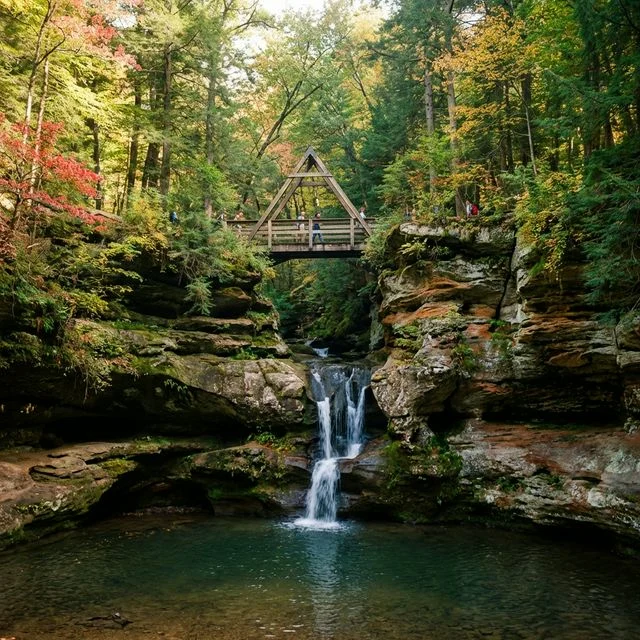
The park’s most famous and most visited area, Old Man’s Cave is named after Richard Rowe, a hermit who lived in the large recess cave in the late 1700s. The 1.5-mile loop trail descends into a stunning gorge containing five distinct features: Upper Falls, Upper Gorge, Middle Falls, Lower Falls, and Lower Gorge. Along the way, look for the Devil’s Bathtub (a swirling stone pool), the Sphinx Head rock formation, and the iconic A-Frame Bridge spanning the gorge. A wheelchair-accessible trail provides ramp access and an observation deck at Upper Falls.
Ash Cave
Ash Cave is the largest recess cave east of the Mississippi River — a staggering horseshoe-shaped cavern measuring 700 feet wide, 100 feet deep, and 90 feet high. A seasonal waterfall cascades over the massive sandstone ledge into the cave. The quarter-mile paved gorge trail is completely wheelchair-accessible (up to the stairs at the cave), making this one of the most jaw-dropping accessible natural experiences in America. The cave gets its name from the massive ash deposits found by early European settlers — evidence of centuries of Native American campfires.
Cedar Falls
Despite its name (early settlers mistook the hemlocks for cedars), Cedar Falls is the largest-volume waterfall in the Hocking Hills region, plunging approximately 50 feet through a hemlock-lined chasm. The 1-mile moderate loop trail descends into a primitive gorge with steep rock walls, grottos, and waterfalls. Cedar Falls flows year-round but is most impressive after rainfall or during spring snowmelt.
Rock House
Rock House is the only true cave in the Hocking Hills — not a recess cave or overhang, but a corridor-like tunnel carved into the face of a sandstone cliff, with natural “windows” opening to the forest below. The cave features gothic arches, stone columns, and ovens carved into the walls by early inhabitants. The moderate 0.5-mile trail includes stairs and can be slippery. This is one of the park’s most architecturally stunning features.
Conkle’s Hollow
Conkle’s Hollow State Nature Preserve is a narrow, half-mile gorge with vertical sandstone walls rising 200 feet — the deepest in the region. Two trails explore it: the easy Gorge Trail (0.5 miles) follows the ravine floor past dripping moss walls, while the moderate Rim Trail (2.5 miles) offers dramatic cliffside views from above. Note: Pets are not permitted in Conkle’s Hollow (it’s a State Nature Preserve, not part of the state park).
Cantwell Cliffs
The most remote and least-visited of the six areas, Cantwell Cliffs rewards hikers with towering shelter caves, narrow rock passages, and blissful solitude. The moderate 1-mile loop trail descends through a “fat man’s squeeze” between massive boulders before opening into a dramatic cliff amphitheater. If you want to avoid crowds, this is your spot.
🥾 Trail Guide
| Trail / Area | Distance | Difficulty | Highlights |
|---|---|---|---|
| Old Man’s Cave Loop | 1.5 mi | Moderate | Upper/Lower Falls, Devil’s Bathtub, Sphinx Head, A-Frame Bridge |
| Ash Cave Gorge Trail | 0.25 mi | Easy (ADA) | Largest recess cave east of Mississippi, seasonal waterfall |
| Ash Cave Rim Trail | 0.25 mi | Moderate | Overlook views of Ash Cave from above |
| Cedar Falls Trail | 1.0 mi | Moderate | Region’s largest waterfall, hemlock gorge |
| Rock House Trail | 0.5 mi | Moderate | Ohio’s only true cave, natural windows, gothic arches |
| Conkle’s Hollow Gorge | 0.5 mi | Easy | 200-ft vertical walls, moss-covered ravine |
| Conkle’s Hollow Rim | 2.5 mi | Moderate | Dramatic clifftop views, one of the best rim hikes in Ohio |
| Cantwell Cliffs Loop | 1.0 mi | Moderate | Shelter caves, narrow rock passages, solitude |
| Grandma Gatewood Trail | 6.0 mi | Strenuous | Connects Old Man’s Cave → Cedar Falls → Ash Cave |
| Whispering Cave Trail | 0.5 mi | Easy-Mod | 105-foot seasonal waterfall, second-largest cave |
The Grandma Gatewood Trail
Named after Emma “Grandma” Gatewood, the legendary Ohio grandmother who in 1955 became the first woman to solo thru-hike the entire Appalachian Trail at age 67, this 6-mile trail connects the park’s three most popular areas: Old Man’s Cave, Cedar Falls, and Ash Cave. It’s the ultimate Hocking Hills experience — a full day hike through the heart of Ohio’s finest geology. The trail is rated strenuous due to elevation changes and rocky terrain. Shuttle service or car-spotting is recommended since it’s point-to-point.
🌊 Waterfalls
| Waterfall | Height | Location | Flow |
|---|---|---|---|
| Old Man’s Cave Upper Falls | ~25 ft | Old Man’s Cave area | Seasonal — best after rain |
| Old Man’s Cave Lower Falls | ~15 ft | Old Man’s Cave area | Seasonal |
| Cedar Falls | ~50 ft | Cedar Falls area | Year-round (strongest after rain) |
| Ash Cave Falls | ~90 ft | Ash Cave | Seasonal — spectacular after rainfall |
| Whispering Cave Falls | 105 ft | Whispering Cave area | Seasonal |
Pro Tip: For the most impressive waterfall displays, visit in spring (March–May) when snowmelt and rainfall maximize water volume. After a heavy rain, Ash Cave Falls becomes one of the most breathtaking sights in Ohio — a curtain of water pouring over a 90-foot sandstone ledge into the massive cavern below.
🪨 Geology: 350 Million Years of History
Every cliff, cave, and gorge at Hocking Hills tells a story that began 350 million years ago, when Ohio lay beneath a shallow tropical sea. The Black Hand Sandstone that dominates the park was deposited as beach sand during the Mississippian geological period. Over hundreds of millions of years, water erosion — aided by freezing and thawing cycles — carved the sandstone into the dramatic formations visible today: recess caves, gorges, waterfalls, and towering cliffs.
The different rates of erosion between harder cap rock and softer underlying sandstone created the park’s characteristic recess caves — shallow, overhanging rock shelters that provided natural shelter for thousands of years of human habitation. Native American artifacts found in Ash Cave date back thousands of years, evidence of how these geological features shaped human settlement in the region.
🏕️ Camping & Lodging
| Accommodation | Sites/Units | Price Range | Amenities |
|---|---|---|---|
| Full Hookup Sites | Available | $32–53/night | Water, electric, sewer; near showers and restrooms |
| Electric Sites | Available | $32–53/night | Electric hookup, heated showers, laundry |
| Non-Electric Sites | Available | $28–32/night | Basic campsite, restroom access |
| Sherman Cabins | Multiple | ~$70/night | Camping shelters with basic amenities |
| Hike-In Primitive Sites | Multiple | $15–20/night | Tent-only, true backcountry experience |
| Park Lodge Cabins | 40 cabins | $185–300/night | 2-bedroom, sleeps 6, full lodge amenities, pool |
Reservations can be made up to 6 months in advance online or by calling the reservation center. Campground amenities include heated showers, flush toilets, laundry, dump station, camp store, playground, volleyball court, horseshoe pit, and a seasonal outdoor pool for registered campers. Some sites are pet-friendly.
📅 Seasonal Guide
| Season | Dates | Highlights | Considerations |
|---|---|---|---|
| Spring | Mar–May | Peak waterfall season, wildflowers, lush green gorges | Trails can be wet/muddy; bring waterproof boots |
| Summer | Jun–Aug | Full access, camping pool open, longest days | Most crowded season; arrive early for parking |
| Fall | Sep–Nov | Spectacular fall colors in gorges, comfortable temps | Peak foliage mid-October; very popular weekends |
| Winter | Dec–Feb | Frozen waterfalls, ice formations, fewest crowds | Bring ice cleats; trails can be extremely slippery |
💰 Visitor Guide & Budget Planner
Getting There
Hocking Hills State Park is located in Hocking County, Ohio, approximately 1 hour south of Columbus. Take US-33 East to Logan, then follow OH-664 south to the park. The GPS address for Old Man’s Cave (the main area) is 19852 OH-664, Logan, OH 43138.
Costs
| Item | Cost | Notes |
|---|---|---|
| Park Entry | Free | Open dawn to dusk year-round |
| Campsite (Electric) | $32–53/night | Peak season rates higher; reservations recommended |
| Campsite (Non-Electric) | $28–32/night | 6-month advance booking available |
| Sherman Cabin | ~$70/night | Basic camping shelter |
| Lodge Cabin (2-bedroom) | $185–300/night | Full amenities, sleeps 6 |
| Canopy Tours / Zip Lines | $50–100/person | Multiple operators in the region |
| Parking | Free | Lots fill early on weekends; arrive before 10 AM |
🌟 Nearby Attractions
- John Glenn Astronomy Park — Free, open 24/7, with a Bortle 3 dark sky rating. One of the best stargazing spots in Ohio.
- Hocking Hills Canopy Tours — Zip-line adventures through the forest canopy with views of the gorges.
- Lake Logan — 400-acre lake with boating, fishing, and swimming beach (20 minutes from the park).
- Wayne National Forest — Ohio’s only national forest, bordering the Hocking Hills for extended hiking and mountain biking.
- Logan and Athens — Charming Appalachian towns with local restaurants, breweries, and farmers markets.
⚠️ Rules & Safety
- Stay on trails — Cliffs are unprotected; keep children within arm’s reach at all times.
- No swimming or wading — Swimming and wading in waterfalls and creeks is strictly prohibited.
- Ice cleats — Strongly recommended for winter hiking; frozen mist makes trails extremely dangerous.
- Pets — Allowed on leash in the state park, but NOT in Conkle’s Hollow or other State Nature Preserves.
- Drones — Prohibited in the state park and all nature preserves.
- Cell service — Poor in many areas; download maps beforehand.
- One-way trails — Most trails are designated one-way for safety; follow signs.
- Arrive early — Parking lots (especially Old Man’s Cave) fill by 10 AM on weekends year-round.
❓ Frequently Asked Questions
Is Hocking Hills State Park free?
Yes — entry to Hocking Hills State Park is completely free and open from dawn to dusk year-round. Parking is also free. Fees apply only for camping, cabins, and some regional attractions like zip-line tours.
What is the best trail at Hocking Hills?
Old Man’s Cave is the most popular trail and a must-do for first-time visitors, featuring waterfalls, the Devil’s Bathtub, and the Sphinx Head formation. For the full experience, hike the Grandma Gatewood Trail (6 miles) connecting Old Man’s Cave, Cedar Falls, and Ash Cave. For a quick, accessible, and breathtaking experience, don’t miss Ash Cave — the largest recess cave east of the Mississippi.
When is the best time to see waterfalls at Hocking Hills?
Spring (March–May) is the best time for waterfalls, when snowmelt and frequent rain maximize water flow. Ash Cave Falls and Cedar Falls are most impressive during this period. Many waterfalls are seasonal and may be dry during late summer. Visit after a rainstorm any time of year for the best displays.
Can I bring my dog to Hocking Hills?
Leashed, well-behaved pets are allowed in Hocking Hills State Park (Old Man’s Cave, Cedar Falls, Ash Cave, Cantwell Cliffs, Rock House). However, pets are NOT permitted in State Nature Preserves, including Conkle’s Hollow and Rockbridge. Look for signs at trailheads.
How far is Hocking Hills from Columbus?
Hocking Hills State Park is approximately 60 miles (1 hour drive) southeast of Columbus. Take US-33 East to Logan, then OH-664 south to the park. The main entrance at Old Man’s Cave is located at 19852 OH-664, Logan, OH 43138.
Is Hocking Hills safe in winter?
The park is open year-round, and winter brings stunning frozen waterfalls and ice formations. However, trails can be extremely slippery due to ice and frozen mist. Ice cleats (Yaktrax or micro-spikes) are strongly recommended for winter hiking. Dress in warm layers, wear waterproof boots, and take extra caution near cliff edges.
What is Ash Cave?
Ash Cave is the largest recess cave east of the Mississippi River — a massive horseshoe-shaped rock shelter measuring 700 feet wide, 100 feet deep, and 90 feet high. Its name comes from large ash deposits found by early settlers, evidence of centuries of Native American campfires. The quarter-mile paved trail to the cave is wheelchair accessible, and a seasonal waterfall pours over the towering sandstone rim.
Frequently Asked Questions
Are West Virginia state parks free?
Yes, West Virginia state parks are free to enter for day use. There are no entrance fees or vehicle permits. The parks offer some of the best lodges and restaurants in any state park system.
What are the best state parks in West Virginia?
Top parks include Blackwater Falls (dramatic waterfall), Coopers Rock (overlook above Cheat River gorge), Cathedral State Park (virgin hemlock forest), and Babcock (famous Glade Creek Grist Mill photo spot).
Can I go whitewater rafting near West Virginia state parks?
Yes, the New River Gorge area (now a National Park) offers world-class whitewater. Nearby state parks like Hawks Nest and Babcock provide convenient lodging and access to rafting outfitters.
Are there resort lodges at West Virginia state parks?
Yes, West Virginia is known for excellent resort-quality state park lodges with restaurants, pools, and golf courses. Stonewall Jackson Resort, Canaan Valley Resort, and Pipestem Resort are the most popular.
Explore More West Virginia State Parks
North Bend State Park is one of many outstanding state parks in West Virginia. Discover more parks in our Best State Parks in West Virginia guide, or use our Park Finder to search by activity, location, or features.
Wildlife & Nature
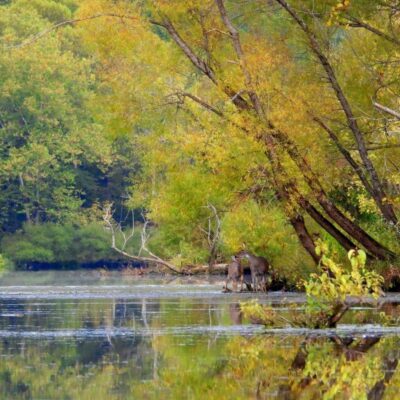
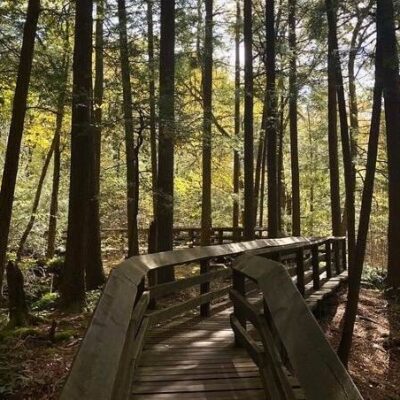
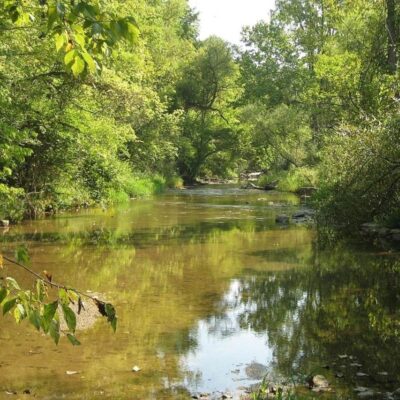
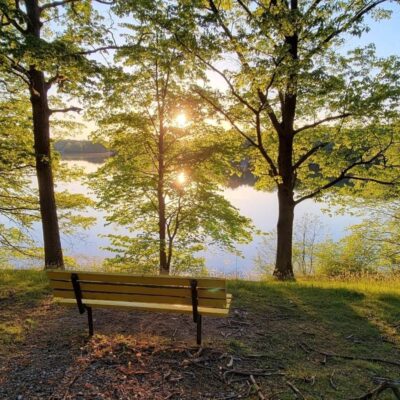
North Bend SP — in the bend of the North Fork of the Hughes River. The park’s Appalachian forest, river, and mountain terrain support white-tailed deer, wild turkeys, and barred owls.

Park Location
Top Tours & Activities Near West Virginia
 from $103
 from $109
 from $129