🌤 Weather at Plantation Agriculture Museum by season
| Spring | Summer | Fall | Winter |
|---|---|---|---|
| 42–80 °F | 68–90 °F | 41–84 °F | 31–54 °F |
Each range runs from the coldest monthly average low to the warmest monthly average high in that season (1991-2020 climate normals), measured at Keo, 8 mi away, elevation 231 ft. Conditions at the park can differ from the station, especially where elevation differs — check a forecast before you go.

Overview
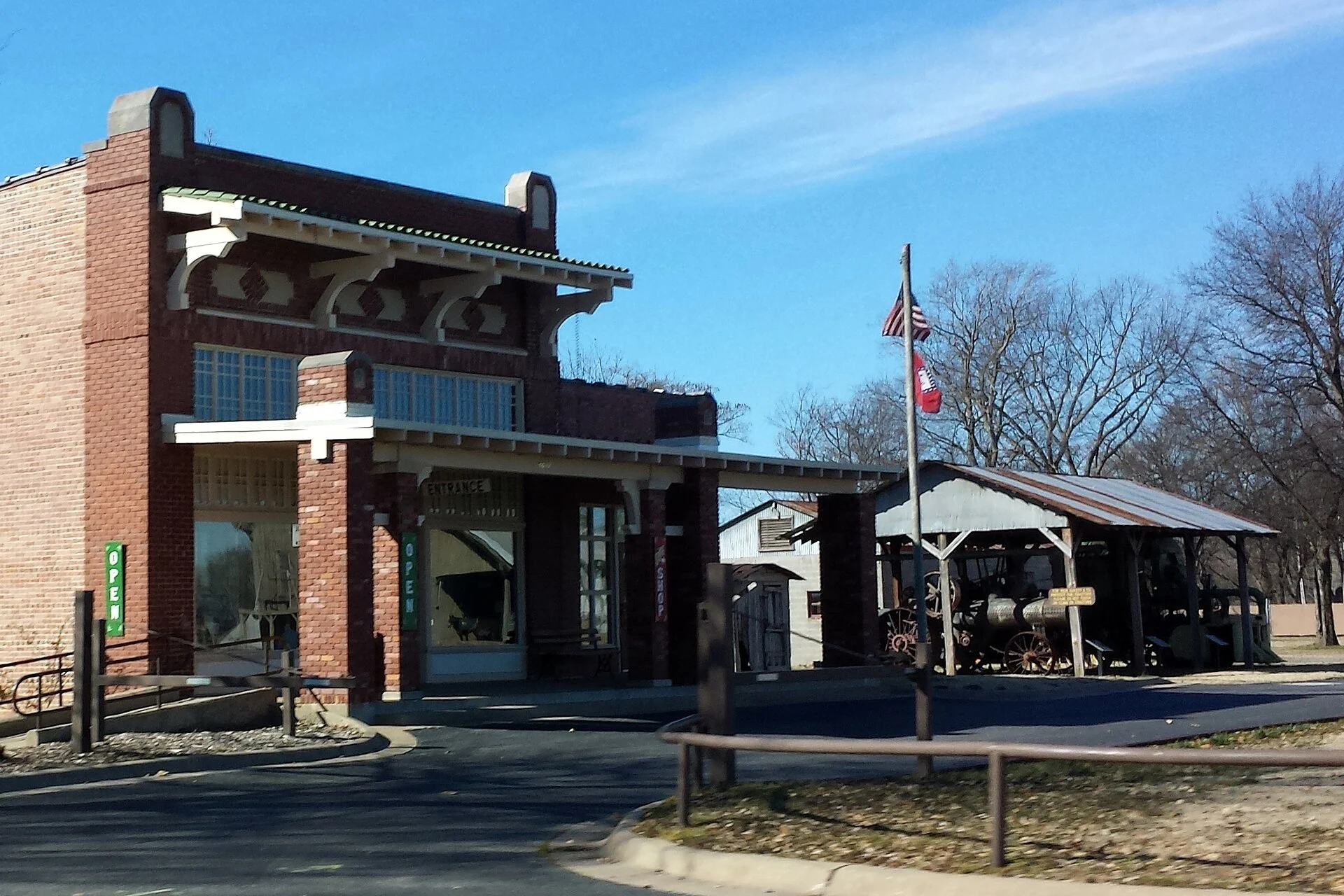
The Plantation Agriculture Museum in Scott, Arkansas, tells the story of cotton agriculture in Arkansas from the early territorial period through the mid-20th century. Operated by the Arkansas Department of Parks, Heritage and Tourism, this state historic site occupies a restored plantation building along Arkansas Highway 161, approximately 10 miles southeast of Little Rock in the heart of the Grand Prairie region.
The museum provides a comprehensive look at how cotton — the dominant cash crop of the American South — shaped the economy, society, and landscape of Arkansas for more than a century. Through artifacts, machinery, interpretive exhibits, and the preserved plantation structure itself, visitors gain insight into every stage of cotton production, from planting and cultivation to ginning and marketing.
Exhibits and Collections
The museum’s permanent exhibitions trace the evolution of cotton farming in Arkansas through three distinct eras: the antebellum plantation period dependent on enslaved labor, the post-Civil War sharecropping system, and the mechanized agriculture of the 20th century. Key exhibits include:
- Cotton Ginning Equipment: A restored cotton gin demonstrates the mechanical process of separating cotton fibers from seeds — the critical step that made large-scale cotton production economically viable.
- Agricultural Implements: Hand tools, plows, and early mechanical equipment illustrate the backbreaking labor that defined cotton farming for generations of workers.
- The Plantation Store: A recreated general store shows how the credit-and-supply system operated on cotton plantations, often trapping sharecroppers in cycles of debt.
- Textile Production: Spinning wheels, looms, and textile samples demonstrate the journey from raw cotton boll to finished fabric.
Historical Context
Arkansas’s Grand Prairie — the flat, fertile alluvial plain surrounding the museum’s location — was transformed into one of the most productive cotton-growing regions in the world during the 19th century. The plantation system that developed here relied first on enslaved labor and later on sharecropping, creating social and economic structures whose effects persisted well into the 20th century. The museum addresses this history directly, providing an honest examination of the human costs of cotton agriculture alongside its economic significance.
Visiting the Museum
The Plantation Agriculture Museum is located at 4815 Arkansas Highway 161 South in Scott, Arkansas 72142. The museum is open Tuesday through Saturday, with guided tours available for groups by appointment. The community of Scott also hosts the Scott Plantation Settlement, a collection of historic log structures that complement the museum’s exhibits.
Frequently Asked Questions
Is there an admission fee?
There is a small admission fee for adults. Children and Arkansas State Parks members may receive discounted or free entry. Check with Arkansas State Parks for current pricing.
How long should I plan for a visit?
Allow approximately 1 to 1.5 hours to explore the museum exhibits and grounds thoroughly.
Is the museum accessible?
The main museum building is accessible, though some of the outdoor historic structures may have limited accessibility due to their age and construction.
Wildlife & Nature
Plantation Agriculture Museum — tells the story of cotton agriculture in the Arkansas Delta — from plantation slavery to sharecropping to mechanization. The museum grounds’ cotton fields, forest, and meadows support songbirds and white-tailed deer.
Nearby Attractions
Scott — adjacent. Little Rock — 20 miles north. Toltec Mounds — 10 miles east.
More parks nearby: Plum Bayou Mounds Archeological State Park is a short drive away.

🐾 Dogs & Pets at Plantation Agriculture Museum
- Pets allowed? statewide rule
- Pets are allowed in Arkansas State Parks, including many trails, but must be restrained and under the owner's direct physical control at all times.
- Leash rule statewide rule
- Pets must be leashed, caged or otherwise restrained under direct physical (not verbal) control; no maximum leash length is specified.
- Beaches & swim areas statewide rule
- Pets (other than service animals) are not permitted at swimming beaches or pools at any time, nor in public buildings.
- Cabins & lodging statewide rule
- Designated dog-friendly cabins and lodge rooms exist at all lodging parks (about 25% of cabins at 14+ parks incl. Petit Jean, Mount Magazine, DeGray Lake Resort, Devil's Den); limit 2 dogs per unit, non-refundable per-dog fee at check-in, proof of vaccinations required.
- Pet fees statewide rule
- No day-use pet fee; a non-refundable per-dog fee applies for dog-friendly cabins/lodge rooms.
- Statewide exceptions statewide rule
- Only dogs (no other pet types) are allowed in lodging units.
Are dogs allowed at Plantation Agriculture Museum?
Pets are allowed in Arkansas State Parks, including many trails, but must be restrained and under the owner's direct physical control at all times. Individual parks can post stricter rules — check signage on arrival.
Rules verified July 2026 via codeofarrules.arkansas.gov. More: Arkansas state parks guide · Dog rules in all 50 states compared