

Arkansas Museum of Natural Resources
🌤 Weather at Arkansas Museum of Natural Resources by season
| Spring | Summer | Fall | Winter |
|---|---|---|---|
| 44–84 °F | 68–94 °F | 42–88 °F | 34–60 °F |
Each range runs from the coldest monthly average low to the warmest monthly average high in that season (1991-2020 climate normals), measured at El Dorado S Ar Rgnl Airport, 11 mi away, elevation 252 ft. Conditions at the park can differ from the station, especially where elevation differs — check a forecast before you go.

🛢️ When Oil Erupted in South Arkansas — The Museum That Tells the Story of America’s Wildest Boom — Arkansas Museum of Natural Resources in Smackover, Union County, Arkansas, 1920s South Arkansas oil boom, El Dorado petroleum industry, boomtown history, wildcat wells and gushers, outdoor oil field exhibits with restored derricks, geology and fossil displays, brine formation science, working pump jack demonstration — Union County, AR
In 1921, a wildcat well near El Dorado, Arkansas, hit oil. Within months, the population of the area exploded from a few hundred to tens of thousands. Roughnecks, roustabouts, speculators, and hustlers flooded into south Arkansas. Smackover — a tiny farming community — became one of the most productive oil fields in the world.
The Arkansas Museum of Natural Resources tells the story of that boom — the geology that created the oil, the technology that pulled it from the ground, and the boomtown chaos that followed. With restored drilling derricks, working pump jacks, and indoor exhibits covering millions of years of Arkansas geology, this is the definitive museum of the South Arkansas oil industry.
What to See
| Feature | Details |
|---|---|
| Outdoor Oil Field | Restored wooden derricks, cable-tool drilling rigs, and working pump jacks on the museum grounds. Walk through a recreated 1920s oil field |
| Geology Exhibits | Millions of years of Arkansas geology — from the Smackover Formation (the limestone that holds the oil) to fossil displays and mineral specimens |
| Boomtown History | The human story of the oil boom — how wildcatters, speculators, and working families transformed south Arkansas overnight. Photos, artifacts, and oral histories |
| Brine & Chemistry | The science of the Smackover Formation’s ancient brine — a mineral-rich fluid that became commercially valuable in its own right for bromine extraction |
| Working Demonstrations | Pump jack demonstrations showing how oil is extracted from deep underground. See the machinery that powered the boom |
The Timeline
| Year | Event |
|---|---|
| 150 million years ago | The Smackover Formation forms — a layer of limestone deposited in a shallow Jurassic sea. Over millions of years, organic material trapped in the rock converts to oil and natural gas |
| 1921 | Wildcatters strike oil near El Dorado, Arkansas. The boom begins. The population explodes |
| 1922–1925 | The Smackover oil field becomes one of the most productive in the world. Derricks cover the landscape. Boomtowns spring up overnight with tent cities, saloons, and chaos |
| 1920s–1940s | South Arkansas becomes a major petroleum-producing region. Companies like Lion Oil and Murphy Oil are founded here |
| 1970s–Present | Production declines but the Smackover Formation remains commercially important — both for remaining oil and for bromine extraction from ancient brine |
Best Time to Visit
| Season | Best For |
|---|---|
| Spring (Mar–May) | 🌸 Comfortable weather for outdoor oil field exhibits. Wildflowers in south Arkansas. Fewer visitors |
| Fall (Oct–Nov) | 🍂 Cool weather. Clear skies. Great for exploring the outdoor derrick displays |
| Summer (Jun–Aug) | Hot and humid. Indoor exhibits are air-conditioned. Morning visits for outdoor areas |
| Winter (Dec–Feb) | Mild south Arkansas winter. Indoor museum. Least crowded |
Frequently Asked Questions
What is the Smackover Formation?
A 150-million-year-old layer of limestone that holds oil, gas, and mineral-rich brine. Deposited in a shallow Jurassic sea, the Smackover Formation extends across much of the Gulf Coast. In south Arkansas, it produced enormous quantities of oil in the 1920s and remains commercially important today for bromine extraction.
Is there still oil production in the area?
Yes — though at much lower levels than the 1920s boom. South Arkansas continues to produce oil and natural gas. The Smackover Formation’s ancient brine is also commercially extracted for bromine, which is used in flame retardants, pharmaceuticals, and water treatment.
Is this a state park?
Yes — the museum is part of the Arkansas State Parks system. Admission and hours are managed by Arkansas State Parks. The museum combines indoor exhibits with an extensive outdoor oil field display.
Nearby state parks: If you have extra time, South Arkansas Arboretum is a short drive away, and Moro Bay State Park is within about an hour’s drive.
🛢️ 150 Million Years Underground — Then the Gusher Blew
Jurassic limestone. Ancient brine. And in 1921, a wildcat well hit oil. South Arkansas exploded. Derricks covered the land. The boom changed everything.
Wildlife & Nature
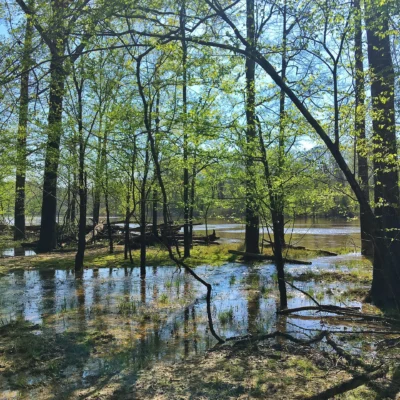
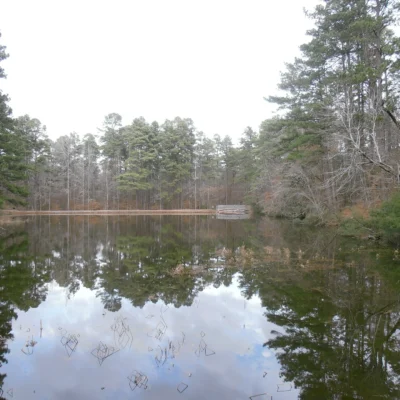
AR Museum of Natural Resources — preserves the site of the 1921 Smackover oil boom — when El Dorado became one of the richest cities in America overnight. The museum grounds’ restored oil field, forest, and wetlands support white-tailed deer, armadillos, and songbirds.
Nearby Attractions
Smackover — adjacent. El Dorado — 5 miles south. South Arkansas Arboretum — in El Dorado.

🐾 Dogs & Pets at Arkansas Museum of Natural Resources
- Pets allowed? statewide rule
- Pets are allowed in Arkansas State Parks, including many trails, but must be restrained and under the owner's direct physical control at all times.
- Leash rule statewide rule
- Pets must be leashed, caged or otherwise restrained under direct physical (not verbal) control; no maximum leash length is specified.
- Beaches & swim areas statewide rule
- Pets (other than service animals) are not permitted at swimming beaches or pools at any time, nor in public buildings.
- Cabins & lodging statewide rule
- Designated dog-friendly cabins and lodge rooms exist at all lodging parks (about 25% of cabins at 14+ parks incl. Petit Jean, Mount Magazine, DeGray Lake Resort, Devil's Den); limit 2 dogs per unit, non-refundable per-dog fee at check-in, proof of vaccinations required.
- Pet fees statewide rule
- No day-use pet fee; a non-refundable per-dog fee applies for dog-friendly cabins/lodge rooms.
- Statewide exceptions statewide rule
- Only dogs (no other pet types) are allowed in lodging units.
Are dogs allowed at Arkansas Museum of Natural Resources?
Pets are allowed in Arkansas State Parks, including many trails, but must be restrained and under the owner's direct physical control at all times. Individual parks can post stricter rules — check signage on arrival.
Rules verified July 2026 via codeofarrules.arkansas.gov. More: Arkansas state parks guide · Dog rules in all 50 states compared
Park Location
Top Tours & Activities Near Louisiana
 from $27
 from $482
 from $35