

🌤 Weather at Rumney Marsh Reservation by season
| Spring | Summer | Fall | Winter |
|---|---|---|---|
| 31–66 °F | 60–82 °F | 38–73 °F | 23–42 °F |
Each range runs from the coldest monthly average low to the warmest monthly average high in that season (1991-2020 climate normals), measured at Boston Logan Intl Airport, 6 mi away, elevation 12 ft. Conditions at the park can differ from the station, especially where elevation differs — check a forecast before you go.

🏆 Urban Salt Marsh — 600-acre salt marsh in Saugus/Revere — the largest remaining salt marsh in Boston Harbor
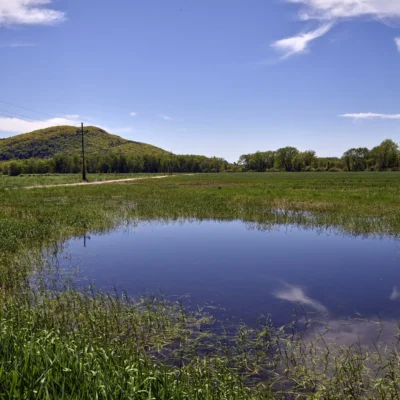
Rumney Marsh Reservation protects 600 acres of salt marsh in Saugus and Revere — the largest remaining salt marsh in Boston Harbor. Once slated for industrial development, the marsh was saved by community activism in the 1970s. Today it supports osprey, marsh hawks, and the declining saltmarsh sparrow. The marsh is a critical flood buffer for surrounding communities — absorbing storm surge that would otherwise damage homes and businesses.
Visitor Information
| Detail | Information |
|---|---|
| Location | Saugus/Revere, MA |
| Size | 600 acres |
| Entry Fee | Free |
| Habitat | Largest salt marsh in Boston Harbor! |
About Rumney Marsh
Rumney Marsh Reservation in Revere and Saugus protects one of the last remaining salt marshes in the Boston area — 600 acres of tidal marsh that once dominated the North Shore coastline. The marsh provides critical habitat for salt marsh sparrows, snowy egrets, and migrating shorebirds. The Belle Isle Marsh section is the last remaining salt marsh in Boston proper.
Rumney Marsh Reservation in Revere and Saugus protects one of the last remaining salt marshes on Boston’s North Shore — a 600-acre tidal marsh that provides critical ecosystem services including flood protection, water filtration, and carbon sequestration. The marsh supports snowy egrets, glossy ibis, and saltmarsh sparrows — one of the most at-risk bird species in North America due to rising sea levels flooding their nesting habitat.
Things to Do
Birdwatching (one of the best marshland birding sites near Boston), walking the boardwalk trails, kayaking through tidal channels, and wildlife photography. The marsh offers a surprising nature experience minutes from downtown Boston.
Birdwatching for at-risk saltmarsh sparrows and wading birds, walking the marsh edge trails, nature photography, and studying one of Boston’s last remaining urban salt marshes.
Insider Tips
Coastal marsh: Rumney Marsh is one of the largest remaining salt marshes in Boston Harbor. Pro tip: The marsh provides critical habitat for wading birds, shorebirds, and fish — and serves as a natural flood buffer for surrounding communities. Birding: Snowy owls visit in winter.
Best Time to Visit
Fall: Shorebird and raptor migration. Winter: Snowy owl season. Spring: Wading bird nesting. Summer: Salt marsh ecology at its peak.
Frequently Asked Questions
Why are salt marshes important?
Salt marshes are among the most productive ecosystems on Earth. They filter water, buffer storm surges, sequester carbon, and provide nursery habitat for fish and shellfish. Boston area salt marshes have been reduced by 90% since colonial times — making remaining marshes like Rumney critically important for both ecology and coastal resilience.
Make it a road trip: Pair a visit with Camp Nihan Environmental Education Camp (a short drive away) or Revere Beach Reservation (a short drive away).

🐾 Dogs & Pets at Rumney Marsh Reservation
- Pets allowed? statewide rule
- The Massachusetts Department of Conservation and Recreation (DCR) welcomes dogs on-leash in most state parks, forests and reservations, though a list of specific properties prohibits dogs for safety, health or habitat reasons.
- Leash rule statewide rule
- Leash of no more than 10 feet in on-leash areas; dogs must be on-leash in all parking areas.
- Beaches & swim areas statewide rule
- Dogs are not allowed on DCR coastal beaches or in designated swimming areas of inland beaches from May 1 through September 15; shorebird-nesting beaches are closed to dogs April 1 - September 15.
- Cabins & lodging statewide rule
- Dogs are not allowed in cabins, yurts and the encompassing areas (no pet-friendly cabin program).
- Statewide exceptions statewide rule
- Designated off-leash areas at ~20 properties (e.g. Bark Place at Breakheart Reservation); max 4 dogs per person; dogs banned entirely at Walden Pond, Moore State Park, Sandy Point and Boston Harbor Islands.
Are dogs allowed at Rumney Marsh Reservation?
The Massachusetts Department of Conservation and Recreation (DCR) welcomes dogs on-leash in most state parks, forests and reservations, though a list of specific properties prohibits dogs for safety, health or habitat reasons. Individual parks can post stricter rules — check signage on arrival.
Rules verified July 2026 via mass.gov. More: Massachusetts state parks guide · Dog rules in all 50 states compared
Park Location
Plan your gear for Rumney Marsh Reservation
From our editorial guides, matched to this park’s activities:






Top Tours & Activities Near Boston
 from $550
 from $45
 from $35