🌤 Weather at South Higgins Lake State Park by season
| Spring | Summer | Fall | Winter |
|---|---|---|---|
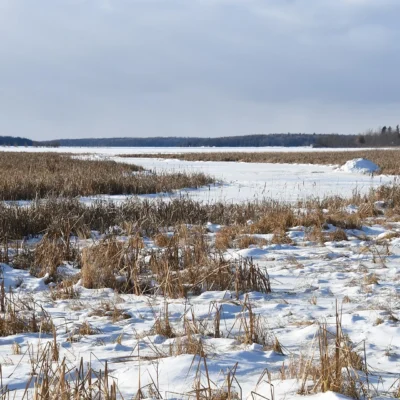
| 19–67 °F | 51–80 °F | 28–71 °F | 11–32 °F |
Each range runs from the coldest monthly average low to the warmest monthly average high in that season (1991-2020 climate normals), measured at Houghton Lk Roscommon Airport, 4 mi away, elevation 1,151 ft. Conditions at the park can differ from the station, especially where elevation differs — check a forecast before you go.

Overview: One of Michigan’s Largest Campgrounds on a Crystal-Clear Lake
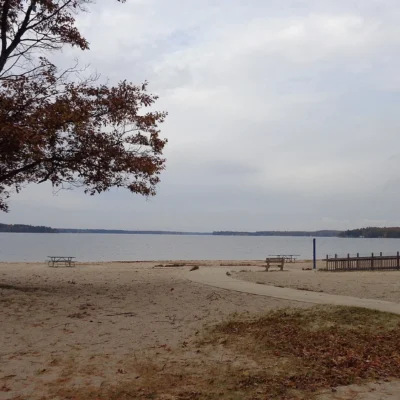
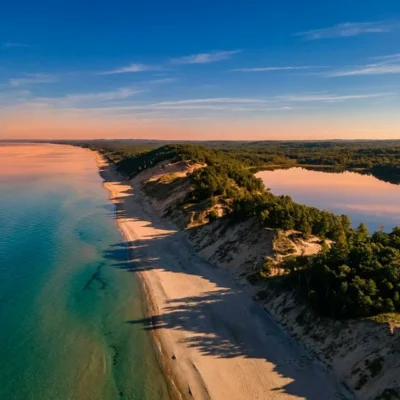
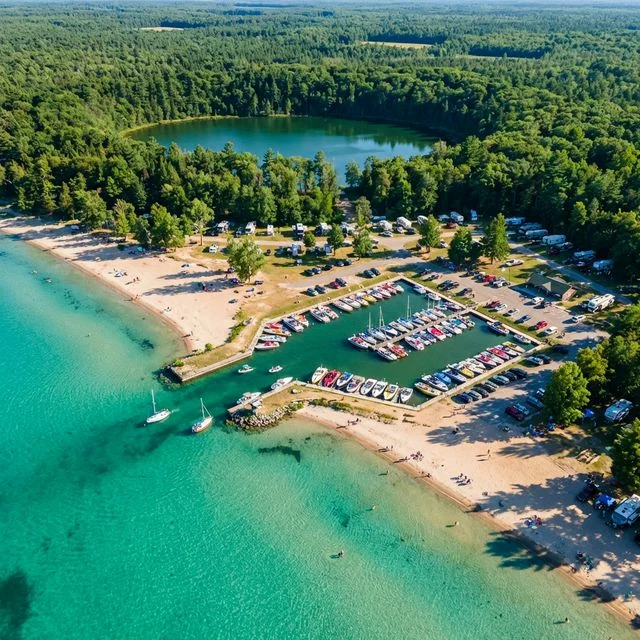
Sprawling across 1,364 acres of pine and hardwood forest on the southern shore of Higgins Lake in Roscommon County, South Higgins Lake State Park is one of Michigan’s most popular camping destinations—and with 400 campsites, it operates one of the largest campgrounds in the entire state park system. The park’s irresistible draw is Higgins Lake itself: a 10,185-acre, spring-fed lake renowned for its exceptional clarity, deep blue color, and cold, clean waters that rank among the most beautiful inland lakes in the Midwest.
Opened in 1927 on just 100 acres, the park expanded significantly in 1984 with the acquisition of 700 acres surrounding nearby Marl Lake, creating a diverse natural area that combines the flagship lakefront camping experience with quieter, more secluded inland exploration. The park’s location in the heart of Michigan’s northern Lower Peninsula—near the communities of Roscommon and Grayling—places it within easy reach of the Au Sable River corridor, one of America’s premier trout fishing destinations.
Higgins Lake: Michigan’s Crown Jewel
Higgins Lake has long been considered one of Michigan’s most beautiful lakes—and the superlative is justified. The lake’s spring-fed waters achieve a clarity that allows visibility to depths of 15–20 feet or more on calm days, and the deep blue color created by the clean, cold water against the sandy bottom has been drawing vacationers since the late 19th century.
- Size: 10,185 acres with a maximum depth of 135 feet
- Water Quality: Exceptionally high clarity and low nutrient levels. The lake is classified as oligotrophic—nutrient-poor and crystal clear
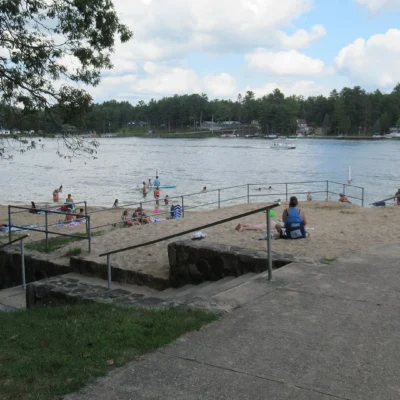
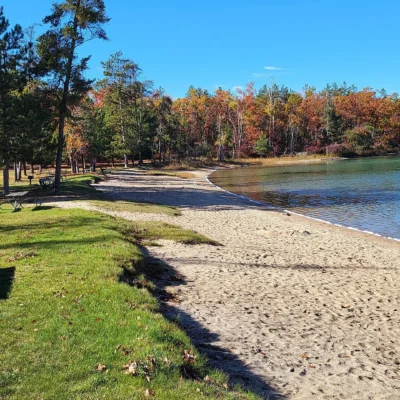
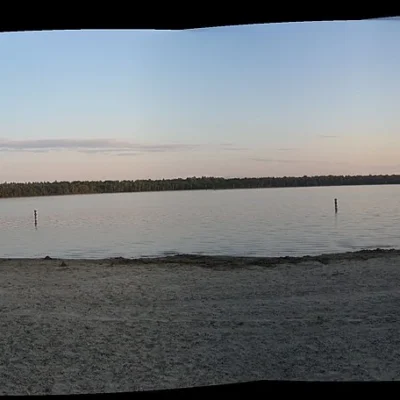
- Swimming: The park’s 1 mile of Higgins Lake shoreline provides sandy beach access with gradual entry into cold, clear water. Water temperatures reach the low-to-mid 70s°F by late July
- Fishing: Lake trout, rainbow trout, smallmouth bass, walleye, and cisco. The deep, cold waters support a quality cold-water fishery
400-Site Campground
The campground at South Higgins Lake is massive by Michigan state park standards, with approximately 400 sites spread across multiple loops in the pine and hardwood forest behind the beach.
- Modern Sites: Electrical hookups (20/30 amp) at most sites
- Facilities: Modern restrooms with flush toilets and hot showers throughout the campground
- Terrain: Sandy, well-drained soil under a mix of red pine, jack pine, and oak provides comfortable, well-shaded camping
- Atmosphere: Despite its size, the campground’s generous spacing and mature tree cover create a surprisingly private experience at most sites
Weekend reservations during June, July, and August should be made as early as possible—this is one of Michigan’s most in-demand campgrounds.
Marl Lake
The 1984 expansion added Marl Lake and its surrounding 700 acres to the park, creating a quieter, more contemplative alternative to the bustling main campground. Marl Lake—named for the calcium carbonate marl deposits that give its water a distinctive turquoise-green color—is smaller, shallower, and surrounded by forest and wetland habitats. Trails connect the Marl Lake area to the main park, offering hiking and cross-country skiing through terrain that sees significantly less foot traffic than the lakefront zones.
North Higgins Lake and the CCC Museum
Visitors interested in Depression-era history should note that North Higgins Lake State Park—located on the opposite shore of Higgins Lake—hosts the Michigan Civilian Conservation Corps Museum, housed in a reconstructed CCC work camp. The museum documents the remarkable contributions of the CCC to Michigan’s state parks, forests, and public lands during the 1930s. The two parks are connected by public roads around the lake, making a museum visit an easy complement to a South Higgins Lake camping trip.
Au Sable River Access
South Higgins Lake’s location near Grayling provides convenient access to the Au Sable River—one of the most celebrated trout fishing and canoeing rivers in the eastern United States. The stretch of the Au Sable near Grayling is designated a Blue Ribbon Trout Stream, supporting wild populations of brook and brown trout in a pristine, forested corridor. Multiple outfitters in Grayling offer canoe, kayak, and tube rentals for river trips ranging from a few hours to multiple days.
Seasonal Guide
Spring (April–May)
Campground opens. Lake water is very cold. Trout fishing opens on the Au Sable. Wildflowers in the forest understory.
Summer (June–August)
Peak season. Swimming, camping, fishing at full capacity. Reserve far in advance for weekends. Higgins Lake water reaches swimmable temperatures by late June.
Autumn (September–October)
Fall color in the hardwood forests. Campground usage drops. Au Sable River fishing remains excellent. Some of the best weather of the year.
Winter (December–March)
Ice fishing on Higgins Lake for lake trout, walleye, and perch. Cross-country skiing in the Marl Lake area. Snowmobiling on regional trail systems.
Frequently Asked Questions
Is Higgins Lake really that clear? Yes. Higgins Lake is spring-fed and classified as oligotrophic (nutrient-poor), producing exceptional water clarity with visibility often exceeding 15 feet. The deep blue color is among the most striking of any inland lake in the Midwest.
How far in advance should I reserve? For summer weekends, reserve as early as the reservation window opens (6 months). Midweek availability is generally easier to secure.
Where is the CCC Museum? The Michigan CCC Museum is located at North Higgins Lake State Park on the opposite shore of Higgins Lake—not at South Higgins Lake. It is a short drive around the lake.
Can I access the Au Sable River from the park? Not directly, but the town of Grayling is approximately 20 minutes northeast and provides multiple access points and outfitter services for the Au Sable River.
Wildlife & Nature
South Higgins Lake SP — on the “most beautiful lake in the world” — has the Christmas tree farm and state forest nursery. Lake trout and walleye thrive. Common loons call at dawn.
Nearby Attractions
Roscommon — nearby. North Higgins Lake SP — across the lake. Grayling — 15 miles north.
Keep exploring: The closest neighbor is Ralph A. MacMullan Conference Center (a short drive away).

🐾 Dogs & Pets at South Higgins Lake State Park
- Pets allowed? statewide rule
- Pets are welcome in Michigan state parks, campgrounds, harbors and state-designated trails, except designated swim beaches and other posted areas.
- Leash rule statewide rule
- Pets must always be on a 6-foot leash and under the owner's immediate control.
- Beaches & swim areas statewide rule
- Pets are prohibited in buoyed swim areas but allowed along the shoreline outside them (on a 6-ft leash, even in the water); 50+ parks have pet-friendly shoreline or designated dog beaches.
- Cabins & lodging statewide rule
- Up to two pets (cats and dogs only) allowed at ~12 parks' designated pet-friendly cabins, yurts and lodges; $10 per night per pet (cabins) or $15 (lodges); otherwise pets barred from overnight lodging.
- Pet fees statewide rule
- No day-use pet fee; pet-friendly lodging costs $10/night per pet (cabins) or $15/night per pet (lodges).
- Statewide exceptions statewide rule
- Leash laws do not apply to dogs used for hunting on land open to such use; pets may not be left unattended.
Are dogs allowed at South Higgins Lake State Park?
Pets are welcome in Michigan state parks, campgrounds, harbors and state-designated trails, except designated swim beaches and other posted areas. Individual parks can post stricter rules — check signage on arrival.
Rules verified July 2026 via michigan.gov. More: Michigan state parks guide · Dog rules in all 50 states compared
Park Location
Plan your gear for South Higgins Lake State Park
From our editorial guides, matched to this park’s activities: