Craters of the Moon State Park

🌋 Idaho’s Volcanic Moonscape — Walk across ancient lava flows, explore lava tube caves, hike through cinder cones and spatter craters — a surreal volcanic landscape alongside the famous National Monument, featuring camping among lava formations and the nearby Shoshone Ice Caves
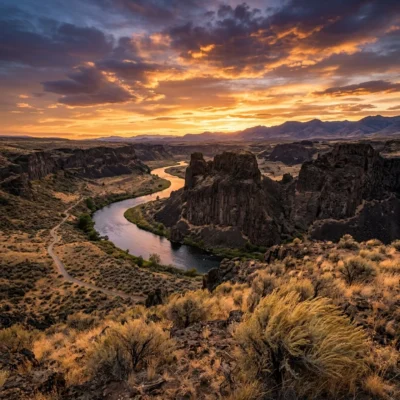
In the heart of south-central Idaho’s Snake River Plain, the earth reveals its violent geological past in a landscape so alien it was used to train Apollo astronauts before their lunar missions. Craters of the Moon is a vast volcanic field where lava flows, cinder cones, spatter craters, and lava tube caves create a terrain that looks more like another planet than the American West. The Great Rift — a 62-mile-long zone of volcanic fissures — last erupted approximately 2,100 years ago, and geologists consider it virtually certain to erupt again.
Adjacent to and complementing the Craters of the Moon National Monument & Preserve, this area offers visitors an accessible entry point into one of the most geologically fascinating landscapes in North America. The 7-mile Loop Road winds through the most spectacular formations, with short trails branching off to cinder cones, lava tubes, the Devil’s Orchard, and viewpoints that stretch across an ocean of hardened lava to the distant peaks of the Pioneer and Lost River mountain ranges.
Volcanic Features
| Feature | Description |
|---|---|
| Lava Flows | Pahoehoe (smooth) and aa (rough) lava stretching for miles |
| Cinder Cones | Volcanic hills of ejected material — climbable via trails |
| Spatter Cones | Miniature volcanoes — some you can peer into |
| Lava Tube Caves | Underground tunnels formed by flowing lava — explorable with free permit |
| Great Rift | 62-mile volcanic fissure zone — last eruption ~2,100 years ago |
Top Trails
| Trail | Difficulty | Highlights |
|---|---|---|
| North Crater Flow Trail | Easy (paved) | Introduction to the lava landscape |
| Caves Trail | Moderate | Access to 4+ lava tube caves (free permit required) |
| Inferno Cone Trail | Moderate (steep) | 360° panoramic views from cinder cone summit |
| Spatter Cones Trail | Easy | Walk up to and peer into miniature volcanic vents |
| Devil’s Orchard Trail | Easy (paved) | Interpretive loop through lava and cinder gardens |
Lava Tube Caves
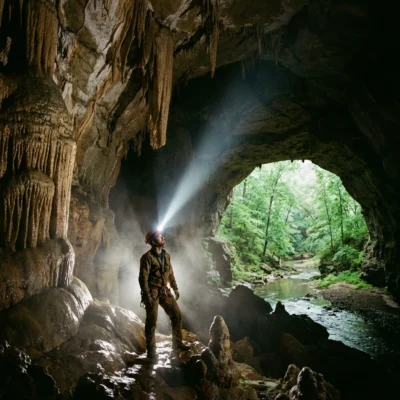
Several lava tube caves are accessible via the Caves Trail. A free cave permit is required (available at the Visitor Center) to help protect bat populations — specifically to prevent the spread of White-nose Syndrome. Caves range from easy walk-in to hands-and-knees crawls. Bring at least two light sources per person.
Camping — Lava Flow Campground
| Detail | Information |
|---|---|
| Sites | 51 sites among lava formations |
| Reservations | First-come, first-served only |
| Fee | $15/night (main season); $8/night (off-season) |
| Winter | Snow camping with free backcountry permit |
Shoshone Ice Caves (Nearby)
| Detail | Information |
|---|---|
| Distance | ~16 miles north of Shoshone on Hwy 75 |
| Temperature | 18°F–33°F year-round — dress warmly! |
| Tours | Guided, 30–60 minutes, May–September |
| Fee | ~$15 adults |
Essential Visitor Information
| Detail | Information |
|---|---|
| Entrance Fee | $20 per vehicle (or NPS pass) |
| Loop Road | 7-mile scenic drive (open late April – mid-November) |
| Elevation | 5,900 feet — can be cold even in summer |
Wildlife & Nature
Craters of the Moon SP — adjacent to Craters of the Moon NM — a vast volcanic landscape of lava flows, cinder cones, and lava tubes covering 750,000 acres. The park’s lava fields, sagebrush, and volcanic terrain support mule deer, great horned owls, and pikas. NASA astronauts trained here for Apollo moon missions.
Nearby Attractions
Arco — nearby — the first city lit by nuclear power (1955). Craters of the Moon NM — adjacent.
Did NASA really train astronauts at Craters of the Moon?
Yes! In 1969, NASA sent Apollo astronauts — including Alan Shepard, Edgar Mitchell, Eugene Cernan, and Joe Engle — to Craters of the Moon for geological field training. The basaltic lava landscape closely resembled what scientists expected the astronauts to encounter on the lunar surface. The training helped them identify volcanic rock types and geological features during their actual Moon missions.
Insider Tips
Lava landscape: Adjacent to the national monument, this state park provides camping access to one of the largest basalt lava fields in the continental US. Pro tip: The lava flows are only 2,000-15,000 years old — geologically brand new. Dark skies: Craters of the Moon has some of the darkest skies in the lower 48 — exceptional stargazing.
Best Time to Visit
Summer: Comfortable temperatures at 5,900 feet. Spring: Wildflowers emerging from lava cracks. Fall: Cool and clear. Winter: Cross-country skiing on snow-covered lava.
Frequently Asked Questions
Is Craters of the Moon worth visiting?
Absolutely. The landscape looks like another planet — NASA astronauts trained here before Apollo missions. Lava tubes, cinder cones, and vast basalt flows create a surreal environment. The state park provides camping that the national monument lacks, making it the ideal base camp.