
🌤 Weather at Box Canyon Springs Nature Preserve by season
| Spring | Summer | Fall | Winter |
|---|---|---|---|
| 31–72 °F | 50–92 °F | 27–80 °F | 22–45 °F |
Each range runs from the coldest monthly average low to the warmest monthly average high in that season (1991-2020 climate normals), measured at Hagerman 2 SW, 9 mi away, elevation 2,897 ft. Conditions at the park can differ from the station, especially where elevation differs — check a forecast before you go.

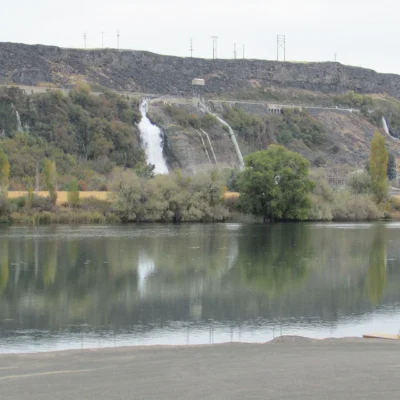
💎 Idaho‘s Turquoise Secret — One of America’s 11th largest springs, crystal-clear turquoise water erupting from basalt canyon walls, a hidden 20-foot waterfall, and swimming in spring-fed pools at a constant 58°F
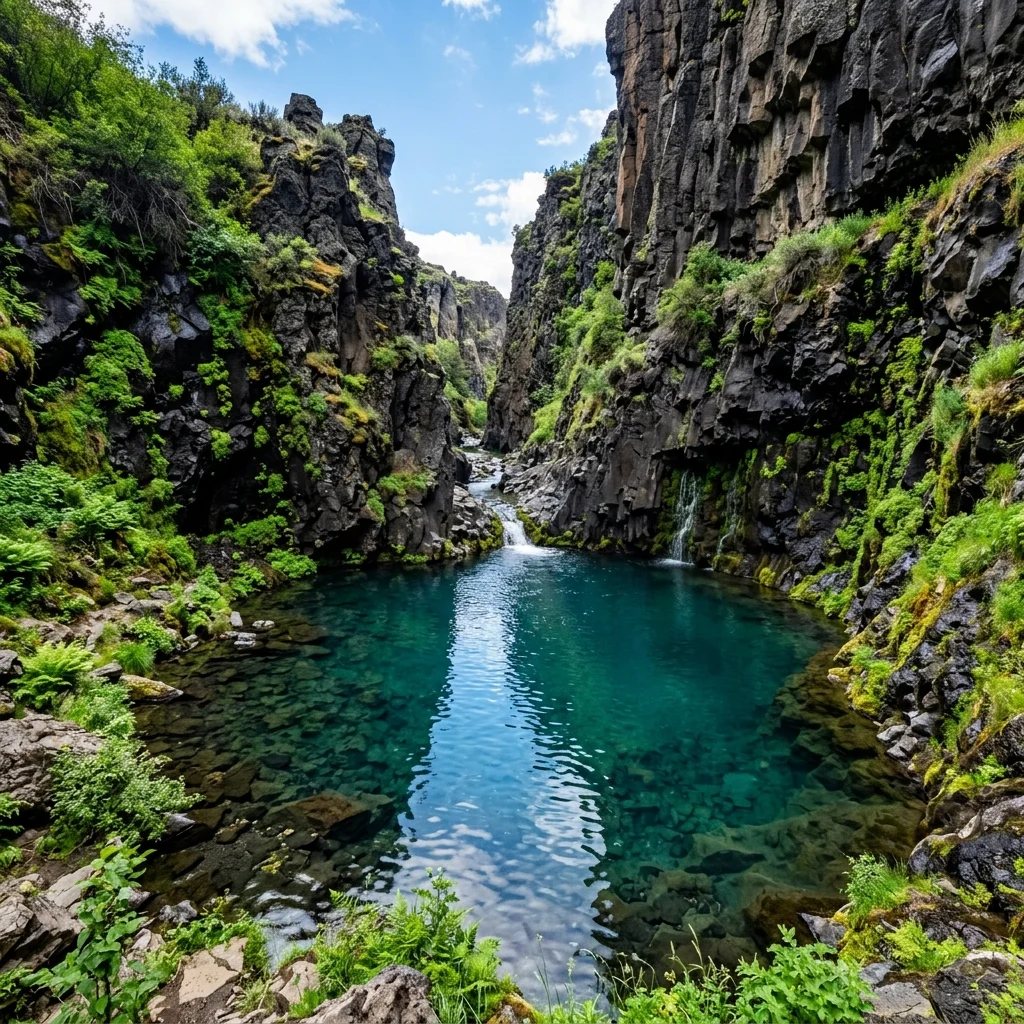
In southern Idaho’s Snake River Plain, where most people see only sagebrush and lava rock stretching to the horizon, the earth unexpectedly opens into a narrow basalt canyon filled with impossibly clear turquoise water. Earl M. Hardy Box Canyon Springs Nature Preserve — part of Idaho’s Thousand Springs State Park system — protects one of the largest freshwater springs in North America. Here, the massive Snake River Plain Aquifer breaches the surface through fractured basalt, releasing an estimated 180,000 gallons of water per minute in a display that has been running continuously for thousands of years. The result is a canyon paradise: a 20-foot waterfall, crystal pools you can swim in, and water so clear it seems fake in photographs.
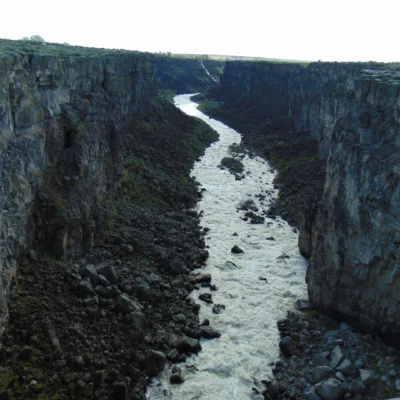
Box Canyon is the kind of place that feels like a secret even when you’re standing in it. The approach gives nothing away — a gravel parking lot in rural farmland, a short walk to a rim overlook, and then the stunning reveal: a deep, narrow canyon carved from black basalt, its floor covered in emerald vegetation and turquoise water that practically glows. It’s one of Idaho’s most photogenic natural features, and most Americans have never heard of it.
What Makes Box Canyon Special
The spring at Box Canyon is fed by the Snake River Plain Aquifer, one of the most productive aquifer systems in North America. Rain and snowmelt from the mountains north of the Snake River Plain percolate through porous volcanic rock for decades — some of the water emerging at Box Canyon fell as precipitation over 200 years ago. This long underground journey naturally filters the water to extraordinary clarity and maintains a constant temperature of approximately 58°F year-round.
- Spring output: ~180,000 gallons per minute (among the 11 largest in the US)
- Water clarity: Visibility exceeds 100 feet in optimal conditions
- Temperature: Constant 58°F (14°C) year-round
- Canyon depth: Approximately 120 feet from rim to canyon floor
Hiking
| Trail | Distance | Difficulty | Highlights |
|---|---|---|---|
| Rim Trail (paved) | 0.3 mi | Easy (wheelchair accessible) | Overlook platform with canyon and spring views |
| Canyon Descent Trail | 0.8 mi one-way | Moderate-Strenuous | Descend to canyon floor, reach spring and waterfall |
| Canyon Floor Loop | 1.5 mi | Moderate | Full exploration of springs, pools, waterfall |
| Extended Rim Loop | 3.5 mi | Moderate | Rim views, farmland panoramas, canyon overlooks |
Trail Tips
- Descent warning: The trail into the canyon is steep, rocky, and can be slippery — sturdy hiking shoes essential
- Leave No Trace: No trash facilities in the canyon — pack out everything you pack in
- Watch for: Poison ivy and stinging nettle along canyon trail edges
- Best timing: Early morning or late afternoon for photography (midday sun creates harsh shadows in the narrow canyon)
Swimming in the Springs
Yes, you can swim in the crystal-clear spring-fed pools at the bottom of the canyon — and it’s an experience unlike any swimming hole in the American West. The water is a shocking shade of turquoise, cold but not unbearable at 58°F, and so clear you can see every pebble on the bottom. Sandy “beach” areas along the canyon floor provide entry points.
- Water temperature: Constant 58°F — refreshing in summer, bracing in spring/fall
- Depth: Varies; deep in the center channel with strong currents
- Safety: No lifeguards; swim with caution; currents can be powerful near spring outlets
- What to bring: Water shoes (rocky bottom), quick-dry towel, reef-safe sunscreen
Thousand Springs State Park: Other Units
Box Canyon is one of several units in the Thousand Springs State Park system, all located along the dramatic Snake River canyon in south-central Idaho. Your $7 vehicle fee typically covers all units.
| Unit | Distance from Box Canyon | Best For | Highlights |
|---|---|---|---|
| Malad Gorge | 15 mi east | Canyon viewing, short hikes | 250-foot deep gorge, dramatic bridge overlook, waterfall |
| Niagara Springs | 8 mi east | Photography, easy walk | Spring water exploding from canyon wall; most photogenic unit |
| Ritter Island | 12 mi east | Birding, history, picnicking | Historic ranch, river access, bald eagles, great blue herons |
| Billingsley Creek | 20 mi east | Fishing, lodging | Crystal-clear creek, historic lodge, fly fishing |
Best Time to Visit
| Season | Air Temp | Water Temp | Best For |
|---|---|---|---|
| 🌸 Spring (Apr–May) | 50–70°F | 58°F | Wildflowers, photography, smaller crowds |
| ☀️ Summer (Jun–Aug) | 80–100°F | 58°F | Swimming, full canyon access |
| 🍂 Fall (Sep–Oct) | 50–75°F | 58°F | Fall colors, eagle migration begins, best clarity |
| ❄️ Winter (Nov–Mar) | 20–45°F | 58°F | Eagle watching, solitude (trails may be icy) |
Budget Planner
| Expense | Cost | Notes |
|---|---|---|
| Vehicle Entrance Fee | $7 | Covers all Thousand Springs units for the day |
| Idaho Annual Parks Passport | $40 | Valid at all Idaho state parks |
| Camping (nearby) | $15-30/night | No camping at Box Canyon; campgrounds at other Thousand Springs units |
| Nearby Hot Springs | $10-20 | Banbury and Miracle hot springs within 15 miles |
Wildlife
| Species | Where to Spot | Best Season |
|---|---|---|
| Bald Eagle | Canyon rim, river corridor | Winter (November–February) |
| Golden Eagle | Rim cliffs, soaring over farmland | Year-round |
| Yellow-bellied Marmot | Canyon walls, rocky outcrops | Spring–Fall |
| Great Blue Heron | Along spring-fed creek below canyon | Spring–Fall |
| Rainbow Trout | Spring pools and outflow creek | Year-round |
| Canyon Wren | Basalt walls (listen for descending song) | Spring–Summer |
Safety Information
| Hazard | Precaution |
|---|---|
| Steep Canyon Descent | Wear sturdy hiking boots; trail is steep, rocky, and can be muddy |
| Strong Currents | Spring outflow creates powerful underwater currents; stay in shallow areas |
| Poison Ivy / Stinging Nettle | Common along canyon trail; wear long pants |
| Extreme Summer Heat | Canyon rim can exceed 100°F; carry 2+ liters of water |
| No Trash Facilities | Pack out everything — the canyon has zero waste infrastructure |
| Icy Winter Trails | Microspikes recommended for canyon descent November–March |
Frequently Asked Questions
Is Box Canyon worth the trip?
Absolutely. Despite its remote location in rural southern Idaho, Box Canyon consistently ranks as one of the state’s most photographed natural areas. The turquoise water color, the 20-foot waterfall, and the dramatic basalt canyon create a scene that feels more like Iceland or New Zealand than Idaho. Plan at least 2-3 hours for a thorough visit including the canyon descent.
Can you swim at Box Canyon?
Yes — swimming is allowed in the spring-fed pools at the canyon floor. The water is a constant 58°F year-round, which is refreshing in summer but cold enough to limit swimming time for most people. There are no lifeguards, and currents near spring outlets can be strong. Water shoes are essential due to the rocky bottom.
How do I get to Box Canyon?
Box Canyon is located near Wendell, Idaho, accessed via West Point Road. From I-84, take exit 147 (Wendell) and follow signs south. The drive from Twin Falls is about 35 minutes. Note: the last stretch is a gravel road through farmland — it does not look like it leads to anything spectacular, but it does.
Can I visit multiple Thousand Springs units in one day?
Yes — your $7 vehicle fee covers all units. A recommended day trip: Start at Box Canyon (2 hours), drive to Niagara Springs (30 min stop for photos), then finish at Malad Gorge (1 hour). All three are within 20 miles of each other along the Snake River canyon.
Is there camping at Box Canyon?
There is no camping at the Box Canyon unit itself. The closest campgrounds are at other Thousand Springs units (Billingsley Creek) or at private campgrounds in the Hagerman/Wendell area. The nearby city of Twin Falls (35 min) has full hotel services.
What about the nearby hot springs?
Banbury Hot Springs and Miracle Hot Springs are both within 15 miles of Box Canyon, making for an excellent post-hike soak. Both offer natural hot spring pools at varying temperatures, and Banbury provides camping as well.
Are dogs allowed at Box Canyon?
Yes — leashed dogs are permitted on trails and at the canyon rim. However, the steep canyon descent can be challenging for dogs, and the rocky terrain at the bottom is rough on paws. Most dog owners stick to the rim trail and overlook.
Make it a road trip: Pair a visit with Thousand Springs State Park (a short drive away) or Ritter Island State Park (a short drive away).
💦 Looking for turquoise pools and stunning waterfalls?
Visit Box Canyon Springs Nature Preserve.
Explore More Idaho State Parks
Box Canyon Springs Nature Preserve is one of many outstanding state parks in Idaho. Discover more parks in our Best State Parks in Idaho guide, or use our Park Finder to search by activity, location, or features.

🐾 Dogs & Pets at Box Canyon Springs Nature Preserve
- Pets allowed? statewide rule
- Pets are welcome in most Idaho state parks and on trails, but only if confined or controlled on a leash no longer than 6 feet.
- Leash rule statewide rule
- 6 ft maximum leash required, or pet must be confined (e.g. in a camper)
- Beaches & swim areas statewide rule
- Pets are prohibited from all swim areas and beaches statewide (service animals excepted)
- Cabins & lodging statewide rule
- Pets are allowed at most parks but some parks prohibit them in some cabins and yurts
- Statewide exceptions statewide rule
- Park managers may designate off-leash exercise areas (e.g. Eagle Island off-leash trails); pets may not be left unattended
Are dogs allowed at Box Canyon Springs Nature Preserve?
Pets are welcome in most Idaho state parks and on trails, but only if confined or controlled on a leash no longer than 6 feet. Individual parks can post stricter rules — check signage on arrival.
Rules verified July 2026 via parksandrecreation.idaho.gov. More: Idaho state parks guide · Dog rules in all 50 states compared
Park Location
Plan your gear for Box Canyon Springs Nature Preserve
From our editorial guides, matched to this park’s activities:
Top Tours & Activities Near Boise
 from $199
 from $10
 from $90