🌤 Weather at ʻIolani Palace State Monument by season
| Spring | Summer | Fall | Winter |
|---|---|---|---|
| 68–85 °F | 73–88 °F | 72–88 °F | 66–82 °F |
Each range runs from the coldest monthly average low to the warmest monthly average high in that season (1991-2020 climate normals), measured at Waikiki 717.2, 4 mi away, elevation 10 ft. Conditions at the park can differ from the station, especially where elevation differs — check a forecast before you go.

Overview: America’s Only Royal Palace
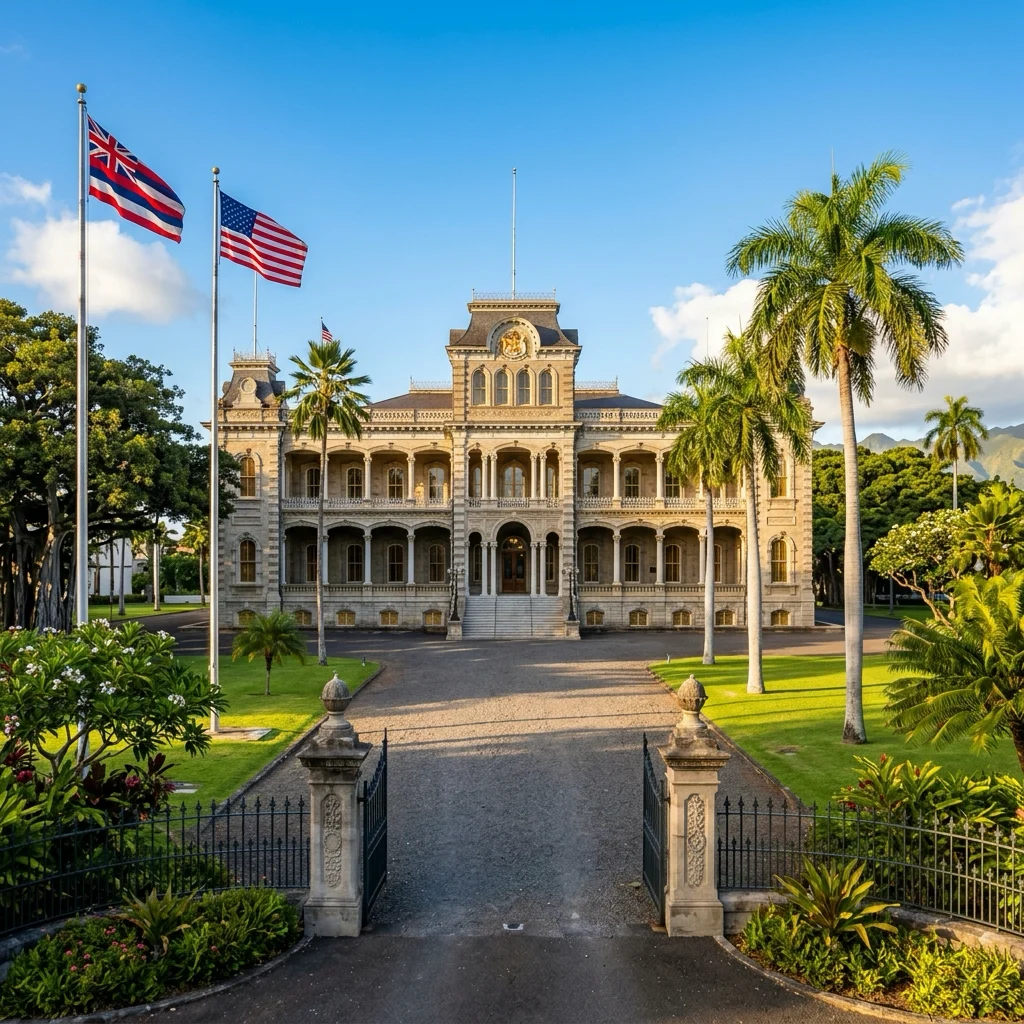
Standing in the heart of downtown Honolulu, ʻIolani Palace holds a distinction no other building in the United States can claim: it is the only official royal palace on American soil. Officially designated as the ʻIolani Palace State Monument and administered by the Hawaiʻi Division of State Parks, this architectural masterpiece served as the seat of power for the last two monarchs of the Kingdom of Hawaiʻi—King David Kalākaua and his sister, Queen Liliʻuokalani.
Today, the palace operates as a living museum and cultural landmark, drawing visitors from around the world who come to walk the same halls where Hawaiian royalty once governed a sovereign nation. With its American Florentine architecture, meticulously restored interiors, and deeply moving history, ʻIolani Palace offers an experience unlike any other state park site in America.
The 11-acre grounds encompass not just the palace itself, but also the Coronation Pavilion (Keliʻiponi Hale), the ʻIolani Barracks (Hale Koa), the Sacred Mound, and the Kanaʻina Building, all set among towering palm trees, manicured lawns, and tropical gardens in the center of Honolulu’s government district.
History of ʻIolani Palace
A Palace for a Modern Kingdom
The story of ʻIolani Palace begins with King David Kalākaua, known as the “Merrie Monarch” for his dedication to reviving Hawaiian arts, music, and cultural traditions. After ascending to the throne in 1874, Kalākaua embarked on a world tour in 1881, visiting royal courts across Europe and Asia. Inspired by the grand palaces he encountered, the king envisioned a residence that would showcase Hawaiʻi’s rightful place among the nations of the world.
Construction began with the laying of the cornerstone on December 31, 1879, and the palace was completed in November 1882 at a cost of approximately $360,000—a staggering sum at the time. The king personally oversaw many design elements, insisting on the latest technological innovations including electric lighting (installed in 1886, before the White House), indoor plumbing, and a telephone system.
The Overthrow and Queen’s Imprisonment
The palace witnessed some of the most consequential moments in Hawaiian history. On January 17, 1893, a group of American and European businessmen, supported by U.S. Marines, overthrew Queen Liliʻuokalani in a bloodless coup. The queen was forced to abdicate, and the provisional government claimed the palace as its headquarters.
In 1895, following a failed counter-revolution by Hawaiian loyalists, Queen Liliʻuokalani was arrested, tried by a military tribunal, and imprisoned in an upstairs bedroom of her own palace for nearly eight months. During her confinement, she composed several songs, including the hauntingly beautiful “Aloha ʻOe” and “The Queen’s Prayer.” Visitors today can see the very room where the queen was held—one of the most emotionally powerful spaces in the building.
Government Use and Restoration
After the overthrow, ʻIolani Palace served as the capitol building for the Republic of Hawaiʻi, the Territory of Hawaiʻi (following U.S. annexation in 1898), and eventually the State of Hawaiʻi after statehood in 1959. The building was used as the state capitol until 1969, when government offices moved to the new Hawaiʻi State Capitol next door.
A major restoration effort began in 1978 under the direction of the Friends of ʻIolani Palace, a nonprofit organization. Restorers tracked down and recovered hundreds of original furnishings, artworks, and personal belongings of the royal family that had been dispersed, sold at auction, or hidden away across the islands. The palace reopened as a museum in 1978 and has undergone continuous restoration ever since. Today, approximately 80% of the furnishings on display are original to the palace.
What to See at ʻIolani Palace
First Floor: The State Rooms
The palace’s grand first floor contains the formal state rooms where King Kalākaua received diplomats, hosted lavish state dinners, and conducted official business:
- Grand Hall: The entrance hall features a magnificent koa wood staircase, imported tile floors, and portraits of Hawaiian monarchs. The hall set the tone for visiting dignitaries with its blend of Victorian elegance and Hawaiian artistry.
- Throne Room: The largest room in the palace, used for formal state functions, royal balls, and the investiture ceremony. The crimson and gold thrones of King Kalākaua and Queen Kapiʻolani remain on the raised dais.
- Blue Room: An informal reception room where the king and queen received guests in a more intimate setting. Named for its blue upholstery and draperies.
- State Dining Room: Capable of seating up to 40 guests, this room features the original dining table, sideboards, and a stunning display of royal china, crystal, and silver bearing the Hawaiian coat of arms.
Second Floor: The Private Quarters
The upper floor housed the royal family’s private living spaces:
- King’s Suite: King Kalākaua’s bedroom and private study, where he worked on matters of state and pursued his interests in science and literature.
- Queen’s Suite: The private chambers of Queen Kapiʻolani, furnished with personal items and photographs.
- Music Room: A room dedicated to the king’s passion for music. Kalākaua was a gifted musician and composer.
- Imprisonment Room: The bedroom where Queen Liliʻuokalani was confined for eight months in 1895. Her personal quilt, which she sewed during her imprisonment, is displayed here.
Palace Grounds
The 11-acre grounds are free to explore and include several significant structures:
| Structure | Description | Highlights |
|---|---|---|
| Coronation Pavilion (Keliʻiponi Hale) | The open-air pavilion where King Kalākaua held his coronation ceremony in 1883 | Site of the Royal Hawaiian Band concerts |
| ʻIolani Barracks (Hale Koa) | Former barracks of the Royal Guard, now houses the ticket office and Palace Shop | Gift shop, ticketing, restrooms |
| The Sacred Mound | A pre-contact Hawaiian religious site that predates the palace | Ancient cultural significance |
| Kanaʻina Building | The former Royal Archives building | Houses administrative offices |
| Gate Entrances | Four ornamental gates at each corner of the palace grounds | Each named after Hawaiian royalty |
Tours & Admission
ʻIolani Palace offers several tour options to explore the historic building. Online reservations are highly recommended—walk-in availability is limited.
| Tour Type | Duration | Description | Best For |
|---|---|---|---|
| Docent-Led Tour | 60-90 min | Guided walkthrough of both floors with a knowledgeable Palace docent | History enthusiasts, first-time visitors |
| Self-Led Audio Tour | 45-75 min | Audio guide tour at your own pace through both floors | Photographers, families, flexible schedules |
| Kalākaua Legacy Tour | 90 min | Specialty tour focusing on King Kalākaua’s vision and legacy | Deep-dive historians |
| Royal Connection to Japan Tour | 90 min | Explores the diplomatic ties between Hawaiʻi and Japan | Japanese heritage visitors |
| White Glove Tour | 120 min | Premium behind-the-scenes access with artifact handling | History scholars, special occasions |
| Grounds Only (Free) | Self-paced | Explore the gardens, Coronation Pavilion, and Barracks | Budget travelers, casual visitors |
Hours of Operation: Tuesday through Saturday, 9:00 AM to 4:00 PM. The ticket window at Hale Koa opens at 8:30 AM.
Kamaʻāina Sundays: Once per month, Hawaiʻi residents receive complimentary Self-Led Audio Tour tickets. Check the official website for scheduled dates.
Book tickets online at iolanipalace.org.
Important Visitor Information
Dress Code
As a sacred and culturally significant site, ʻIolani Palace enforces a respectful dress code:
- Shirts and footwear are required at all times
- Shoe coverings are provided by the palace and must be worn inside
- Swimwear, beachwear, and beach coverups are not permitted
- Clothing with profanity is not allowed
Photography Rules
Personal photography is welcome inside the palace with these restrictions:
- ✅ Selfies and personal photos (no flash)
- ❌ Tripods, monopods, and selfie sticks
- ❌ Video recording and audio recording
- ❌ Extended lenses
- ❌ Commercial photography (requires written permission)
Children & Accessibility
Children under 5 are admitted free but must be in a front-held carrier, a palace-provided stroller, or holding an adult’s hand at all times. Personal strollers are not permitted inside. For accessibility concerns or wheelchair access, contact the palace directly at (808) 522-0832 to confirm arrangements.
Getting There: Location, Directions & Parking
ʻIolani Palace is located at 364 South King Street in downtown Honolulu, at the corner of King Street and Richards Street. It sits directly across from the Hawaiʻi State Capitol and is a short drive or bus ride from Waikīkī.
| Transportation | Details | Cost |
|---|---|---|
| Car from Waikīkī | 10-15 minute drive via Ala Moana Blvd or Beretania St | $3-5 metered parking |
| TheBus | Routes 2, 13, 42 stop near the palace | $3.00 one-way |
| Biki Bikeshare | Multiple stations within walking distance | $4.50 per ride |
| Rideshare (Uber/Lyft) | Drop-off at the Richards St entrance | $10-15 from Waikīkī |
| Walking | From Aloha Tower Marketplace: 10 minutes | Free |
Parking: Metered street parking is available along King Street, Richards Street, and surrounding blocks. The Alii Place parking garage on Alakea Street and municipal lots nearby offer additional options. Arrive early—downtown Honolulu parking fills quickly on weekdays.
Nearby Attractions in Honolulu
The downtown Honolulu area surrounding ʻIolani Palace is rich with historic and cultural sites, all within easy walking distance:
- Hawaiʻi State Capitol – The distinctive open-air capitol building, directly across from the palace (free to visit)
- King Kamehameha Statue – The iconic gold-draped statue of Hawaiʻi’s first king, across King Street
- Aliʻiolani Hale – The Hawaiʻi Supreme Court building, featuring the Judiciary History Center
- Kawaiahaʻo Church – The “Westminster Abbey of Hawaiʻi,” built from coral blocks in 1842
- Honolulu Museum of Art – World-class collection of Asian, Pacific, and Western art (15-minute walk)
- Chinatown Historic District – Vibrant neighborhood with galleries, restaurants, and markets (10-minute walk)
Wildlife & Natural Features
While ʻIolani Palace is an urban historic site rather than a traditional outdoor park, the 11-acre grounds contain a remarkable collection of tropical trees and plants, many planted during the monarchy era. Notable species include:
- Royal Palms and Coconut Palms: Towering specimens that frame the palace entrance
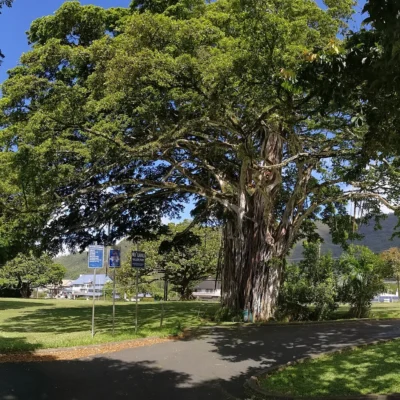
- Banyan Tree: A massive banyan near the Barracks, providing shade for over a century
- Plumeria (Frangipani): Fragrant flowering trees throughout the grounds
- Indian Almond Trees: Historic shade trees along the perimeter
Bird watchers may spot common Hawaiian urban birds including the Red-crested Cardinal, Java Sparrow, Common Myna, and Zebra Dove feeding on the palace lawns.
Events & Programs
ʻIolani Palace hosts regular public events throughout the year:
- Royal Hawaiian Band Concerts: Free outdoor concerts at the Coronation Pavilion, continuing a tradition established by King Kalākaua
- Nā Moʻolelo Lecture Series: Educational lectures on Hawaiian history and culture
- Keiki & ʻOhana Activities: Family-friendly educational programs for children
- Venue Rentals: The Barracks and grounds are available for private events
Planning Your Visit: Tips & Recommendations
Best Time to Visit
- Early morning (9:00 AM): The first tour slots are least crowded
- Weekdays (Tuesday-Thursday): Fewer crowds than Friday and Saturday
- Dry season (April-October): More comfortable walking conditions on the grounds
- Avoid cruise ship days: When large ships are in port, downtown attractions see increased traffic
How Long to Spend
Plan for 2-3 hours total: 60-90 minutes for the palace tour itself, plus 30-60 minutes exploring the grounds, gift shop, and taking photographs. The palace pairs well with a walking tour of downtown Honolulu’s historic sites.
What to Bring
- Comfortable walking shoes (shoe coverings provided for inside)
- Camera (no flash, tripods, or video)
- Water bottle (no food or drinks inside the palace)
- Light layers (the palace interior is air-conditioned)
- Respectful attire (no swimwear or beachwear)
Frequently Asked Questions
Is ʻIolani Palace really a state park?
Yes. ʻIolani Palace is officially designated as the ʻIolani Palace State Monument and is administered by the Hawaiʻi Department of Land and Natural Resources, Division of State Parks. Day-to-day operations are managed by the nonprofit Friends of ʻIolani Palace under a long-term lease.
Can you visit ʻIolani Palace without a tour?
Yes. The palace grounds, including the Coronation Pavilion, Sacred Mound, and gardens, are free to explore during open hours. However, entering the palace building itself requires a tour ticket booked in advance.
How long does a tour of ʻIolani Palace take?
Guided docent tours last approximately 60-90 minutes. Self-led audio tours take 45-75 minutes depending on your pace. Plan an additional 30-60 minutes to explore the grounds and gift shop.
Is ʻIolani Palace the only royal palace in the United States?
Yes. ʻIolani Palace is the only official royal residence in the entire United States. It served as the home of the Hawaiian monarchs from 1882 until the overthrow of the monarchy in 1893.
Why was Queen Liliʻuokalani imprisoned in the palace?
After a failed counter-revolution by Hawaiian loyalists in 1895, Queen Liliʻuokalani was arrested and tried by a military tribunal of the Republic of Hawaiʻi. She was confined in an upstairs bedroom of the palace for nearly eight months. Visitors can see the imprisonment room on the guided tour.
Is there free parking at ʻIolani Palace?
No free parking is available on the palace grounds. Visitors can use metered street parking along King Street and Richards Street, or nearby parking garages. TheBus public transit is a convenient alternative.
Can you take photos inside ʻIolani Palace?
Yes. Personal photography without flash is permitted inside the palace. However, tripods, monopods, selfie sticks, video recordings, and audio recordings are not allowed. Commercial photography requires prior written permission.
Nearby parks: If you have extra time, Kewalo Basin Harbor is a short drive away, and Kakaʻako Waterfront Park is a short drive away.

🐾 Dogs & Pets at ʻIolani Palace State Monument
- Pets allowed? statewide rule
- Pets are heavily restricted in Hawaii state parks: they are not permitted in pavilions, swimming areas, campgrounds, lodges, on beaches or wherever posted, and only limited areas allow them.
- Leash rule statewide rule
- Where permitted, pets must be crated, caged, on a 6-foot or shorter leash, or otherwise under physical restrictive control at all times
- Beaches & swim areas statewide rule
- Pets are not permitted on beaches or in swimming areas statewide
- Cabins & lodging statewide rule
- Pets are not permitted in lodges or campgrounds, so overnight accommodations are effectively pet-free
- Statewide exceptions statewide rule
- Rules vary by park and posting; effectively day-use only in the limited unposted areas where pets are tolerated
Are dogs allowed at ʻIolani Palace State Monument?
Pets are heavily restricted in Hawaii state parks: they are not permitted in pavilions, swimming areas, campgrounds, lodges, on beaches or wherever posted, and only limited areas allow them. Individual parks can post stricter rules — check signage on arrival.
Rules verified July 2026 via dlnr.hawaii.gov. More: Hawaii state parks guide · Dog rules in all 50 states compared
Park Location
Plan your gear for ʻIolani Palace State Monument
From our editorial guides, matched to this park’s activities: