
🌤 Weather at Royal Mausoleum State Monument by season
| Spring | Summer | Fall | Winter |
|---|---|---|---|
| 64–78 °F | 68–80 °F | 68–81 °F | 63–76 °F |
Each range runs from the coldest monthly average low to the warmest monthly average high in that season (1991-2020 climate normals), measured at Manoa Lyon Arbo 785.2, 3 mi away, elevation 500 ft. Conditions at the park can differ from the station, especially where elevation differs — check a forecast before you go.

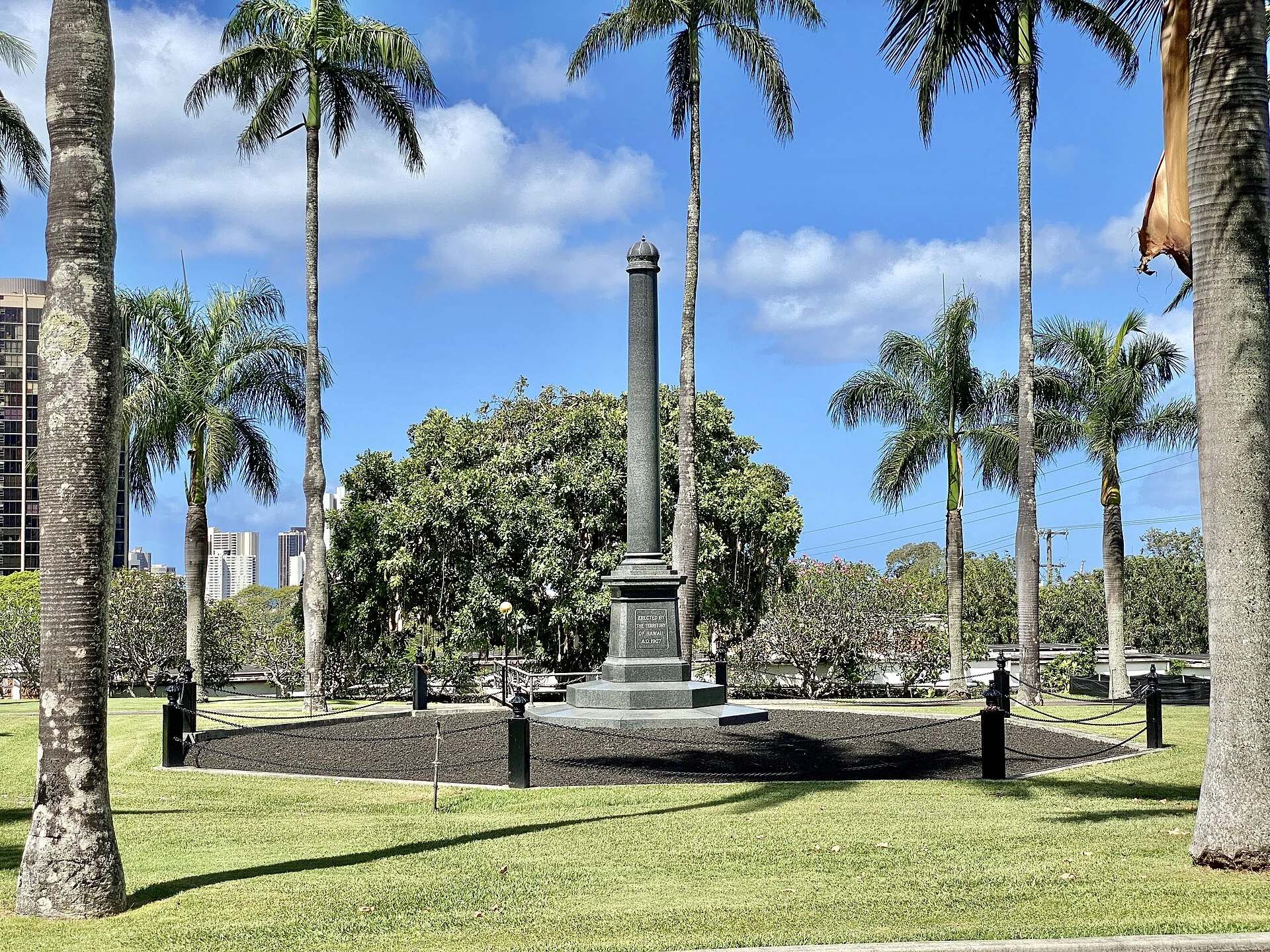
👑 The Only Royal Mausoleum in America — Where Hawaii’s Kings and Queens Rest Forever — Royal Mausoleum State Monument (Mauna ʻAla) in Nuʻuanu Valley, Honolulu, Oahu, Hawaii, 1865 Gothic Revival chapel built with cut coral blocks, final resting place of Kamehameha Dynasty and Kalākaua Dynasty, King Kamehameha II–V, King Kalākaua, Queen Kapiʻolani, Queen Liliʻuokalani, sacred iwi (bones) of aliʻi (royals), National Register of Historic Places, “Fragrant Hills” — Honolulu County, HI
In the center of Honolulu’s Nuʻuanu Valley, behind an iron fence and beneath towering trees, lies the only royal mausoleum in the United States. Here rest the kings and queens who ruled the Hawaiian Kingdom — from the dynasty founded by Kamehameha the Great to the last queen who watched her nation be overthrown.
The Hawaiians call this place Mauna ʻAla — “Fragrant Hills.” In Hawaiian tradition, the bones of the aliʻi (royalty) are vessels of mana — spiritual power. This ground is sacred.
Who Rests Here
| Royal | Significance |
|---|---|
| King Kamehameha II | Liholiho — abolished the kapu system. Died in London in 1824 during a state visit. His remains were returned to Hawaii |
| King Kamehameha III | Kauikeaouli — longest-reigning Hawaiian monarch. Established Hawaii’s first constitution (1840) |
| King Kamehameha IV | Alexander Liholiho — established Queen’s Medical Center. Chose this site as a royal burial ground after the death of his young son, Prince Albert |
| King Kamehameha V | Lot Kapuāiwa — completed the mausoleum in 1865. Last of the Kamehameha Dynasty |
| King David Kalākaua | The “Merrie Monarch” — revived Hawaiian culture, hula, and traditions. Built ʻIolani Palace. Died in San Francisco in 1891 |
| Queen Liliʻuokalani | Last reigning monarch of Hawaii. Overthrown in 1893 by American businessmen backed by U.S. Marines. Died 1917. Composer of “Aloha ʻOe” |
| Queen Kapiʻolani | Wife of Kalākaua. Founded Kapiʻolani Maternity Home (now Kapiʻolani Medical Center) |
The Timeline
| Year | Event |
|---|---|
| 1810 | Kamehameha I unifies the Hawaiian Islands into a single kingdom |
| 1862 | Prince Albert, son of Kamehameha IV and Queen Emma, dies at age 4. His parents choose the Nuʻuanu site for his burial |
| 1863 | Kamehameha IV dies. His brother, Kamehameha V, begins construction of the mausoleum |
| 1865 | The Gothic Revival mausoleum is completed. Royal remains previously housed at ʻIolani Palace are transferred here |
| 1893 | Queen Liliʻuokalani is overthrown. The Hawaiian Kingdom ends. The mausoleum becomes a monument to a lost nation |
| 1922 | The mausoleum building is converted into a chapel. Royal remains are moved to dedicated family crypts on the grounds |
Best Time to Visit
| Season | Best For |
|---|---|
| Year-round | 🌺 Honolulu’s climate is consistent. The grounds are peaceful in any season. Morning visits are most serene |
| Spring (Mar–May) | Comfortable. Fewer tourists than summer. Tropical flowers in bloom |
| Fall (Sep–Nov) | Post-summer calm. Good weather. The valley is especially green |
Frequently Asked Questions
Where is Kamehameha I?
His burial place is unknown. In accordance with ancient Hawaiian tradition, Kamehameha the Great’s bones were hidden after his death in 1819 to protect their mana. The location has never been revealed. Only his successors rest at Mauna ʻAla.
Can I visit inside the chapel?
The grounds are open to respectful visitors, but the chapel and crypts have restricted access. This is sacred ground. Visitors are expected to behave with quiet reverence. Photography policies vary — check before visiting.
Is this connected to ʻIolani Palace?
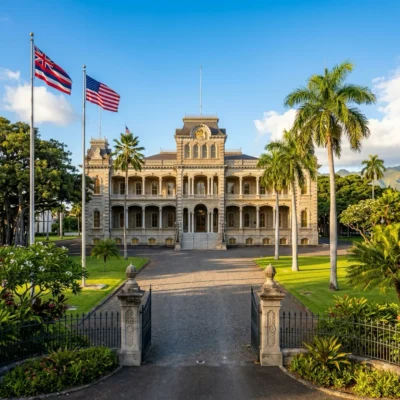
Yes — historically, royal remains were first housed at ʻIolani Palace before being transferred to Mauna ʻAla in 1865. The palace and the mausoleum together tell the story of the Hawaiian monarchy. ʻIolani Palace is the only royal palace on American soil.
Make it a road trip: Pair a visit with Queen Emma Summer Palace (a short drive away) or ʻIolani Palace State Monument (a short drive away).
👑 The Only Royal Mausoleum in America
Kings and queens of a lost kingdom. Sacred bones in a Gothic chapel of coral. Mauna ʻAla — “Fragrant Hills” — where Hawaii’s monarchs rest in the valley they loved.
Wildlife & Nature
Royal Mausoleum SM — Mauna ‘Ala (“Fragrant Hills”) — the burial site of Hawaiian royalty including Kamehameha II through V, Queen Lili’uokalani, and other members of the Kamehameha and Kalākaua dynasties. The grounds’ tropical gardens and royal tombs are maintained in the Hawaiian tradition. Native and exotic trees shade the sacred grounds.
Nearby Attractions
Nu’uanu — surrounding. Downtown Honolulu — 1 mile south. ‘Iolani Palace — 2 miles south.

🐾 Dogs & Pets at Royal Mausoleum State Monument
- Pets allowed? statewide rule
- Pets are heavily restricted in Hawaii state parks: they are not permitted in pavilions, swimming areas, campgrounds, lodges, on beaches or wherever posted, and only limited areas allow them.
- Leash rule statewide rule
- Where permitted, pets must be crated, caged, on a 6-foot or shorter leash, or otherwise under physical restrictive control at all times
- Beaches & swim areas statewide rule
- Pets are not permitted on beaches or in swimming areas statewide
- Cabins & lodging statewide rule
- Pets are not permitted in lodges or campgrounds, so overnight accommodations are effectively pet-free
- Statewide exceptions statewide rule
- Rules vary by park and posting; effectively day-use only in the limited unposted areas where pets are tolerated
Are dogs allowed at Royal Mausoleum State Monument?
Pets are heavily restricted in Hawaii state parks: they are not permitted in pavilions, swimming areas, campgrounds, lodges, on beaches or wherever posted, and only limited areas allow them. Individual parks can post stricter rules — check signage on arrival.
Rules verified July 2026 via dlnr.hawaii.gov. More: Hawaii state parks guide · Dog rules in all 50 states compared
Park Location
Top Tours & Activities Near Honolulu
 from $509
 from $1,200
 from $175