🌤 Weather at Muskallonge Lake State Park by season
| Spring | Summer | Fall | Winter |
|---|---|---|---|
| 20–61 °F | 48–75 °F | 29–68 °F | 13–30 °F |
Each range runs from the coldest monthly average low to the warmest monthly average high in that season (1991-2020 climate normals), measured at Grand Marais 2 E, 15 mi away, elevation 624 ft. Conditions at the park can differ from the station, especially where elevation differs — check a forecast before you go.

Overview: Between Lake Superior and an Inland Lake
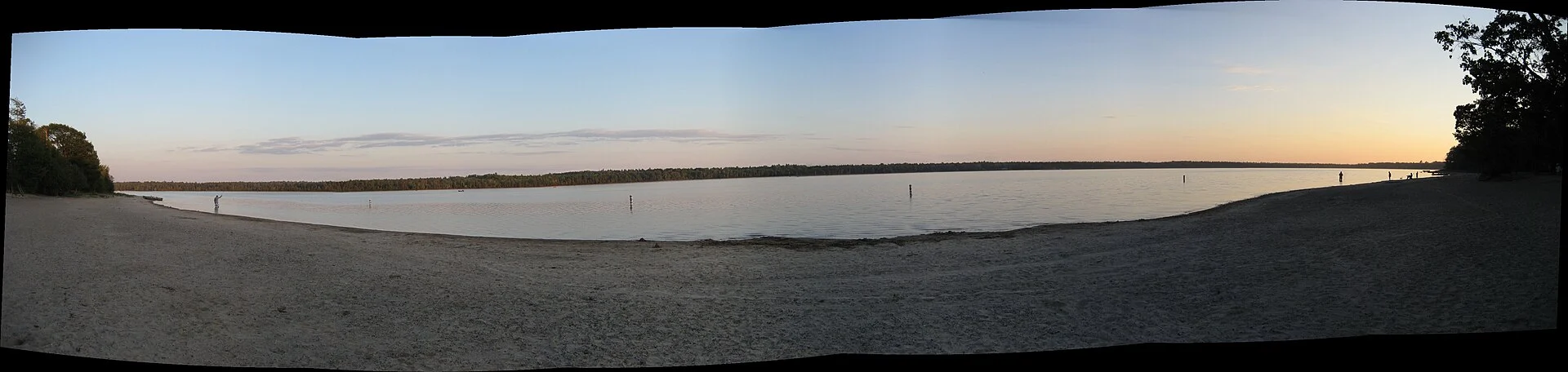
Situated on a narrow strip of land between the vast southern shore of Lake Superior and the smaller, warmer Muskallonge Lake in Luce County, Muskallonge Lake State Park occupies 217 acres of one of the most remote and scenically dramatic stretches of the eastern Upper Peninsula—approximately 28 miles northwest of Newberry, near the vanished lumber town of Deer Park. The park’s dual-water geography gives visitors a rare choice: the cold, wild, agate-studded beaches of Lake Superior on one side, and the warm, sheltered, boat-friendly waters of Muskallonge Lake on the other.
This was once the site of a Native American encampment and later the 1880s lumber town of Deer Park, where Muskallonge Lake served as a mill pond for the timber operations that cleared the surrounding forests. A U.S. Coast Guard Life Saving Station also operated here, serving mariners navigating the treacherous Superior shoreline. Today, the park serves as a base camp for exploring the eastern UP’s premier attractions—Tahquamenon Falls, the Great Lakes Shipwreck Museum at Whitefish Point, and Pictured Rocks National Lakeshore—while offering its own compelling combination of rockhounding, dark sky stargazing, and Superior shoreline solitude.
Lake Superior Shoreline: Agates and Yooperlites
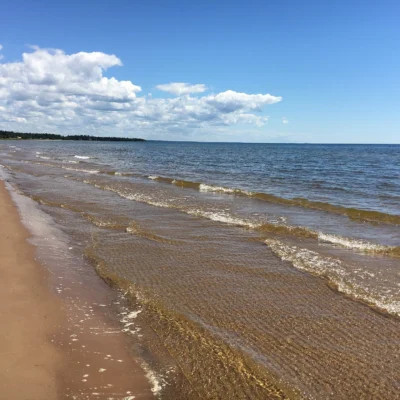
The Lake Superior beach at Muskallonge Lake State Park is one of the UP’s premier rockhounding destinations, drawing treasure hunters who scan the shoreline for two prizes.
- Lake Superior Agates: The banded, translucent agates carried south by glaciers from ancient volcanic formations and deposited along Superior’s shores. Patient beachcombers with an eye for the characteristic banding pattern can find specimens ranging from pebble-sized to impressive hand-held stones.
- Yooperlites: Syenite rocks containing fluorescent sodalite that glow brilliant orange under UV light. Discovered in 2017, Yooperlites have created a nighttime rockhounding culture—visitors walk the beach after dark with UV flashlights, turning an already spectacular stretch of shoreline into a glowing treasure hunt.
Beyond rockhounding, the Superior beach delivers the raw, wild experience that defines the lake: cold water (rarely above 55°F even in August), crashing waves, driftwood, and the vast, unbroken horizon of the largest freshwater lake on Earth.
Muskallonge Lake
The inland Muskallonge Lake provides the warm-water counterpart to Superior’s cold intensity. The lake offers comfortable swimming temperatures by mid-summer, a boat launch within the park, and productive fishing for bass, pike, walleye, and panfish. For families with young children, Muskallonge Lake’s calmer, warmer water provides a safer and more comfortable swimming option than Superior.
159-Site Campground
The campground spreads across three loops with electrical hookups, paved/gravel/grass surfaces, modern restrooms with showers, and a sanitation station. The park is notably popular with off-road vehicle (ORV) enthusiasts—riding to and from the campsite to local ORV trails is permitted, making Muskallonge one of the few Michigan state parks that directly supports motorized trail access from camp.
Dark Sky Stargazing
The park’s remote UP location—far from any significant light sources—produces some of the darkest skies in Michigan. On clear, moonless nights, the Milky Way stretches in vivid detail across the sky, and the aurora borealis (northern lights) is visible during periods of strong geomagnetic activity. Combine the dark sky with the Lake Superior beach, and the stargazing experience is genuinely world-class.
Base Camp for the Eastern UP
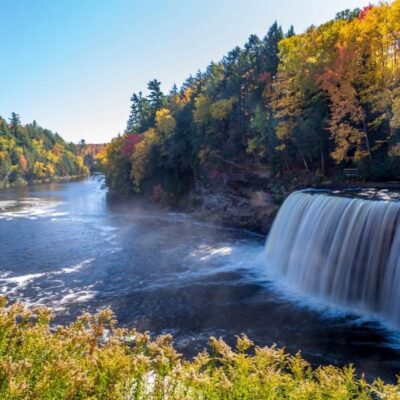
- Tahquamenon Falls: Michigan’s largest waterfall, approximately 45 minutes east
- Great Lakes Shipwreck Museum (Whitefish Point): Approximately 40 minutes northeast
- Pictured Rocks National Lakeshore: Approximately 90 minutes west
- Crisp Point Lighthouse: A remote, iconic lighthouse accessible by unpaved road
Seasonal Guide
Spring (May–June)
Campground opens. Lake Superior still very cold. Wildflowers and spring bird migration. Muskallonge Lake warming for fishing.
Summer (July–August)
Peak season. Dual-lake swimming. Rockhounding. Yooperlite hunting after dark. ORV riding.
Autumn (September–October)
Fall color in UP forests. Lake Superior storms produce dramatic wave action. Dark skies at their best.
Winter (November–April)
Campground closed. Snowmobiling. Ice fishing on Muskallonge Lake. Winter aurora viewing.
Frequently Asked Questions
What are Yooperlites? Syenite rocks containing fluorescent sodalite mineral that glow bright orange under ultraviolet light. Discovered in 2017, they are found along Lake Superior beaches and can be hunted after dark with a UV flashlight.
Can I swim in Lake Superior here? Yes, but the water is cold—rarely exceeding 55°F even in August. Muskallonge Lake (inland side) offers much warmer swimming.
Can I ride my ORV from the campsite to trails? Yes. Muskallonge Lake is one of the few Michigan state parks that permits ORV riding to and from campsites to local trail systems.
Wildlife & Nature
Muskallonge Lake SP — between an inland lake and Lake Superior — has remote UP camping. Gray wolves and moose inhabit the surrounding forest. Common loons nest on the lake. Brook trout fill the streams.
Nearby Attractions
Grand Marais — 15 miles east. Tahquamenon Falls SP — 30 miles west. Pictured Rocks NL — nearby.
Nearby parks: If you have extra time, Tahquamenon Falls State Park is within about an hour’s drive, and Wagner Falls Scenic Site is elsewhere in the state.
Camping reservations: Book campsites and cabins for Michigan state parks online at midnrreservations.com.

🐾 Dogs & Pets at Muskallonge Lake State Park
- Pets allowed? statewide rule
- Pets are welcome in Michigan state parks, campgrounds, harbors and state-designated trails, except designated swim beaches and other posted areas.
- Leash rule statewide rule
- Pets must always be on a 6-foot leash and under the owner's immediate control.
- Beaches & swim areas statewide rule
- Pets are prohibited in buoyed swim areas but allowed along the shoreline outside them (on a 6-ft leash, even in the water); 50+ parks have pet-friendly shoreline or designated dog beaches.
- Cabins & lodging statewide rule
- Up to two pets (cats and dogs only) allowed at ~12 parks' designated pet-friendly cabins, yurts and lodges; $10 per night per pet (cabins) or $15 (lodges); otherwise pets barred from overnight lodging.
- Pet fees statewide rule
- No day-use pet fee; pet-friendly lodging costs $10/night per pet (cabins) or $15/night per pet (lodges).
- Statewide exceptions statewide rule
- Leash laws do not apply to dogs used for hunting on land open to such use; pets may not be left unattended.
Are dogs allowed at Muskallonge Lake State Park?
Pets are welcome in Michigan state parks, campgrounds, harbors and state-designated trails, except designated swim beaches and other posted areas. Individual parks can post stricter rules — check signage on arrival.
Rules verified July 2026 via michigan.gov. More: Michigan state parks guide · Dog rules in all 50 states compared
🐻 Wildlife at Muskallonge Lake State Park: What to Watch For — and Watch Out For
Worth watching for: The park's Lake Superior shore is designated piping plover nesting habitat, protected by its own Land Use Order - the endangered shorebird is the one species officially documented here, and you watch it from outside the posted areas. Muskallonge Lake itself is the fishing draw, with northern pike, muskallonge, smallmouth bass, walleye and perch, while Lake Superior holds trout, salmon and menominee, especially near the river mouths. The North Country National Scenic Trail runs through the park with short feeder trails from the campground.
Watch out for: From April 15 through August 31 you may not enter, use or occupy the posted state-owned lands in sections 1-2, T49N R11W, Luce County, at Muskallonge Lake State Park without written permission - a Land Use Order of the Director issued to protect piping plover nesting areas from disturbance and destruction. On the Lake Superior side, the DNR's own park page flags Great Lakes beach safety: these are powerful bodies of water prone to dangerous currents that can threaten even strong swimmers, and there are no beach guards in Michigan state parks. Where the Great Lakes flag warning system is posted, green means low hazard, yellow medium, red high (stay on the beach), and double red means water access is closed and entering the water is against the law. Never swim alone and keep close watch over children and inexperienced swimmers.
Wildlife information verified July 2026 via michigan.gov.
Park Location
Plan your gear for Muskallonge Lake State Park
From our editorial guides, matched to this park’s activities:
Top Tours & Activities Near Mackinaw City
 from $128
 from $95
 from $12