🌤 Weather at P.H. Hoeft State Park by season
| Spring | Summer | Fall | Winter |
|---|---|---|---|
| 20–64 °F | 52–80 °F | 30–71 °F | 13–34 °F |
Each range runs from the coldest monthly average low to the warmest monthly average high in that season (1991-2020 climate normals), measured at Rogers City, 4 mi away, elevation 615 ft. Conditions at the park can differ from the station, especially where elevation differs — check a forecast before you go.

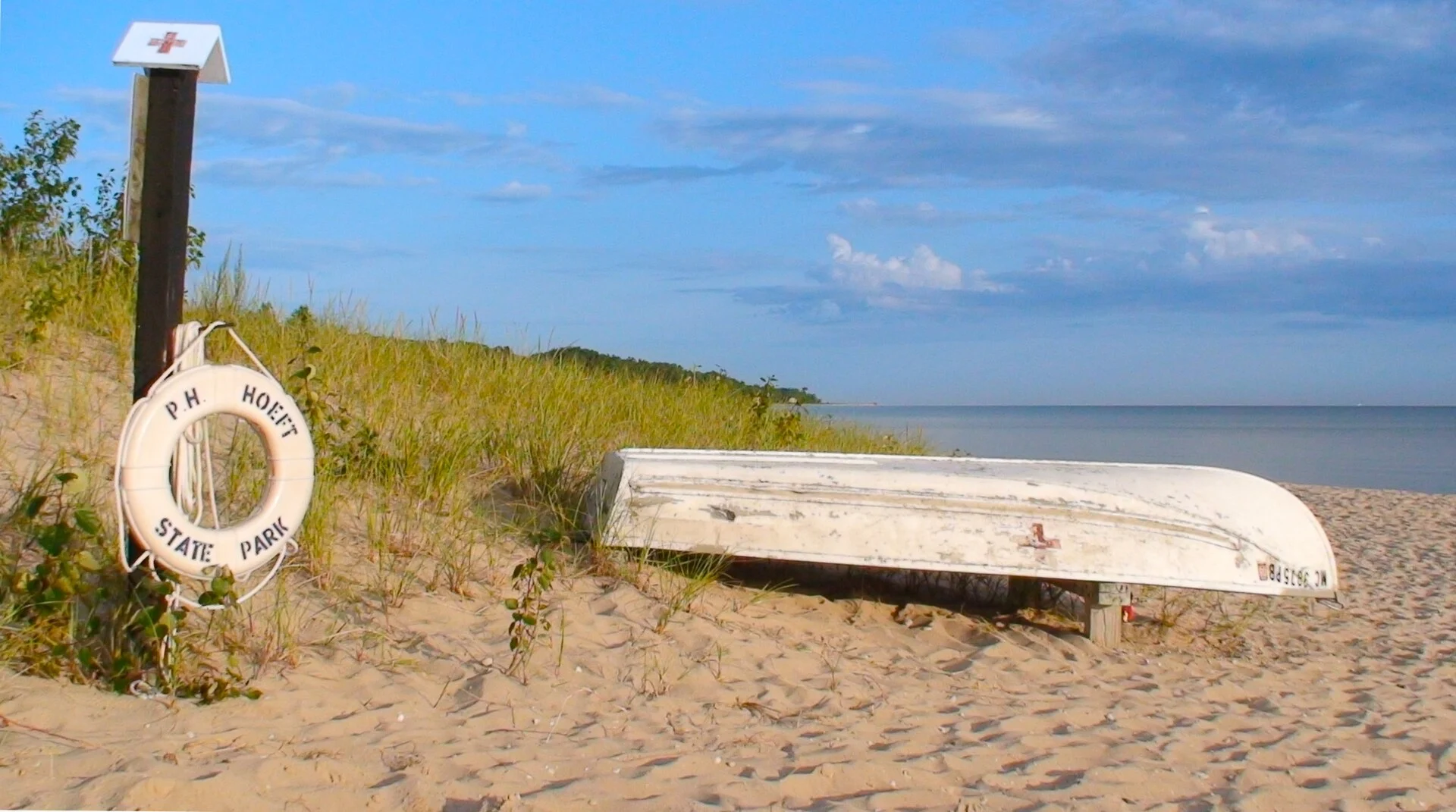
Hoeft State Park is a public state park in Michigan near Rogers City in Presque Isle County. Spanning 301 acres and established in 1921, this park offers a peaceful retreat into nature for visitors of all ages.
Quick Facts
| State | Michigan |
| Nearest City | Rogers City |
| County | Presque Isle |
| Park Size | 301 acres |
| Established | 1921 |
| Accessibility | Accessible available. Accessible The picnic area is in the day-use area and includes picnic tables and charcoal grills that are available first come, first served. available. Accessible An accessible playground, located just outside the modern campground, sits on a rubberized surface that makes access easier for those of all mobility levels. There’s a small parking lot across from sites #2-4. A sand volleyball court is located between the playground and Lake Huron, via a trail near site #7. available. |
Location & Getting There
Hoeft State Park is located near Rogers City, Michigan. The park’s coordinates are 45.4625, -83.8800.
Things to Do
Michigan’s state park system — one of the largest in the nation — stretches across two peninsulas surrounded by four Great Lakes, offering extraordinary variety. Activities include swimming and sunbathing on freshwater beaches that rival ocean coastlines, hiking sand dune bluffs with panoramic lake views, fishing for walleye, bass, and salmon in rivers and Great Lakes tributaries, camping in pine forests steps from the beach, kayaking along dramatic Pictured Rocks-style shorelines, mountain biking through rolling hardwood forests, cross-country skiing and snowmobiling in the Upper Peninsula, and exploring historic lighthouses dotting the coastline. Michigan’s state parks include some of the finest freshwater beaches in the world.
Best Time to Visit
Michigan’s park season centers on summer (June–August), when Great Lakes beaches warm up, trails are fully accessible, and campgrounds are buzzing with activity. Lake Michigan water temperatures peak in August (65–75°F). Fall (September–October) brings spectacular foliage — the Upper Peninsula and northern Lower Peninsula peak in late September, while southern parks follow in October. Spring (April–May) is muddy but great for wildflowers and waterfall viewing. Winter transforms many parks into Nordic skiing, snowshoeing, and ice fishing destinations. The Upper Peninsula receives 200+ inches of annual snowfall, creating a winter recreation paradise. Recreation Passport ($15) required for vehicle entry — add it to your license plate registration for the best value.
Visitor Tips
Michigan state parks require a Recreation Passport ($15 for Michigan residents, $42 for non-residents) for vehicle entry. Purchase it with your license plate renewal for automatic access all year. Camping reservations are made through the Michigan DNR reservation system up to 6 months in advance. Lakefront campsites at popular parks like Holland, Ludington, and Traverse City sell out within hours of opening. Bring warm layers even in summer — Great Lakes breezes can drop temperatures significantly near the water.
Explore More Michigan State Parks
Hoeft State Park is one of many outstanding state parks in Michigan. Discover more parks in our Best State Parks in Michigan guide, or use our Park Finder to search by activity, location, or features.
Wildlife & Nature
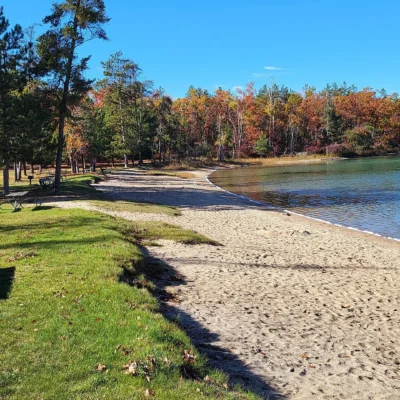
Hoeft SP — near Rogers City on Lake Huron — features a mile-long sandy beach and one of the least crowded shorelines in the Lower Peninsula. The park’s mixed forest, wetlands, and limestone bedrock support bald eagles, osprey, and common loons. Dwarf lake iris (Michigan’s state wildflower, federally threatened) blooms in June. Petoskey stones wash ashore.
Nearby Attractions
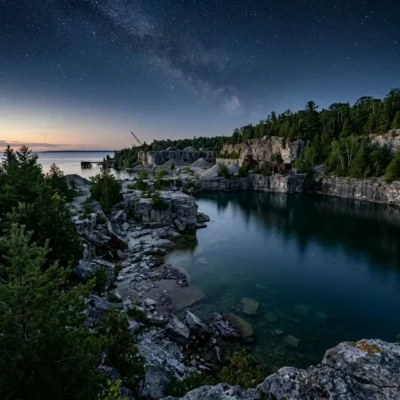
Rogers City — adjacent — has the world’s largest open-pit limestone quarry (Calcite). Ocqueoc Falls — 15 miles west — is the largest waterfall in the Lower Peninsula. Presque Isle Lighthouses — 15 miles south.
More parks in Michigan: Ocqueoc Falls Bicentennial Pathway and Thompson's Harbor State Park. See the full Michigan state parks guide.

🐾 Dogs & Pets at P.H. Hoeft State Park
- Pets allowed? statewide rule
- Pets are welcome in Michigan state parks, campgrounds, harbors and state-designated trails, except designated swim beaches and other posted areas.
- Leash rule statewide rule
- Pets must always be on a 6-foot leash and under the owner's immediate control.
- Beaches & swim areas statewide rule
- Pets are prohibited in buoyed swim areas but allowed along the shoreline outside them (on a 6-ft leash, even in the water); 50+ parks have pet-friendly shoreline or designated dog beaches.
- Cabins & lodging statewide rule
- Up to two pets (cats and dogs only) allowed at ~12 parks' designated pet-friendly cabins, yurts and lodges; $10 per night per pet (cabins) or $15 (lodges); otherwise pets barred from overnight lodging.
- Pet fees statewide rule
- No day-use pet fee; pet-friendly lodging costs $10/night per pet (cabins) or $15/night per pet (lodges).
- Statewide exceptions statewide rule
- Leash laws do not apply to dogs used for hunting on land open to such use; pets may not be left unattended.
Are dogs allowed at P.H. Hoeft State Park?
Pets are welcome in Michigan state parks, campgrounds, harbors and state-designated trails, except designated swim beaches and other posted areas. Individual parks can post stricter rules — check signage on arrival.
Rules verified July 2026 via michigan.gov. More: Michigan state parks guide · Dog rules in all 50 states compared
Park Location
Plan your gear for P.H. Hoeft State Park
From our editorial guides, matched to this park’s activities:
Top Tours & Activities Near Mackinaw City
 from $128
 from $95
 from $12