
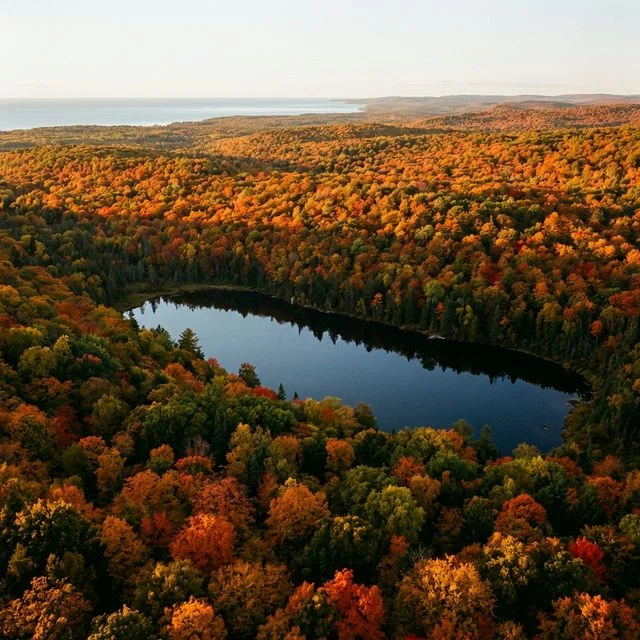
🌤 Weather at Porcupine Mountains Wilderness State Park by season
| Spring | Summer | Fall | Winter |
|---|---|---|---|
| 10–64 °F | 48–78 °F | 23–68 °F | 2–26 °F |
Each range runs from the coldest monthly average low to the warmest monthly average high in that season (1991-2020 climate normals), measured at Bergland Dam, 19 mi away, elevation 1,300 ft. Conditions at the park can differ from the station, especially where elevation differs — check a forecast before you go.

Michigan’s Last Great Wilderness: 60,000 Acres of Ancient Forest, Waterfalls, and Lake Superior Shoreline
Deep in Michigan’s western Upper Peninsula, where 35,000 acres of ancient forest have stood undisturbed for centuries and the dark waters of Lake of the Clouds mirror a sky framed by towering hemlocks, lies a wilderness so vast and untamed that it earned a name from the Ojibwa people centuries ago. The Porcupine Mountains Wilderness State Park — affectionately known as “the Porkies” — is Michigan’s largest state park at 60,000 acres, protecting one of the last great tracts of virgin northern hardwood and hemlock forest in North America.
Named by the Ojibwa because the mountain ridgeline resembles a crouching porcupine when viewed from Lake Superior, this park delivers an experience that feels more like the remote wilderness of Canada than a state park in the Midwest. With over 90 miles of hiking trails, thundering waterfalls, a ski resort with Lake Superior views, and wildlife that includes black bears, gray wolves, and moose, the Porcupine Mountains are a four-season wilderness destination that rewards every visit with something extraordinary.
🥾 Hiking Trails at the Porcupine Mountains
The Porcupine Mountains offer one of the most extensive trail systems in the Great Lakes region, with over 90 miles of paths winding through ancient forests, along river gorges, past waterfalls, and across mountain ridges with panoramic Lake Superior views. Whether you’re looking for a quick scenic overlook or a multi-day backpacking adventure, the Porkies deliver.
| Trail | Distance | Difficulty | Highlights |
|---|---|---|---|
| Lake of the Clouds Overlook | 0.25 mi | Easy | Michigan’s most iconic viewpoint, paved boardwalk |
| Escarpment Trail | 4.3 mi | Moderate | Stunning ridgeline views of Lake of the Clouds and Carp River Valley |
| Summit Peak Trail | 0.5 mi | Easy | Observation tower at park’s highest point, 360° panorama |
| Presque Isle River Loop | 2.0 mi | Moderate | Three major waterfalls, suspension bridge, boardwalks |
| Lake Superior Trail | 17.1 mi | Strenuous | Park’s longest trail, entire Lake Superior shoreline |
| Big Carp River Trail | 9.6 mi | Strenuous | Descends from Escarpment to Lake Superior through ancient forest |
| Little Carp River Trail | 11.8 mi | Strenuous | Four waterfalls, connects Mirror Lake to Lake Superior |
| Mirror Lake North Loop | 7.3 mi | Moderate | Circles Mirror Lake through old-growth forest |
| Mirror Lake South Loop | 3.0 mi | Easy-Mod | Shorter lake circuit, ideal for half-day hike |
| Lost Lake Trail | 2.5 mi | Easy | Picturesque lake views, backcountry campsites |
| Visitor Center Nature Path | 1.4 mi | Easy | Interpretive loop, great for families and first-timers |
Must-Do: The Escarpment Trail
Widely considered one of the most beautiful hikes in Michigan, the Escarpment Trail follows a rocky ridgeline high above the Big Carp River Valley, offering jaw-dropping views of Lake of the Clouds from multiple overlook points. The 4.3-mile one-way trail gains moderate elevation and rewards hikers with vistas that appear on nearly every “Best of Michigan” list. Start early for the best light and fewer crowds — parking at the Lake of the Clouds overlook fills quickly, especially during fall color season.
🌊 Waterfalls of the Porcupine Mountains
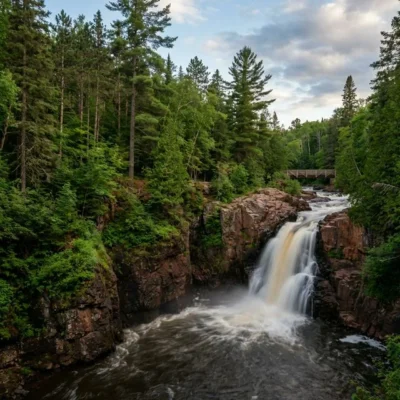
The Porcupine Mountains harbor some of Michigan’s most impressive waterfalls, primarily concentrated along the Presque Isle River at the park’s western edge. Spring snowmelt transforms these cascades into thundering displays of power, but they’re beautiful year-round.
| Waterfall | Height | Location | Access |
|---|---|---|---|
| Manabezho Falls | ~25 ft drop, 150 ft wide | Presque Isle River | Short walk from parking, boardwalk trail |
| Manido Falls | ~20 ft tiered cascade | Presque Isle River | Part of 2-mile river loop |
| Nawadaha Falls | ~15 ft | Presque Isle River | Viewing platform directly above cascade |
| Greenstone Falls | ~15 ft | Little Carp River | 3+ mile hike on Little Carp River Trail |
| Overlooked Falls | ~20 ft | Little Carp River | 4+ mile hike, aptly named hidden gem |
Presque Isle River Scenic Area
The Presque Isle River Scenic Area is the most accessible waterfall experience in the park. A well-maintained 2-mile loop trail connects all three major falls — Manabezho, Manido, and Nawadaha — via boardwalks, stairs, and a scenic suspension bridge that crosses the river. The trail also leads to a beautiful Lake Superior shoreline where the river meets the great lake. Allow 1.5–2 hours for the full loop, and bring sturdy shoes — the boardwalks can be slippery when wet.
🌲 The Ancient Old-Growth Forest
What makes the Porcupine Mountains truly extraordinary isn’t just scenic beauty — it’s time. The park protects approximately 35,000 acres of virgin old-growth forest, one of the largest uncut tracts of northern hardwood and eastern hemlock forest in North America west of the Adirondack Mountains. Some hemlock trees here are over 300 years old, their massive trunks creating a cathedral-like canopy that filters sunlight into golden beams.
The forest canopy is dominated by sugar maple, eastern hemlock, yellow birch, and American basswood. Walking through these ancient groves is a profoundly different experience from typical state park trails — the silence, the scale, and the sense of timelessness are palpable. The preservation of this forest was the primary reason the park was established in 1945, when citizens rallied to save it from the expanding logging industry that had already stripped much of the Upper Peninsula bare.
🐻 Wildlife at the Porcupine Mountains
The vast, unbroken wilderness of the Porcupine Mountains supports one of the richest wildlife populations in the Great Lakes region. The park’s size and old-growth habitat provide critical territory for species that need large, undisturbed ranges.
| Species | Status | Best Viewing | Notes |
|---|---|---|---|
| Black Bear | Common | Spring–Fall | ~1 bear per 2 sq miles in Ontonagon County; store food properly |
| Gray Wolf | Present | Year-round | Rarely seen but frequently heard; tracks common in winter |
| Moose | Uncommon | Dawn/Dusk | Occasionally spotted near wetlands and rivers |
| White-tailed Deer | Common | Year-round | Abundant throughout the park |
| River Otter | Present | Spring–Fall | Found along rivers and lakeshores |
| Fisher | Present | Year-round | Elusive forest carnivore, old-growth habitat specialist |
| Pine Marten | Present | Year-round | Arboreal predator found in dense forest |
| Bald Eagle | Common | Year-round | Nests along Lake Superior shoreline |
| Peregrine Falcon | Present | Summer | Nests on cliff faces |
| Barred Owl | Common | Year-round | Distinctive “who cooks for you” call in old-growth forest |
Bear Country Safety
With one of the highest black bear densities in Michigan, the Porcupine Mountains require visitors to practice proper food storage at all times. When camping, use bear-resistant containers or hang food bags at least 10 feet high and 4 feet from tree trunks. Never store food in your tent. If you encounter a bear, make noise, appear large, and back away slowly — black bears in the Porkies are generally shy and avoid humans.
⛷️ Winter Sports at the Porkies
The Porcupine Mountains transform into a world-class winter wonderland when snow blankets the Upper Peninsula. The park’s Winter Sports Complex — marketed as “Ski the Porkies” — offers one of the most unique skiing experiences in the Midwest, where every run ends with a view of Lake Superior.
Downhill Skiing & Snowboarding
The ski area features 15 groomed runs, glade trails for tree skiing, and a terrain park. With a vertical drop that captures Lake Superior panoramas, the experience feels more like a mountain resort than a Midwest ski hill. The season typically runs from mid-December through mid-March.
Cross-Country Skiing & Snowshoeing
Over 20 miles of groomed trails wind through the park for cross-country skiing, snowshoeing, and fat-tire biking. The silence of the snow-covered old-growth forest creates an almost otherworldly atmosphere. Winter visitors can also enjoy lantern-lit trail hikes and guided snowshoeing excursions organized by the park.
🏕️ Camping & Lodging
The Porcupine Mountains offer accommodations ranging from modern campgrounds to remote backcountry cabins and yurts, making the park accessible to both car campers and wilderness adventurers.
| Accommodation | Sites/Units | Amenities | Season |
|---|---|---|---|
| Union Bay Modern Campground | 100 sites | Electric, modern restrooms, dump station, camp store, Lake Superior frontage | May–Oct |
| Presque Isle Rustic Campground | 50 sites | Vault toilets, hand pumps, 6 walk-in sites on Lake Superior | May–Oct |
| White Pine Outpost Camp | 8 sites | Rustic camping, vault toilets | May–Oct |
| Backcountry Campsites | 65 sites | Primitive, permit required at check-in | Reservation season May 15–Oct 31; ask park headquarters about other dates |
| Backcountry Rustic Cabins | 19 cabins | Basic shelter, wood stove, bunks; some pet-friendly | Some available year-round; verify your cabin and date |
| Wilderness Yurts | Multiple | Bunk beds, wood stove, table/chair; hike in | Some available year-round; verify your yurt and date |
Pro Tip: Book Early
Compare the DNR operating dates and rates with live availability before choosing a campsite, cabin or yurt. Overnight inventory generally opens six months before arrival. Backcountry campers must check in for a permit; a reservation receipt is not the permit. Check the season-specific check-in instructions or call 800-447-2757. Some cabins and yurts cannot be reserved in winter.
📅 Seasonal Guide
| Season | Dates | Highlights | Considerations |
|---|---|---|---|
| Spring | Apr–May | Peak waterfall flow, wildflowers, returning wildlife | Trails may be muddy, some roads closed until mid-May |
| Summer | Jun–Aug | Full trail access, camping, Lake Superior beaches, fishing | Bugs (mosquitoes, black flies) June–July; bring repellent |
| Fall | Sep–Oct | Spectacular fall colors (peak late Sep), chairlift rides, fewer bugs | Most popular season — book cabins/yurts months ahead |
| Winter | Nov–Mar | Downhill/cross-country skiing, snowshoeing, yurt stays, solitude | Heavy snow (200+ inches), limited services, check road conditions |
📜 History of the Porcupine Mountains
The story of the Porcupine Mountains spans thousands of years, from indigenous stewardship to 19th-century mining to modern conservation.
| Year | Event |
|---|---|
| Pre-1600s | Ojibwa people name the mountains for their ridgeline’s resemblance to a crouching porcupine |
| 1822 | Henry Rowe Schoolcraft documents the region’s indigenous history and the origin of the mountains’ name from Chief Konteka |
| 1867–1912 | Nonesuch Mine operates sporadically for copper extraction in the region |
| 1920s–1940s | Citizens campaign to protect the old-growth forest from the expanding logging industry |
| 1945 | Michigan establishes Porcupine Mountains Wilderness State Park to preserve the ancient forest |
| Present | Michigan’s largest state park at 60,000 acres with 35,000 acres of protected old-growth forest |
💰 Visitor Guide & Budget Planner
Getting There
The Porcupine Mountains are located in Ontonagon County in Michigan’s western Upper Peninsula. The park entrance is accessible via M-107 from Silver City. The nearest major airport is Rhinelander-Oneida County Airport (RHI), approximately 3 hours southeast. Most visitors drive from cities like Milwaukee (5 hours), Minneapolis (7 hours), or Detroit (9 hours).
Fees & Costs
| Item | Cost | Notes |
|---|---|---|
| Michigan Recreation Passport (Resident) | $15/year | Required for all vehicles; buy at Secretary of State or park entrance |
| Michigan Recreation Passport (Non-Resident) | $42/year | Also available as day pass at some locations |
| Modern Campsite (Union Bay) | $41–46/night | DNR listed 20/30-amp and 50-amp rates, checked October 2026; verify at booking |
| Rustic Campsite | Varies by site | Check the DNR facility schedule for the chosen campground |
| Backcountry Campsite | $20/night | Per group of one to six; permit issued at check-in |
| Backcountry Cabin | $100/night listed | Some cabins unavailable in winter; verify exact unit and total cost |
| Wilderness Yurt | $100/night listed | Some yurts unavailable in winter; verify exact unit and total cost |
| Ski Lift Ticket | $30–50/day | Season passes available |
⚠️ Rules & Safety
- Bear safety — Store all food in bear-resistant containers or properly hung bags. Never keep food in your tent.
- Backcountry permits — Required for all overnight backcountry camping; obtain at the Visitor Center.
- Pets — Allowed in most areas on a 6-foot leash. Some cabins are pet-friendly (additional fee).
- Water — Treat or filter all backcountry water sources. Potable water available at developed campgrounds.
- Cell service — Extremely limited to none throughout most of the park. Plan accordingly.
- Winter travel — Check road conditions before visiting November–April. Some roads close seasonally.
- Leave No Trace — Pack out all trash. The park’s wilderness designation requires extra care.
🎒 Packing Essentials
- Trekking poles — Essential for the rocky Escarpment Trail and river crossings
- Bear-resistant food container — Required for backcountry camping
- Bug spray — Mosquitoes and black flies are intense June–July
- Rain gear — UP weather changes rapidly; be prepared for sudden storms
- Layered clothing — Temperature swings of 30°F+ are common, even in summer
- Water filter — No potable water in backcountry areas
- Detailed trail map — Cell service is virtually nonexistent; don’t rely on phone GPS
- Headlamp — For cabin/yurt stays and dawn/dusk hiking
❓ Frequently Asked Questions
What is the best time to visit the Porcupine Mountains?
Fall (late September–mid October) is the most popular season for spectacular fall colors. Summer (June–August) offers the most activities and warmest weather, though bugs can be intense in early summer. Winter is ideal for skiing and snowshoeing in solitude. Spring brings peak waterfall flow but muddy trails.
Are there bears in the Porcupine Mountains?
Yes, the Porcupine Mountains have one of Michigan’s highest black bear populations, with approximately one bear per two square miles in Ontonagon County. Bears are generally shy and avoid humans, but proper food storage is essential when camping. Use bear-resistant containers or properly hung food bags.
How much does it cost to visit the Porcupine Mountains?
Vehicle entry requires a Michigan Recreation Passport, separate from overnight charges. As listed by Michigan DNR in October 2026, backcountry camping is $20 per night for groups of up to six; Union Bay electric sites are $41–46 per night and backcountry cabins/yurts are listed at $100 per night. Check the current rates, availability and reservation fees for your dates. Ski lift tickets are priced separately.
Can I ski at the Porcupine Mountains?
Yes! The Porcupine Mountains Winter Sports Complex offers 15 groomed downhill runs and glade trails with Lake Superior views, plus over 20 miles of groomed cross-country trails. The ski season typically runs mid-December through mid-March. Lessons, rentals, and season passes are available.
Is there cell phone service in the Porcupine Mountains?
Cell service is extremely limited to nonexistent throughout most of the park. You may get a weak signal near the Visitor Center or Union Bay area, but don’t count on it. Download offline maps, bring a paper trail map, and inform someone of your itinerary before heading into the backcountry.
What are the backcountry cabins like?
The park’s 19 backcountry cabins are rustic shelters with bunk beds, a wood-burning stove, and basic furniture. They have no running water, electricity, or plumbing — vault toilets are located nearby. Some cabins are pet-friendly. Access requires hiking in (distances vary from a few hundred yards to several miles). Cabins book out months in advance, especially for fall and winter.
Where is the Lake of the Clouds viewpoint?
The Lake of the Clouds Overlook is located at the end of M-107 in the eastern portion of the park. A short, paved boardwalk trail (0.25 miles) leads to the iconic viewpoint overlooking the lake and Big Carp River Valley. This is the park’s most visited destination — arrive early (before 10 AM) to avoid parking issues, especially during fall color season.
Explore More Michigan State Parks
Porcupine Mountains Wilderness State Park is one of many outstanding state parks in Michigan. Discover more parks in our Best State Parks in Michigan guide, or use our Park Finder to search by activity, location, or features.
Nearby parks: If you have extra time, Lake Gogebic State Park is within about an hour’s drive, and Bond Falls Scenic Site is elsewhere in the state.

⛺ Camping at Porcupine Mountains Wilderness State Park: Campgrounds & Cabins
| Campsites | Union Bay Modern Campground (only modern CG): 100 sites, electrical service, near shore. Presque Isle Rustic Campground: 50 sites, 2 loops (east generator-friendly, west quieter). Lost Creek Rustic Outpost: 3 sites. White Pine Rustic Outpost: 8 sites. Union River Rustic Outpost: 3 sites. |
|---|---|
| Cabins & Lodging | Kaug Wudjoo Modern Lodge: sleeps 12, 4BR/1.5BA, pet-friendly (extra fee), 7-night min May-Nov/4-night Dec-Apr, WiFi. Backcountry Rustic Cabins: sleep 2-8, wood stove, pet-friendly ($10/night/pet extra, up to 2), no lighting provided (Whitetail Cabin closed - fire damage). Union Bay Tiny Quill House: sleeps 4, electrical. Backcountry Wilderness Yurts: sleep 4, wood stove, pet-friendly except Lost Creek yurt. |
| Pets | Kaug Wudjoo Lodge and most backcountry cabins/yurts pet-friendly, up to 2 cats/dogs, $10/night/pet/cabin extra (Lost Creek yurt excluded). |
| Reservations | midnrreservations.com or 1-800-447-2757 (park direct line 906-885-5275 for backcountry/group). Recreation Passport required. |
| Special sites | 65 backcountry/primitive campsites; 2 rustic group sites (24 people each); boat launches adjacent to Union Bay Campground. |
| Season notes | Dispersed winter camping allowed in backcountry once snow-covered; check-in at visitor center (May15-Oct14, 8am-8pm) or headquarters (Oct15-May14, 8am-4pm) for cabins/yurts/outposts. |
Camping questions about Porcupine Mountains Wilderness State Park
Can you camp at Porcupine Mountains Wilderness State Park?
Union Bay Modern Campground (only modern CG): 100 sites, electrical service, near shore. Presque Isle Rustic Campground: 50 sites, 2 loops (east generator-friendly, west quieter). Lost Creek Rustic Outpost: 3 sites. White Pine Rustic Outpost: 8 sites. Union River Rustic Outpost: 3 sites.
How do you reserve a campsite at Porcupine Mountains Wilderness State Park?
midnrreservations.com or 1-800-447-2757 (park direct line 906-885-5275 for backcountry/group). Recreation Passport required.
Are there cabins at Porcupine Mountains Wilderness State Park?
Kaug Wudjoo Modern Lodge: sleeps 12, 4BR/1.5BA, pet-friendly (extra fee), 7-night min May-Nov/4-night Dec-Apr, WiFi. Backcountry Rustic Cabins: sleep 2-8, wood stove, pet-friendly ($10/night/pet extra, up to 2), no lighting provided (Whitetail Cabin closed - fire damage). Union Bay Tiny Quill House: sleeps 4, electrical. Backcountry Wilderness Yurts: sleep 4, wood stove, pet-friendly except Lost Creek yurt.
Are pets allowed at the Porcupine Mountains Wilderness State Park campground?
Kaug Wudjoo Lodge and most backcountry cabins/yurts pet-friendly, up to 2 cats/dogs, $10/night/pet/cabin extra (Lost Creek yurt excluded).
Source: michigan.gov (verified July 2026). Details change seasonally — confirm when booking.
🐾 Dogs & Pets at Porcupine Mountains Wilderness State Park
Park policy: Effective Nov. 1, 2025 the Michigan DNR lists every Porkies backcountry rustic cabin and wilderness yurt as pet-friendly except Tiny Quill House and Lost Creek Yurt. Kaug Wudjoo Lodge accepts pets as well. The cap is two pets, cats and dogs only, and the DNR adds $10 per night per pet for cabins and yurts.
- Pets allowed?
- Yes, and most backcountry cabins and yurts take up to two pets for $10 nightly
- Leash rule statewide rule
- Pets must always be on a 6-foot leash and under the owner's immediate control.
- Beaches & swim areas statewide rule
- Pets are prohibited in buoyed swim areas but allowed along the shoreline outside them (on a 6-ft leash, even in the water); 50+ parks have pet-friendly shoreline or designated dog beaches.
- Cabins & lodging statewide rule
- Up to two pets (cats and dogs only) allowed at ~12 parks' designated pet-friendly cabins, yurts and lodges; $10 per night per pet (cabins) or $15 (lodges); otherwise pets barred from overnight lodging.
- Pet fees statewide rule
- No day-use pet fee; pet-friendly lodging costs $10/night per pet (cabins) or $15/night per pet (lodges).
- Park-specific rules
- Tiny Quill House and the Lost Creek Yurt are the two rental units at this park that stay closed to pets.
- Statewide exceptions statewide rule
- Leash laws do not apply to dogs used for hunting on land open to such use; pets may not be left unattended.
Are dogs allowed at Porcupine Mountains Wilderness State Park?
Yes, and most backcountry cabins and yurts take up to two pets for $10 nightly.
Beyond that, Michigan’s statewide rules apply.
Rules verified July 2026 via michigan.gov. More: Michigan state parks guide · Dog rules in all 50 states compared
🐻 Wildlife at Porcupine Mountains Wilderness State Park: What to Watch For — and Watch Out For
Worth watching for: The Porkies' 60,000 acres of old-growth forest shelter wildlife few Midwest parks can match: Michigan DNR lists gray wolves, bald eagles, peregrine falcons and merlins among the park's resident endangered, threatened and special-concern species. The visitor center posts current trail and wildlife information before you head in.
Watch out for: This is black bear country. The DNR equips most backcountry campsites with bear poles — hang your food bags and every scented item on them — and backcountry campers register at the visitor center, where staff share current black bear sighting reports. On the Lake Superior shoreline, take the park's Great Lakes beach-safety notice seriously: these waters produce dangerous currents.
Are there bears at Porcupine Mountains Wilderness State Park?
Yes — see above for where they occur in the park and how to behave. Sightings are a normal part of a healthy park; incidents are rare when visitors keep distance and store food properly.
Wildlife information verified July 2026 via michigan.gov.
Park Map
Plan your gear for Porcupine Mountains Wilderness State Park
From our editorial guides, matched to this park’s activities:
Top Tours & Activities Near Hayward
 from $339
 from $30
 from $10