
🌤 Weather at Lake Gogebic State Park by season
| Spring | Summer | Fall | Winter |
|---|---|---|---|
| 10–64 °F | 48–78 °F | 23–68 °F | 2–26 °F |
Each range runs from the coldest monthly average low to the warmest monthly average high in that season (1991-2020 climate normals), measured at Bergland Dam, 6 mi away, elevation 1,300 ft. Conditions at the park can differ from the station, especially where elevation differs — check a forecast before you go.

Overview: The UP’s Largest Lake in Two Time Zones
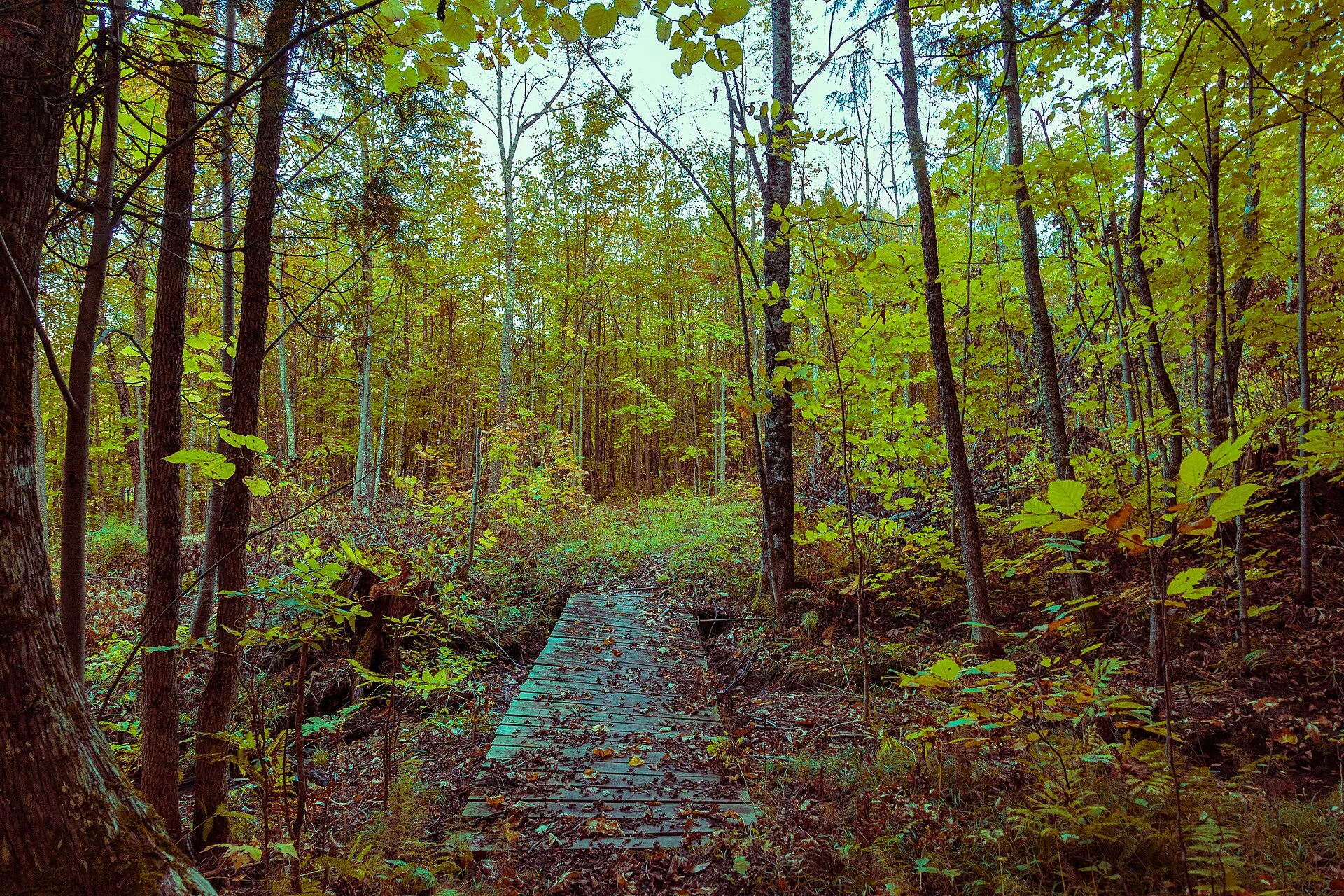
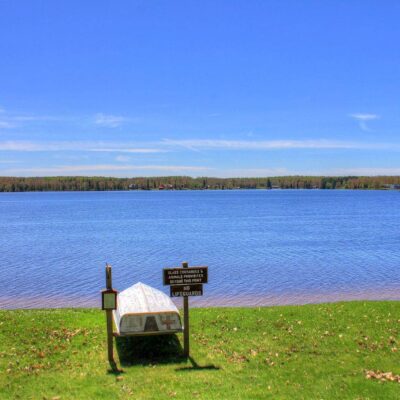
Nestled on the western shore of Lake Gogebic in the far western Upper Peninsula, Lake Gogebic State Park occupies 360 acres within the vast, million-acre Ottawa National Forest—one of the largest National Forests in the eastern United States. Lake Gogebic itself is the largest natural inland lake in the Upper Peninsula at 13,380 acres, and it holds a geographical distinction that no other lake in Michigan can claim: it lies in two different time zones, with its western shore in the Central Time Zone and its eastern shore in the Eastern Time Zone.
The park was established in 1926 when Gogebic County donated the land to the state, opening to the public in 1930. Nearly a century later, it remains what it has always been: a quiet, forested lakefront campground in one of the most remote and least populated corners of Michigan, where the walleye fishing is excellent, the night skies are dark, and the surrounding Ottawa National Forest offers wilderness-scale exploration in every direction.
Lake Gogebic: 13,380 Acres
The UP’s largest natural inland lake provides exceptional fishing, boating, and paddling in a setting that feels genuinely wild.
- Walleye: Lake Gogebic is one of the premier walleye lakes in the western UP, with productive spring and fall fishing seasons
- Smallmouth Bass: Strong smallmouth populations on rocky structure throughout the lake
- Northern Pike: Abundant pike in weedy bays and along shoreline structure
- Yellow Perch: Consistent panfish action, especially productive for ice fishing
- Boat Launch: A paved boat launch within the park provides full access to the lake
The Two Time Zones
Lake Gogebic’s unusual time zone split places the state park (western shore) in the Central Time Zone and the far eastern shore in the Eastern Time Zone. This means that a boat crossing the lake from west to east effectively travels one hour into the future—a peculiarity that creates occasional confusion for visitors but adds a distinctive oddity to the park’s character.
Camping
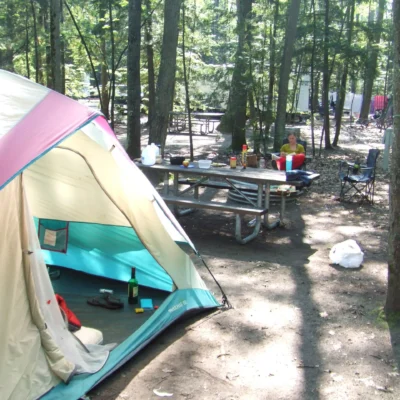
The campground offers both modern and semi-modern sites in a forested setting with some lakefront positions.
- Electrical Hookups: 20/30 amp available at modern sites
- Facilities: Showers, flush toilets, sanitation station
- Lakefront Sites: Select sites with direct frontage on Lake Gogebic—highly coveted and recommended for advance reservation
- Season: Typically May through October
Mysterious Gravestones
In 1962, two mysterious gravestones were discovered within the park, engraved “1822 JOHN KEY” and “1824 WHITH.” The stones are believed to mark the graves of early fur traders who operated in this remote region of the western UP during the early 19th century—decades before significant European settlement reached this area. The graves serve as a quiet reminder that this wilderness landscape has been traveled, traded across, and died in for centuries.
Ottawa National Forest
The park sits within the Ottawa National Forest—a million-acre public forest that extends across the western UP and provides virtually unlimited outdoor recreation:
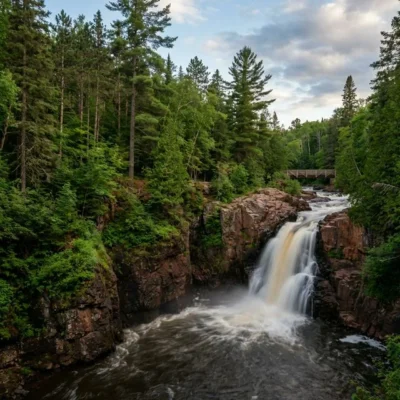
- Waterfalls: The Ottawa contains dozens of waterfalls, many accessible by short hikes from forest roads
- North Country Trail: The NCT winds through the forest, offering multi-day backpacking opportunities
- Remote Lakes: Hundreds of small inland lakes, many with primitive boat access, dispersed through the forest
- Wilderness Areas: Federally designated wilderness areas including Sylvania and McCormick provide truly roadless backcountry experiences
Seasonal Guide
Spring (May–June)
Campground opens. Walleye fishing at peak intensity as water warms. Wildflowers and spring bird migration in the Ottawa.
Summer (July–August)
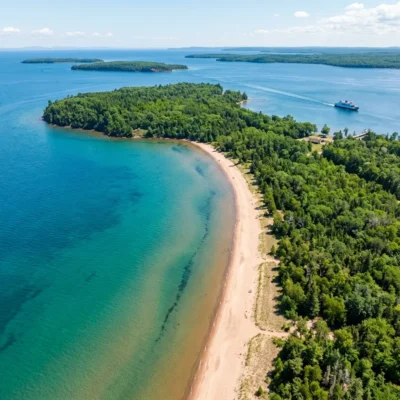
Swimming from the sandy beach. Boating, fishing, paddling. Waterfall touring in the Ottawa National Forest.
Autumn (September–October)
Fall color—some of the earliest and most vivid in Michigan at this latitude. Walleye fishing improves again as water cools.
Winter (November–April)
Campground closed. Ice fishing on Lake Gogebic—one of the UP’s most popular ice fisheries. Snowmobiling on extensive western UP trail systems. Heavy snowfall (200+ inches annually).
Frequently Asked Questions
Is the lake really in two time zones? Yes. The western shore (where the state park is located) falls in the Central Time Zone, while the eastern shore is in the Eastern Time Zone. Boating across the lake changes your clock by one hour.
What are the mysterious gravestones? Two stones engraved with 1822 and 1824 dates, discovered in 1962, believed to mark graves of early fur traders who lived and died in this remote region decades before significant European settlement.
What is the Ottawa National Forest? A million-acre federal forest surrounding the park, offering waterfalls, wilderness areas, the North Country Trail, and hundreds of remote lakes for exploration.
Wildlife & Nature
Lake Gogebic SP — on the UP’s largest lake (13,380 acres) — has premier walleye fishing. Common loons and bald eagles frequent the lake. Black bears and gray wolves roam the surrounding forest.
Nearby Attractions
Marenisco — adjacent. Porcupine Mountains — 30 miles north. Ottawa National Forest — surrounding.
Nearby parks: If you have extra time, Bond Falls Scenic Site is within about an hour’s drive, and Porcupine Mountains Wilderness State Park is within about an hour’s drive.

🐾 Dogs & Pets at Lake Gogebic State Park
- Pets allowed? statewide rule
- Pets are welcome in Michigan state parks, campgrounds, harbors and state-designated trails, except designated swim beaches and other posted areas.
- Leash rule statewide rule
- Pets must always be on a 6-foot leash and under the owner's immediate control.
- Beaches & swim areas statewide rule
- Pets are prohibited in buoyed swim areas but allowed along the shoreline outside them (on a 6-ft leash, even in the water); 50+ parks have pet-friendly shoreline or designated dog beaches.
- Cabins & lodging statewide rule
- Up to two pets (cats and dogs only) allowed at ~12 parks' designated pet-friendly cabins, yurts and lodges; $10 per night per pet (cabins) or $15 (lodges); otherwise pets barred from overnight lodging.
- Pet fees statewide rule
- No day-use pet fee; pet-friendly lodging costs $10/night per pet (cabins) or $15/night per pet (lodges).
- Statewide exceptions statewide rule
- Leash laws do not apply to dogs used for hunting on land open to such use; pets may not be left unattended.
Are dogs allowed at Lake Gogebic State Park?
Pets are welcome in Michigan state parks, campgrounds, harbors and state-designated trails, except designated swim beaches and other posted areas. Individual parks can post stricter rules — check signage on arrival.
Rules verified July 2026 via michigan.gov. More: Michigan state parks guide · Dog rules in all 50 states compared
🐻 Wildlife at Lake Gogebic State Park: What to Watch For — and Watch Out For
Worth watching for: Lake Gogebic State Park sits on the edge of an extensive upland area in the heart of the Ottawa National Forest in Michigan's western Upper Peninsula, near Bond Falls, the Presque Isle River and the Porcupine Mountains.
Watch out for: The park lies in Michigan's Upper Peninsula, which is black-bear country — the DNR estimated about 10,350 bears in the U.P. in its 2024 survey. When camping, never keep food or toiletries in your tent; store them in airtight containers in a vehicle trunk, and cook away from your campsite. If you encounter a bear, stay calm, do not run, back away slowly while talking, and never feed or approach it.
Are there bears at Lake Gogebic State Park?
Yes — see above for where they occur in the park and how to behave. Sightings are a normal part of a healthy park; incidents are rare when visitors keep distance and store food properly.
Wildlife information verified July 2026 via michigan.gov.
Park Location
Plan your gear for Lake Gogebic State Park
From our editorial guides, matched to this park’s activities:
Top Tours & Activities Near Hayward
 from $339
 from $30
 from $10