🌤 Weather at Bond Falls Scenic Site by season
| Spring | Summer | Fall | Winter |
|---|---|---|---|
| 12–64 °F | 48–78 °F | 22–68 °F | 2–26 °F |
Each range runs from the coldest monthly average low to the warmest monthly average high in that season (1991-2020 climate normals), measured at Paulding, 2 mi away, elevation 1,367 ft. Conditions at the park can differ from the station, especially where elevation differs — check a forecast before you go.

Overview: The Upper Peninsula’s Most Photogenic Cascade
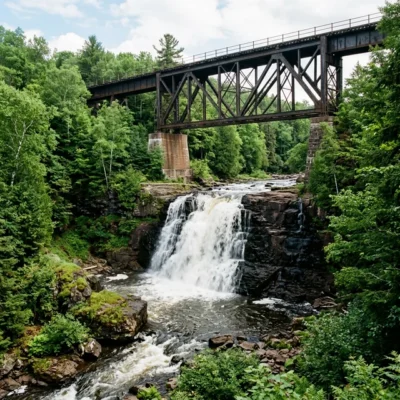
In the remote, densely forested interior of Michigan’s western Upper Peninsula, where the middle branch of the Ontonagon River tumbles over a broad, fractured shelf of ancient rock, Bond Falls has earned its reputation as one of the most beautiful and accessible waterfalls in the entire Great Lakes region. Approximately 50 feet tall and stretching roughly 100 feet across at its widest point, Bond Falls is not a single dramatic plunge but rather a spectacular, photogenic cascade—the river splits into dozens of individual channels and ribbons of white water as it navigates a complex, tiered rock formation before reuniting in a churning pool at the base.
Located near the small community of Paulding in Ontonagon County, Bond Falls Scenic Site is managed by the Michigan Department of Natural Resources. Unlike many of the Upper Peninsula’s more remote and rugged waterfalls, Bond Falls benefits from excellent visitor infrastructure: a paved parking area, accessible boardwalks, strategically placed viewing platforms, and well-maintained restroom facilities. This combination of genuine natural grandeur and thoughtful accessibility makes it one of the few truly world-class waterfalls in the Midwest that can be comfortably enjoyed by visitors of virtually all ages and physical ability levels.
The Geology and Hydrology of Bond Falls
The geological story of Bond Falls begins over a billion years ago, during a period of intense volcanic activity that formed the ancient Precambrian bedrock underlying much of the western Upper Peninsula. The middle branch of the Ontonagon River flows northward across this ancient terrain, and at Bond Falls, it encounters a particularly wide, resistant shelf of dark volcanic rock laced with fractures and fissures.
Rather than concentrating into a single channel and plunging over a clean lip—as many waterfalls do—the river here disperses across the full width of this rock shelf. The water probes every crack, ledge, and natural depression, creating the spectacular “braided” cascade effect that defines Bond Falls. Dozens of individual streams of white water weave between islands of dark, moss-covered rock before converging at the base. This complex, ever-shifting pattern means that Bond Falls never looks exactly the same twice; slight changes in water level dramatically alter which channels are flowing and how the overall cascade appears.
It is important to note that Bond Falls, while breathtaking, is not entirely natural in its current form. The nearby Bond Falls Dam, built and operated by the Upper Peninsula Power Company (UPPCO) to create the Bond Falls Flowage for hydroelectric power generation, directly controls the volume of water released into the river above the falls. When the dam is releasing significant flow, the cascade is a thundering, full-width spectacle. During periods of reduced release, individual channels may dry up, revealing more of the underlying rock structure. Both conditions are visually compelling but produce a very different experience.
The Boardwalk and Viewing Platforms
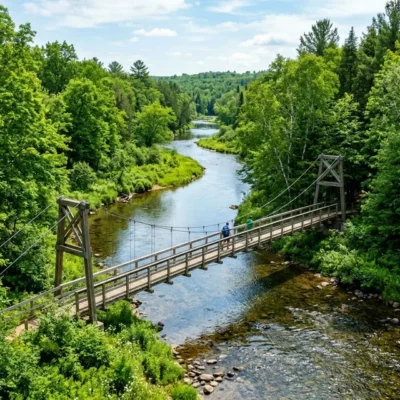
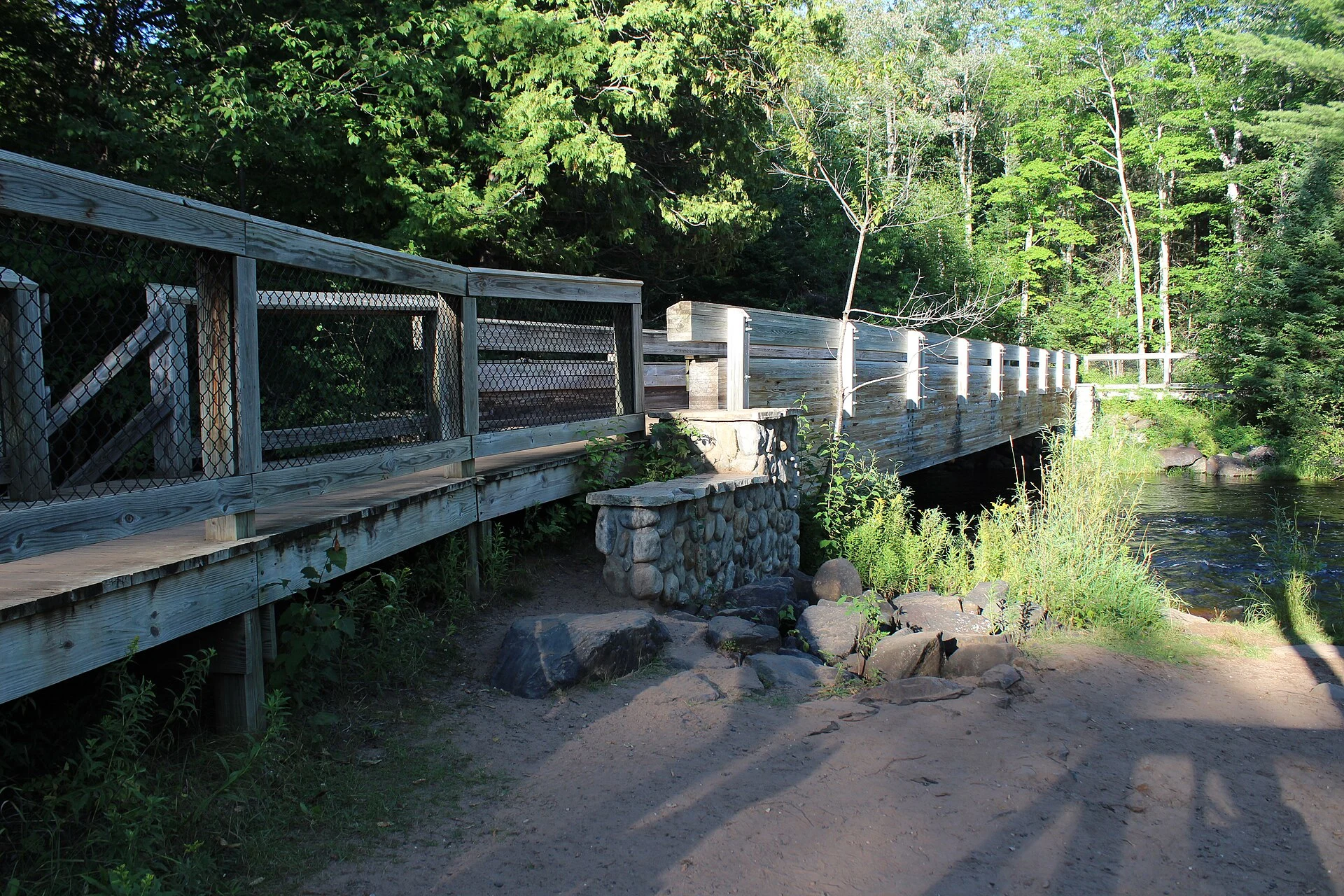
The primary visitor experience at Bond Falls centers on a 600-foot accessible boardwalk that descends from the lower parking area through the forest, providing six separate viewing locations at progressively closer vantage points to the cascade. The boardwalk is constructed of treated timber with non-slip surfaces and features sturdy railings throughout.
The Main Viewing Deck
The largest and most famous viewing platform sits directly at the base of the falls, positioned at the edge of the churning pool where the multiple cascading channels converge. This wheelchair-accessible deck is the iconic photography spot—virtually every postcard and tourism image of Bond Falls is captured from this location. The deck is large enough to accommodate a dozen or more visitors simultaneously, though during peak autumn weekends, waiting for a clear shot may require patience.
The Upper Trail Loop
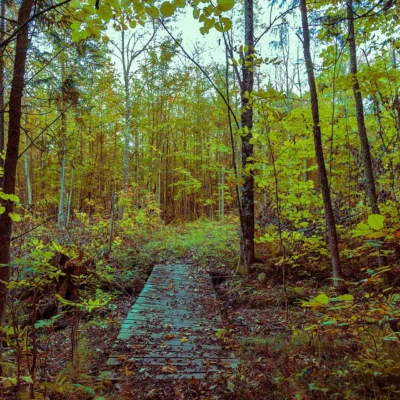
Beyond the main boardwalk, a rougher hiking trail climbs along either side of the river gorge to the top of the falls. This loop—approximately one mile in total—allows visitors to observe the cascading river from above and to explore the series of smaller, scenic rapids and cascades that exist upstream of the main drop. The upper trail is not paved and can be muddy and uneven, requiring sturdy footwear. However, the elevated perspective it offers—looking down the full length of the braided cascade—is considered by many to be even more dramatic than the view from the base deck.
Bond Falls Through the Seasons
Spring (April–May)
The spring snowmelt unleashes enormous volumes of water, and Bond Falls becomes a roaring, full-width powerhouse. The sheer force of the water obliterates the individual channels, transforming the cascade into a single, massive curtain of white. Spring is the most dramatic season for sheer power, but the boardwalks can be wet, slippery, and occasionally partially flooded. Bug pressure (blackflies and mosquitoes) increases rapidly as temperatures warm.
Summer (June–August)
The most popular time to visit. Water flow is moderate, revealing the intricate braided pattern of individual channels that makes Bond Falls so photogenic. The surrounding forest is deep green, temperatures are comfortable, and all facilities are fully operational. Weekends can be quite busy; arriving before 9 AM is strongly recommended to secure parking and enjoy the falls in relative solitude.
Autumn (September–October)
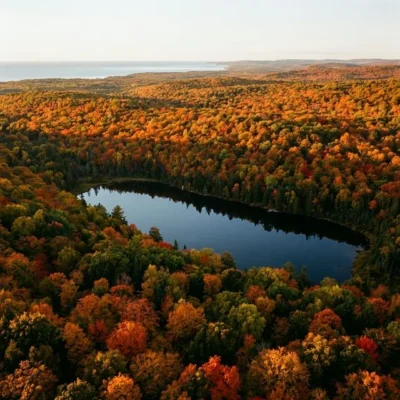
Bond Falls during peak fall color is considered one of the premier natural spectacles in the Upper Midwest. The surrounding forest—dominated by sugar maple, yellow birch, and aspen—erupts into brilliant crimson, gold, and orange. The contrast between the white cascade and the blazing autumn canopy is extraordinary. Peak color typically occurs between the last week of September and the second week of October, depending on temperature and rainfall patterns. Expect the site to be extremely busy during this period, particularly on weekends.
Winter (December–March)
Bond Falls partially freezes in winter, creating dramatic ice formations along the rock face. Snowshoe and cross-country ski access is possible but challenging; the parking areas may not be fully plowed, and the boardwalk is not maintained for winter use. The frozen cascade is hauntingly beautiful, but visitors must exercise extreme caution as the boardwalk and trail surfaces will be coated in ice.
Bond Falls Flowage Campground
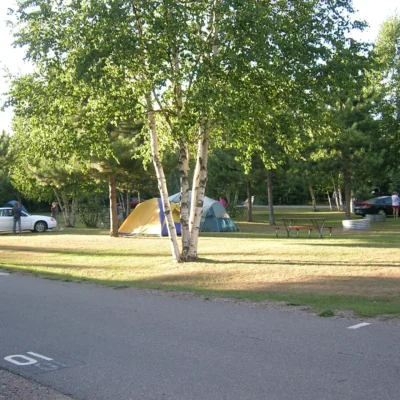
One of the hidden gems associated with Bond Falls is the free campground located at the Bond Falls Flowage, near the dam upstream of the falls.
- Sites: 26 rustic, first-come-first-served campsites
- Cost: Free (no reservation, no fees)
- Amenities: Vault toilets, fire rings, picnic tables. No electricity, no running water, no dump station.
- Setting: Sites are spread along the wooded shoreline of the flowage, offering a quiet, secluded lakeside camping experience far from any developed facilities.
- Fishing: The flowage itself is a productive warm-water fishery supporting walleye, northern pike, smallmouth bass, and panfish.
Because the campground is free and unmanaged, it operates entirely on an honor system. Campers must pack out all trash without exception. During peak autumn weekends, sites can fill early; arriving on a Thursday or Friday morning is advisable to secure a spot.
Fishing the Ontonagon River
The middle branch of the Ontonagon River, both above and below Bond Falls, is a seriously underrated fishery. The cold, well-oxygenated water below the falls supports populations of brook trout and brown trout in the river’s upper reaches, while the slower, deeper pools farther downstream hold smallmouth bass, walleye, and the occasional muskie. The Bond Falls Flowage above the dam is a popular destination for boat anglers targeting walleye and northern pike, particularly in the spring and fall. A Michigan fishing license with a valid trout stamp (if targeting trout) is required.
Practical Visitor Information
Getting There
Bond Falls is located approximately 4 miles east of U.S. Highway 45, south of the small community of Paulding. From US-45, follow Bond Falls Road east. The turnoff is well-signed. There are two parking areas: a lower lot near the base of the falls (requires a Michigan Recreation Passport or daily vehicle pass) and an upper lot near the top of the cascade (no pass required). The lower lot fills quickly during peak season.
Michigan Recreation Passport
A Michigan Recreation Passport ($15 for Michigan residents, $42 for non-residents as of recent pricing) or a daily pass is required for vehicles parking in the lower lot. This passport also grants access to all Michigan state parks, recreation areas, and state forest campgrounds for the calendar year. It can be purchased at the time of vehicle registration or at any state park entrance.
Facilities
The lower trailhead features a picnic area with grills and tables, vault restrooms, and informational signage. There are no concession stands, gift shops, or potable water sources at the site. Bring all food, water, and supplies with you.
Frequently Asked Questions
Is Bond Falls a natural waterfall? Bond Falls is a natural geological feature—the rock formation and the cascade have existed for thousands of years. However, its water flow is significantly influenced by the upstream Bond Falls Dam, which is operated by the Upper Peninsula Power Company for hydroelectric generation. The dam controls how much water is released into the river, which directly affects the volume and visual impact of the falls at any given time.
Is the boardwalk wheelchair accessible? Yes. The main boardwalk from the lower parking area to the primary viewing deck at the base of the falls is accessible and features a gentle grade, non-slip surfaces, and sturdy railings. The upper loop trail, however, is not accessible and involves uneven, unpaved terrain.
When is the best time for fall color photography? Peak fall color at Bond Falls typically occurs between the last week of September and the second week of October. The exact timing varies annually depending on nighttime temperatures and rainfall. For the most current foliage reports, check the Michigan DNR or Travel Michigan’s official fall color tracker.
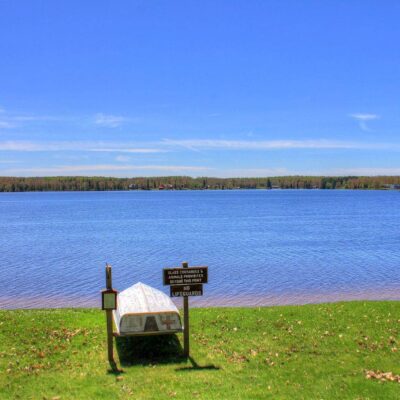
Can I swim at the base of Bond Falls? Swimming is strongly discouraged and potentially dangerous. The currents at the base of the falls are powerful and unpredictable, submerged rocks create serious hazards, and the water temperature—even in summer—is extremely cold. There is no lifeguard or rescue equipment on site.
Is the free campground really free? Yes. The Bond Falls Flowage Campground is operated as a free, rustic, first-come-first-served facility. There is no registration, no reservation system, and no fees. The tradeoff is that there are no amenities beyond vault toilets, fire rings, and picnic tables. Campers are expected to practice strict Leave No Trace principles.
Wildlife & Nature
Bond Falls — one of Michigan’s most spectacular waterfalls — cascades 50 feet over a wide volcanic rock ledge on the Middle Branch of the Ontonagon River. The boardwalk and stairway system provides multiple viewing angles of the falls. Brook trout inhabit the pools below. Bald eagles fish the river. Black bears forage the surrounding forest.
Nearby Attractions
Agate Falls — 15 miles west — has the 40-foot companion waterfall. Porcupine Mountains Wilderness SP — 45 miles west. Watersmeet — 15 miles south — has the Sylvania Wilderness. Ottawa National Forest — surrounding.
Make it a road trip: Pair a visit with Lake Gogebic State Park (within about an hour’s drive) or Twin Lakes State Park (within about an hour’s drive).

🐾 Dogs & Pets at Bond Falls Scenic Site
- Pets allowed? statewide rule
- Pets are welcome in Michigan state parks, campgrounds, harbors and state-designated trails, except designated swim beaches and other posted areas.
- Leash rule statewide rule
- Pets must always be on a 6-foot leash and under the owner's immediate control.
- Beaches & swim areas statewide rule
- Pets are prohibited in buoyed swim areas but allowed along the shoreline outside them (on a 6-ft leash, even in the water); 50+ parks have pet-friendly shoreline or designated dog beaches.
- Cabins & lodging statewide rule
- Up to two pets (cats and dogs only) allowed at ~12 parks' designated pet-friendly cabins, yurts and lodges; $10 per night per pet (cabins) or $15 (lodges); otherwise pets barred from overnight lodging.
- Pet fees statewide rule
- No day-use pet fee; pet-friendly lodging costs $10/night per pet (cabins) or $15/night per pet (lodges).
- Statewide exceptions statewide rule
- Leash laws do not apply to dogs used for hunting on land open to such use; pets may not be left unattended.
Are dogs allowed at Bond Falls Scenic Site?
Pets are welcome in Michigan state parks, campgrounds, harbors and state-designated trails, except designated swim beaches and other posted areas. Individual parks can post stricter rules — check signage on arrival.
Rules verified July 2026 via michigan.gov. More: Michigan state parks guide · Dog rules in all 50 states compared
Park Location
Plan your gear for Bond Falls Scenic Site
From our editorial guides, matched to this park’s activities: