
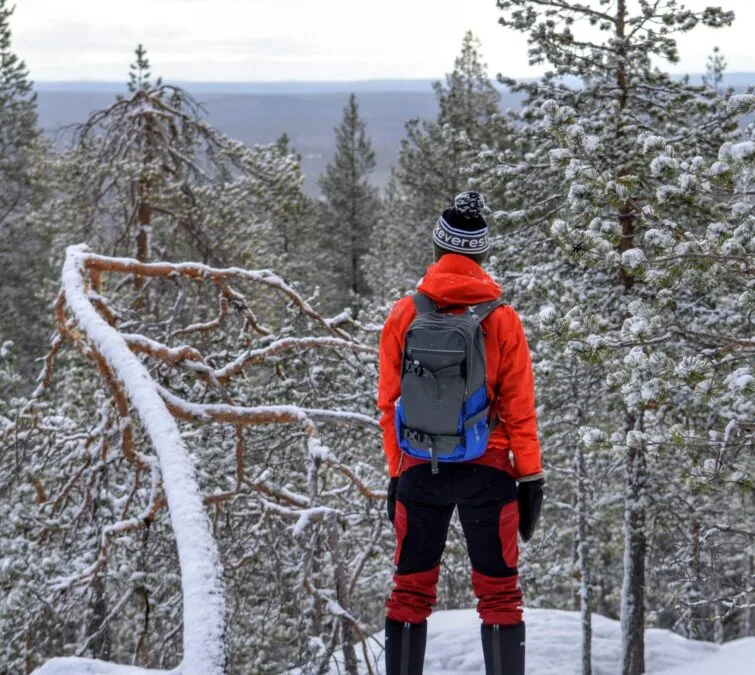
A backpacking thermometer is one of those tiny pieces of gear that punches far above its weight. Knowing the real air temperature — and, when the wind picks up above the treeline, the wind-chill temperature — helps you layer correctly, judge whether water will freeze overnight, and make smart calls on exposed trail. The good news: the best options weigh almost nothing and cost less than a trailhead sandwich.
Below we compare five picks, split into two honest categories: simple trail thermometers that clip to a zipper and just work, and multifunction weather meters that also read wind speed, pressure or altitude for those who want more data. Prices change constantly on Amazon, so rather than quote a stale number we link you straight to the current price on each product.
Disclosure: America’s State Parks is reader-supported. If you buy through our links we may earn a small commission at no extra cost to you — see our affiliate disclosure and editorial review methodology. Manufacturer specifications cited below were verified in July 2026.
How to choose a backpacking thermometer
The right pick depends on how much data you want to carry. Weigh these four factors:
- Accuracy & readability in changing outdoor temperatures — a clear dial or backlit screen you can read with cold hands.
- Packed weight & attachment — a zipper-pull or carabiner thermometer adds well under an ounce; a handheld meter adds a few ounces but does far more.
- Durability against rain, dust, and drops on repeated trail use.
- Wind-chill capability — above the treeline the “feels-like” temperature matters more than the raw reading. Simple thermometers print a wind-chill chart; digital meters calculate it live from measured wind speed.
Before you buy: match the pick to your trip type, expected weather, and how far you have to carry it. See our backpacking planning guide and state park packing lists for the full kit.
Backpacking thermometer comparison
| Model | Type | Temp range | Wind speed? | Best for |
|---|---|---|---|---|
| Sun Company Zip-o-gage (Top Pick) | Zipper-pull thermometer | to −20°F / −30°C | Chart on back | Ultralight everyday carry |
| Sun Company TempaComp | Thermometer + ball compass | to −20°F / −30°C | No | Thermometer + basic navigation |
| HoldPeak 866B | Handheld anemometer | temp + wind chill | Yes — 0.67–67 mph | Live wind chill above treeline |
| BTMETER BT-100 | Handheld anemometer | 14°F–113°F | Yes — 0.67–67 mph | Durable wind + temp meter |
| SUNDERPOWER 8-in-1 | Baro/altimeter + thermometer | Digital readout | No | Weather forecasting + altitude |
Temperature ranges and wind-speed ranges are manufacturer specifications. Availability and price vary — tap any model to see the current Amazon listing.
Sun Company Zip-o-gage
For a pure backpacking thermometer, the Zip-o-gage is our top pick — and it has been the trusted zipper-pull standard since 1971. It reads down to −20°F, prints a wind-chill chart on the back, weighs almost nothing, and is still assembled in Denver, Colorado. At around the price of a coffee, there is no reason not to clip one to your pack.
Simple trail thermometers
If all you want is an accurate temperature reading with zero batteries and zero fuss, start here. Both of these clip on and are effectively “set and forget.”

Sun Company Original Zip-o-gage – Zipper-Pull Thermometer
An American classic since 1971. The cushion-mounted dial reads down to a genuinely cold −20°F / −30°C, and the back carries a wind-chill chart so you can estimate the “feels-like” temperature once you know the wind speed. It clips to a zipper, pack, or keyring on a nickel-plated split ring and is designed and assembled in Denver, Colorado.
- Ultralight, packs anywhere
- Reads to −20°F / −30°C
- Wind-chill chart on the back
- USA-made, decades of trust
- You must already know wind speed to use the chart
- Analog only (no backlight)
Specs: Zipper-pull dial thermometer · range to −20°F / −30°C · split-ring attachment · cushion-mounted for impact resistance.

Sun Company TempaComp – Thermometer + Ball Compass Carabiner
The same dependable low-tech thermometer (also to −20°F) paired with a ball compass and a carabiner clip. It is a smart backup even if you carry a digital meter: no batteries to die, and the compass gives you a rough bearing when it is overcast and you have lost the sun.
- Thermometer + compass in one
- Carabiner clips straight to a pack
- No batteries, always works
- Great redundant backup
- No wind-chill or wind-speed data
- Ball compass is approximate, not for fine navigation
Specs: Cushion-mounted thermometer to −20°F / −30°C · ball compass · carabiner + split ring.
Multifunction weather meters (temperature + wind)
These are handheld anemometers and weather meters — they measure temperature and live wind speed (or pressure and altitude), so they can calculate real-time wind chill instead of making you read it off a chart. They weigh a few ounces more and need batteries, but above the treeline that live wind-chill number is genuinely useful. Just know what you are buying: these are wind/weather instruments that happen to include a thermometer, not the other way around.

HoldPeak 866B Digital Anemometer
A compact handheld that measures wind speed (0.67–67 mph), temperature, and live wind chill on a backlit screen, with max/average/current readings and auto power-off to save the battery. It ships with a carry pouch and is the most trail-friendly of the anemometers here.
- Live wind chill from measured wind
- Backlit screen, max/avg/current
- Auto power-off saves battery
- Comes with carry pouch
- Smaller screen than some rivals
- Needs batteries; heavier than a dial
Specs: Wind speed 0.67–67.1 mph (±2%) in 5 units · wind temperature in °C/°F · backlit LCD · tripod hole + hand strap · 2×AAA included.

BTMETER BT-100 Handheld Anemometer
A rugged wind + temperature meter with a large, easy-to-read backlit LCD and a simple button interface. Wind temperature range runs 14°F–113°F and wind speed to 67 mph, with a tripod thread if you want hands-free readings at camp. Heavier than a dial thermometer, but versatile across hiking, hunting, and boating.
- Large backlit LCD, easy buttons
- Wind speed + temp + wind chill
- Tripod hole for hands-free use
- Durable multi-activity build
- Heaviest option here
- Overkill if you only want temperature
Specs: Wind speed 0.67–67.1 mph (±2%) · wind temp 14°F–113°F · 5 speed units · backlit LCD · tripod thread · 2×AAA included.

SUNDERPOWER 8-in-1 Barometer / Altimeter / Thermometer
If you want weather forecasting and altitude rather than wind speed, this pocket unit combines a thermometer, barometer, altimeter, digital compass, and a simple forecast icon on a large LCD. Knowing whether pressure is dropping — a storm signal — is arguably more useful for trip planning than raw wind speed.
- Barometer + altimeter + compass
- Simple weather forecast readout
- Large screen, small footprint
- Rubberized buttons, easy to hold
- No wind-speed measurement
- More features means a small learning curve
Specs: 8-in-1 digital unit: thermometer, barometer, altimeter, compass, clock/calendar, weather forecast · large LCD.
Thermometer or weather meter: which do you need?
Most backpackers are genuinely well served by a simple dial thermometer like the Zip-o-gage — it is lighter, cheaper, and never runs out of battery. Reach for a handheld weather meter if you regularly hike exposed, above-treeline terrain where live wind chill changes your safety margin, or if you like forecasting weather from pressure trends. Many experienced hikers carry both: a digital meter for data and a dial thermometer as a no-battery backup.
How wind speed affects temperature
Under tree cover you rarely feel the wind, so the raw temperature is close to what you experience. Step onto an exposed ridge with a loaded pack and wind chill can make it feel 15–25°F colder than the thermometer reads — which is exactly why the simple thermometers print a wind-chill chart and the digital meters calculate it live. Here is a short explainer:
Frequently asked questions
Do I really need a thermometer for backpacking?
It is not survival-critical gear, but it is one of the cheapest, lightest ways to make better decisions on trail — when to add a layer, whether water or a tent fly will freeze overnight, and how cold it truly is versus how cold it feels. A zipper-pull model adds well under an ounce.
What is the difference between a thermometer and an anemometer?
A thermometer measures air temperature only. An anemometer measures wind speed and usually temperature too, letting it calculate live wind chill. Several picks on this page are anemometers — we have labeled them clearly so you know what you are buying.
How accurate are zipper-pull thermometers?
Dial thermometers like the Sun Company models are accurate enough for trip decisions once they have had a few minutes to adjust to the air. Keep the thermometer out of direct sun and off your warm body for the truest reading.
Will these work in freezing temperatures?
Yes. The Sun Company Zip-o-gage and TempaComp both read down to −20°F / −30°C. Digital meters operate in the cold too, though battery life drops — keep the unit in an inner pocket between readings.
Reviewed and updated July 2026 by the America’s State Parks Editorial Team. Specifications are drawn from current manufacturer listings; prices and availability change, so always confirm details on Amazon before buying. See our review methodology and affiliate disclosure.