
🌤 Weather at Camel’s Hump State Park by season
| Spring | Summer | Fall | Winter |
|---|---|---|---|
| 16–57 °F | 50–69 °F | 23–61 °F | 6–27 °F |
Each range runs from the coldest monthly average low to the warmest monthly average high in that season (1991-2020 climate normals), measured at Mount Mansfield, 15 mi away, elevation 3,950 ft. Conditions at the park can differ from the station, especially where elevation differs — check a forecast before you go.

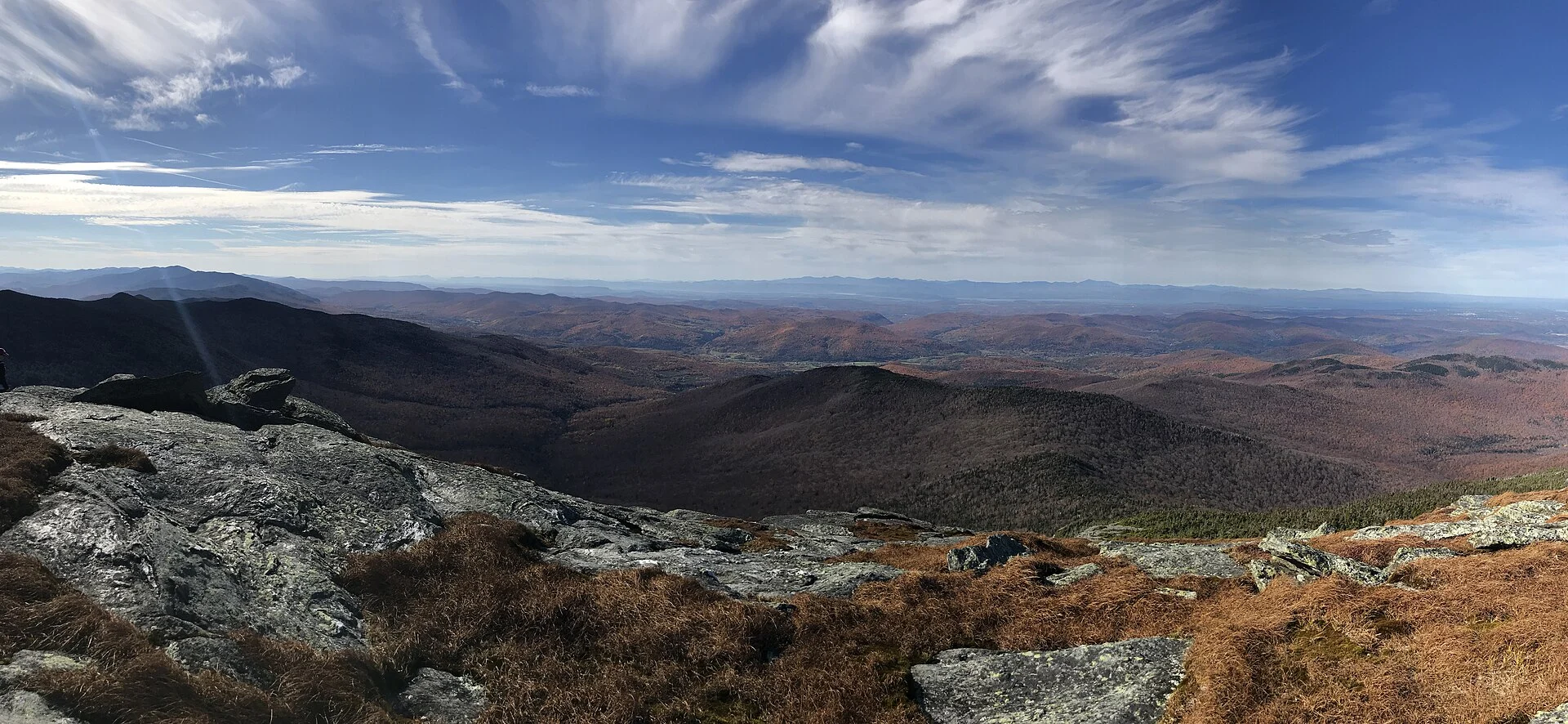
Rising to 4,083 feet with its unmistakable twin-humped summit, Camel’s Hump is Vermont’s most iconic mountain — and the state’s highest undeveloped peak. The summit hosts one of only three alpine tundra communities in Vermont, a fragile 10-acre ecosystem where rare arctic plants have survived since the last Ice Age. Camel’s Hump State Park protects over 21,000 acres of wild forest, making it the largest undeveloped state park in Vermont.
Why Camel’s Hump Stands Out
While Vermont offers many excellent hiking destinations, Camel’s Hump is special: it’s the only undeveloped summit above 4,000 feet in the state, and its exposed alpine zone feels more like northern Labrador than New England. The summit panorama stretches from the Adirondacks across Lake Champlain to the White Mountains — and on exceptional days, all the way to Mount Royal in Montreal. The mountain is also bisected by Vermont’s legendary Long Trail, which runs 273 miles along the Green Mountain spine.
Hiking Trails
| Trail | Distance (one way) | Difficulty | Notes |
|---|---|---|---|
| Burrows Trail | 2.1 miles | Moderate | Most popular summit route, starts from Huntington side |
| Monroe Trail | 3.1 miles | Moderate | Eastern approach, steady climb through hardwood forest |
| Long Trail | 18.7 miles (through park) | Difficult | Vermont’s iconic thru-trail crosses the summit |
| Forest City Trail | 2.2 miles | Moderate | Quieter route along Brush Brook |
| Alpine Trail | 1.7 miles | Difficult | Alternate summit approach, exposed conditions |
| Camel’s Hump View Trail | 0.8 miles | Easy (Accessible) | Universally accessible, views of Camel’s Hump |
Insider Tip: The Burrows Trail is the fastest summit route but gets extremely crowded on nice weekends — arrive before 8 AM to secure parking. The Monroe Trail is slightly longer but offers a more solitary experience. Popular loop options include Burrows + Forest City (6.7 miles) and Monroe + Dean Trail (6.1 miles). In winter, Camel’s Hump is excellent for snowshoeing and backcountry skiing.
The Alpine Tundra
The summit of Camel’s Hump supports a rare 10-acre alpine tundra ecosystem — the second-largest in Vermont. Arctic-alpine plants like Bigelow’s sedge, alpine bilberry, and mountain sandwort survive here in conditions of extreme wind, cold, thin soil, and intense UV exposure. These plant communities have persisted since the last glacial period, roughly 12,000 years ago.
Please stay on marked trails above treeline. A single footstep can destroy decades of growth in these fragile communities. Summit stewards are present during peak seasons to educate hikers and protect the tundra.
Camping & Shelters
Camel’s Hump State Park is an undeveloped park — there are no visitor facilities, campground offices, or phone service. Primitive camping is permitted at designated sites including the Hump Brook Tenting Area and Green Mountain Club shelters and lodges along the Long Trail. GMC caretakers supervise shelters from May through October on a first-come, first-served basis, with a nominal fee and a two-night maximum stay. Open fires are allowed only in designated fire rings.
For developed campgrounds, nearby Little River State Park offers full-service sites within a short drive.
Seasonal Guide
| Season | Experience | Important Notes |
|---|---|---|
| Summer (Jun–Aug) | Summit hiking, alpine wildflowers, summit stewards present | Arrive early on weekends for parking |
| Fall (Sep–Oct) | Spectacular foliage, crisp temperatures, fewer bugs | Peak foliage typically late September |
| Winter (Dec–Mar) | Snowshoeing, backcountry skiing, ice-coated summits | Full winter gear required, trails unmarked above treeline |
| Spring (Apr–May) | Mud Season — trails CLOSED | Avoid trails to prevent erosion; typically closed until Memorial Day |
Visitor Essentials
| Detail | Info |
|---|---|
| Elevation | 4,083 feet (1,244 m) |
| Park Size | 21,000+ acres |
| Admission | Free |
| Facilities | None — no phone, no visitor center, no potable water |
| Dogs | Allowed on leash (keep off alpine tundra) |
| Group Permit | Required for groups of 10+ or commercial events |
Frequently Asked Questions
How hard is the hike to the summit?
The Burrows Trail (shortest route) covers 2.1 miles one way with about 2,200 feet of elevation gain — moderately challenging for fit hikers. Allow 3–5 hours for a round trip. The final stretch is rocky and exposed, with conditions that can change rapidly even in summer.
Why are trails closed in spring?
Vermont’s “mud season” (roughly early April through Memorial Day) leaves high-elevation trails saturated and extremely vulnerable to erosion. Hiking during this period causes significant trail damage that takes years to repair. The Vermont Department of Forests, Parks and Recreation closes trails until conditions stabilize.
Can you camp at Camel’s Hump?
Yes — primitive camping is allowed at designated sites including the Hump Brook Tenting Area and Green Mountain Club shelters along the Long Trail. There are no developed campgrounds within the park. Nearby Little River State Park offers full-service camping.
Explore More Vermont State Parks
Camels Hump State Park is one of many outstanding state parks in Vermont. Discover more parks in our Best State Parks in Vermont guide, or use our Park Finder to search by activity, location, or features.
Wildlife & Nature
Camels Hump SP — encompasses Vermont’s third-highest peak (4,083 feet) and one of only three peaks in Vermont with alpine tundra above the treeline. The fragile arctic-alpine vegetation — surviving since the last Ice Age — includes Bigelow’s sedge and diapensia. Bicknell’s thrush (one of the rarest songbirds in North America) nests in the high-elevation spruce-fir forest. Black bears and moose roam below.
Nearby Attractions
Huntington — access town. Burlington — 20 miles northwest — has Church Street Marketplace and Lake Champlain waterfront. Waterbury — 10 miles east — has Ben & Jerry’s factory and Cold Hollow Cider Mill. Stowe — 20 miles northeast — has skiing.
Make it a road trip: Pair a visit with Little River State Park (a short drive away).
Camping reservations: Book campsites and cabins for Vermont state parks online at vtstateparks-visit.com.

🐾 Dogs & Pets at Camel’s Hump State Park
- Pets allowed? statewide rule
- Pets are allowed at all Vermont State Parks campgrounds and on trails unless otherwise posted, but are not permitted on beaches or in most picnic areas.
- Leash rule statewide rule
- Leash shorter than 10 ft required (or pet safely confined) at all times
- Beaches & swim areas statewide rule
- Pets are not permitted on beaches; limited exceptions let pets use the far side of the beach away from swim areas at Branbury, Lake Shaftsbury and Silver Lake
- Cabins & lodging statewide rule
- Pets are permitted in designated pet-friendly cabins only (full list on the Vermont State Parks cabins page); cottages do not allow pets
- Statewide exceptions statewide rule
- Pets allowed in picnic areas at Allis, Camp Plymouth, Elmore, Kill Kare, Knight Point, Lake Shaftsbury, Mt. Philo, Osmore Pond and Owl's Head; at Camp Plymouth pets may swim only at the cartop boat launch; current rabies vaccination expected
Are dogs allowed at Camel’s Hump State Park?
Pets are allowed at all Vermont State Parks campgrounds and on trails unless otherwise posted, but are not permitted on beaches or in most picnic areas. Individual parks can post stricter rules — check signage on arrival.
Rules verified July 2026 via vtstateparks.com. More: Vermont state parks guide · Dog rules in all 50 states compared
Park Map
Plan your gear for Camel’s Hump State Park
From our editorial guides, matched to this park’s activities:
Top Tours & Activities Near Stowe
 from $359
 from $359
 from $20