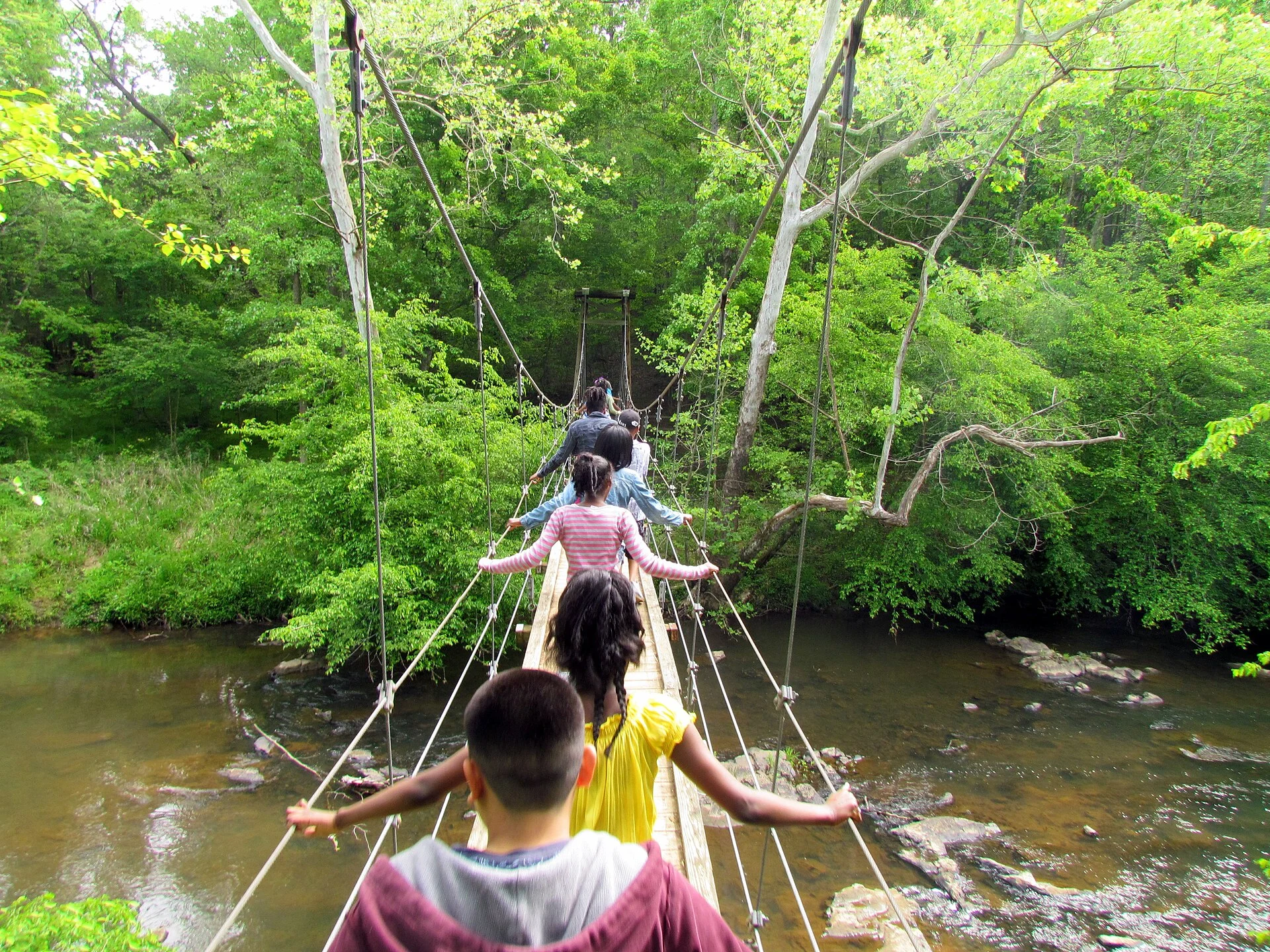
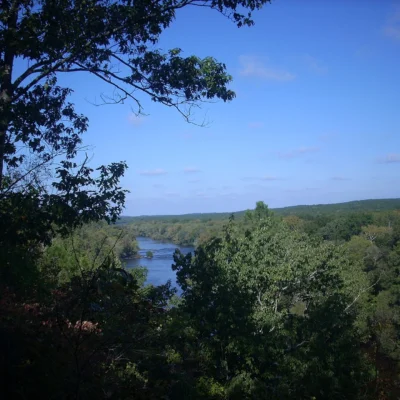
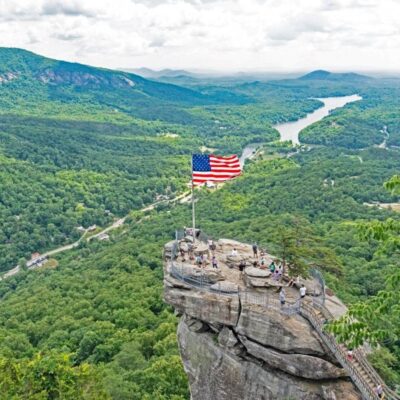
Photo: bobistraveling, CC BY 2.0, via Wikimedia Commons
🌤 Weather at Eno River State Park by season
| Spring | Summer | Fall | Winter |
|---|---|---|---|
| 37–77 °F | 64–87 °F | 37–79 °F | 28–52 °F |
Each range runs from the coldest monthly average low to the warmest monthly average high in that season (1991-2020 climate normals), measured at Durham, 3 mi away, elevation 400 ft. Conditions at the park can differ from the station, especially where elevation differs — check a forecast before you go.

Eno River State Park is a 4,319-acre urban wilderness just 10 miles from downtown Durham, North Carolina — a green corridor where nearly 30 miles of hiking trails wind along a free-flowing Piedmont river through forests that were saved from a dam project by passionate local conservationists in the 1960s. With backcountry camping, paddling, historic mill ruins, and geological features dating back 600 million years to ancient volcanic activity, Eno River is proof that world-class nature awaits even near a city.
Quick Facts at a Glance
| Location | Durham & Orange Counties, NC (10 mi from downtown Durham) |
| Park Size | 4,319 acres |
| Trails | Nearly 30 miles |
| Camping | Primitive backcountry only (hike-in, 0.5–1.2 mi) |
| Key River | Eno River (canoeing/kayaking when water level permits) |
| Access Areas | 5 (Fews Ford, Cole Mill, Cabelands, Pump Station, Pleasant Green) |
| Fee | Free entry |
| Nearest City | Durham, NC |
History: How Citizens Saved the Eno
In the 1960s, Durham planned to dam the Eno River for a new water supply. Local residents, led by the indomitable Margaret Nygard, organized what became the Eno River Association — a citizen conservation movement that ultimately convinced Durham to abandon the dam project. The state of North Carolina then acquired the land, establishing Eno River State Park and preserving one of the Piedmont’s last free-flowing rivers.
The park also preserves historic mill sites, ancient fording points used by early settlers, and the stone ruins of Durham’s first water pumping station — visible on the Pump Station Trail.
600 Million Years of Geology
The Eno River area holds some of the East Coast’s best-preserved evidence of ancient volcanism. Over 600 million years ago, this region was part of a volcanic island arc — the rocks along the river tell a geological story stretching back to before complex life existed on Earth.
Trails & Hiking (30 Miles)
| Trail | Distance | Difficulty | Highlights |
| Cox Mountain Trail | 3.75 mi loop | Moderate-Strenuous | Ridge-top views, most popular trail |
| Laurel Bluffs Trail | 2.5 mi (one way) | Moderate | Scenic river walking, bluff views |
| Eno Quarry Trail | 0.8 mi loop | Easy | Secluded quarry pond — hidden gem |
| Pump Station Trail | 1.5 mi loop | Easy-Moderate | Historic stone ruins of 1st pumping station |
| Fanny’s Ford Trail | 1.0+ mi | Easy | Peaceful riverside walk |
| Eno Trace Trail | 0.5 mi loop | Easy | Interpretive panels, river views |
| Holden Mill Trail | Varies | Moderate | Historic mill ruins |
| Buckquarter Creek Trail | Varies | Moderate | Creek crossings, forest solitude |
Canoeing & Kayaking
The Eno River offers paddling opportunities, though its often shallow water levels can be challenging. Flatwater paddling works in sections with adequate water; whitewater conditions appear after significant rainfall in winter and spring. Check USGS gauge readings before planning a paddle trip. Bring your own equipment — the park does not offer rentals or shuttle services.
Primitive Backcountry Camping
Eno River offers a true hike-in camping experience — all sites require carrying your gear 0.5 to 1.2 miles from parking. Sites include gravel tent pads, picnic tables, and fire pits. No potable water at campsites — carry your own.
- Fanny’s Ford Campground — individual/small group sites
- Piper Creek Campground — individual/small group sites
- Cox Mountain Group Camp — larger groups
- Buckquarter Creek Group Camp — larger groups
Reservations required — book up to 6 months in advance through North Carolina State Parks.
Wildlife
- River Otter — increasingly common along the Eno
- Great Blue Heron — wading in shallow river stretches
- Belted Kingfisher — diving for fish from overhanging branches
- Wood Duck — nesting in tree cavities along the riverbank
- White-tailed Deer — common throughout forested trails
- Box Turtle — frequently spotted crossing trails in summer
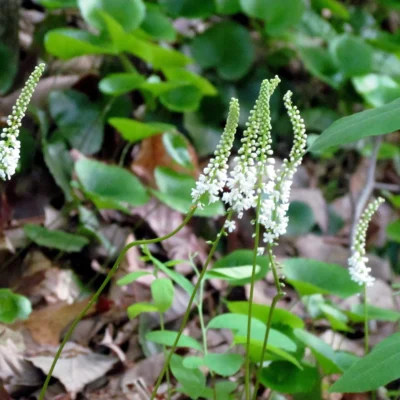
- Spring wildflowers — trillium, bloodroot, and dogwood in April
How to Get There
- From downtown Durham (10 min): Multiple access points via I-85 exits to local roads.
- From Raleigh (40 min): I-40 West to I-85 North to Cole Mill or Fews Ford access.
- From Chapel Hill (20 min): US-86 North to Pleasant Green access area.
Insider Tips
- Cox Mountain Trail is the must-do hike — the 3.75-mile loop delivers the best views and workout
- The Eno Quarry Trail is a hidden gem — a secluded pond perfect for quiet reflection
- Visit in April for peak wildflowers — bloodroot, trillium, and dogwood light up the forest floor
- Backcountry camping fills fast in spring and fall — book 6 months ahead
- Attend the annual Festival for the Eno — July 4th weekend, celebrating the river with music, food, and crafts
- Bring your own water for camping — there’s no potable water at the backcountry sites
- Check USGS gauge readings before paddling — the Eno is often too shallow
Best Time to Visit
| Season | Conditions | Best For |
| Spring (Mar–May) | Mild (60–80°F), wildflowers, good water levels | Hiking, wildflowers, paddling |
| Summer (Jun–Aug) | Hot & humid (85–95°F), low water | Shaded hiking, backcountry camping |
| Fall (Sep–Nov) | Cool (50–75°F), fall colors | Hiking (best season), camping |
| Winter (Dec–Feb) | Cool-cold (35–55°F), leafless trees reveal geology | Geology walks, winter paddling (after rain) |
Frequently Asked Questions
Is there camping at Eno River State Park?
Yes, but it’s primitive backcountry camping only. All sites require hiking in your gear (0.5–1.2 miles). You must bring your own water. Reservations required up to 6 months in advance.
Can I canoe the Eno River?
Yes, but water levels are often too shallow. Check USGS gauge readings before you go. Best conditions are after winter/spring rains. Bring your own equipment — no rentals available.
Is the park free?
Yes — Eno River State Park has no entrance fee. Camping fees apply for overnight stays.
Explore More North Carolina State Parks
Discover more in our Best State Parks in North Carolina guide, or use our Park Finder.
More parks nearby: Occoneechee Mountain State Natural Area is a short drive away, while Falls Lake State Recreation Area lies within about an hour’s drive.

🐾 Dogs & Pets at Eno River State Park
Park policy: Eno River explicitly allows pets at the park and at its campsites, so you do not need to clear campground access with the office first the way the statewide rule suggests. All camping here is backpack-in tent and group sites at Fews Ford and Cole Mill. Buildings such as the Fews Ford visitor center remain closed to pets.
- Pets allowed?
- Pets allowed park-wide and at the campsites, but not inside buildings
- Leash rule statewide rule
- Attended leash or other restraint no longer than 6 feet required at all times
- Beaches & swim areas statewide rule
- Pets are not permitted at swim areas or in bathhouses
- Cabins & lodging statewide rule
- Pets are strictly prohibited from entering any building, including cabins; no pet-friendly cabin program
- Statewide exceptions statewide rule
- Not all campgrounds allow pets (contact the park office first); pets must be confined to tent or vehicle during quiet hours (10 p.m.-7 a.m.); at Hammocks Beach visitors must arrange their own transportation for pets to Bear Island
Are dogs allowed at Eno River State Park?
Pets allowed park-wide and at the campsites, but not inside buildings.
Beyond that, North Carolina’s statewide rules apply.
Rules verified July 2026 via ncparks.gov. More: North Carolina state parks guide · Dog rules in all 50 states compared
Park Map
Plan your gear for Eno River State Park
From our editorial guides, matched to this park’s activities:
Top Tours & Activities Near North Carolina
 from $41
 from $155
 from $69