🌤 Weather at First Peoples Buffalo Jump State Park by season
| Spring | Summer | Fall | Winter |
|---|---|---|---|
| 24–64 °F | 48–83 °F | 25–71 °F | 16–37 °F |
Each range runs from the coldest monthly average low to the warmest monthly average high in that season (1991-2020 climate normals), measured at Great Falls Wfo, 7 mi away, elevation 3,705 ft. Conditions at the park can differ from the station, especially where elevation differs — check a forecast before you go.

🏆 National Historic Landmark — One of the largest and most significant buffalo jumps in North America, preserving over 1,000 years of Native American hunting heritage
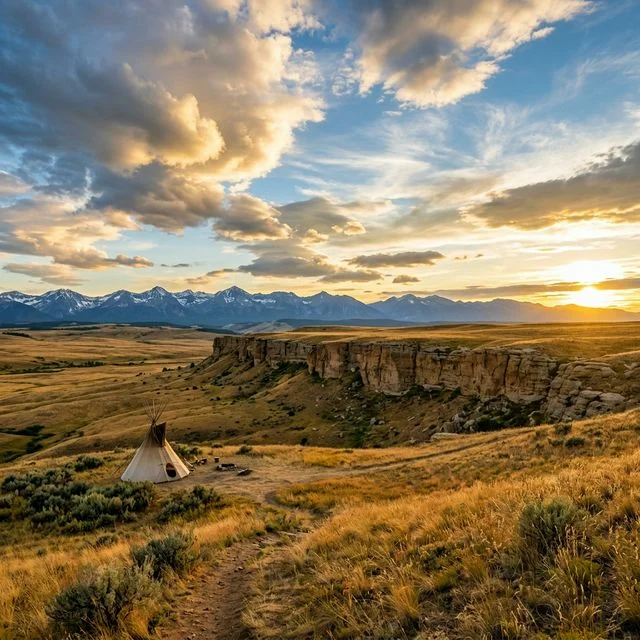
Stand at the edge of the sandstone cliff at First Peoples Buffalo Jump State Park and look down. Sixty feet below, the prairie stretches to the horizon in every direction — the Big Belt Mountains to the south, the Highwood Mountains to the east, and the vast sweep of grassland where herds of bison once moved by the tens of thousands. The wind that whips across this exposed bluff is the same wind that once carried the thunder of a thousand hooves toward this very precipice.
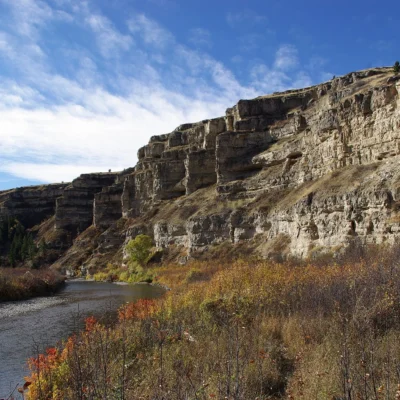
This is not just a cliff. It is a pishkun — a Blackfeet word meaning “deep blood kettle” — and it represents one of the most remarkable testaments to human ingenuity on the North American continent. For at least a thousand years before the arrival of horses or European settlers, Native American hunters used this mile-long sandstone escarpment to harvest bison in coordinated, community-wide drives that required extraordinary planning, courage, and ecological knowledge. The evidence is literally underfoot: up to 18 feet of compacted bison remains lie at the base of the cliff, layer upon layer of bone from centuries of hunts that sustained entire nations.
Located just 3.5 miles northwest of the small town of Ulm along Interstate 15, First Peoples Buffalo Jump State Park spans 1,481 acres of rolling Montana grassland. It features a world-class interpretive visitor center, several miles of trails that explore both the top and bottom of the jump, a thriving black-tailed prairie dog town, and some of the finest panoramic views in central Montana. Whether you’re a history enthusiast, a birder, a photographer, or simply someone who wants to stand where something profound happened, this park delivers an experience that stays with you long after you leave.
Table of Contents
History: The Buffalo Jump
The history of this site stretches back at least 1,000 years, though some archaeological evidence suggests use over a substantially longer period. The cliff — a mile-long sandstone escarpment — was used by multiple Native American tribes including the Blackfeet, Salish, and Kootenai as a communal buffalo jump, a method of bison hunting that was both spectacularly effective and deeply woven into the spiritual and social fabric of Plains culture.
The scale of operations here was staggering. Archaeological excavations at the base of the cliff have revealed up to 18 feet of compressed bison bone, hide, and organic material — the accumulated residue of hundreds of individual hunts conducted over centuries. Each successful drive could yield enough bison to feed an entire band for months. The meat was dried into jerky and pemmican for winter provisions, the hides were tanned for clothing and shelter, bones were fashioned into tools, and sinew was used for thread and bowstrings. Nothing was wasted.
In the early 20th century, the site faced threats from commercial mining operations that sought to extract the bone deposits for use as fertilizer. A local ranching family, the Vieths, purchased the land and protected it from development. In 1972, the site was officially designated as a Montana state park. It was listed on the National Register of Historic Places and later designated a National Historic Landmark, recognizing its significance to American history and Indigenous heritage.
How the Hunt Worked
Understanding the mechanics of a buffalo jump transforms the visit from “looking at a cliff” to comprehending a masterpiece of pre-industrial engineering. The process involved the entire community and could take days of preparation.
🦬 The Five Phases of a Buffalo Drive
1. Scouting: Scouts tracked the movements of bison herds across the plains, identifying groups that could be maneuvered toward the jump.
2. Drive Lines: Over days, hunters constructed “drive lines” — converging fences made of stacked rocks and twisted sage brush — that funneled the landscape into a narrowing V-shape pointing toward the cliff edge. Remnants of these drive lines are still visible in the park today.
3. The Runners: Young hunters called “buffalo runners” positioned themselves behind the herd. Their job was to slowly and quietly pressure the bison into moving between the drive lines — a terrifyingly dangerous task that required nerves of steel and intimate knowledge of bison behavior.
4. The Stampede: Once the herd entered the funnel, the runners would trigger a stampede by shouting, waving hides, and lighting fires. The panicked bison would surge toward the cliff, with animals in the rear pushing those in front over the edge.
5. Processing: Women, children, and elders waited at the base of the cliff to begin the enormous task of butchering and preserving the harvest — work that could take several days to complete.
Visitor Center & Exhibits
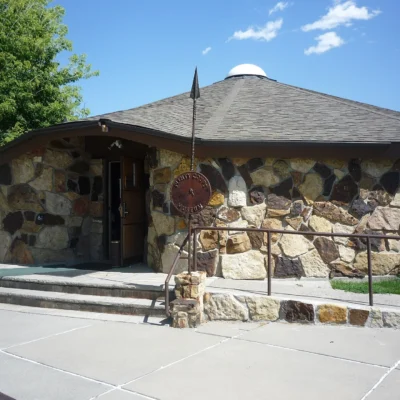
The 6,000-square-foot interpretive visitor center is far more than a trailhead building — it’s a genuine regional museum that justifies a visit to the park all on its own. Designed in collaboration with tribal representatives, the center presents the story of the buffalo jump through multiple lenses: archaeological, cultural, ecological, and spiritual.
| Feature | Description | Highlights |
|---|---|---|
| 🏛️ Main Exhibit Hall | Interactive displays on buffalo culture | Life-size dioramas, archaeological artifacts |
| 🔥 Storytelling Circle | Traditional gathering space | Tribal cultural presentations (seasonal) |
| 🎨 Art Gallery | Rotating exhibitions | Native American art and photography |
| 📚 Bookstore | Regional books and gifts | Excellent selection on Plains Indian history |
| 🎭 Amphitheater | Outdoor performance space | Summer programs and special events |
| 🏈 Traditional Games Field | Open playing areas | Demonstrations of traditional games |
Plan to spend at least 45 minutes to an hour in the visitor center before heading to the trails. The context you gain from the exhibits makes the outdoor experience dramatically more meaningful — you’ll notice features in the landscape (drive line remnants, processing areas, vision quest sites) that you would otherwise walk right past.
Trails & Hiking Guide
The park’s trail system allows you to experience both the top and bottom of the jump, plus several interpretive loops that explore the surrounding grassland ecosystem.
| Trail | Distance | Difficulty | Highlights |
|---|---|---|---|
| Cliff Base Trail | 0.8 miles | Easy | Base of the jump, bone layers visible in cliff face |
| Cliff Top Trail | 1.2 miles | Easy–Moderate | Panoramic views, drive line remnants, cliff edge |
| Prairie Dog Town Loop | 0.5 miles | Easy | Active colony, burrowing owls, ground squirrels |
| Interpretive Trail | 0.6 miles | Easy | Wayside exhibits explaining the hunt process |
| Grassland Loop | 2.0 miles | Moderate | Native grasses, wildflowers (June–July), solitude |
🥾 Trail Tips
• Don’t skip the cliff top: You can drive to the top parking area instead of hiking up. The panoramic views of the Missouri River valley, Rocky Mountain Front, and Highwood Mountains are spectacular — especially at sunset.
• Bring binoculars: Essential for the prairie dog town and for spotting raptors riding thermals along the cliff face.
• Sun protection is critical: There is virtually no shade on any trail. The Montana sun at this elevation (3,600+ feet) is intense, even in spring and fall.
• Respect the site: Do not collect rocks, bones, artifacts, or disturb any features along the cliff. This is an active archaeological site and a sacred space.
Wildlife Viewing
The park’s grassland ecosystem supports a surprisingly diverse community of wildlife. The star attraction is the black-tailed prairie dog town — a bustling colony of these charismatic rodents that provides constant entertainment and excellent photography opportunities.
| Species | When to See | Where | Notes |
|---|---|---|---|
| 🐾 Black-tailed Prairie Dogs | Apr–Oct (active day) | Prairie Dog Town Loop | Most active mornings, entertaining barking behavior |
| 🦅 Golden Eagles | Year-round | Soaring along cliff face | Often hunting for prairie dogs |
| 🦉 Burrowing Owls | May–Sep | Prairie dog town edges | Live in abandoned prairie dog burrows |
| 🐦 Cliff Swallows | May–Aug | Cliff face (massive colony) | Thousands of mud nests on the sandstone |
| 🦌 Mule Deer | Year-round | Grassland edges, morning/evening | Common, often near parking areas |
| 🐍 Bull Snakes | May–Sep | Rocky areas, trail edges | Non-venomous but large — harmless |
The cliff face itself hosts a massive cliff swallow colony during summer months — thousands of individuals build mud nests on the sandstone overhangs, creating a constant swirl of activity that is mesmerizing to watch. Bring binoculars and patience, and you’ll be rewarded with sightings that are hard to find elsewhere in central Montana.
Photography Guide
📸 Best Photo Opportunities
• Golden hour at the cliff top: The sandstone glows warm orange at sunset. Position yourself at the north end of the cliff top trail for the best light angle with the Highwood Mountains in the background.
• Prairie dog portraits: Bring a 70–200mm or longer lens. Sit quietly near the colony for 10 minutes and the prairie dogs will resume normal activity. Morning light is best — they’re very active after sunrise.
• Drive line remnants: Visible from the cliff top trail. Use a drone (check current FAA regulations) for an aerial perspective that reveals the converging V-shape pattern in the landscape.
• Big sky compositions: Montana’s legendary sky dominates here. Use the cliff edge or drive line rocks as foreground anchors for dramatic wide-angle sky shots, especially when thunderstorms build on the horizon.
• Cliff swallows: A fast shutter speed (1/2000+) with continuous autofocus captures the frenetic flight patterns against the buff sandstone.
Visitor Information
| Detail | Information |
|---|---|
| 📍 Address | 342 Ulm-Vaughn Road, Ulm, MT 59485 |
| 📞 Phone | (406) 866-2217 |
| 🕐 Summer Hours (Apr 14–Sep 15) | Daily 8:00 AM – 6:00 PM |
| 🕐 Winter Hours (Sep 16–Apr 13) | Wed–Sat 10:00 AM – 4:00 PM, Sun 12:00–4:00 PM |
| 💰 MT Residents | Free (covered by $9 annual vehicle registration fee) |
| 💰 Non-Residents | $8 per vehicle day use |
| 🅿️ Parking | Free (included with entrance) |
| 🏕️ Camping | Not available — day-use only |
Best Time to Visit
| Season | Weather | Crowds | Best For |
|---|---|---|---|
| 🌸 Spring (Apr–May) | 45–65°F, windy | Low | Wildflowers, spring migration, prairie dogs emerge |
| ☀️ Summer (Jun–Aug) | 75–95°F | Moderate | Full visitor center hours, all trails open, cliff swallows |
| 🍂 Fall (Sep–Oct) | 50–70°F | Low | Best photography light, comfortable hiking, golden grass |
| ❄️ Winter (Nov–Mar) | 15–35°F, snow | Very Low | Solitude, winter photography, reduced visitor center hours |
The ideal window is late September through mid-October — the summer heat has broken, the prairie grass turns golden, thunderheads build dramatic backdrops, and you’ll likely have the cliff top to yourself. Summer visitors should plan for early morning or late afternoon visits to avoid the midday heat, which can exceed 95°F with no shade on the trails.
Nearby Attractions
| Destination | Distance | Highlights |
|---|---|---|
| Giant Springs State Park | 17 miles | One of the largest freshwater springs in the U.S., fish hatchery |
| Great Falls of the Missouri | 15 miles | Lewis & Clark Interpretive Center, Ryan Dam |
| Gates of the Mountains Wilderness | 50 miles | Dramatic Missouri River canyon, boat tours |
| C.M. Russell Museum | 15 miles (Great Falls) | World-class Western art collection |
| Belt Creek Canyon | 25 miles | Scenic drive, Sluice Boxes State Park, fishing |
Budget Planner
| Expense | Individual | Family of 4 | Notes |
|---|---|---|---|
| Entrance (MT Resident) | Free | Free | Covered by annual registration |
| Entrance (Non-Resident) | $8/vehicle | $8/vehicle | Per vehicle, not per person |
| Bookstore/Gifts | $10–$25 | $15–$40 | Excellent book selection |
| Lunch in Ulm/Great Falls | $10–$20 | $30–$60 | No on-site food service |
| Total Estimated | $8–$55 | $8–$110 |
Safety Tips
| Hazard | Risk Level | Prevention |
|---|---|---|
| ☀️ Heat/Sun Exposure | High (summer) | No shade on trails — bring water, sunscreen, hat. Start early. |
| 🌩️ Lightning | Moderate (Jun–Aug) | Exposed cliff top is dangerous during thunderstorms. Descend immediately if storms approach. |
| 🐍 Rattlesnakes | Low–Moderate | Prairie rattlesnakes present — watch where you step on rocky terrain. |
| ⚠️ Cliff Edges | Moderate | Cliff top has NO guardrails. Keep children close. Stay on established trails near the edge. |
| 💨 Wind | High | Extreme gusts possible on cliff top. Secure hats, loose items, and camera gear. |
Nearby parks: If you have extra time, Giant Springs State Park is a short drive away.
Camping reservations: Book campsites and cabins for Montana state parks online at montanastateparks.reserveamerica.com.
Frequently Asked Questions
What is a buffalo jump?
A buffalo jump, called a “pishkun” in the Blackfeet language, is a cliff over which Native American hunters drove herds of bison as a method of communal hunting. Before the introduction of horses, this was one of the most effective ways to harvest large numbers of bison at once. Hunters would construct stone and brush drive lines to funnel the herd toward the cliff, then trigger a stampede that sent the animals over the edge. First Peoples Buffalo Jump is one of the largest and most extensively used sites in North America — its mile-long cliff has up to 18 feet of accumulated bison remains at its base.
How much does it cost to visit First Peoples Buffalo Jump?
Montana residents enter free — the $9 state parks fee included in annual vehicle registration covers admission to all Montana state parks. Non-residents pay $8 per vehicle for a day-use permit. There is no additional charge for the visitor center, trails, or exhibits.
How long should I plan for a visit?
Plan for a minimum of 2 hours — about 45 minutes to an hour for the visitor center exhibits and another hour for the trails. If you’re a photographer, birder, or history enthusiast, you could easily spend 3 to 4 hours exploring the cliff top, base trail, prairie dog town, and grassland loops. The visitor center context makes the outdoor experience dramatically more meaningful, so don’t skip it.
Can you see actual buffalo bones at the site?
Yes. Cross-sections of the bone deposits are visible in the exposed cliff face along the base trail, and the visitor center displays excavated artifacts including bones, stone tools, and projectile points. The compacted bone deposit at the base of the cliff is up to 18 feet deep in places — one of the deepest accumulations found at any buffalo jump site in North America.
Are there bison at First Peoples Buffalo Jump today?
No — there are no live bison at the park. The last wild bison were hunted from the area in the late 1800s. However, you can see bison at the nearby National Bison Range (about 200 miles west in Moiese, MT) or at several private ranches in the Great Falls area that occasionally offer tours.
Is the park wheelchair accessible?
The visitor center is fully ADA accessible. The cliff top can be reached by driving, and portions of the interpretive trails near the visitor center are accessible. However, the cliff base trail involves uneven terrain that may be challenging for wheelchair users or visitors with mobility limitations. Contact the park office at (406) 866-2217 for specific accessibility questions.
Can you camp at First Peoples Buffalo Jump?
No, the park is day-use only. For camping nearby, Giant Springs State Park in Great Falls (17 miles northeast) offers basic facilities, and Ackley Lake State Park (about 45 miles east) provides a more remote lakeside camping experience. Several private campgrounds and RV parks are available in the Great Falls area.
🦬 Explore First Peoples Buffalo Jump State Park
Walk the mile-long cliff where Plains nations hunted for a thousand years. The visitor center, interpretive trails, and panoramic Montana views make this National Historic Landmark an unmissable stop on any central Montana road trip.
🗺️ Official Park Info & Hours 🏔️ Plan Your Montana TripExplore More Montana State Parks
First Peoples Buffalo Jump State Park is one of many outstanding state parks in Montana. Discover more parks in our Best State Parks in Montana guide, or use our Park Finder to search by activity, location, or features.

🐾 Dogs & Pets at First Peoples Buffalo Jump State Park
- Pets allowed? statewide rule
- Pets are allowed at most Montana state parks but must be leashed and not left unattended.
- Leash rule statewide rule
- Leash no longer than 8 feet required, unless otherwise posted.
- Beaches & swim areas statewide rule
- Pets are prohibited from swimming beaches and posted restricted areas.
- Statewide exceptions statewide rule
- Pets prohibited at Frenchtown Pond and Wild Horse Island; kennel service offered during Lewis and Clark Caverns tours; Spring Meadow Lake no pets April 16 - October 14; Lake Elmo has a fenced dog park.
Are dogs allowed at First Peoples Buffalo Jump State Park?
Pets are allowed at most Montana state parks but must be leashed and not left unattended. Individual parks can post stricter rules — check signage on arrival.
Rules verified July 2026 via fwp.mt.gov. More: Montana state parks guide · Dog rules in all 50 states compared
Park Location
Plan your gear for First Peoples Buffalo Jump State Park
From our editorial guides, matched to this park’s activities: