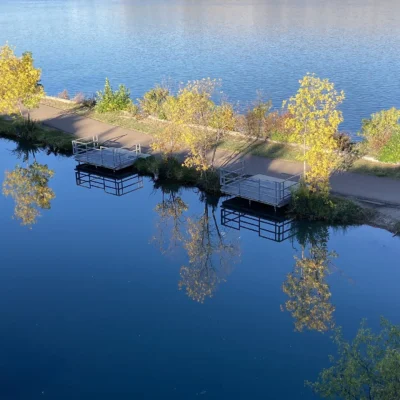

💧 156 Million Gallons Per Day — One of the Largest Freshwater Springs on Earth, Right in Great Falls — Giant Springs State Park in Great Falls, Montana, massive freshwater spring, Missouri River, Roe River (world’s shortest), Rainbow Falls overlook, state fish hatchery, Lewis and Clark, River’s Edge Trail — Cascade County, MT
The water is 3,000 years old. It fell as rain or snow on the Little Belt Mountains three millennia ago, filtered through the Madison limestone aquifer, and now erupts at Giant Springs at a rate of 156 million gallons per day. The temperature never changes — 54°F, year-round, century after century. And it’s right inside the city limits of Great Falls, Montana.
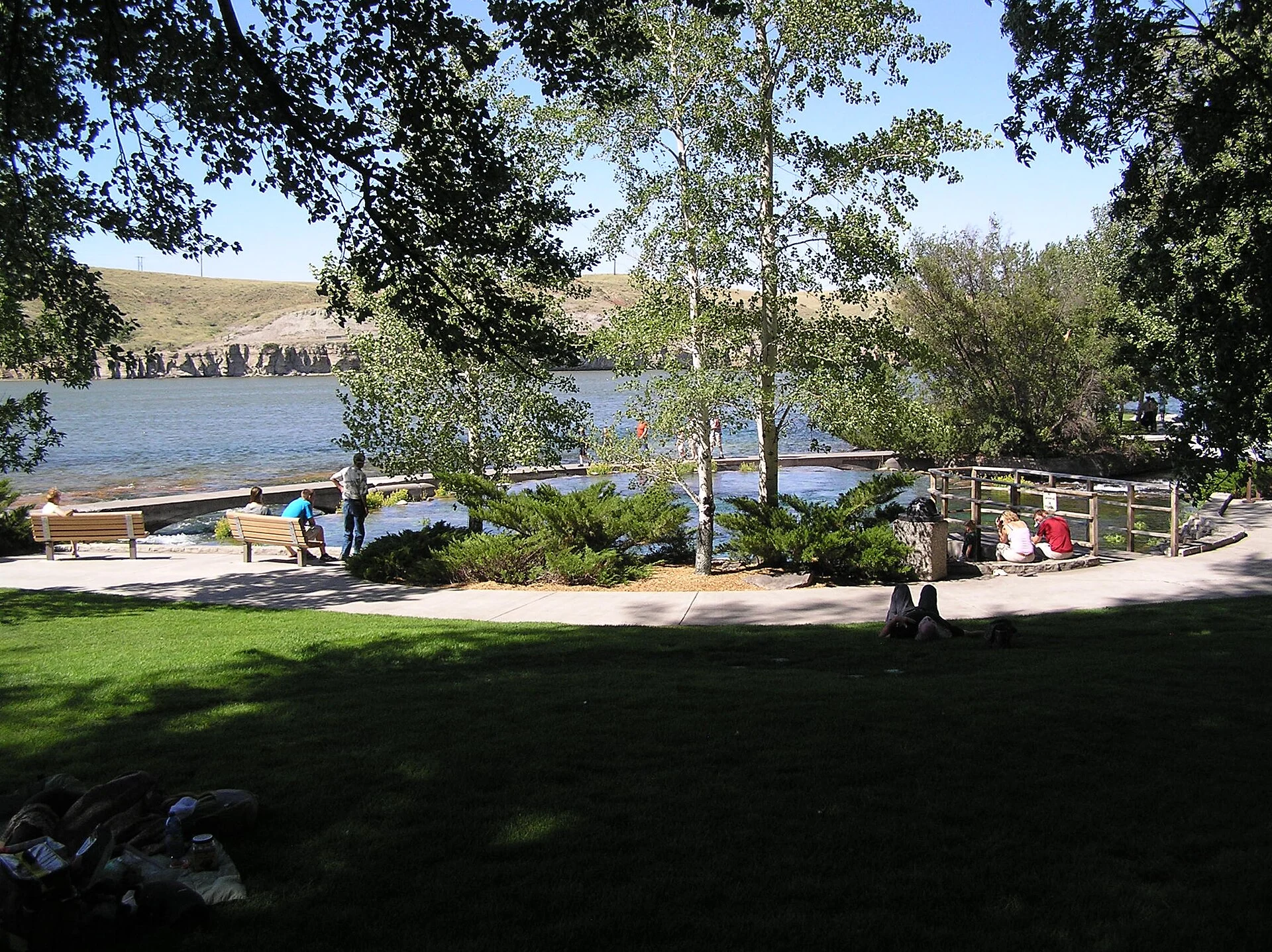
Giant Springs is where geology becomes spectacle. A river of crystal-clear water surges from the ground and flows 201 feet to the Missouri River — that 201-foot journey is the Roe River, once listed as the world’s shortest. Lewis and Clark stood here in 1805 and marveled at the same water you’ll see today. Some things in Montana don’t change.
What to Do
| Activity | Details |
|---|---|
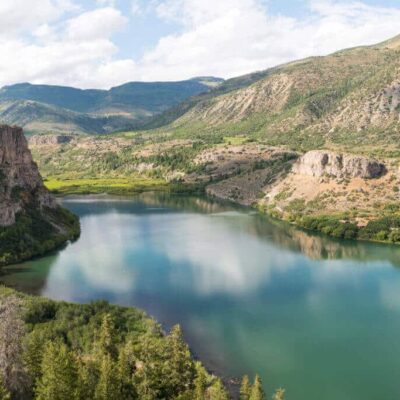
| Giant Springs | Watch 156 million gallons of 54°F water surge from the ground every day — the spring pool is crystal clear, turquoise-tinted, and so voluminous it creates its own small river. Boardwalks and viewing areas provide close access. The water clarity is astonishing — you can see every rock on the bottom |
| Roe River | The 201-foot river that connects Giant Springs to the Missouri River — once listed in the Guinness Book as the world’s shortest river. Walk along its entire length in about a minute. Watch the spring water merge with the Missouri. The shortest river meeting one of the longest |
| Fish Hatchery | The Montana Fish Hatchery at Giant Springs raises 1.3 million trout and salmon annually — the spring water’s constant 54°F temperature is perfect for fish rearing. Visit the hatchery ponds and watch rainbow trout in various growth stages. Kids love feeding the fish |
| River’s Edge Trail | The park is a hub for Great Falls’ trail system — miles of paved and dirt trails along the Missouri River for hiking, biking, and jogging. Follow the trail to Rainbow Falls overlook for views of one of the Missouri’s Great Falls that Lewis and Clark portaged around in 1805 |
| Visitor Center | Educational exhibits on the spring’s geology, local wildlife, and the Lewis and Clark expedition. The center explains how water that fell 3,000 years ago travels through limestone to emerge here — a geology lesson that makes sense because you can see the result flowing past the window |
The Missouri River
| Feature | Details |
|---|---|
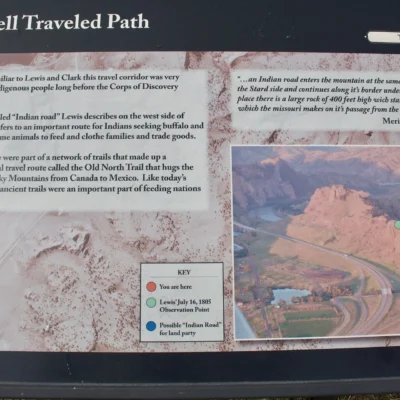
| Lewis and Clark | On June 18, 1805, Meriwether Lewis described Giant Springs in his journal — one of the first written records of the site. The expedition spent weeks portaging around the Great Falls, one of the most grueling stretches of their entire journey. The springs provided fresh water during the ordeal |
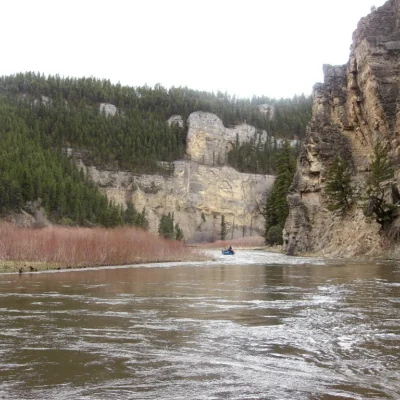
| Great Falls | The Missouri River drops through a series of five waterfalls in the Great Falls area — only Rainbow Falls remains in near-original condition (the others are dammed). The falls gave the city its name and were one of the most significant obstacles on the Missouri River for pre-dam navigation |
| Madison Limestone | The spring water originates from precipitation on the Little Belt Mountains 50+ miles away. It percolates through 300-million-year-old Madison limestone, gaining minerals and maintaining a constant temperature. By the time it reaches Giant Springs, it’s been underground for approximately 3,000 years |
| Fishing | The Missouri River below Giant Springs offers exceptional trout fishing — rainbow and brown trout thrive in the nutrient-rich, spring-influenced water. The stretch through Great Falls is accessible from the River’s Edge Trail. Montana fishing license required |
Best Time to Visit
| Season | Best For |
|---|---|
| Summer (Jun–Aug) | ☀️ Full programs. Trail system at peak. The springs in summer light. Great Falls warm and accessible |
| Winter (Dec–Feb) | ❄️ The springs steam in cold air — 54°F water meeting sub-zero Montana winter creates fog and ice formations. Dramatic and otherworldly. The springs never freeze |
| Spring (Apr–May) | Missouri River running high. The trails greening. Spring wildflowers. The hatchery active |
| Fall (Sep–Oct) | Cottonwoods golden along the Missouri. Clear air. Fewer visitors. Excellent fishing |
Frequently Asked Questions
Is there an entrance fee?
Yes — Montana State Parks charges a vehicle entrance fee. An annual parks pass covers all state parks. The fee is modest and supports the visitor center, trails, and hatchery operations.
Can I swim in the springs?
No — swimming is not permitted in Giant Springs or the Roe River. The spring area is protected. The Missouri River nearby offers fishing access. The springs are for viewing, not swimming — and at 54°F, you’d thank the rule.
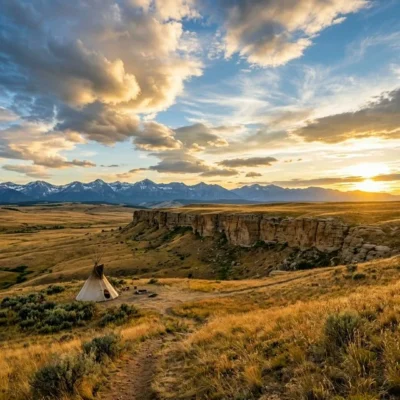
Nearby state parks: If you have extra time, Giant Springs State Park is a short drive away, and First Peoples Buffalo Jump State Park is a short drive away.
💧 3,000-Year-Old Water. 156 Million Gallons Per Day. The World’s Shortest River. Montana’s Liquid Geology.
Rain fell on the Little Belt Mountains when the Roman Republic was young. It filtered through limestone for 3,000 years. And now it surges from the ground at Giant Springs — crystal clear, 54 degrees, and flowing into the Missouri River that Lewis and Clark followed west. Some Montana springs are hidden. This one produces a river.