🌤 Weather at Tower Rock State Park by season
| Spring | Summer | Fall | Winter |
|---|---|---|---|
| 25–67 °F | 47–86 °F | 27–74 °F | 18–40 °F |
Each range runs from the coldest monthly average low to the warmest monthly average high in that season (1991-2020 climate normals), measured at Cascade 5 S, 5 mi away, elevation 3,360 ft. Conditions at the park can differ from the station, especially where elevation differs — check a forecast before you go.

Montana’s Lewis & Clark Landmark — 424-Foot Volcanic Rock Tower, Missouri River Views, Interpretive Trail & Historic Day-Use Park Near Cascade
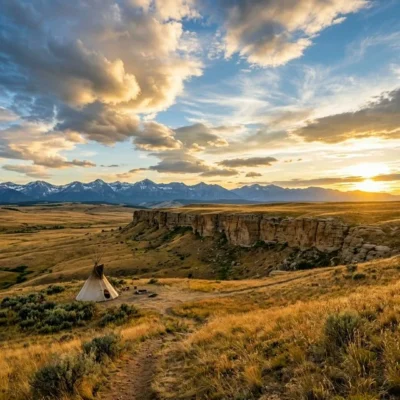
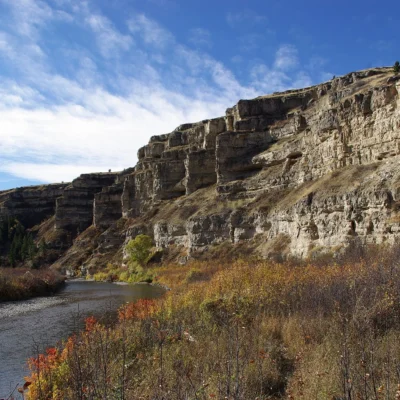
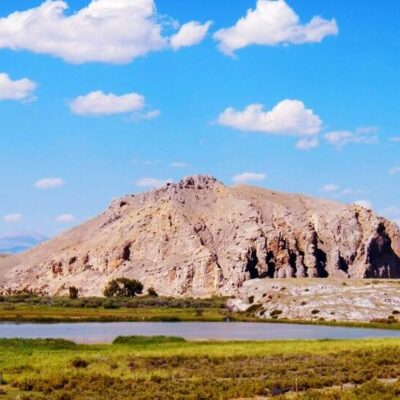
Tower Rock State Park is a day-use park along the Missouri River near Cascade, Montana, preserving one of the most striking geological landmarks in the northern Rocky Mountain region — a 424-foot-high igneous (volcanic) rock tower that has served as a navigation landmark for thousands of years. Meriwether Lewis himself named it “the tower” during the Lewis and Clark Expedition in July 1805. The park features a maintained quarter-mile interpretive trail to the base of the rock saddle, five interpretive panels, vault toilets, and parking.
Tower Rock rises dramatically from the Missouri River corridor — a massive volcanic plug that was a landmark for Native American tribes long before Lewis and Clark’s Corps of Discovery documented it. The park is accessible via Interstate 15 (Interchange 247), making it a convenient stop for travelers between Great Falls and Helena. For Lewis and Clark Trail enthusiasts, geologists, photographers, and anyone drawn to Montana’s dramatic landscape, Tower Rock delivers an unforgettable short-hike experience.
Things to Do
Interpretive Trail
- Quarter-mile maintained trail to the base of the rock saddle
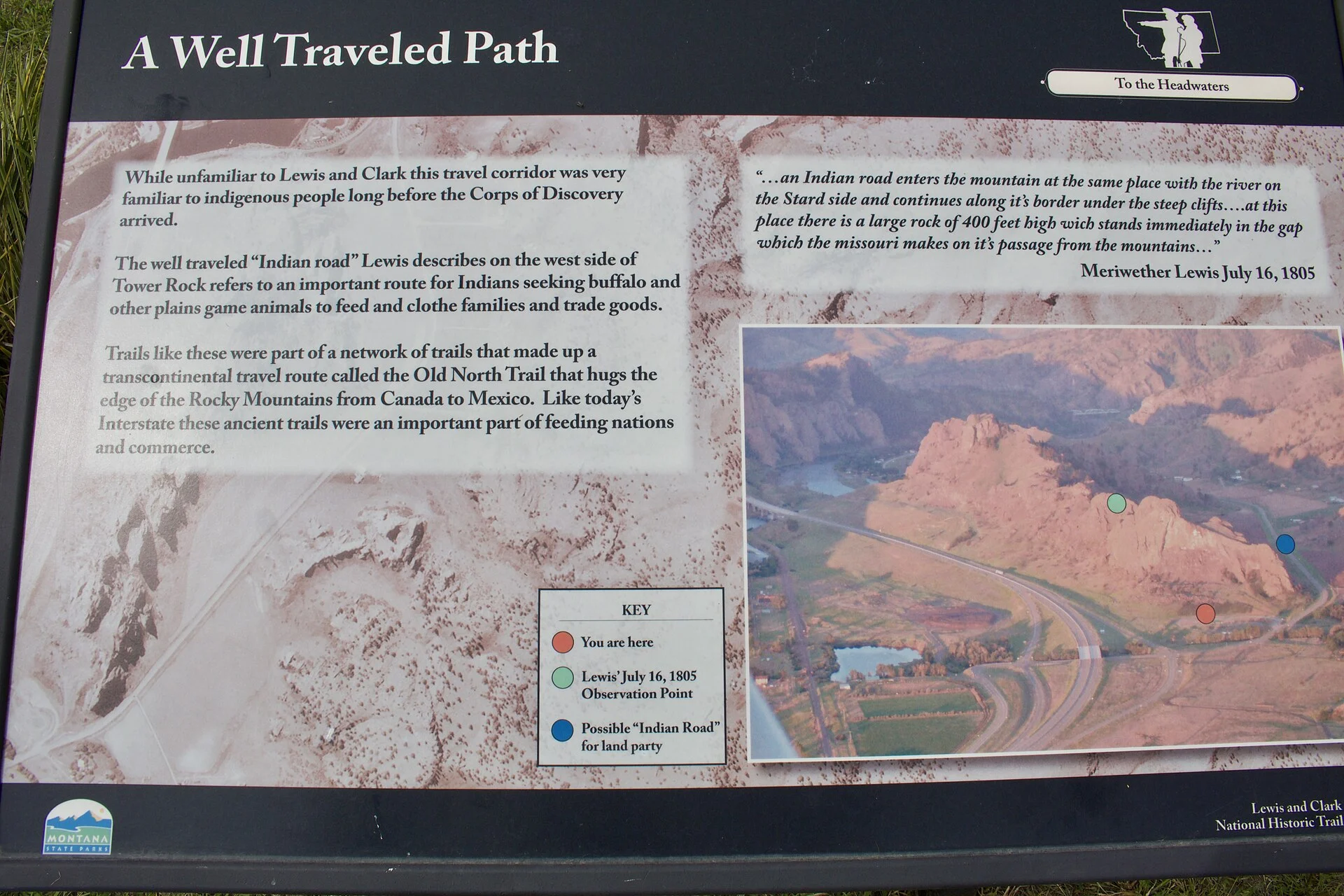
- Five interpretive panels at the trailhead covering geology, Lewis & Clark history, and Native American significance
- Moderate terrain: Short but potentially uneven; sturdy footwear recommended
- ⚠️ Rattlesnake warning: Be alert for rattlesnakes, especially in warm months
Photography
- 424-foot volcanic tower: Dramatic from every angle — early morning and late afternoon light are most spectacular
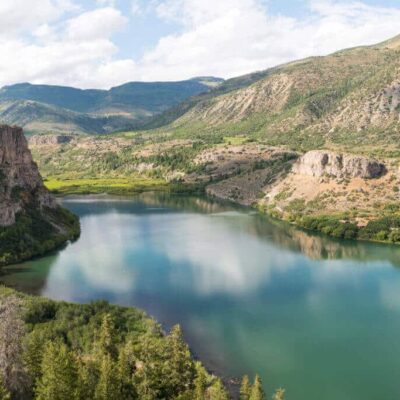
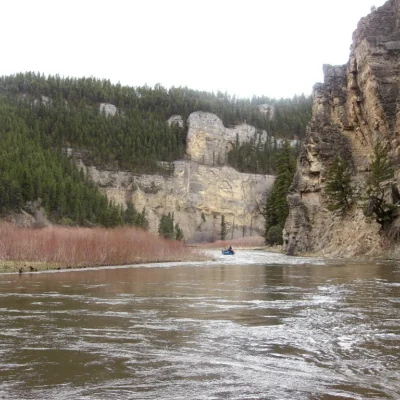
- Missouri River corridor views: River, rock, and mountain panoramas
- Seasonal light: Golden hour photography is exceptional here
History & Education
- Lewis and Clark Expedition: Meriwether Lewis recorded “the tower” in his journal on July 16, 1805 — one of the expedition’s most recognizable landmarks
- Native American history: The rock served as a navigation and spiritual landmark for indigenous peoples for thousands of years
- Geology: The tower is an igneous intrusion (volcanic plug) — harder rock exposed after softer surrounding material eroded away
Picnicking
Informal picnic areas near the trailhead with Missouri River views.
Park Information
| Feature | Details |
|---|---|
| Type | Day-use only — no camping |
| Facilities | Vault toilets; parking; interpretive panels |
| Access | I-15 Interchange 247, then Old US Highway 91 |
| Pets | Allowed |
| Staff | No visitor center; no on-site staff |
Best Time to Visit
| Season | Highlights | Considerations |
|---|---|---|
| Summer (Jun–Aug) | ⭐ PEAK: Longest days; best trail conditions; golden-hour photography; wildflowers; combine with Missouri River float trips | Hot midday; rattlesnakes active; bring water — no drinking water on-site |
| Fall (Sep–Oct) | ⭐ Fall color; dramatic light; cool hiking; quiet; cottonwood gold along Missouri River | Shorter days; variable weather; cooling fast |
| Spring (Apr–May) | Wildflowers; birding; snow-capped mountain backdrop; rivers high | Muddy trail possible; variable weather; rattlesnakes emerging |
| Winter (Nov–Mar) | Dramatic winter scenery; snow on rock tower; solitude; bald eagle viewing along Missouri River | Cold; icy trail possible; short days; check access conditions |
Visitor Tips
- Short but impactful: The trail is only a quarter mile — plan for a 30-60 minute visit including time for interpretive panels and photography. Perfect as an I-15 road trip stop.
- Rattlesnakes: Be alert for rattlesnakes, especially from May through September. Stay on the trail, watch where you step and place your hands, and wear closed-toe shoes.
- No water or services: There is no drinking water, visitor center, or on-site staff. Bring your own water and supplies. Vault toilets are the only facility.
- Lewis & Clark Trail: Tower Rock is a must-visit for Lewis and Clark Trail enthusiasts — one of the few expedition landmarks that remains essentially unchanged since 1805.
- I-15 convenience: The park is accessed directly from I-15 Interchange 247 — an easy detour for travelers between Great Falls and Helena (approximately 30 minutes from either city).
- Combine visits: Pair Tower Rock with nearby Giant Springs State Park in Great Falls and Gates of the Mountains boat tour near Helena for a complete Missouri River corridor day.
Wildlife & Nature
Tower Rock SP — features a massive volcanic rock tower rising from the Missouri River. The park’s Missouri River, volcanic formations, and canyon support bighorn sheep, bald eagles, and mule deer.
Nearby Attractions
Cascade — nearby. Missouri River — at the park. Lewis and Clark Trail — at the site.
What is Tower Rock State Park Montana?
Tower Rock State Park preserves a 424-foot-high igneous (volcanic) rock tower along the Missouri River near Cascade, Montana. The rock formation served as a landmark for Native American tribes for thousands of years and was documented by Meriwether Lewis during the Lewis and Clark Expedition in July 1805. The park features a quarter-mile interpretive trail to the base of the formation, five educational panels, vault toilets, and parking. It is a day-use park with no camping, no visitor center, and no on-site staff. The park is easily accessible from Interstate 15, Interchange 247.
Can you camp at Tower Rock State Park?
No — Tower Rock State Park is a day-use only park. There is no camping, no overnight parking, and no campground. The park provides vault toilets, parking, and an interpretive trail. For camping in the area, nearby options include Giant Springs State Park in Great Falls (approximately 30 minutes north) and various campgrounds along the Missouri River corridor between Great Falls and Helena.
Last updated: May 2026
More parks nearby: First Peoples Buffalo Jump State Park is within about an hour’s drive, while Black Sandy State Park lies within about an hour’s drive.

🐾 Dogs & Pets at Tower Rock State Park
- Pets allowed? statewide rule
- Pets are allowed at most Montana state parks but must be leashed and not left unattended.
- Leash rule statewide rule
- Leash no longer than 8 feet required, unless otherwise posted.
- Beaches & swim areas statewide rule
- Pets are prohibited from swimming beaches and posted restricted areas.
- Statewide exceptions statewide rule
- Pets prohibited at Frenchtown Pond and Wild Horse Island; kennel service offered during Lewis and Clark Caverns tours; Spring Meadow Lake no pets April 16 - October 14; Lake Elmo has a fenced dog park.
Are dogs allowed at Tower Rock State Park?
Pets are allowed at most Montana state parks but must be leashed and not left unattended. Individual parks can post stricter rules — check signage on arrival.
Rules verified July 2026 via fwp.mt.gov. More: Montana state parks guide · Dog rules in all 50 states compared
Park Location
Plan your gear for Tower Rock State Park
From our editorial guides, matched to this park’s activities: