
🌤 Weather at Hither Hills State Park by season
| Spring | Summer | Fall | Winter |
|---|---|---|---|
| 33–64 °F | 60–80 °F | 42–73 °F | 28–45 °F |
Each range runs from the coldest monthly average low to the warmest monthly average high in that season (1991-2020 climate normals), measured at Montauk Airport, 6 mi away, elevation 7 ft. Conditions at the park can differ from the station, especially where elevation differs — check a forecast before you go.

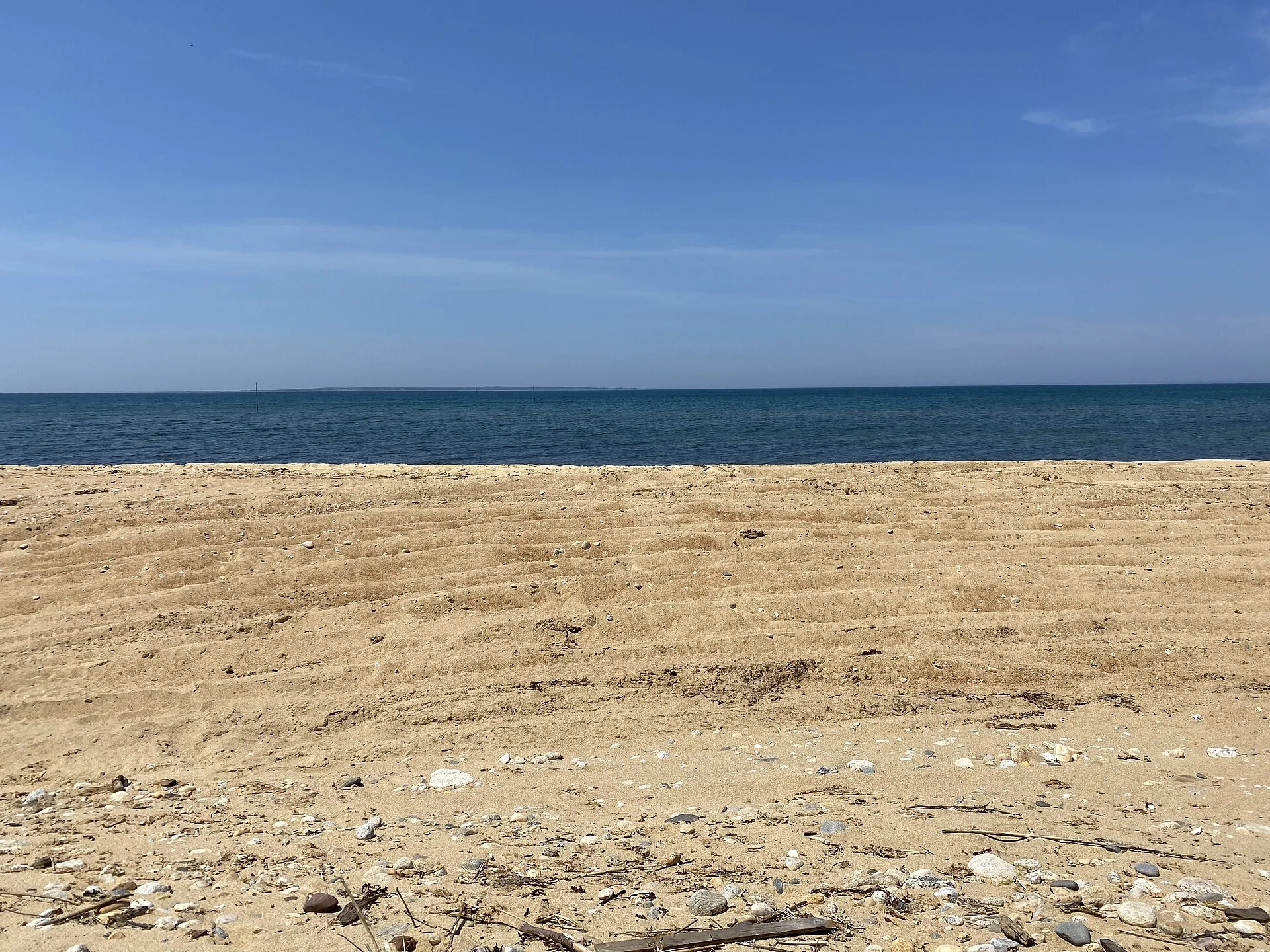
The sand is alive here. Three towering parabolic dunes—some reaching eight stories high—creep across the landscape at Hither Hills, burying entire forests in their path. Oak trees disappear beneath the shifting sand, then reappear years later as bleached skeletons in what locals call the “phantom forest.” It’s one of the rarest geological phenomena on the East Coast, and it’s happening right now, in a state park where you can fall asleep to the sound of Atlantic waves crashing just steps from your tent.
Welcome to Hither Hills State Park, Montauk’s 1,755-acre oceanfront paradise at the eastern tip of Long Island. Established in 1924 when Robert Moses blocked private developers who planned casinos and yacht basins on this land, Hither Hills has become one of the most coveted camping destinations in the Northeast. Its 189 oceanfront campsites book out within minutes of becoming available, its 2-mile sandy Atlantic beach rivals anything in the Hamptons, and its connection to the 3,000-acre Hither Woods trail network offers over 40 miles of hiking through maritime forest, coastal dunes, and freshwater wetlands.
⚠️ Reservation Warning
Campsites book up instantly—9 months in advance. During peak summer (mid-June through Labor Day), a 7-night minimum stay is required. Set your alarm for midnight when reservations open on ReserveAmerica. Non-residents pay a higher nightly rate.
What Makes Hither Hills Unforgettable
Oceanfront Camping
189 sites steps from the Atlantic—fall asleep to crashing waves. One of the East Coast’s best beach campgrounds.
Walking Dunes
Rare parabolic dunes that migrate across the landscape, burying forests and creating the eerie “phantom forest.”
Year-Round Fishing
Surf cast for striped bass and bluefish, or fish the 40-acre freshwater lake for largemouth bass and trout.
40+ Miles of Trails
Connected to Hither Woods Preserve—18 trails through maritime forest, dunes, and coastal bluffs.
The Walking Dunes: A Living Geological Wonder
The walking dunes at Hither Hills are among the rarest geological formations in the Eastern United States. Unlike typical linear beach dunes, these are parabolic dunes—massive U-shaped sand formations that actively migrate in a southeasterly direction, driven by powerful winds from Gardiners Bay and Napeague Harbor.
Three named dunes dominate the landscape near Napeague Harbor on the park’s eastern boundary. Historical research suggests the Middle and North Dunes formed between 1845 and 1892, possibly accelerated by human activity from nearby fish-processing factories that stripped protective vegetation. The South Dune may predate them both.
How the Dunes “Walk”
- 🌬️ Storm Mechanics: Powerful nor’easters cause “blowouts” in existing linear dunes, reshaping them into their characteristic U-shape
- 📏 Migration Rate: The dunes move several feet per year in a southeasterly direction
- 🌳 Phantom Forest: As dunes advance, they bury oak trees alive. Years later, when the dune passes, bleached tree skeletons re-emerge from the sand
- 📐 Scale: Some dunes reach up to eight stories high—visible from miles away
- 🧪 Rarity: Parabolic dunes are extremely rare on the East Coast, where most coastal dunes are stationary and linear
🥾 Walking Dunes Trail Tips
- The trail to the walking dunes is approximately 1.5 miles from the main parking area
- Best visited at golden hour for dramatic shadows across the sand formations
- Bring water—there’s no shade on the dunes themselves
- The phantom forest area is most photogenic in late afternoon light
- Stay on marked trails to protect fragile dune vegetation
The Beach: Two Miles of Atlantic Oceanfront
Hither Hills’ 2-mile sandy beach stretches along the Atlantic Ocean and is the park’s main draw for day visitors and campers alike. Unlike the exclusive Hamptons beaches to the west, this public beach offers the same pristine sand and powerful surf—without the attitude or the parking fees for campers.
| Beach Detail | Information |
|---|---|
| 🏖️ Beach Length | 2 miles of uninterrupted sandy oceanfront |
| 🏊 Swimming Season | Memorial Day through Labor Day (lifeguards on duty) |
| ⏰ Beach Hours | 10:00 AM – 6:00 PM (summer) |
| 🐕 Dogs | Allowed on leash (max 6 ft) in non-swimming areas |
| 🔥 Beach Fires | Permitted on the beach following park guidelines |
| 🌊 Surf Conditions | Moderate to strong Atlantic surf—excellent for bodyboarding |
Hiking Trails & the Hither Woods Network
While most visitors come for the beach, the trail system at Hither Hills is a hidden gem. The park is contiguous with Hither Woods Preserve and Lee Koppelman Nature Preserve, forming a combined complex of over 3,000 acres with 18 different trails spanning 40+ miles. Trails wind through maritime woodland of Russian olive, oak, shad, and pine, past freshwater ponds, and along coastal bluffs.
| Trail | Distance | Difficulty | Highlights |
|---|---|---|---|
| 🏖️ Coastal Loop | 11.1 mi | Moderate | Beach walking + woodland paths; full park overview |
| 🏜️ Dunes via Paumanok Path | 5.8 mi | Moderate | Walking dunes, phantom forest, Napeague views |
| 🌲 Duck Bluff via Paumanok Path | 9.1 mi | Moderate | Elevation gain through forest; bay views |
| 🦌 Hither Woods Nature Trail | 2-3 mi | Easy | Maritime forest, wildlife viewing, beginner-friendly |
| 🐦 Fresh Pond Loop | ~3 mi | Easy | Freshwater lake circuit; excellent birding |
🗺️ Trail Navigation Warning
Carry a trail map! The Hither Woods trail network has numerous divergent paths, and leaf cover can obscure trail markers. Maps are available at the park office. Cell service is spotty throughout the woods.
Camping: The Most Coveted Sites on Long Island
Hither Hills’ 189 oceanfront campsites are legendary. They’re among the most sought-after in the entire New York State Park system, and for good reason—many sites sit just steps from the Atlantic Ocean. You can literally hear the waves from your tent.
| Camping Detail | Information |
|---|---|
| ⛺ Total Sites | 189 (tents, trailers, and RVs) |
| 🔌 Electric Hookups | No electric hookups available |
| 📅 Season | April through November |
| 📏 Peak Minimum Stay | 7-night minimum (mid-June – Labor Day) |
| 📆 Book Ahead | 9 months in advance via ReserveAmerica |
| 🚗 Vehicles Per Site | Max 2 cars (second vehicle $20/night in designated area) |
| ⛺ Max Per Site | 1 RV + 1 tent, or 2 tents |
| 🚿 Facilities | Hot showers, flush toilets, RV dump station |
| 🔥 Campfires | Not at individual sites; allowed on beach |
| 🐕 Pets | Dogs on leash in park, but NOT in campground |
Campground Loops
The campground features several loops, including the tent-only J Loop which requires a key card ($5 cash deposit). Sites vary from oceanfront (highest demand) to wooded interior sites with more privacy. The camp store operates during peak season, and a playground and sports fields provide activities for families.
📅 Camping Reservation Strategy
- Mark your calendar: Reservations open exactly 9 months before your arrival date at midnight
- Be ready: Popular dates sell out within minutes—have your ReserveAmerica account pre-loaded
- Shoulder season hack: Late September/October offers beautiful weather, no minimum stay, and easier booking
- Quiet hours: 10:00 PM to 8:00 AM strictly enforced
- Night sky bonus: Minimal light pollution makes Hither Hills exceptional for stargazing
Fishing: Surf, Lake & Harbor
Hither Hills offers exceptional fishing in three distinct environments—and it’s available year-round.
| Fishing Location | Species | Details |
|---|---|---|
| 🌊 Atlantic Surf | Striped bass, bluefish | Year-round surf casting from 2-mile beach |
| 🏞️ Fresh Pond (40 acres) | Largemouth bass, trout, yellow perch, bluegill, pumpkinseed | Also black crappie and brown bullhead |
| ⛵ Napeague Harbor | Flounder, porgy | Calmer waters; great for kayak fishing |
Night fishing permits are available ($35–$60) for dedicated anglers. Each summer, the park hosts an annual snapper derby for kids—a beloved tradition that introduces young anglers to saltwater fishing.
Wildlife & Birding
The combination of maritime forest, coastal dunes, freshwater wetlands, and oceanfront creates a diverse mosaic of habitats. Hither Hills and the surrounding Hither Woods Preserve (3,325+ acres) support an impressive variety of wildlife.
| Category | Species |
|---|---|
| 🦌 Mammals | White-tailed deer, red fox, raccoon, rabbits, squirrels, chipmunks |
| 🦅 Raptors | Red-tailed hawk, broad-winged hawk, red-shouldered hawk, great-horned owl |
| 🐦 Songbirds | Eastern bluebird, prairie warbler, blue-winged warbler, whip-poor-will |
| 🦃 Game Birds | Wild turkey (reintroduced 1993), ruffed grouse, bobwhite quail |
| 🐟 Freshwater Fish | Largemouth bass, trout, yellow perch, pumpkinseed, bluegill |
History: Saved from Casinos & Yacht Basins
The story of Hither Hills State Park is one of preservation triumphing over development. In the early 20th century, private developers had grand plans for this stretch of Montauk coastline—plans that included luxury hotels, casinos, a polo field, and a yacht basin. It was the Long Island State Park Commission and the formidable Robert Moses who intervened.
In 1924, Moses successfully pushed for the condemnation of private holdings, and New York State acquired the land. Hither Hills State Park officially opened in August 1924, saving this coastline for public enjoyment—a decision that seems remarkably prescient given the explosive development of the Hamptons in the decades that followed.
| Year | Milestone |
|---|---|
| 📅 Early 1900s | Private developers plan casinos, hotels, and yacht basins |
| 🏛️ 1924 | Robert Moses intervenes; state acquires land and opens park |
| 🦃 1993 | Wild turkeys successfully reintroduced to Hither Woods |
| 🌿 Today | 1,755 acres protected; part of 3,000+ acre conservation complex |
When to Visit
☀️ Summer (June – August)
Peak season. Beach lifeguards on duty. Campground at full capacity—book 9 months ahead. Water temperatures warm enough for swimming (65–72°F). Camp store open. Expect crowds on weekends. 7-night minimum stay for camping. Best for: full beach experience, families, water sports.
Best for: Beach camping, swimming, fishing, families
🍂 Fall (September – November)
The hidden gem season. Warm ocean water persists into September. Minimum stay requirements drop. Easier to get reservations. Maritime forest turns golden. Migrating raptors pass overhead along the Atlantic Flyway. Striped bass fishing peaks in October. Fewer crowds, still comfortable weather.
Best for: Easier camping bookings, fishing, fall foliage, birding
🌸 Spring (March – May)
Campground reopens in April. Wildflowers bloom in maritime forest. Excellent birding during spring migration. Water still cold for swimming but fishing picks up. Walking dunes most dramatic after winter storms reshape the sand.
Best for: Hiking, birding, photography, solitude
❄️ Winter (December – February)
Campground closed. Park open sunrise to sunset for day use. Dramatic winter waves and deserted beach. Walking dunes visible under dusting of snow. True solitude—you may have the entire 2-mile beach to yourself. Nearby Montauk village offers cozy restaurants.
Best for: Solitude, winter photography, walking dunes, storm watching
Practical Information
| Item | Details |
|---|---|
| 🎟️ Parking Fee | $10/vehicle (summer season; valid for all NY state parks same day) |
| 🏕️ Camping | From $17–$30/night base rate + out-of-state surcharge |
| ⏰ Park Hours | Sunrise to sunset daily, year-round |
| 📐 Park Size | 1,755 acres |
| 📅 Camping Season | April through November |
| 🐕 Pets | Dogs on leash (max 6 ft); not in campground or swimming areas |
Getting There
- 📍 Address: 50 South Fairview Avenue, Montauk, NY 11954
- 📍 From NYC: ~2.5 hours east (130 miles) via Long Island Expressway to Montauk Highway
- 📍 From Hamptons: ~30 minutes east via NY-27
- 🚂 Train: LIRR to Montauk station, then taxi/rideshare (~5 miles)
- 📞 Phone: (631) 668-2554
Nearby Attractions
- 🗼 Montauk Point Lighthouse: Oldest lighthouse in New York State (1796)—10 minutes east
- 🐋 Whale Watching: Seasonal tours depart from Montauk Harbor—15 minutes
- 🍽️ Montauk Village: Fresh seafood restaurants, bars, and shops—5 minutes
- 🏖️ Camp Hero State Park: Former military radar station with hiking trails and surf fishing—adjacent
- 🎣 Montauk Harbor: Charter fishing capital of the world—15 minutes
Frequently Asked Questions
How do I get a campsite at Hither Hills?
Reservations open exactly 9 months before your arrival date on ReserveAmerica. Popular dates sell out within minutes. Create your account in advance, save your preferred dates, and be logged in right at midnight when reservations open. During peak summer, a 7-night minimum stay is required.
Are dogs allowed at Hither Hills?
Dogs on leashes (6 feet max) are allowed in the park and on trails, but they are not permitted in the campground or swimming beach areas. Plan accordingly if traveling with pets.
Can you have campfires?
Not at individual campsites, but campfires are permitted on the beach following park guidelines. Many campers gather on the beach at sunset for communal fires—it’s one of the highlights of the Hither Hills camping experience.
Is Hither Hills good for surfing?
The Atlantic surf at Hither Hills can be excellent for bodyboarding and beginner-intermediate surfing, especially during fall swells. The beach break is generally forgiving. No lifeguards outside summer season—surf at your own risk.
What are the Walking Dunes?
The Walking Dunes are three massive parabolic dunes near Napeague Harbor that actively migrate across the landscape. As they move, they bury entire forests—creating the “phantom forest” of bleached tree skeletons. They’re rare on the East Coast and accessible via a 1.5-mile trail from the parking area.
Is there cell service?
Cell service is inconsistent at Hither Hills. Some areas of the campground and beach have decent coverage, but service drops significantly in the Hither Woods trails. Download offline maps before hiking.
What’s the best time to visit?
For beach and camping: summer (book 9 months ahead). For easier reservations and fewer crowds: September–October. For hiking and photography: spring and fall. For solitude and walking dunes: winter.
🏖️ Where the Dunes Walk and the Waves Don’t Stop
Hither Hills isn’t just another beach campground. It’s where the sand has a mind of its own—where three towering dunes literally walk across the land, burying forests and reshaping the coastline. It’s where you can surf cast for striped bass at dawn, hike through a phantom forest at noon, and build a bonfire on 2 miles of Atlantic beach at sunset. And it’s where, if you’re lucky enough to score one of those 189 coveted campsites, you’ll fall asleep to the rhythm of the ocean just outside your tent. This is Montauk’s greatest secret—and it’s been hiding in plain sight since 1924.
📍 Address: 50 South Fairview Avenue, Montauk, NY 11954
📞 Phone: (631) 668-2554
Explore More New York State Parks
Hither Hills State Park is one of many outstanding state parks in New York. Discover more parks in our Best State Parks in New York guide, or use our Park Finder to search by activity, location, or features.
Make it a road trip: Pair a visit with Napeague State Park (a short drive away) or Montauk Downs State Park (a short drive away).

⛺ Camping at Hither Hills State Park: Campgrounds & Cabins
| Campsites | 190-site ocean campground (official park copy); 176 campsites currently listed as bookable on ReserveAmerica, plus additional loops. — All non-electric tent/RV sites, no hookups; back-in 20–40 ft; max 1 RV + 1 tent or 2 tents/site, up to 6 people. J Loop is tent-only, no generators, key-card entry ($5 cash deposit). |
|---|---|
| Pets | NO pets allowed anywhere in the park. |
| Reservations | ReserveAmerica or 1-800-456-2267; up to 9 months in advance; release times 8 a.m. weekdays/9 a.m. weekends (Mar 15–Labor Day), 9 a.m. daily after; check-in required by 9 p.m. or reservation forfeited; only one 7-night reservation per name/address/email/phone during peak season. |
| Special sites | Group camping via Montauk Downs Park Office, (631) 668-5000. Ocean-front camping; no boat-in or winter camping stated. |
| Season notes | 2026: West Area (Fri) Apr 24–Nov 8; West Area (Sat) May 1–Nov 1; East Area (Sun) Apr 10–Nov 21; J East Area (Sun) May 1–Nov 1. Peak season mid-June–mid-Sept. |
Camping questions about Hither Hills State Park
Can you camp at Hither Hills State Park?
Yes. Hither Hills State Park has 190-site ocean campground (official park copy); 176 campsites currently listed as bookable on ReserveAmerica, plus additional loops.. All non-electric tent/RV sites, no hookups; back-in 20–40 ft; max 1 RV + 1 tent or 2 tents/site, up to 6 people. J Loop is tent-only, no generators, key-card entry ($5 cash deposit).
How do you reserve a campsite at Hither Hills State Park?
ReserveAmerica or 1-800-456-2267; up to 9 months in advance; release times 8 a.m. weekdays/9 a.m. weekends (Mar 15–Labor Day), 9 a.m. daily after; check-in required by 9 p.m. or reservation forfeited; only one 7-night reservation per name/address/email/phone during peak season.
Are pets allowed at the Hither Hills State Park campground?
NO pets allowed anywhere in the park.
Source: newyorkstateparks.reserveamerica.com (verified July 2026). Details change seasonally — confirm when booking.
🐾 Dogs & Pets at Hither Hills State Park
- Pets allowed? statewide rule
- Pets are permitted in most state parks and campgrounds (maximum two pets per site where allowed), but policies vary by park and some parks prohibit pets entirely.
- Leash rule statewide rule
- Leash no longer than 6 ft required, pet under control at all times
- Beaches & swim areas statewide rule
- Pets are not permitted on guarded beaches, boardwalks, pools or spray-grounds
- Cabins & lodging statewide rule
- No uniform statewide rule — pets are prohibited in buildings and most cabins, but some parks designate pet-friendly cabin areas (e.g. Letchworth Cabin Area C); check with the individual park
- Statewide exceptions statewide rule
- Proof of rabies vaccination required upon request; maximum two pets per campsite; some parks (e.g. Wildwood State Park) do not allow pets at all
Are dogs allowed at Hither Hills State Park?
Pets are permitted in most state parks and campgrounds (maximum two pets per site where allowed), but policies vary by park and some parks prohibit pets entirely. Individual parks can post stricter rules — check signage on arrival.
Rules verified July 2026 via parks.ny.gov. More: New York state parks guide · Dog rules in all 50 states compared
Park Location
Plan your gear for Hither Hills State Park
From our editorial guides, matched to this park’s activities:
Top Tours & Activities Near Mystic
 from $100from $75
 from $59