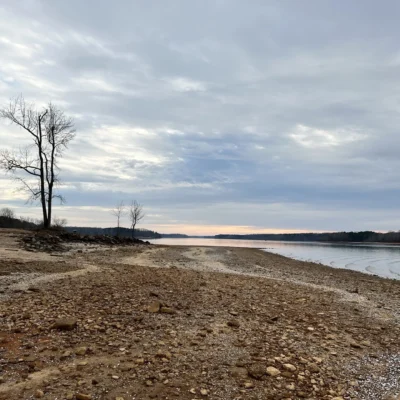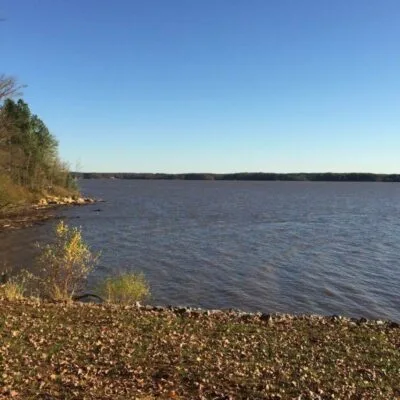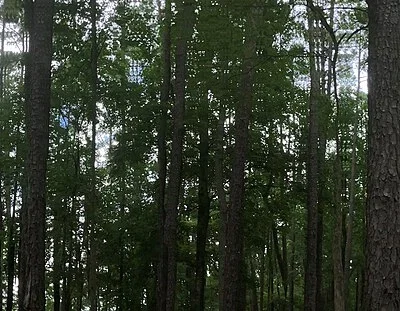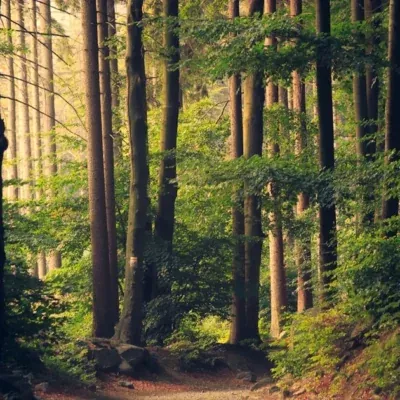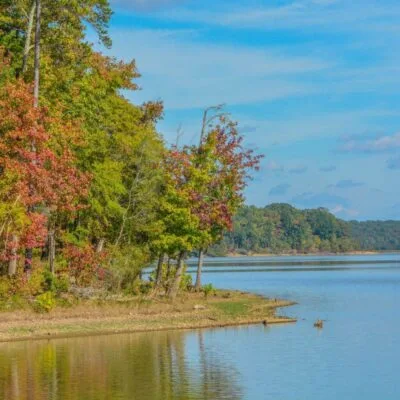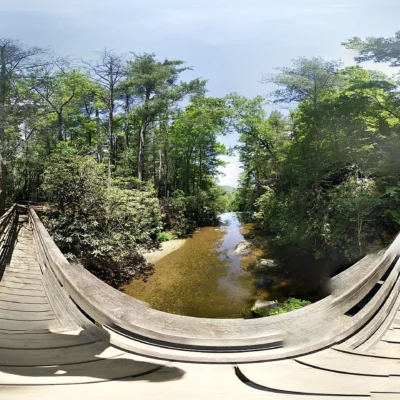

Photo: DiscoA340, CC BY-SA 4.0, via Wikimedia Commons
🌤 Weather at Medoc Mountain State Park by season
| Spring | Summer | Fall | Winter |
|---|---|---|---|
| 37–79 °F | 64–89 °F | 38–82 °F | 29–56 °F |
Each range runs from the coldest monthly average low to the warmest monthly average high in that season (1991-2020 climate normals), measured at Arcola, 5 mi away, elevation 330 ft. Conditions at the park can differ from the station, especially where elevation differs — check a forecast before you go.

🏔️ 350-Million-Year-Old Granite in the Coastal Plain — A geologic anomaly: the remnant of an ancient volcanic mountain rising 325 feet above North Carolina’s flat coastal plain, with 30 miles of trails (hiking, biking, horseback), Little Fishing Creek, camping, cabins, and a landscape where the Piedmont meets the coast
In Halifax County, deep in North Carolina’s rural Inner Coastal Plain — a landscape of flatwater creeks, tobacco fields, and longleaf pine — something geologically improbable rises from the surrounding terrain: a 325-foot ridge of biotite granite formed by volcanic action approximately 350 million years ago. This is Medoc Mountain — not a mountain by Appalachian standards, but a dramatic elevation anomaly on the coastal plain, a stubborn remnant of an ancient mountain range that has resisted the erosion that leveled everything around it over the eons. Medoc Mountain State Park protects 2,287 acres of this unique transition zone where Piedmont upland ecology meets coastal plain lowlands, creating a biodiversity corridor unlike anything else in eastern North Carolina.
The park’s name comes from the historical Medoc Vineyard that once operated on this land — producing wines from grapes grown on the granite slopes, in a nod to the French Médoc wine region. But the park’s real draw is its exceptional trail system: nearly 30 miles of trails for hiking, mountain biking, and horseback riding, threading through granite outcrops, mixed hardwood and pine forests, creek bottoms, and bluff overlooks above Little Fishing Creek — one of the cleanest streams in the region. For a state park this remote and this quiet, the trail density is extraordinary, making Medoc Mountain a hidden gem for trail-centric visitors who want solitude, diverse terrain, and a landscape that tells a 350-million-year geological story.
Geology: Why is There a Mountain on the Coastal Plain?
Medoc Mountain is the surface expression of a deeply buried pluton — a mass of igneous rock that intruded into the earth’s crust during the late Devonian period, roughly 350 million years ago, when this part of North America was volcanically active. Over the following hundreds of millions of years, the softer sedimentary rocks that once surrounded and covered the pluton eroded away, leaving the harder biotite granite exposed as an elongated ridge rising above the flat coastal plain sediments.
| Feature | Details |
|---|---|
| Elevation | 325 feet above sea level |
| Rock Type | Biotite granite (igneous intrusion) |
| Age | ~350 million years (late Devonian) |
| Geologic Context | Pluton remnant on the Inner Coastal Plain |
| Ecological Zone | Piedmont-Coastal Plain transition |
Trails
The trail system is Medoc Mountain’s crown jewel — nearly 30 miles of marked trails spanning three distinct use categories, all winding through varied terrain that ranges from creek-bottom rhododendron thickets to granite outcrop ridgelines with views over the surrounding plain.
| Type | Miles | Difficulty Range | Highlights |
|---|---|---|---|
| Hiking Trails | ~11 miles | Easy to Moderate | Creek bluffs, granite outcrops, forest transitions |
| Mountain Biking | ~9 miles | Moderate | Rolling terrain, mixed surfaces, multi-use |
| Horseback (Bridle) Trails | ~10 miles | Moderate | Dedicated equestrian trails, parking area |
| Total System | ~30 miles | Easy to Moderate | Three distinct trail networks |
Key Hiking Routes
- Summit Trail: Climbs to the highest point on the ridge — granite outcrops, mature hardwoods, seasonal views through the canopy
- Bluff Loop: Follows the bluffs above Little Fishing Creek — the park’s most scenic section, with creek views through gaps in rhododendron
- Stream Trail: Follows Little Fishing Creek through bottomland forest — flat, easy, excellent for wildflower viewing in spring
Little Fishing Creek
Little Fishing Creek meanders for approximately 2.5 miles through the park, cutting through the granite and sedimentary layers in a forested corridor of sycamores, river birch, and rhododendron. The creek is considered one of the cleanest streams in the region and supports a healthy aquatic ecosystem.
| Fishery | Details |
|---|---|
| Species | Sunfish, bluegill, largemouth bass |
| Paddling | Possible in sections — seasonal water levels |
| Water Quality | Among the cleanest streams in the region |
| License | North Carolina fishing license required |
Camping
| Type | Details |
|---|---|
| Tent Sites | Walk-in tent camping with fire rings and picnic tables |
| Full Hookup Sites | Electric and sewer hookups for RVs |
| Equestrian Sites | Primitive sites with horse tie-outs, near bridle trails |
| Group Sites | Group tent camping areas available for reservation |
| Cabins | Cabins with heat/AC available |
| Facilities | Restrooms, showers, water |
Wildlife and Ecology
The Piedmont-Coastal Plain transition zone creates ecological diversity that far exceeds what the park’s size alone would suggest:
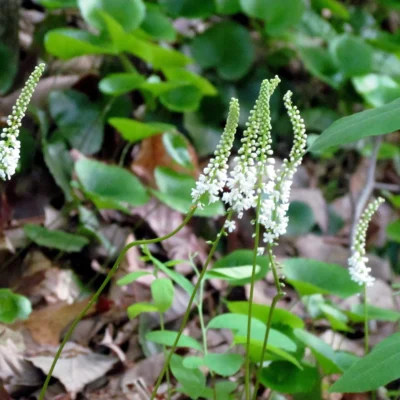
- Flora: Mountain laurel, rhododendron, wild azaleas, and galax (typically Piedmont/mountain species) growing alongside coastal plain longleaf pine, turkey oak, and bottomland hardwoods
- Birds: Wood thrush, pileated woodpecker, barred owl, red-shouldered hawk, wild turkey, and diverse warblers during spring migration
- Mammals: White-tailed deer, beaver (on Little Fishing Creek), gray fox, and river otter
- Reptiles: Eastern box turtle, five-lined skink, and various non-venomous water snakes along the creek
Essential Visitor Information
| Detail | Information |
|---|---|
| Address | 1541 Medoc State Park Road, Hollister, NC 27844 |
| Visitor Center | Daily 8 AM – 5 PM (closed Christmas) |
| Park Hours | Varies seasonally (typically 7 AM – 7/9 PM) |
| Entrance Fee | FREE |
| Reservations | ncparks.gov or ReserveAmerica |
Getting There
- From Raleigh: 70 miles northeast (~1 hour 15 minutes via US-64)
- From Rocky Mount: 30 miles north (~40 minutes)
- From Virginia Beach: 130 miles southwest (~2 hours 15 minutes)
- From Durham: 85 miles northeast (~1 hour 30 minutes)
Navigation tip: When using GPS, search for “Medoc Mountain State Park” rather than the road address — some navigation apps route to closed-off access roads. Use the visitor center address for the main entrance.
Best Time to Visit
| Season | Highlights | Crowd Level |
|---|---|---|
| Spring (Mar-May) | Wildflowers (mountain laurel, azaleas), creek at best flow, migrant warblers | Low-Moderate |
| Summer (Jun-Aug) | Full canopy shade, Creek swimming, equestrian trails | Low |
| Fall (Oct-Nov) | Hardwood foliage, cool hiking temps, granite outcrops visible | Low-Moderate |
| Winter (Dec-Feb) | Open views, cabin stays, solitude | Very Low |
Nearby Attractions
Mendocino — 3 miles north — has the headlands, art galleries, and Ford House. Russian Gulch SP — 5 miles north — has the Devil’s Punch Bowl. Point Cabrillo Light Station — 5 miles north. Little River — adjacent — has the Little River Inn. Anderson Valley — 20 miles inland — has Boonville wineries.
Frequently Asked Questions
Is Medoc Mountain really a mountain?
Not by Appalachian standards, but yes, it’s a genuine geologic anomaly. Medoc Mountain is a 325-foot granite ridge rising from North Carolina’s flat Inner Coastal Plain. It’s the surface expression of a 350-million-year-old igneous intrusion (pluton) — harder biotite granite that resisted the erosion that leveled everything around it. The elevation creates a unique Piedmont-Coastal Plain transition zone with species diversity unusual for this part of North Carolina, including mountain laurel and rhododendron growing alongside coastal plain pines.
Can you ride horses at Medoc Mountain State Park?
Yes! Medoc Mountain State Park offers 10 miles of dedicated bridle trails through mixed forest and rolling terrain. The park provides designated equestrian parking and primitive equestrian campsites with horse tie-outs, making multi-day horseback trips possible. The equestrian trail network is separate from (but adjacent to) the hiking and biking trails.
Is Medoc Mountain State Park free?
Yes! Day-use access to Medoc Mountain State Park is completely free — no entrance fee, no parking fee. Fees apply only for overnight camping and cabin reservations. The trails, visitor center, fishing access, and picnic areas are all free to use. North Carolina state parks do not charge entrance fees.
Nearby parks: If you have extra time, Kerr Lake State Recreation Area is within about an hour’s drive, and Falls Lake State Recreation Area is elsewhere in the state.

🐾 Dogs & Pets at Medoc Mountain State Park
- Pets allowed? statewide rule
- Pets are permitted in all North Carolina state parks as long as they are on an attended leash and under the constant control of the owner.
- Leash rule statewide rule
- Attended leash or other restraint no longer than 6 feet required at all times
- Beaches & swim areas statewide rule
- Pets are not permitted at swim areas or in bathhouses
- Cabins & lodging statewide rule
- Pets are strictly prohibited from entering any building, including cabins; no pet-friendly cabin program
- Statewide exceptions statewide rule
- Not all campgrounds allow pets (contact the park office first); pets must be confined to tent or vehicle during quiet hours (10 p.m.-7 a.m.); at Hammocks Beach visitors must arrange their own transportation for pets to Bear Island
Are dogs allowed at Medoc Mountain State Park?
Pets are permitted in all North Carolina state parks as long as they are on an attended leash and under the constant control of the owner. Individual parks can post stricter rules — check signage on arrival.
Rules verified July 2026 via ncparks.gov. More: North Carolina state parks guide · Dog rules in all 50 states compared
Park Map
Plan your gear for Medoc Mountain State Park
From our editorial guides, matched to this park’s activities: