🌤 Weather at White Clay Creek Preserve by season
| Spring | Summer | Fall | Winter |
|---|---|---|---|
| 33–76 °F | 62–89 °F | 36–79 °F | 25–47 °F |
Each range runs from the coldest monthly average low to the warmest monthly average high in that season (1991-2020 climate normals), measured at Newark Ag Farm, 6 mi away, elevation 106 ft. Conditions at the park can differ from the station, especially where elevation differs — check a forecast before you go.

🏆 Official Guide: White Clay Creek Preserve — Pennsylvania’s only state park designated as a “preserve” — protecting 3,050 acres of Piedmont forest along the White Clay Creek National Wild and Scenic River, the first entire watershed in America to receive this designation.
White Clay Creek Preserve encompasses 3,050 acres of rolling Piedmont woodlands, meadows, and stream corridors in Chester County, Pennsylvania, near the Delaware border. It is the only Pennsylvania state park officially designated as a “preserve” — a status that minimizes development and prioritizes ecosystem protection over intensive recreation. The preserve connects seamlessly with Delaware’s White Clay Creek State Park, forming a bi-state greenway along one of America’s most ecologically significant waterways.
Visitor Information
| Detail | Information |
|---|---|
| Location | Chester County, PA — near Landenberg, along the Delaware border |
| Size | 3,050 acres |
| Entry Fee | Free (Pennsylvania side) |
| Hours | Dawn to dusk, year-round |
| Designation | National Wild and Scenic River (entire watershed, 2000) |
| Parking | London Tract Road, Sharpless Road lots |
| Managed By | PA DCNR Bureau of State Parks |
The National Wild and Scenic River
In October 2000, White Clay Creek became the first creek in America where an entire watershed received National Wild and Scenic River designation — protecting 190 stream miles across Pennsylvania and Delaware. This unprecedented designation recognized the watershed’s exceptional water quality, biological diversity, and scenic character in one of the most densely populated regions of the eastern seaboard.
Hiking Trails
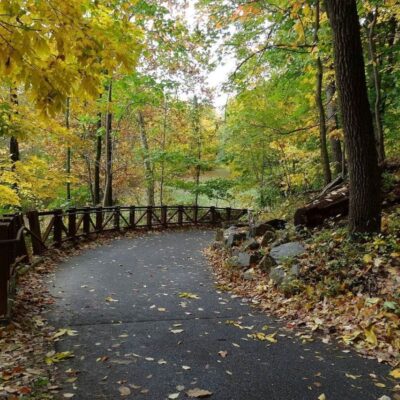
The preserve offers a network of trails through mature Piedmont forest, creek corridors, and open meadows. Many trails connect to Delaware’s White Clay Creek State Park, enabling extended cross-state hikes.
Featured Trails
| Trail | Distance | Highlights |
|---|---|---|
| Tri-State Marker Trail | ~4 miles (loop) | Passes the historic PA-DE-MD tri-state marker through mature woodlands |
| Edwin Leid Trail | ~2 miles (out & back) | Follows the Middle Branch of White Clay Creek |
| Charles Bailey Trail | Varies | Creek-side connector trail — excellent for wildlife watching |
| PennDel Trail | Multi-mile | Bi-state trail along old railroad corridor on creek banks |
| Nivin Trail | ~1 mile (loop) | Stone steps, native plants — London Britain Township |
Natural Features
Ecosystems
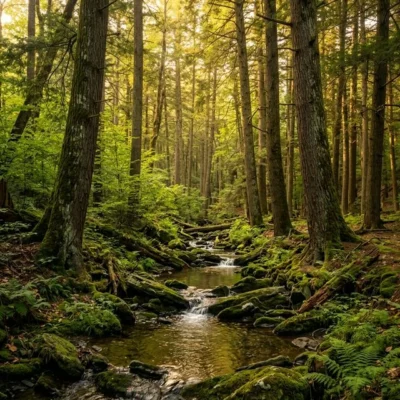
The preserve contains some of the most extensive mature Piedmont forests remaining in the Philadelphia-Wilmington metro region. The diverse landscape includes:
| Habitat | Notable Features |
|---|---|
| Mature Piedmont Forest | Hickory, tulip poplar, white ash, red and white oak canopy |
| Riparian Corridors | Rich floodplains along White Clay Creek branches |
| Open Marshes | Wetland meadows supporting diverse plant communities |
| Serpentine Barren | Rare grassland on serpentine rock — unique plant assemblages |
Wildlife
The preserve supports nearly 700 plant species and serves as a critical ecological corridor. Notable wildlife includes the federally endangered bog turtle, white-tailed deer, great blue herons, wood ducks, brook trout in the headwaters, and eastern bluebirds in nest boxes throughout the meadows. The creek provides vital habitat for native trout — sections are stocked by the Pennsylvania Fish and Boat Commission.
Fishing
White Clay Creek is a premier trout fishing destination in southeastern Pennsylvania. The creek’s clean, cool waters support both stocked and wild trout populations. Sections within the preserve are accessible to anglers — a valid PA fishing license is required. The adjacent Delaware sections may require a Delaware license.
Activities
| Activity | Season | Notes |
|---|---|---|
| Hiking | Year-round | Multi-use trails (some hiking-only sections) |
| Mountain Biking | Year-round | Designated multi-use trails only |
| Horseback Riding | Year-round | Equestrian-permitted trails |
| Fishing | Spring–Fall | Trout (stocked and native), PA license required |
| Birdwatching | Year-round | Warblers, herons, raptors, bluebirds |
| Cross-Country Skiing | Winter | When snow conditions permit |
History & Geography
The Mason-Dixon Line
The Mason-Dixon Line, surveyed between 1763 and 1767 to resolve the colonial boundary dispute between Pennsylvania and Maryland, crosses directly through the preserve. Visitors can literally stand on the historic boundary that later became the symbolic divide between North and South in the Civil War.
Brandywine Valley Context
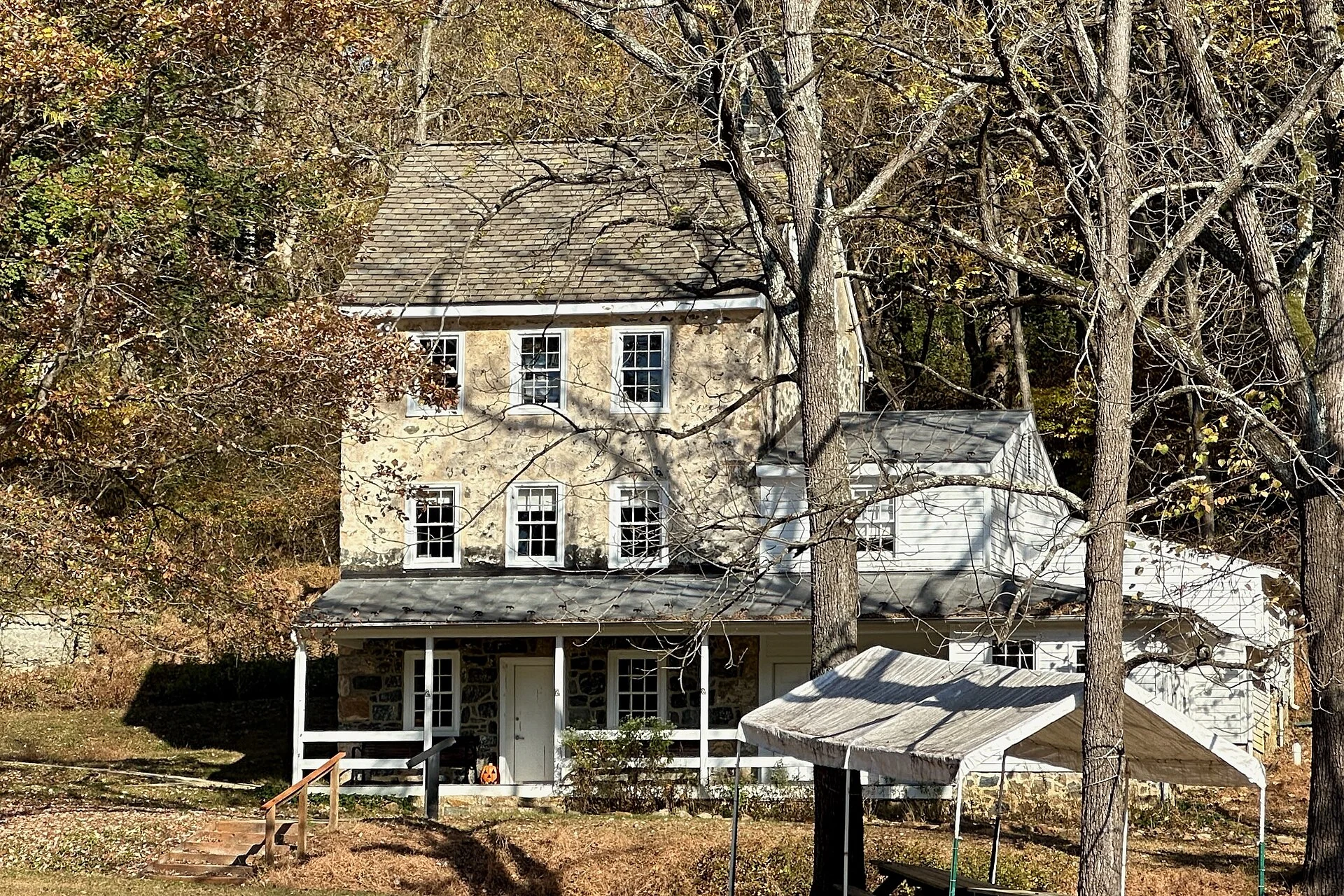
The preserve sits in the heart of the Brandywine Valley — a landscape of rolling hills, stone farmhouses, and covered bridges that inspired generations of artists, most famously the Wyeth family (N.C. Wyeth, Andrew Wyeth, Jamie Wyeth) and illustrator Howard Pyle. Nearby Longwood Gardens (10 miles north) and the Brandywine River Museum of Art complement a nature-and-culture day trip.
Getting There
From Wilmington, DE: ~15 minutes north via DE-41. From Philadelphia: ~45 minutes west via US-1. From Newark, DE: ~5 miles north. Parking is available at lots on London Tract Road and Sharpless Road.
Nearby Attractions
| Attraction | Distance | Details |
|---|---|---|
| Longwood Gardens | 10 miles N | World-class botanical gardens (1,077 acres) |
| Brandywine River Museum | 12 miles NE | Wyeth family art collection |
| Kennett Square | 8 miles N | America’s “Mushroom Capital” — 50% of US production |
| White Clay Creek SP (DE) | Adjacent | Seamless trail connections into Delaware |
Insider Tips
Bi-state hike: Cross into Delaware’s White Clay Creek State Park for extended hiking — the trails connect seamlessly. Tri-state marker: The ~4-mile Tri-State Marker Trail visits the PA-DE-MD tri-state point. Mushroom country: Nearby Kennett Square hosts an annual Mushroom Festival in September. Trout fishing: The creek’s Wild and Scenic designation ensures excellent water quality for native and stocked trout.
Best Time to Visit
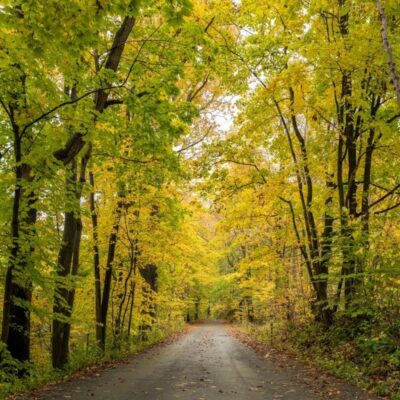
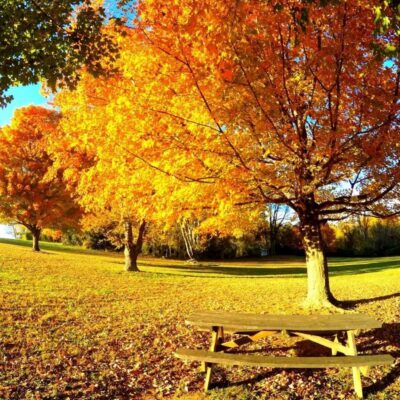
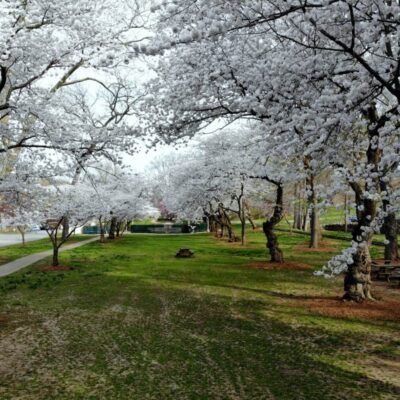
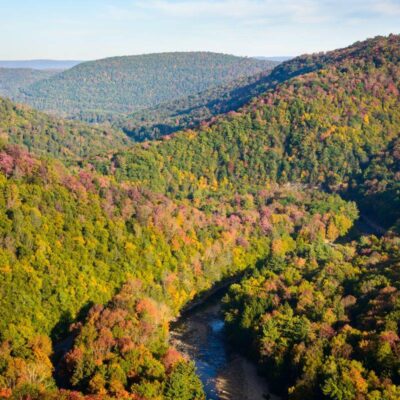
Spring: Wildflowers, trout season opens, migrating warblers. Fall: Piedmont forest foliage, mushroom festival. Summer: Creek wading, full canopy shade. Winter: Cross-country skiing when conditions allow, bare canopy reveals landscape structure.
Frequently Asked Questions
What makes White Clay Creek special?
White Clay Creek was the first creek in America to receive a National Wild and Scenic River designation covering its entire watershed — 190 stream miles across Pennsylvania and Delaware. The designation was awarded in 2000 to protect the creek’s exceptional water quality and biological diversity. The preserve is also the only Pennsylvania state park with a “preserve” designation, limiting development to protect ecosystems.
Can I hike from Pennsylvania into Delaware?
Yes. The preserve connects directly with Delaware’s White Clay Creek State Park, and several trails cross the state line seamlessly. The PennDel Trail follows the creek along the border. Note that the Delaware side may charge an entrance fee during peak season, while the Pennsylvania preserve is always free.
Is there a tri-state marker?
Yes. The Tri-State Marker Trail (~4-mile loop) takes hikers to the point where Pennsylvania, Delaware, and Maryland converge. It is one of the few accessible tri-state markers in the eastern United States. The trail passes through mature Piedmont forest and crosses multiple bridges and boardwalks.
Why is Kennett Square called the Mushroom Capital?
Kennett Square, approximately 8 miles north of the preserve, produces about 50% of all mushrooms grown in the United States — roughly 500 million pounds annually. The industry started in the 1880s when Quaker farmers began growing mushrooms in limestone caves. The annual Mushroom Festival (September) features farm tours, cooking demos, and mushroom-themed food.
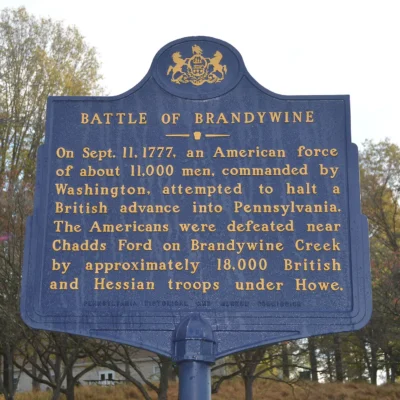
More parks nearby: Big Elk Creek State Park is a short drive away, while Brandywine Battlefield State Park lies a short drive away.

🐾 Dogs & Pets at White Clay Creek Preserve
- Pets allowed? statewide rule
- Pets are allowed in day-use areas of Pennsylvania state parks and in designated campground sites, but must be physically controlled, attended at all times and leashed, caged or crated.
- Leash rule statewide rule
- Leash required at all times; no universal maximum length — inquire at the park office (electronic fences/shock collars not accepted as control)
- Beaches & swim areas statewide rule
- Pets are prohibited in swimming areas and designated beaches
- Cabins & lodging statewide rule
- Dogs allowed in a limited number of designated cabins, cottages and yurts (pilot program); maximum two dogs per unit; dogs must be house-trained and current on rabies vaccination
- Pet fees statewide rule
- No standard statewide pet fee; fees may be assessed for damage in dog-friendly lodging
- Statewide exceptions statewide rule
- Maximum two non-caged pets per campsite; pets prohibited in buildings; pet food may not be left outside camping units
Are dogs allowed at White Clay Creek Preserve?
Pets are allowed in day-use areas of Pennsylvania state parks and in designated campground sites, but must be physically controlled, attended at all times and leashed, caged or crated. Individual parks can post stricter rules — check signage on arrival.
Rules verified July 2026 via pa.gov. More: Pennsylvania state parks guide · Dog rules in all 50 states compared
Park Location
Plan your gear for White Clay Creek Preserve
From our editorial guides, matched to this park’s activities: