
🌤 Weather at Cherry Springs State Park by season
| Spring | Summer | Fall | Winter |
|---|---|---|---|
| 22–66 °F | 51–78 °F | 28–70 °F | 14–34 °F |
Each range runs from the coldest monthly average low to the warmest monthly average high in that season (1991-2020 climate normals), measured at Coudersport 7SE, 9 mi away, elevation 2,150 ft. Conditions at the park can differ from the station, especially where elevation differs — check a forecast before you go.

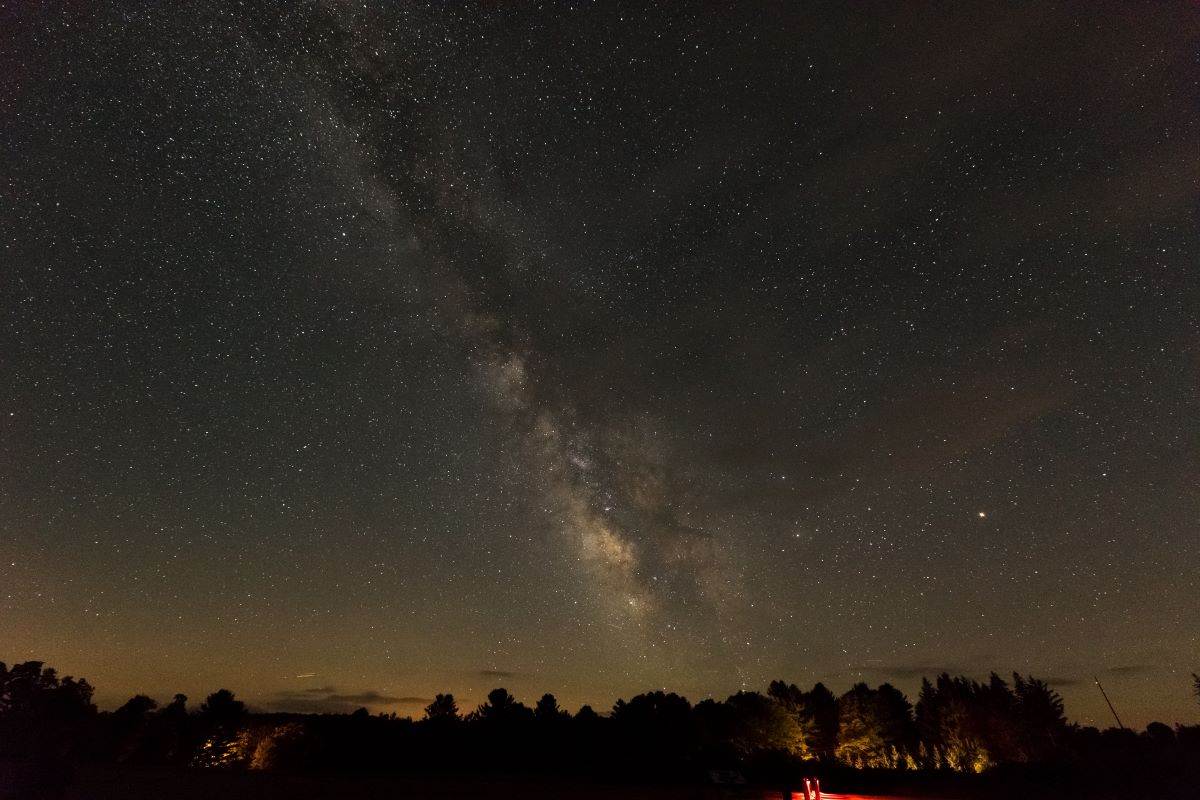
Stand in the middle of Pennsylvania, tilt your head back, and watch the universe reveal itself. At Cherry Springs State Park, the Milky Way isn’t a faded smudge—it’s a blazing river of light stretching from horizon to horizon. So bright, in fact, that on the darkest nights it can cast a visible shadow.
This 82-acre park in Potter County is the darkest place in the eastern United States. With a Bortle rating of 2 (out of 9, where 1 is the absolute darkest), Cherry Springs offers night skies that rival remote deserts and mountaintops. It was designated the world’s second International Dark Sky Park in 2007 and holds Gold Tier status—the highest certification from the International Dark-Sky Association.
Surrounded by 262,000 acres of Susquehannock State Forest, Cherry Springs exists in a bubble of darkness that took decades to protect. Park lights are shielded red, electrical lines are buried underground, and trees block any encroaching glow. The result? Up to 10,000 stars visible with the naked eye on the best nights—compared to a few dozen in most suburban areas.
Whether you’re a serious astrophotographer, a family introducing kids to the cosmos, or someone who just wants to experience what the sky looked like before electric lights—Cherry Springs delivers an experience unlike anything else east of the Mississippi.
What Makes Cherry Springs Legendary
Bortle 2 Rating
Among the darkest skies in North America—second only to remote wilderness areas.
Gold Level IDA
World’s 2nd International Dark Sky Park (2007). Highest certification possible.
Milky Way Territory
See the Milky Way with naked eye. On best nights, it casts a visible shadow.
10,000 Stars
Up to 10,000 stars visible without equipment—vs ~50 in typical suburbs.
Dark Sky Statistics
| Metric | Cherry Springs | Typical Suburb |
|---|---|---|
| ⭐ Bortle Scale | 2 (Excellent) | 6-7 (Moderate) |
| 👁️ Naked-Eye Stars | ~10,000 | ~50-200 |
| 🌌 Milky Way Visibility | Stunning, casts shadows | Not visible |
| 🏔️ Elevation | 2,300 feet | Varies |
| 🌲 Light Buffer | 262,000-acre forest | None |
Two Stargazing Areas
Cherry Springs offers two distinct viewing areas designed for different levels of stargazing commitment:
Night Sky Public Viewing Area (Casual Visitors)
Located on the northern side of Route 44, this large field (a former airport) offers 360-degree unobstructed views of the sky. Perfect for visitors who want to spend a few hours stargazing without overnight commitment.
- ✅ Free access, no reservation needed
- ✅ Parking and restrooms adjacent
- ✅ Small amphitheater for star programs
- ⚠️ Some car headlight intrusion possible
- ❌ No overnight camping/sleeping
Overnight Astronomy Observation Field (Serious Astronomers)
Across Route 44 from the public area, this is the premier stargazing location for overnight observers. Reservation required.
- ✅ Strictest light discipline—NO white lights after dark
- ✅ Electrical pedestals for equipment
- ✅ Overnight camping permitted
- ✅ Used by serious astrophotographers
- ⚠️ Must use red-filtered flashlights only
- ⚠️ Arrive before dark (no driving in after)
| Area | Best For | Reservation |
|---|---|---|
| 🌙 Night Sky Public Viewing | Casual visitors, families, first-timers | Not required |
| 🔭 Overnight Observation Field | Serious astronomers, astrophotographers | Required |
Pro Tips for Stargazing Success
🌑 THE GOLDEN RULE: Visit During New Moon!
The moon is your enemy for stargazing. Even a half-moon washes out the Milky Way. Plan your visit within ±3 days of a new moon for optimal darkness. Use a moon phase calendar to plan.
| Tip | Why It Matters |
|---|---|
| 🌑 New Moon Timing | Moonlight destroys dark sky viewing; plan around lunar phases |
| 🔴 Red Flashlight ONLY | White light destroys night vision (takes 30+ min to recover) |
| 🧥 Dress Warm—Even Summer | Mountain nights are cold (40s-50s); hypothermia risk real |
| 🔭 Bring Binoculars (7×50) | Even basic binoculars reveal incredible detail |
| ⏰ Arrive Before Dark | No driving allowed in observation field after dark |
| 📱 Check Clear Sky Chart | ClearDarkSky.com forecasts cloud cover |
👁️ Let Your Eyes Adjust
True dark adaptation takes 20-30 minutes of complete darkness. Even a brief look at a phone screen resets the clock. Red lights preserve night vision; white lights destroy it. Bring red cellophane to cover flashlights if you don’t have red-filtered lights.
What You Can See
| Object | Visibility | Best Viewing |
|---|---|---|
| 🌌 Milky Way | Stunning—casts visible shadow | Summer months (May-Sep) |
| 🪐 Planets | Saturn’s rings, Jupiter’s moons visible | Varies by planet position |
| 🌟 Andromeda Galaxy | Naked-eye visible (2.5M light-years away!) | Fall months |
| ☄️ Meteor Showers | Spectacular from dark site | Perseids (Aug), Geminids (Dec) |
| 🟢 Northern Lights (Rare) | Visible during strong solar activity | Solar maximum years |
| 🔭 Deep Sky Objects | Nebulae, star clusters, galaxies | With telescope/binoculars |
Best Times to Visit
🌌 Spring & Summer (April – September)
Peak Milky Way season. The galactic core is visible nightly from late April through September. Summer brings warmer nights but higher humidity (which can affect transparency). The park hosts Star Parties in late May and late September—major events with hundreds of astronomers.
🍂 Fall (September – November)
Excellent conditions. Lower humidity means clearer skies. Andromeda Galaxy becomes prominent. September and October are considered the best months overall. Cooler temperatures require warm layers.
❄️ Winter (December – February)
Clearest skies, coldest nights. Winter constellations (Orion, Taurus) are spectacular. The Geminid meteor shower (December) is breathtaking from Cherry Springs. However, temperatures regularly drop below freezing—serious cold-weather gear required.
📅 Approximately 60-85 Optimal Nights/Year
Check the Cherry Springs Clear Sky Chart for real-time cloud forecasts before visiting.
Camping Options
| Site Type | Details |
|---|---|
| 🏕️ Rustic Campground | 30 sites; primitive (no electric/water hookups); fire rings, picnic tables, vault toilets |
| 🔭 Overnight Astronomy Field | First-come first-served; fee required; NO campfires; electrical pedestals for equipment |
| 🏠 Nearby Lodging | CherrySpringsStatePark.com offers cabins: Aurora, Stargazer, Moonraker, etc. |
⚠️ Primitive Camping
The campground has NO electricity, water hookups, or cell service (very limited). Roads are unpaved. Bring everything you need. Water spigots and vault toilets are available.
Beyond Stargazing
🥾 Hiking
The park itself has just one 1-mile interpretive trail, but the surrounding Susquehannock Trail offers 85 miles of backcountry hiking and backpacking through remote Pennsylvania wilderness.
🪓 Woodsmen Show (August)
Since 1952, Cherry Springs has hosted the annual Woodsmen Show in early August. This popular event features lumberjack competitions: tree-felling, log rolling, chainsaw events, and standing block chop. Attracts thousands of spectators.
🎣 Fishing
No fishing in the park itself, but nearby Pine Creek offers excellent freestone fishing for brown and rainbow trout. Lyman Run State Park (nearby) has a lake with bass and panfish. Pennsylvania fishing license required.
🦌 Wildlife
Located in Pennsylvania Wilds “Elk Country,” the area is home to elk, white-tailed deer, black bear, porcupines, and various raptors. Dawn and dusk offer best wildlife viewing.
Practical Information
| Item | Details |
|---|---|
| 🎟️ Entrance Fee | Free (fees for overnight astronomy field) |
| 📍 Park Size | 82 acres (surrounded by 262,000-acre forest) |
| 📱 Cell Service | Very limited/none in park |
| 🐕 Pets | Allowed in park; NOT allowed in astronomy areas or campground |
| 🌐 GPS Coordinates | 41.6633° N, 77.8261° W |
Getting There
- 📍 Address: 4639 Cherry Springs Rd, Coudersport, PA 16915
- 📞 Phone: (814) 435-1037
- 📍 From Pittsburgh: ~145 miles northeast via US-219 N and Route 6
- 📍 From Philadelphia: ~250 miles northwest via I-80 and Route 44
- 📍 From State College: ~95 miles north via Route 144 and Route 44
Nearby Attractions
- ⭐ Lyman Run State Park: Swimming beach, boating, fishing (~15 min)
- ⭐ Susquehannock State Forest: 262,000 acres of wilderness hiking
- ⭐ PA Grand Canyon (Leonard Harrison State Park): ~45 minutes south
- ⭐ Ole Bull State Park: ~25 miles east; rustic camping
Frequently Asked Questions
Is Cherry Springs State Park worth visiting?
Absolutely—if you care about seeing the night sky. This is the darkest place in the eastern United States and one of the best stargazing destinations in North America. The Milky Way is visible with the naked eye, and on optimal nights you can see up to 10,000 stars. For astronomy enthusiasts, it’s a bucket-list destination. For casual visitors, it’s a profound experience of what the sky looked like before electric lights.
Can you see the Milky Way at Cherry Springs State Park?
Yes—spectacularly. The Milky Way is easily visible to the naked eye from Cherry Springs. On the best nights (new moon, clear skies), it’s so bright it can cast a discernible shadow. The galactic core is visible from late April through September. No telescope or binoculars needed—just look up.
What is the best time of year to go to Cherry Springs State Park?
September-October offers the best combination of factors: clear, low-humidity skies, comfortable temperatures, and the Milky Way still visible in early evening. Summer (June-August) provides the longest Milky Way viewing but can be humid. Winter offers the clearest skies but is extremely cold. Always plan around the new moon (±3 days) for optimal darkness.
Can you see the Northern Lights at Cherry Springs State Park?
Occasionally, during strong solar activity. The Aurora Borealis has been sighted at Cherry Springs during peak solar flare events. However, this far south (41°N latitude), Northern Lights are rare and unpredictable. During solar maximum years (like 2024-2025), chances improve but are never guaranteed. Most aurora sightings here require long-exposure photography to capture.
Do I need a telescope?
No—but it helps. The naked-eye experience at Cherry Springs is already extraordinary. Binoculars (7×50 recommended) reveal incredible detail. A telescope unlocks deep-sky objects (nebulae, galaxies, star clusters). Many astronomers set up large scopes and are often happy to let visitors take a look—just ask politely!
Why are white lights prohibited?
White light destroys night vision, which takes 20-30 minutes to fully recover. Red light preserves dark adaptation. The overnight astronomy field strictly prohibits white lights after dark—violators will be asked to leave. Bring a red flashlight or cover your light with red cellophane.
🌌 Where the Universe Reveals Itself
Cherry Springs is more than a state park—it’s a portal to the cosmos. Stand in the darkness, let your eyes adjust, and watch the Milky Way blaze across the sky like our ancestors saw it for thousands of years. In a world drowning in artificial light, this 82-acre sanctuary protects something increasingly rare: the ability to see our place in the universe.
📍 Address: 4639 Cherry Springs Rd, Coudersport, PA 16915
📞 Phone: (814) 435-1037
Explore More Pennsylvania State Parks
Cherry Springs State Park is one of many outstanding state parks in Pennsylvania. Discover more parks in our Best State Parks in Pennsylvania guide, or use our Park Finder to search by activity, location, or features.
Make it a road trip: Pair a visit with Denton Hill State Park (a short drive away) or Patterson State Park (a short drive away).

⛺ Camping at Cherry Springs State Park: Campgrounds & Cabins
| Campsites | The park's own page describes 30 non-electric sites in the Airport A and Airport B loops; the state's booking portal currently lists 29 bookable sites (the two figures don't match), split between "Rustic Tent" walk-up pads and "Rustic Non-Electric" back-in sites ranging from about 18 to 80 feet. No sites have electric hookups. |
|---|---|
| Cabins & Lodging | No cabins, cottages, or yurts are offered at Cherry Springs; overnight stays are limited to the non-electric campsites in the Airport A and Airport B loops. |
| Pets | Pets are prohibited in the campground. |
| Reservations | Reserve online at pennsylvaniastateparks.reserveamerica.com or call 888-727-2757 (7 a.m.-5 p.m., Monday-Saturday). Pennsylvania state park campsites can be booked up to 11 months in advance. Cancelling 7 or more days before arrival costs a $10 fee; cancelling 6 days or less before arrival forfeits the first night's fee. Every reservation carries a $6.50 non-refundable transaction fee, and most changes cost $10 (adding nights is free). Reservations booked at the 11-month maximum window can't be moved or cancelled for 22 days. |
| Special sites | One section of the Airport A Campground is set aside as a designated Dark Sky observing area, with strict lighting rules: no campfires, no white light, red-filtered flashlights only, and vehicle interior lights or headlights must stay off or be shielded after dark. |
| Season notes | The campground is open from the second Friday in April through the last weekend in October. As of July 2026. |
Camping questions about Cherry Springs State Park
Can you camp at Cherry Springs State Park?
The park's own page describes 30 non-electric sites in the Airport A and Airport B loops; the state's booking portal currently lists 29 bookable sites (the two figures don't match), split between "Rustic Tent" walk-up pads and "Rustic Non-Electric" back-in sites ranging from about 18 to 80 feet. No sites have electric hookups.
How do you reserve a campsite at Cherry Springs State Park?
Reserve online at pennsylvaniastateparks.reserveamerica.com or call 888-727-2757 (7 a.m.-5 p.m., Monday-Saturday). Pennsylvania state park campsites can be booked up to 11 months in advance. Cancelling 7 or more days before arrival costs a $10 fee; cancelling 6 days or less before arrival forfeits the first night's fee. Every reservation carries a $6.50 non-refundable transaction fee, and most changes cost $10 (adding nights is free). Reservations booked at the 11-month maximum window can't be moved or cancelled for 22 days.
Are there cabins at Cherry Springs State Park?
No cabins, cottages, or yurts are offered at Cherry Springs; overnight stays are limited to the non-electric campsites in the Airport A and Airport B loops.
Are pets allowed at the Cherry Springs State Park campground?
Pets are prohibited in the campground.
Source: pa.gov (verified July 2026). Details change seasonally — confirm when booking.
🐾 Dogs & Pets at Cherry Springs State Park
Park policy: DCNR states flatly for the 30-site rustic campground that 'Pets are prohibited in the campground.' For the Night Sky Public Viewing Area north of Route 44, the park lists pets under 'What not to bring,' alongside white lights and alcohol.
- Pets allowed?
- Not allowed in the rustic campground or at the Night Sky Public Viewing Area
- Leash rule statewide rule
- Leash required at all times; no universal maximum length — inquire at the park office (electronic fences/shock collars not accepted as control)
- Beaches & swim areas statewide rule
- Pets are prohibited in swimming areas and designated beaches
- Cabins & lodging statewide rule
- Dogs allowed in a limited number of designated cabins, cottages and yurts (pilot program); maximum two dogs per unit; dogs must be house-trained and current on rabies vaccination
- Pet fees statewide rule
- No standard statewide pet fee; fees may be assessed for damage in dog-friendly lodging
- Park-specific rules
- Both overnight camping and the public stargazing amphitheater are closed to pets, which effectively rules out a night here with a dog. The Overnight Astronomy Observation Field permit conditions say nothing about pets - call the Lyman Run office before counting on it.
- Statewide exceptions statewide rule
- Maximum two non-caged pets per campsite; pets prohibited in buildings; pet food may not be left outside camping units
- Dogs & wildlife
- Store dog food in your vehicle with the rest of your supplies — food left out draws black bears and other scavengers to campsites.
Are dogs allowed at Cherry Springs State Park?
Not allowed in the rustic campground or at the Night Sky Public Viewing Area.
Beyond that, Pennsylvania’s statewide rules apply.
Rules verified July 2026 via pa.gov. More: Pennsylvania state parks guide · Dog rules in all 50 states compared
🐻 Wildlife at Cherry Springs State Park: What to Watch For — and Watch Out For
Worth watching for: Cherry Springs is an astronomy park first, and its wildlife is mostly nocturnal to match: DCNR's seasonal Nature at Night programs introduce the owls, bats, and fireflies of the surrounding 262,000-acre Susquehannock State Forest.
Watch out for: Black bears, along with raccoons, opossums, and skunks, scavenge campsites for food scraps here — the park tells campers to store all food in a vehicle to prevent damage to their equipment. The Pennsylvania Game Commission's camping guidance is the same: keep food in your car trunk or a hard-sided camper, never in your tent, and pack out or properly dispose of all garbage. The rustic campground is open from the second Friday in April through late October, which is also when bears are active.
Are there bears at Cherry Springs State Park?
Yes — see above for where they occur in the park and how to behave. Sightings are a normal part of a healthy park; incidents are rare when visitors keep distance and store food properly.
Wildlife information verified July 2026 via pa.gov.
Park Location
Plan your gear for Cherry Springs State Park
From our editorial guides, matched to this park’s activities:
Top Tours & Activities Near Pennsylvania
 from $59
 from $595
 from $35