A fed bear rarely gets a second chance — once it links a campsite to food, rangers often have no option left but to destroy it. A rigid, animal-resistant container is still the most reliable way to prevent that. This guide covers canisters and one soft-sided alternative carrying Interagency Grizzly Bear Committee (IGBC) certification, the only recognized bear-resistant standard.
We built this around two things: which containers are IGBC-certified and in stock, and which state parks and public lands have specific rules on “bear-resistant” — rules that vary more than most campers assume. Building a full kit? Our packing lists cover the rest.
America’s State Parks is reader-supported. We may earn a commission from qualifying purchases made through links here, at no extra cost to you — see our affiliate disclosure and review methodology. Specs below were verified in July 2026.
How to Choose a Bear Canister
- IGBC certification ≠ bear-proof. Confirm the model against the IGBC’s own list — not every certified product carries the logo. IGBC states certification does “not guarantee that a product is BEAR-PROOF”; it only works closed/locked.
- Capacity matched to trip length. Roughly 1.5–2 L per person per day: ~5 L for 1–2 days, 7–8 L for 3–4, 10–12 L for 5–6, 11.5 L+ for 7+ or two sharing. Bulky dehydrated meals eat rated volume fast.
- Hard-sided vs. soft-sided legality. Some managers require rigid construction by regulation — a soft-sided bag can be certified and still not legal there.
- Weight vs. capacity trade-off. Hard-sided models run 1.75–2.75 lb; the soft-sided option weighs a fraction of that.
- A lock a bear can’t work. Coin-slot twists and tool-free latches defeat claws, not cold fingers at 6 a.m.
Before you buy: confirm what your destination requires — some parks provide bear lockers and only require a canister once backpacking away from the car; others mandate hard-sided storage nightly. Pair it with bear spray, and check rules via our park finder.
Comparison Table
| Model | Capacity | Weight | Type | Best for |
|---|---|---|---|---|
| BearVault BV500 Journey | 11.5 L (7+ person-days) | 2 lb 9 oz | Hard-sided, polycarbonate | Multi-day trips, two sharing |
| BearVault BV450 Jaunt | 7.2 L (3–4 person-days) | 2 lb 1 oz | Hard-sided, polycarbonate | Short solo trips |
| Garcia Backpackers’ Cache 812 | 10 L / 614 cu in (~6 person-days) | 2.7 lb | Hard-sided, ABS polymer | NPS-standard backcountry |
| Ursack Major | 10.65 L (~5 person-days) | 7.7 oz | Soft-sided, IGBC-certified fabric | Ultralight, where legal |
| Counter Assault Bear Keg | 11.7 L / 716 cu in | Not published | Hard-sided, polymer blend | Two-person short trips |
Specs are manufacturer-published, July 2026.
Top Pick for 2026
BearVault BV500 Journey
The BV500 fits most solo backpackers and pairs past a long weekend — 7+ person-days at 11.5 L, transparent polycarbonate to check food levels without opening it, and a tool-free opening you can work with cold hands. At 2 lb 9 oz it’s not the lightest here, but it’s IGBC-certified (#5339) and sized for a full week without under-packing.
The Full Lineup
Best for Multi-Day & Group Trips
The BV500 (top pick above) is the transparent-polycarbonate standard; the Garcia 812 is the older, opaque ABS-polymer NPS workhorse, its smooth body denying bears a gripping point, its steel locks needing a coin or screwdriver, not claws.
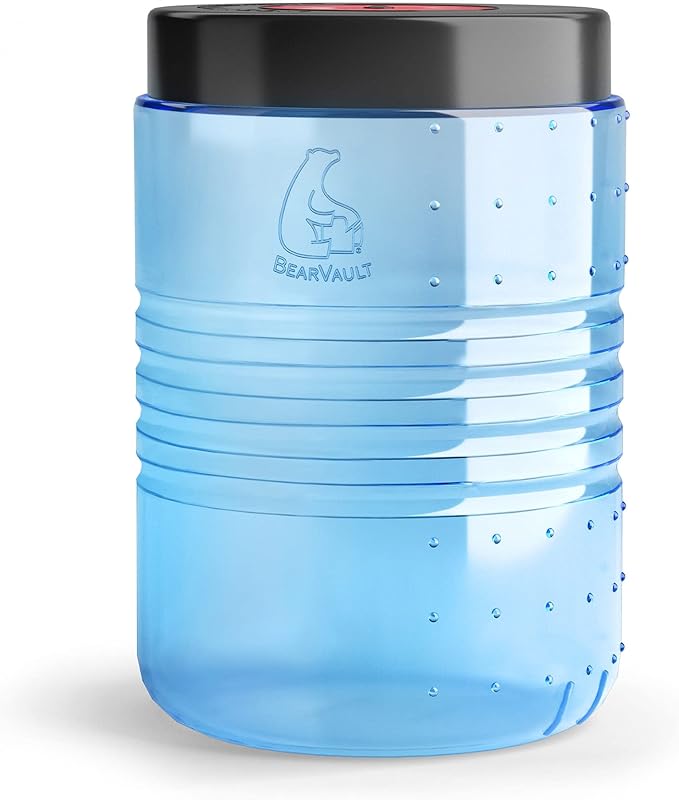
BearVault BV500 Journey Bear Canister — 11.5L, 7+ Person-Days
- Rated for 7+ person-days of food (11.5 L)
- 2 lb 9 oz; 8.7″ diameter x 12.7″ length
- Transparent polycarbonate, tool-free wide-mouth opening
- IGBC certification #5339 (grizzly bear-resistant)
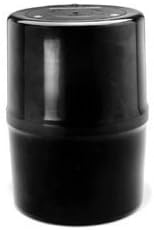
Garcia Backpackers' Cache 812 Bear-Resistant Container
- 614 cu in (10 L), about 6 person-days of food; 2.7 lb
- ABS polymer with smooth rounded body — no gripping points for bears
- Stainless-steel locks open with a coin or screwdriver, not by bears
- The classic NPS workhorse (used at Denali, Glacier Bay, Yosemite per manufacturer)
Best for Short Trips
Not every weekend needs an 11-liter canister. The BV450 Jaunt covers 3–4 person-days at 2 lb 1 oz, its polycarbonate body doubling as a camp stool.
BearVault BV450 Jaunt Bear Canister — 7.2L, 3-4 Person-Days
- Rated for 3-4 person-days of food (7.2 L)
- 2 lb 1 oz; 8.7″ diameter x 8.3″ length
- Transparent polycarbonate body doubles as a camp stool
- IGBC certification #55340
Best Ultralight — Where the Rules Allow It
The Ursack Major is remarkable on paper: ~10.65 L (roughly 5 person-days solo) at only 7.7 oz, and it’s IGBC-certified for grizzly resistance — bears can’t get the food out. But a bear can still crush the contents through the fabric, so food often survives inedible even when it isn’t eaten. That’s why jurisdictions exclude soft-sided bags: NY DEC’s definition requires “solid, non-pliable material,” which the Ursack doesn’t meet. Ursack itself says the Major isn’t accepted in parts of AK, WA, CO, CA, or on PCT sections, and carries no black-bear-specific certification — a great lightweight pick where hard-sided isn’t mandated, not a universal substitute.

Ursack Major Bear-Resistant Food Sack — 10.65L, Soft-Sided
- About 10.65 L (~5 person-days) at only ~7.7 oz — the ultralight option
- IGBC-certified (grizzly); NOT accepted where rigid canisters are required
- 6 ft high-tensile cord included for tie-off; made in USA
- Odor-barrier liner recommended, sold separately
Best Twist-Lock Alternative
The Counter Assault Bear Keg holds 716 cu in (11.7 L) for two on a short trip, in durable yellow polymer opening with a coin or screwdriver twist. IGBC/SIBBG approved.

Counter Assault Bear Keg — 716 cu in Bear-Resistant Container
- 716 cu in (11.7 L) — about 3+ days of food for two people
- Proprietary durable polymer blend, high-visibility yellow
- Opens with a coin or screwdriver twist mechanism
- IGBC and SIBBG approved; required in several national parks
Food Storage Rules at State Parks (Verified July 2026)
A canister legal in one state can be non-compliant a few hundred miles away.
New York — Adirondack Eastern High Peaks (DEC Land, Not a State Park)
Worth a correction: the Eastern High Peaks Wilderness is DEC land, not the state park system, though it’s the most-cited canister law in the Northeast. Overnight campers need a bear-resistant canister April 1–November 30. DEC’s definition requires “solid, non-pliable material manufactured for the specific purpose of resisting entry by bears” — excluding soft-sided sacks and hangs. Canisters must sit 100+ feet from tents/cooking sites; DEC notes local bears have “regularly defeated… canisters made of clear plastic.” Nearby: New York hub.
California State Parks — Bear Lockers & Hard Canisters
Under Title 14 CCR §4323(b), food, scented items, and trash go in provided bear-resistant lockers when not in active use — violation can mean confiscation, ejection, and a $1,000 fine. At Calaveras Big Trees State Park, every site has one locker for all food and scented items. Backcountry travel follows the same guidance toward hard-sided IGBC canisters. More: California hub.
Colorado — 2 CCR 405-1-100.C.21
Colorado Parks and Wildlife managers can designate zones requiring food, trash, and cookware in a hard-sided vehicle, a unit of “solid, non-pliable material,” or a park-provided box. Tents and canvas- or nylon-sided units are explicitly excluded from “hard-sided.” See Colorado hub.
Montana — Smith River State Park & River Corridor
From March 1–December 1, Montana FWP requires food/attractants stored bear-resistant overnight, and by day whenever unattended past 100 feet. Methods: an IGBC-approved container or electric fence, proper suspension (10 ft vertical, 4 ft horizontal from the trunk), or — at Camp Baker/Eden Bridge only — a hard-sided vehicle. Burying/burning attractants is prohibited. See Montana hub.
Virginia — Grayson Highlands State Park
Backpackers at Grayson Highlands State Park must use a canister or one of four bear boxes (Thomas Knob Shelter, Rhododendron Gap, Wise Shelter, Scales). Food, cooking clothes, trash, and toiletries can’t go in a tent; campsites sit 200+ feet from cooking/storage areas. Bear-bag hanging is a last resort, since suitable trees are scarce there. See Virginia hub.
The “100 Yards” Myth
Repeated advice tells backpackers to store canisters 100 yards from camp. NPS’s own guidance says otherwise — 100 feet, on flat ground, away from cliffs and water, closed and locked, never tied to a rope. Where black bear activity exists but a canister isn’t mandated, pair solid storage with bear spray.
Which One Do You Need?
A 3–4 day solo trip calls for the BV450 Jaunt; longer, or two sharing food, points to the BV500 or Garcia 812. No hard-sided requirement and every ounce counts? The Ursack works — confirm the local rule first, since NY’s Eastern High Peaks and parts of CA, CO, WA, and AK rule it out. Unsure what your park requires? Check our camping guide first.
FAQs
What does “IGBC-approved” actually guarantee?
That the product passed a live-bear test or technical evaluation for grizzly resistance — not that it’s indestructible. IGBC states certification doesn’t guarantee “bear-proof” or never breached.
Can I use a soft-sided Ursack instead of a hard bear canister?
Sometimes. The Ursack Major is IGBC-certified for grizzly resistance, but the Adirondack Eastern High Peaks and parts of CA, CO, WA, AK, and the PCT require rigid containers, ruling it out despite certification.
How big a canister do I need for a 5-day solo trip?
Roughly 1.5–2 L per person per day. A 5-day trip lands around 10–12 L — the BearVault BV475 Trek or Garcia 812 both fit.
Are bear canisters legally required, or just recommended?
Varies by land manager. New York DEC’s rule is binding with defined dates. Colorado’s rule is discretionary — a manager must designate it. Montana’s Smith River rule is a binding biennial rule.
Reviewed and updated July 2026 by the America’s State Parks Editorial Team. Specs, IGBC details, and food-storage regulations here were verified against official sources as of the date above; see our review methodology and affiliate disclosure.